🍁 Quick Answer
The best Thanksgiving table decoration in 2026 is a mood, not a matching kit. Build it from natural materials — a flat dried-botanical runner, taper candles at varying heights, fresh herb napkin ties, and personalized place cards on river rocks or mini pumpkins — held to a tight 2–3 color palette (sage, ivory, terracotta). A complete budget table runs about $33–$52; the single best habit is setting the table the evening before.
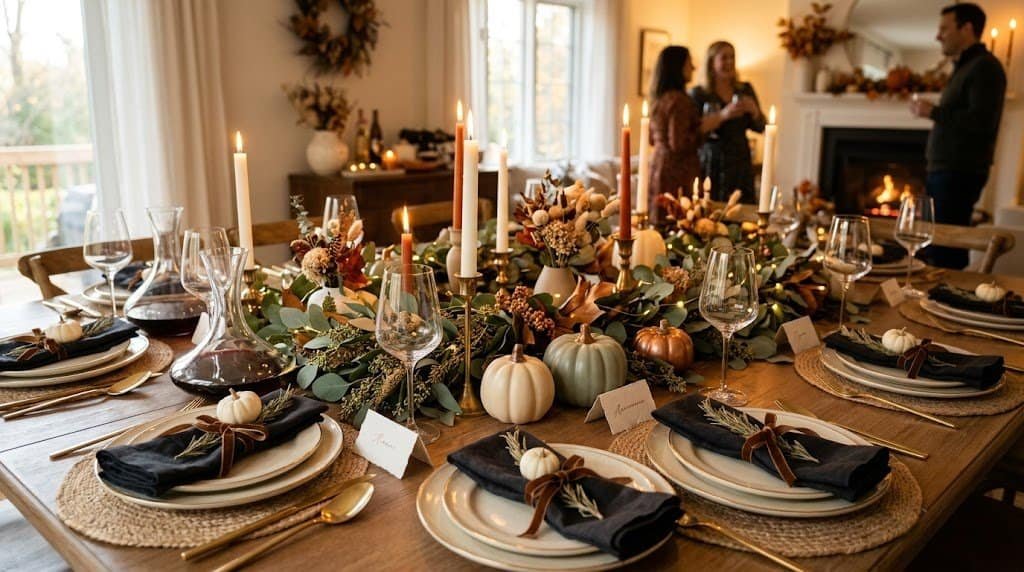
The most memorable Thanksgiving tables aren’t built from an orange-and-brown craft-store kit. Picture a long, flat arrangement of dried wheat, pampas grass, and eucalyptus running the length of the table, three ivory pillar candles at varying heights, white grocery-store pumpkins scattered at intervals, and fresh rosemary tucked into each folded napkin. Guests walk in, stop, and reach for their phones before a single serving dish hits the table. That kind of table can cost about $22.
That’s Thanksgiving table decoration done right — a mood, not a checklist; a moment people bring up the following year. Here are the ideas that actually work, what’s overrated, and how to pull it off for under $50.
What Is a Thanksgiving Tablescape — And What Makes One Actually Work?
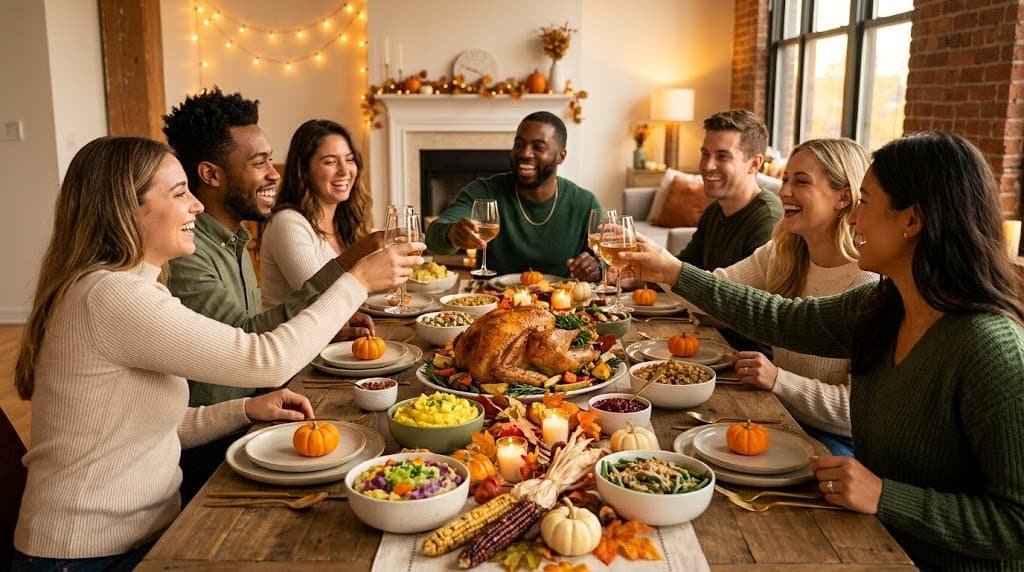
A Thanksgiving tablescape is everything guests see when they sit down: linens, centerpiece, candles, place settings, and the color palette tying it together. Done right, it turns a regular dining table into the backdrop for a memory. Searches for harvest tablescapes and dried-flower centerpieces climb sharply every autumn, with a clear shift in recent years toward natural, restrained aesthetics over coordinated seasonal kits.
What it IS:
- A mood built through texture, candlelight, and natural materials
- A 2–3 color palette, held firmly
- Decor where every piece earns its place
- Items that look better every year you reuse them
What it ISN’T:
- A coordinated orange-and-brown seasonal kit from a craft store
- Fresh florals that wilt before dessert is served
- Buying all-new dishes every November
- Trying to recreate a specific Pinterest image exactly
The trick is restraint. The most beautiful tables are never the ones with the most things on them.
What Are the Best Thanksgiving Table Decoration Ideas for 2026?
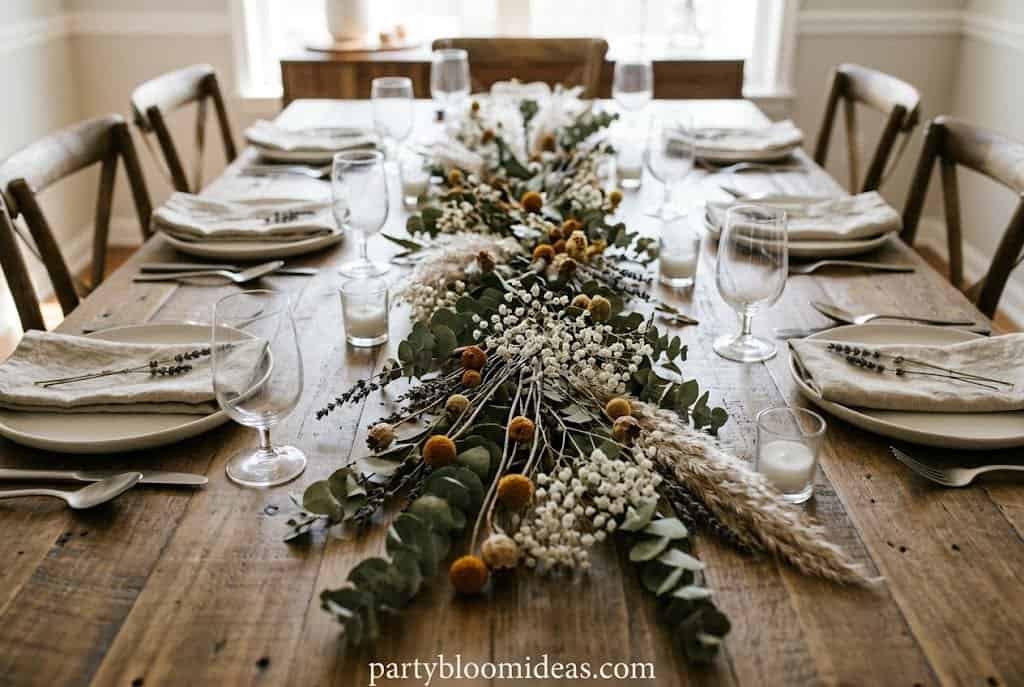
1. The Dried Botanical Runner — Best for: Any gathering, 8–20 guests | Budget: $14–22
The strongest centerpiece move for 2026: no vase, no vessel, no elevated arrangement. Just a loose, flat collection of dried botanicals laid directly down the table center — dried wheat, pampas grass, and eucalyptus (three dollar-store bundles at $1.25 each), with dried orange slices and white grocery-store pumpkins tucked in at intervals. Total cost: about $18, and it looks like it’s been gathered slowly over time. Warm, organic, collected — not assembled.
- Dried stems (wheat, pampas grass, eucalyptus): $8–12
- Dried orange slices: $6
- 3–5 white or cream mini pumpkins: $3–5
Dollar-store DIY tip: the fall seasonal aisle carries dried wheat and faux eucalyptus bundles starting in September. Three bundles = $3.75 for your full runner base.
Done right, this looks collected and effortless. Done wrong — too many different dried varieties piled together — it looks like a potpourri situation. Three stem types maximum; space matters more than volume.
💡 Pro Tip: Arrange it the evening before. Dried botanicals settle naturally over several hours and look significantly more organic the next morning. Set it and leave it.
2. The Modernized Cornucopia — Best for: Traditional family gatherings, 8–16 guests | Budget: $22–36
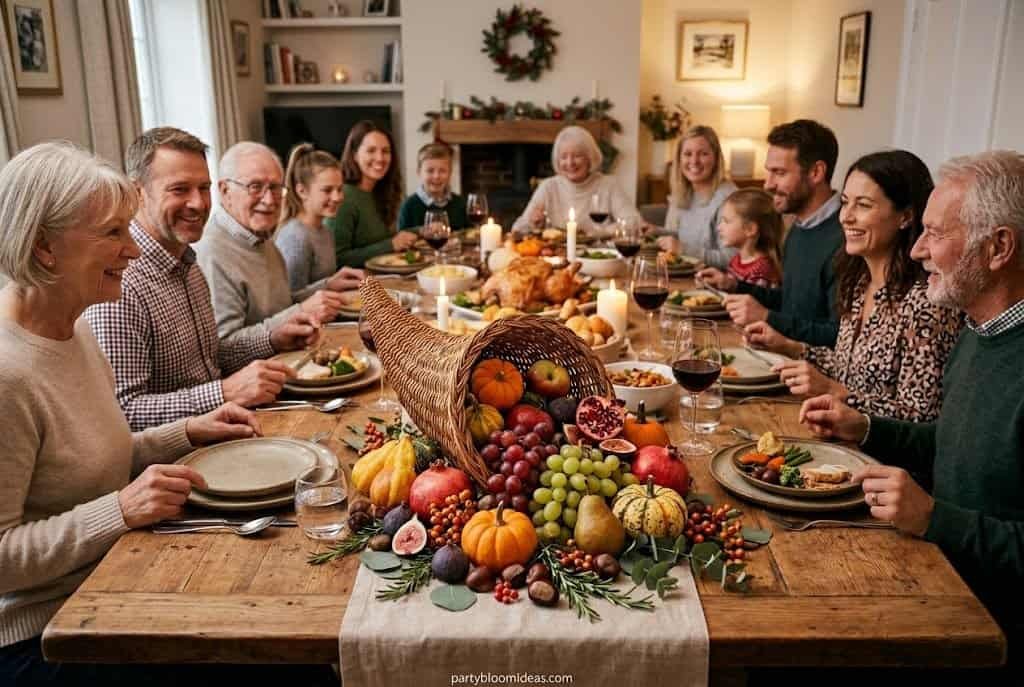
The cornucopia has had an image problem for about twenty years — the plastic-fruit-in-screaming-orange version deserved to be retired. But the form itself is brilliant: a wicker horn overflowing with seasonal abundance is exactly right for Thanksgiving. The modernized version updates the palette: real grocery-store produce (mini gourds, small apples, persimmons, pinecones), sage green, ivory, and terracotta tones only, with fresh rosemary tucked throughout. Traditional in form, completely contemporary in feel.
- Wicker cornucopia basket: $12–18 (or about $3 at the dollar store in fall)
- Seasonal grocery produce (gourds, apples, pears, pinecones): $8–15
- Fresh rosemary or sage: $2–3, or free from the garden
After dinner, the fruit is edible — zero waste, and it reliably draws a comment.
3. River Rock Place Cards — Best for: Any gathering size | Budget: $7–10 for 12–15 guests
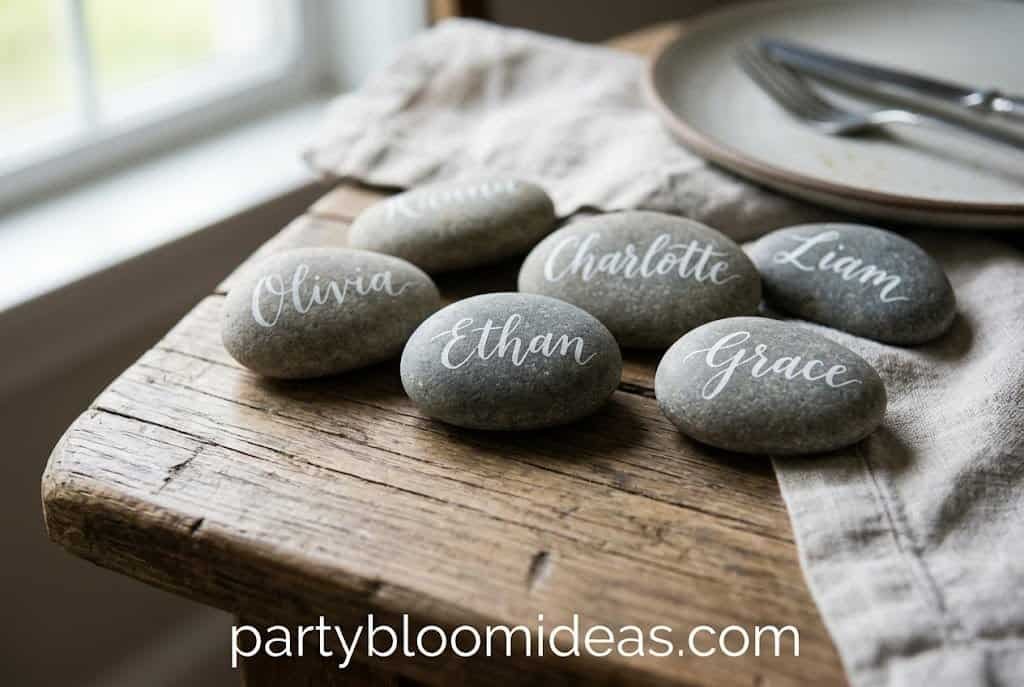
The single place-card idea worth recommending to everyone: smooth river rocks, a white paint marker, and guest names. There’s something about picking up a warm, smooth rock with your name in white letters that feels both grounding and quietly moving — guests almost always want to keep them, and they travel well beyond Thanksgiving (a windowsill, a desk).
- Smooth river rocks: $4–6/bag — home-decor section or craft store
- White paint pen: $3–4
💡 Pro Tip: Two coats, always. Let the first dry fully — about ten minutes — then go back with a second for crisp, even lettering. Thin and confident, not pressed hard on the first stroke.
4. Taper Candle Ladder Arrangement — Best for: Evening dinners, adult gatherings | Budget: $13–23
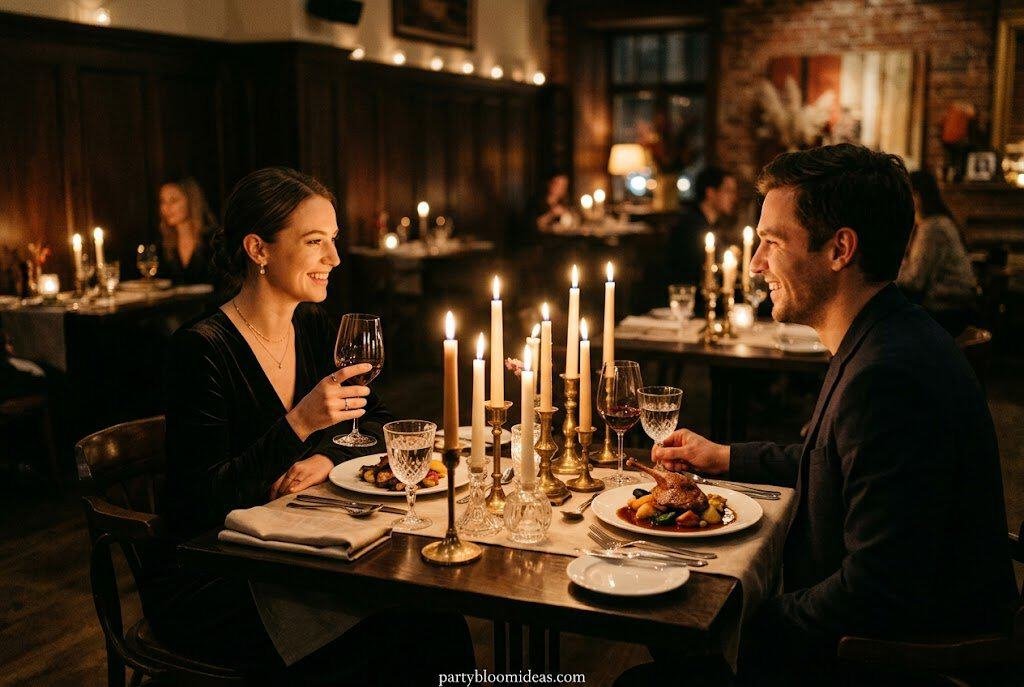
The single most impactful atmospheric move on a Thanksgiving table isn’t a centerpiece — it’s multiple candles at multiple heights. Not a cluster, not a pair: a loose, uneven zigzag of 6–7 taper candles in individual holders, some tall, some short, scattered down the center. Lit at dinner, the light is warm and flickering, faces look better, and conversation drops lower and stays longer.
- Taper candles 10-pack: $5–8 — the best value available
- Individual taper holders, varying heights: $8–15 set
Done right: a French-farmhouse dinner party. Done wrong — all the same height, perfectly even spacing — it looks like a birthday cake. The unevenness is the point. Vary heights, vary spacing, and place 2–3 among the botanical runner if you’re doing both.
5. Fresh Herb Napkin Ties — Best for: Any gathering | Budget: $5–8 for 12 guests
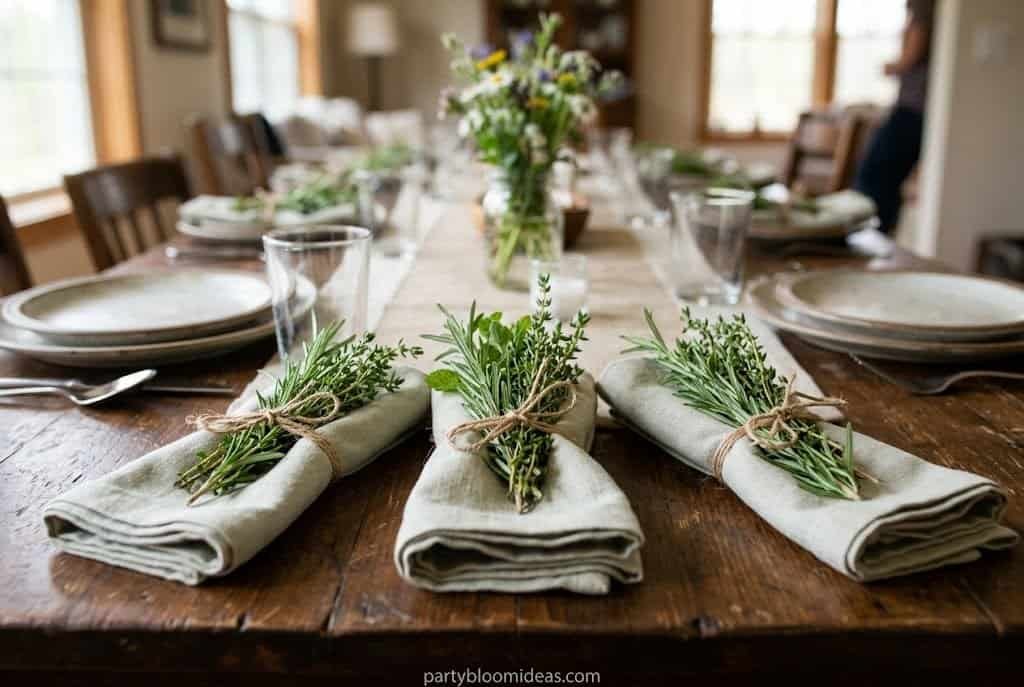
A single fresh rosemary sprig tied to each folded napkin with natural twine. When guests sit down, the warmth from the table releases the rosemary scent and the whole room smells extraordinary — better than any candle, because it’s real. Someone always asks what that smell is.
- Fresh rosemary, sage, or thyme: $2–5, or free from the garden
- Natural twine: $3
Fresh herbs are the most underrated, highest-impact, lowest-cost table move available — nothing synthetic comes close to real rosemary.
💡 Pro Tip: Rosemary is most aromatic, sage looks most seasonal, thyme is most visually delicate. Use whichever you prefer — or mix across the table for variety.
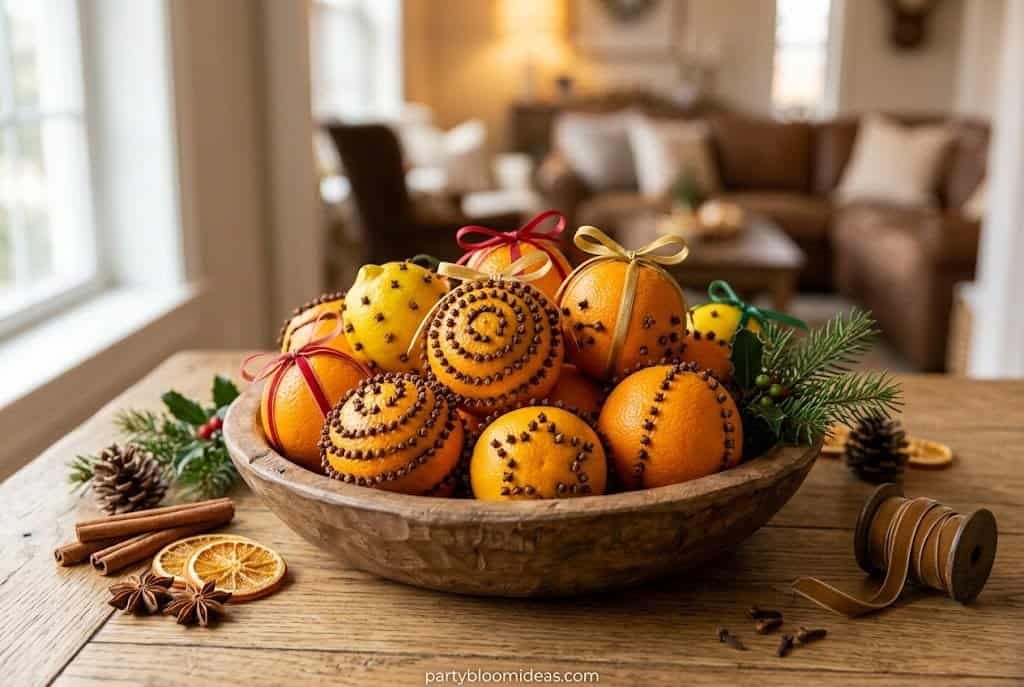
6. Citrus Pomander Balls — Best for: Any gathering — make a week ahead | Budget: $7–10
Whole oranges studded with whole cloves, arranged in shallow bowls along the table center. The scent they release — warm orange and spiced clove — is exactly what a Thanksgiving room should smell like: real, not synthetic. Make them a full week ahead; the scent intensifies as they slowly dry, and by Thursday they’ll fill the room before you’ve cooked a thing.
- 6–8 navel oranges: $4–6
- Whole cloves: $3–4
- Shallow bowls or a tray: use what you own
💡 Pro Tip: Pre-puncture the orange skin with a toothpick or skewer before pushing in cloves. It’s significantly faster and kinder on your fingertips after the first 50 cloves.
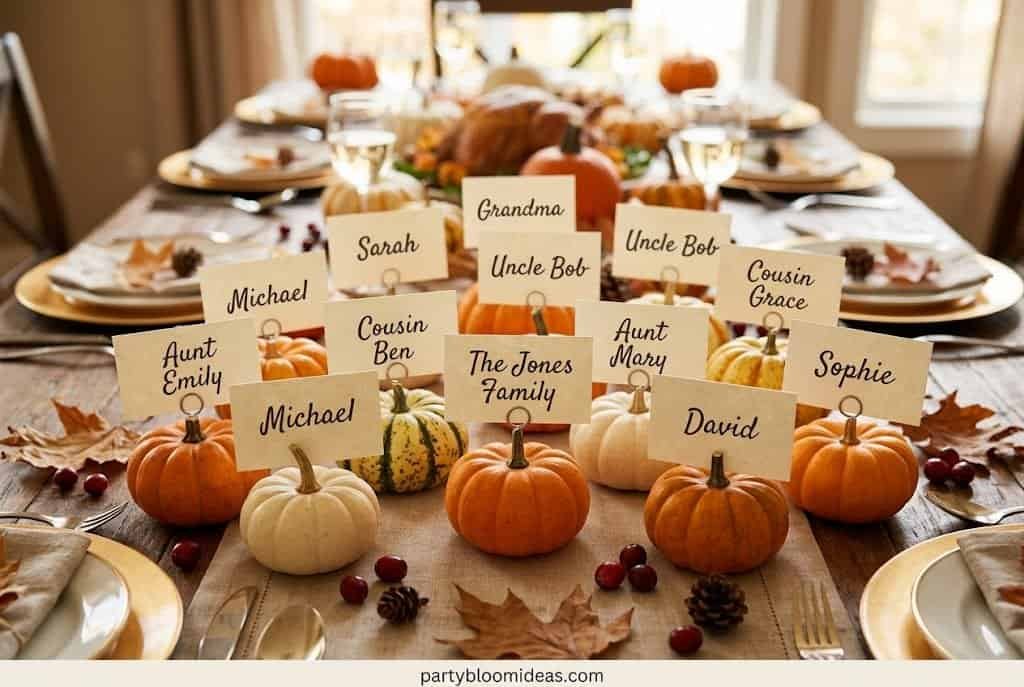
7. Mini Pumpkin Place Card Holders — Best for: Family gatherings, 10–18 guests | Budget: $12–17
Mini pumpkins from the grocery store, a small slit cut at the top with a paring knife, a handwritten name card slipped in. Each guest finds a small pumpkin at their seat with their name on it — people pick them up, turn them over, smile, and most take them home. Kids especially love finding their names on something real and round and orange. About $12–17 for a table of 14, 30 minutes of work, and the pumpkins become keepsakes.
- Mini pumpkins: $0.75–1 each
- Cardstock strips, handwritten: $3
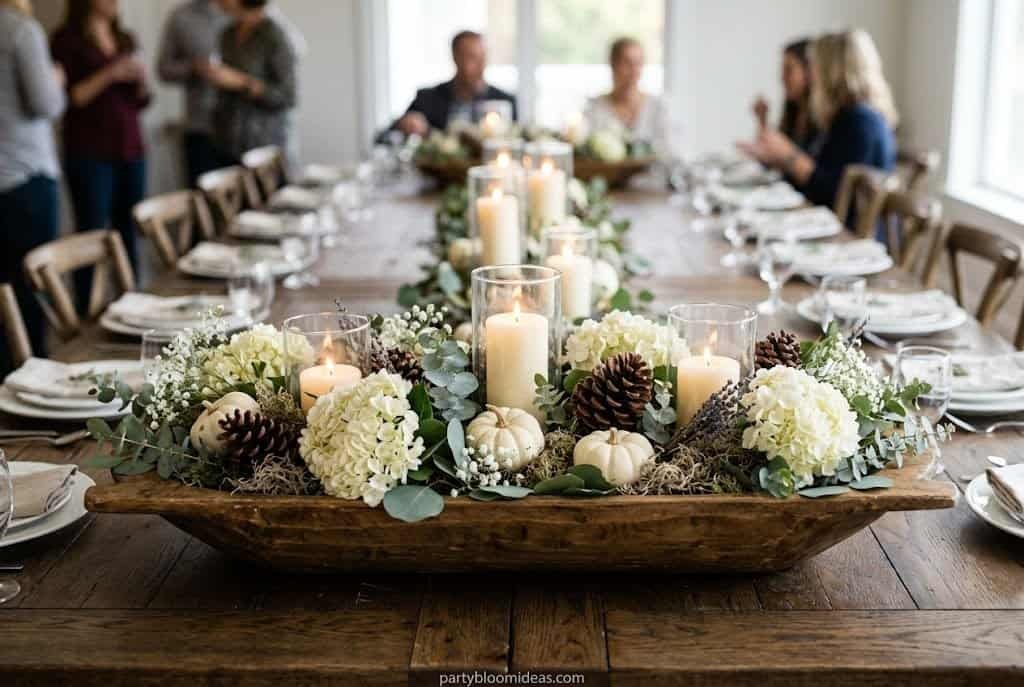
8. Dough Bowl Statement Centerpiece — Best for: Large tables, 12–24 guests | Budget: $35–60
If you’re going to invest in one piece, make it a wooden dough bowl. A large bowl filled with white pumpkins, dried eucalyptus, pinecones, and two taper candles leaning naturally at angles is the most versatile, reusable, reliably beautiful centerpiece you can own — the bowl does the design work and you fill it differently each year. At Thanksgiving: pumpkins and botanical stems. At Christmas: pinecones and evergreen. In summer: lemons, lavender, and rosemary. One investment, decades of use.
- Wooden dough bowl: $25–45
- Fillers (white pumpkins, dried botanicals, greenery): $10–15
💡 Pro Tip: Check discount home-goods stores in person before buying online. They consistently carry dough bowls in the fall seasonal section at $15–20 less than comparable online listings.
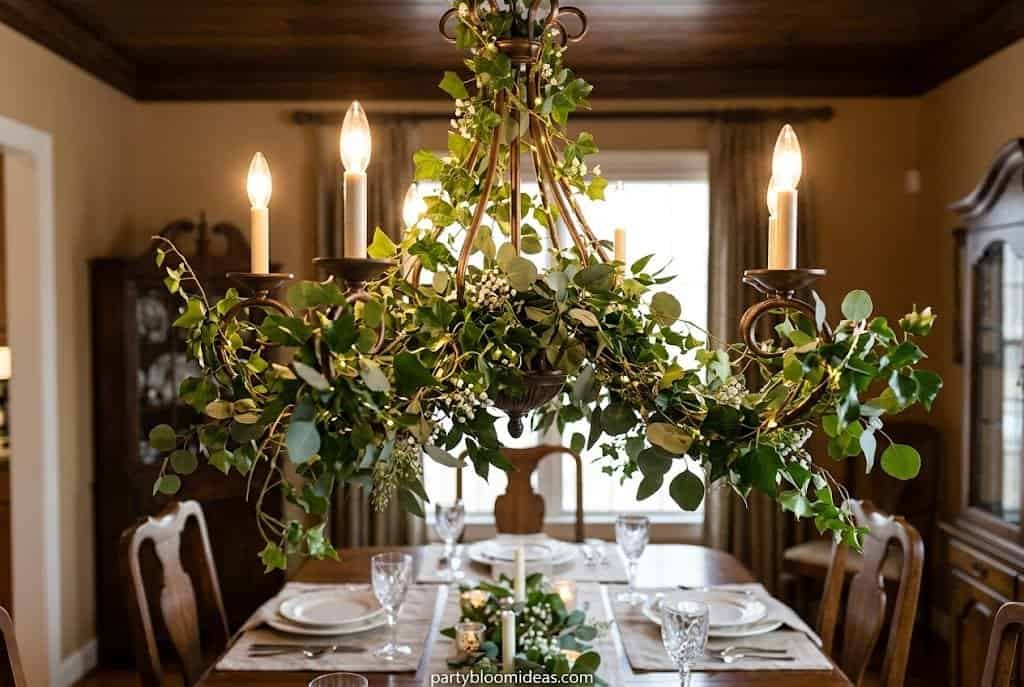
9. Leafy Chandelier Drape — Best for: Dining rooms with overhead fixtures | Budget: $8–15
This takes 20 minutes, costs $8–15, and guests cannot figure out why the entire room feels different. A faux autumn leaf garland draped unevenly over your chandelier or pendant light casts warm, filtered shadow-light across the table from above when dimmed. Light your table candles, dim the overhead, and the effect is overhead and candlelit at once.
- Faux autumn leaf garland: $8–15
- Optional: battery-powered fairy lights wound in for a soft glow
Drape unevenly — one longer loop on one side, two shorter cascades on the other. Symmetry looks staged; asymmetry looks natural. If you’re hosting in a small or space-limited dining area, this is your highest-impact, zero-table-footprint option.
10. The Minimalist 3-Color Palette — Best for: Any host | Budget: $0
This is less a decoration idea and more the framework that makes every idea above work. Choose three tones — sage green, ivory white, terracotta orange — and everything on the table must be one of them. White or terracotta pumpkins only, ivory candles, cream or sage linens. Anything outside the palette comes off the table. The result looks curated, and guests sense the intentionality without being able to name exactly why.
Most hosts over-buy — an orange runner, brown chargers, orange-and-brown napkins, turkey figurines, leaves in four colors — and the result reads “festive” in the worst sense. The minimalist palette costs nothing: you’re removing what doesn’t belong, not buying more. Start there, always.
Budget vs. Splurge: Thanksgiving Table Comparison
| Element | Budget Option | Cost | Splurge Option | Cost |
|---|---|---|---|---|
| Centerpiece | Dried botanical runner | $6–12 | Wooden dough bowl with fresh stems | $45–75 |
| Place cards | River rock + white paint pen | $7–10 | Air dry clay leaf cards (handmade) | $15–20 |
| Candles | Tapers + budget holders | $8–12 | Artisan beeswax tapers + ceramic holders | $35–60 |
| Napkin accent | Fresh herb sprig + natural twine | $5–8 | Linen napkins with embroidered rings | $30–50 |
| Table runner | Plaid blanket repurposed | $0 | Belgian linen runner | $45–80 |
| Fragrance | Citrus pomander balls | $7–10 | Luxury harvest candle set | $40–90 |
| Full table total | Budget | $33–52 | Splurge | $210–375 |
The budget table wins more often than not: river rocks and rosemary sprigs tend to get more comments than $80 floral arrangements.
What Common Thanksgiving Table Mistakes Should You Avoid?
The mistake most hosts make is trying to do too much. The rest of what to avoid:
Matching everything in orange and brown. If your runner, napkins, chargers, and centerpiece all share one seasonal palette, it reads as a themed restaurant, not someone’s home. One palette, mixed textures and materials.
Tall centerpieces. If guests can’t comfortably make eye contact across the table, the centerpiece is too tall. Keep everything under 10 inches or go completely flat — the botanical runner solves this entirely.
Fresh florals as the centerpiece. They cost $40–80, wilt within 3–4 hours in a warm dining room, and most guests don’t notice them. Use dried botanicals — lower cost, better look, lasts all season.
Setting up Thanksgiving morning. You’ll be managing cooking, family arrivals, and timing chaos. Set the table Wednesday evening — it takes 30 minutes and changes the entire energy of Thursday morning.
Buying decor that only works once. The best elements — a dough bowl, taper holders, woven placemats — are reusable indefinitely. Only invest in pieces that live outside November.
🎉 Quick Summary
✅ Best for: Family Thanksgiving, Friendsgiving, adult dinner parties, any gathering of 6–24 guests
💰 Budget range: $0 (palette edit using items you own) to $52 (full budget table) to $375 (full splurge table)
⏱ Setup time: 20 minutes (simple place settings + herbs) to 2 hours (pomander balls + full arrangement)
🌟 Top pick: Dried Botanical Runner + River Rock Place Cards + Fresh Herb Napkin Ties — $29 total, maximum impact
📌 Don’t skip: Setting the table Wednesday evening — this single habit changes the entire hosting experience
🕯️ Secret weapon: Multiple taper candles at varying heights down the center — the most atmospheric thing you can do for under $25
People Also Ask
What is the best Thanksgiving table centerpiece idea for 2026? The dried botanical runner is the strongest choice — dried wheat, pampas grass, and eucalyptus laid flat down the table with white pumpkins and dried orange slices. It costs $14–22, reuses for 2–3 seasons, and creates a warm, collected look that works for both casual family gatherings and formal dinner parties.
How do I decorate a Thanksgiving table on a $30 budget? Use the 3-color palette edit first (free). Then: dried botanical runner ($5–6), river rock place cards ($7–10), fresh rosemary napkin ties ($5–8), and budget taper candles ($5–8). Total: $22–32 for a table that looks far more intentional than its price suggests.
What Thanksgiving decor trends are popular in 2026? Dried botanicals replacing fresh florals, woven textures (jute placemats, linen runners), minimalist palettes of sage/ivory/terracotta, taper candle groupings at varying heights, natural grocery produce as centerpiece material, and personalized place cards on natural objects like river rocks, mini pumpkins, and air-dry clay leaves.
How far in advance should I set my Thanksgiving table? Set it the evening before — Wednesday night. You’ll have time to adjust details calmly, and the arrangements will have settled naturally by Thursday. Setting up Thursday morning while managing cooking is one of the most common and most avoidable Thanksgiving hosting mistakes.
What colors look best on a modern Thanksgiving table in 2026? The strongest palettes: sage green + ivory + terracotta (restrained, contemporary), warm neutral + dried wheat + cream (organic, minimal), or black + white + gold (design-forward, non-traditional). The rule: no more than three tones on the table. All-orange-and-brown reads dated.
Frequently Asked Questions
How do I make a Thanksgiving table look beautiful without spending a lot? Start with what you already own: candles, linens, any white or cream plates. Add one natural element from the grocery store — a small gourd, rosemary, pinecones. Apply a 3-color palette and remove anything outside it. The most beautiful budget tables are built by editing, not buying. Total real spend: $0–22.
What is a tablescape and how is it different from just setting the table? A tablescape is an intentional designed arrangement — every element (centerpiece, linens, candles, place settings, accessories) chosen to create a cohesive mood. Setting the table means putting dishes and silverware in place. A tablescape means thinking about why every element is there and what feeling it creates together.
What colors work best for a Thanksgiving tablescape in 2026? The trend moves decisively away from all-orange-and-brown toward sage green + ivory + terracotta (most versatile), warm neutral + cream + dried wheat (most organic), or black + white + gold (most modern). Three tones maximum, held firmly. One accent color only.
How early should I set my Thanksgiving table? Wednesday evening. Thanksgiving Day is too chaotic to set a table well — you’re managing food, timing, and family arrivals at once. A table set 12–16 hours ahead also looks calmer and more intentional; everything settles, and you’ll catch small gaps to fix. It takes 30 minutes and changes everything about Thursday morning.
What is the traditional Thanksgiving centerpiece called? A cornucopia — also called the “horn of plenty.” It’s a wicker horn-shaped basket filled with seasonal produce, gourds, and natural elements symbolizing harvest abundance. In 2026 the cornucopia is trending again, updated with restrained modern palettes (sage, ivory, terracotta) and real grocery produce replacing plastic fruit.
What do you actually put on a Thanksgiving dinner table beyond food? A centerpiece or runner, candles, cloth napkins, and optional place cards. Charger plates under dinner plates if you own them. Keep decor proportionate — if guests can’t reach across the table, scale the centerpiece down. The table must function as a dining table first, styled installation second.
How do I make a DIY table runner? Easiest: lay 3–4 dried botanical bundles flat along the center with no vase — direct on the linen. Alternatively, repurpose a plaid blanket or scarf ($0). For a sewn version: 2 yards of linen or burlap, frayed edges, 30 minutes. For a participatory option, roll kraft paper down the center and let guests write gratitudes throughout dinner.
Can I use real food as Thanksgiving decoration? Yes — one of the strongest approaches available. Apples, pears, persimmons, pomegranates, mini gourds, whole walnuts, citrus, and pinecones all look beautiful, cost $8–15 total from a grocery store, and are completely edible after dinner. Real produce is lower cost, zero-waste, and reads more organic than any faux alternative.
How do I decorate if I don’t want to store a lot of seasonal items? Focus on natural biodegradable materials: real produce, fresh herbs, pinecones, dried botanicals. Store only 4–5 small reusable anchor pieces — a dough bowl, taper holders, woven placemats — and compost or discard the natural elements afterward. A good Thanksgiving table is already mostly natural and seasonal, so you’re storing less than you think.
What are the biggest Thanksgiving decor trends for 2026? Dried botanicals replacing fresh florals; woven jute and linen textures; minimalist 2–3 color palettes; taper candles at varying heights; natural grocery produce as centerpiece material; personalized place cards on river rocks, mini pumpkins, or air-dry clay; handmade or artisan-feeling elements over coordinated kits; and sage, ivory, and terracotta as the dominant palette.
How do I make my Thanksgiving table smell amazing? Three approaches: (1) citrus pomander balls made a week ahead fill the room before you cook a thing; (2) fresh rosemary tied to each napkin releases scent from the warmth of the table and guests’ hands; (3) whole cinnamon sticks and cloves scattered among centerpiece elements. Avoid synthetic “harvest” or pumpkin-spice candles — the artificial scent rarely matches the mood you’re creating.
What should I do if my dining table is very small? Work vertically: the leafy chandelier drape transforms the room without taking table space. Keep the table to one small anchor item — a pillar candle grouping, a small cornucopia — plus individual place settings only. River rock place cards and herb napkin ties add warmth with zero footprint. A crowded small table reads as trying too hard; a spare one with two intentional elements reads as thoughtful.
Is it okay to mix and match dinnerware? Yes — intentional mismatching often reads as more sophisticated than a perfectly matched set. Layer white dinner plates with patterned salad plates, or use everyday dishes with charger plates in a complementary tone. The key is a consistent 2–3 color palette threading all the pieces together. Matching everything now reads as “bought a seasonal kit”; thoughtful mixing reads as a considered host.
How do I keep taper candles from dripping on my tablecloth? Choose quality tapers and chill them in the freezer for 2–3 hours before use — cold candles burn more slowly and drip significantly less. Use holders with built-in trays, and for extra protection on linen, place a small mirror or decorative plate beneath each holder as a catch surface.
Read more: 21 Birthday Party Games For 13-Year-Olds (2026)
25 Best Easter Party Ideas for Kids and Families (2026 Guide)
30 Halloween Party Ideas for Adults