Quick Answer: To plan a kids birthday party, set your budget first, then lock the date and venue 6–8 weeks out. Choose a theme your child actually wants, send invitations 3–4 weeks ahead, and keep the party to about two hours. Put your real energy into the food, one fun activity, and the cake — kids barely notice the rest.
If you’re wondering how to plan a kids birthday party step by step, you’re in the right place. Most planning guides focus on picture-perfect decorations, but the truth is that a successful birthday party has very little to do with matching balloons or expensive themes. The parties that fall apart usually do so because there are too many guests, the schedule runs too long, or no one planned what happens after the cake is served.
The good news? Every one of those problems is easy to avoid when you plan in the right order.
At PartyBloomIdeas, we believe a memorable kids birthday party doesn’t have to cost a fortune. You don’t need a $400 themed tablescape or dozens of Pinterest-worthy decorations. What you need is a simple, practical plan that covers the decisions that actually matter—from setting a realistic budget and choosing the right venue to planning food, activities, and a timeline that keeps kids happy from start to finish.
This guide shows you how to plan a kids birthday party step by step with 10 easy-to-follow steps, realistic budget estimates, expert tips, and common mistakes to avoid. Whether you’re organizing your child’s very first birthday party or planning a celebration for older kids, you’ll learn exactly what to prioritize, what you can skip, and how to create a fun, stress-free day that everyone will remember.
Let’s get started.
What Planning a Kids Birthday Party Actually Means (And What It Doesn’t)
Planning a kids party means making a handful of decisions early so the day itself runs on autopilot. It’s logistics — budget, guests, food, one or two activities, and a timeline — handled in advance so you’re not problem-solving with frosting on your hands.
What it IS:
- A budget set before you start buying
- A short guest list and a clear two-hour window
- Food kids will actually eat and one activity they’ll remember
- A day-of timeline so there’s no dead air
What it ISN’T:
- A color-coordinated photoshoot for your feed
- A four-hour marathon that ends in meltdowns
- Twenty kids you barely know in your living room
- A reason to go into debt
The trick is restraint. The mistake most parents make is planning the party they want to look impressive instead of the party their kid wants to attend. Done right, this is calm and joyful. Done wrong, it’s an expensive stress spiral. Pick the first one.
How Much Does a Kids Birthday Party Cost?
Let’s be honest — this is the number everyone’s quietly anxious about. According to a 2024 What to Expect / Everyday Health Group survey of 404 parents, the average children’s birthday party costs around $314, climbing with age: roughly $279 for ages 1–2 and $344 for ages 6–10. A broader 2023 LendingTree survey put the average closer to $422, and found that one in three parents went into debt to cover it.
You do not have to be one of those parents. The same data shows about 14% of families spend under $100 — and their kids have a great time anyway. As a rough working range: a home/DIY party runs about $150–$300 for ten kids, while a venue package (bounce house, trampoline park, play café) typically lands at $400–$800+.
💡 Pro Tip: Build a 10–15% buffer into whatever number you land on. Something always comes up — an extra pizza, a forgotten pack of candles, a last-minute RSVP. Padding the budget on day one beats panic-spending on day fourteen.
Step 1: Set Your Budget First
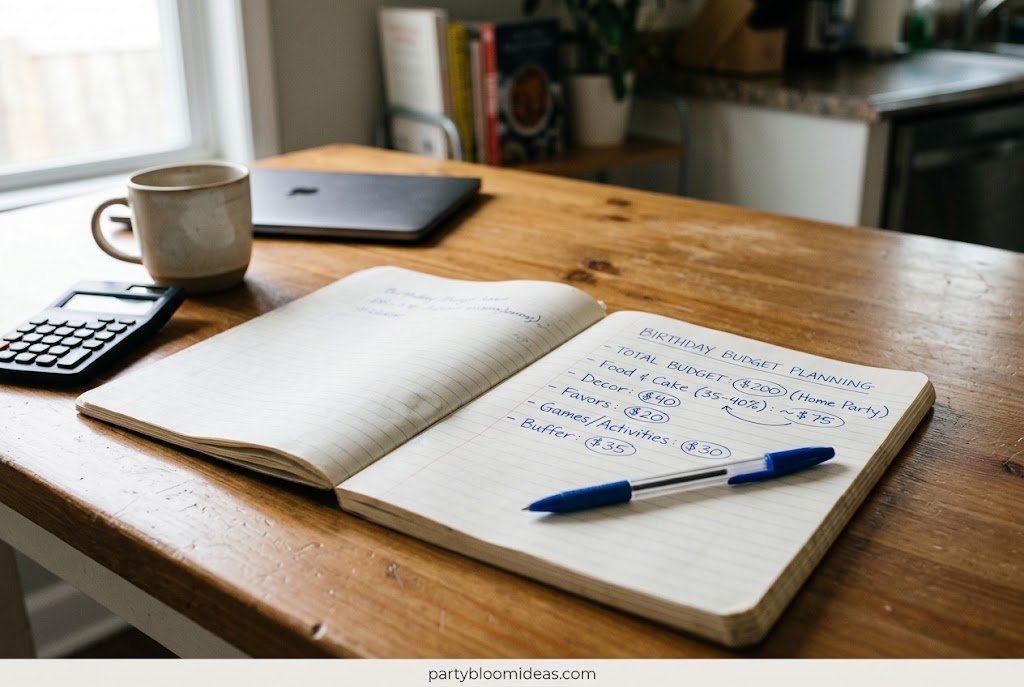
Before a single Pinterest tab opens, decide what you’re comfortable spending. This one decision controls every other choice — venue, guest count, food, favors — so it has to come first.
Write down a total, then split it roughly: food and cake usually eat 35–40% of the budget, so plan around that. A simple home party for ten kids might break down as $60–$80 food, $30 cake, $40 decor, $20 favors, $30 buffer. That’s a real, lovely party for under $200.
Here’s what actually works: decide your number, then work backward. If the budget is $200, you’re a home-party family this year, and that’s a great party. If it’s $500, a venue becomes an option. Picking the venue first and hoping the budget stretches is how people end up in debt.
The biggest budget killer isn’t any single item — it’s scope creep. Custom invitations, personalized favors, a themed dessert table, and a venue. Pick the one or two things that matter most to your kid and let the rest be simple.
Step 2: Choose the Date and Venue
Lock the date 6–8 weeks out. Weekend early afternoons — think 11 a.m. or 2 p.m. — work best for young kids because they fall between meals and before the evening crankiness sets in. Check the school calendar and steer clear of long holiday weekends when half the guest list will be traveling.
Then choose where. Your three realistic options:
- Home or backyard — cheapest, full control, but you handle setup, food, and cleanup
- A park or community space — low-cost, lots of room for kids to run, weather-dependent
- A venue (bounce house, trampoline park, play café, museum) — most expensive, but they handle the heavy lifting
| Factor | Home / DIY Party | Venue Party |
|---|---|---|
| Typical cost (10 kids) | $150–$300 | $400–$800+ |
| Setup effort | High — you do it all | Low — they handle it |
| Cleanup | You | Usually included |
| Control over food & theme | Full | Limited |
| Weather risk | Yes, if outdoors | None |
| Best for | Budgets, small lists, younger kids | Big lists, no-stress hosts, winter |
Here’s my honest take: venue parties cost two to three times more for arguably less control, and the trade-off is your sanity. That’s not nothing — if the thought of hosting twelve kids at home makes you want to lie down, a venue is money well spent. Just go in knowing what you’re paying for.
Step 3: Pick a Theme Your Child Actually Wants
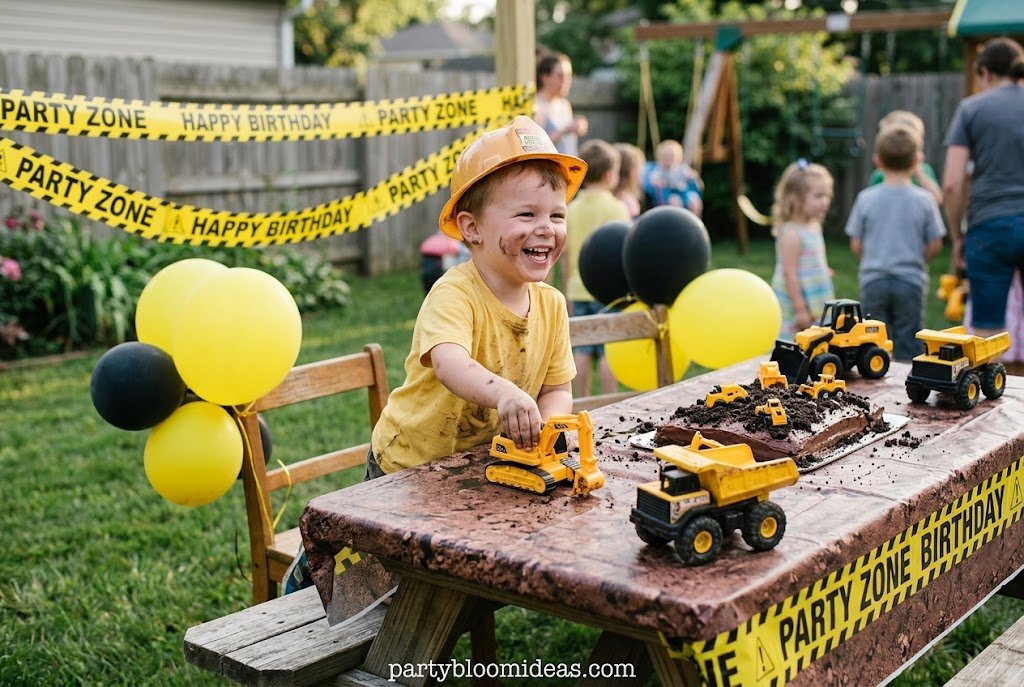
Ask your kid. Not Pinterest, not the aesthetic that photographs well — your kid. A four-year-old who wants a “digger party” will be electric about brown-and-yellow construction trucks, and completely indifferent to the muted boho rainbow you fell in love with online.
Popular themes that are easy to source and easy to love:
- Dinosaurs — green/orange, plastic dinos everywhere ($30–$60 decor)
- Outer space / galaxy — navy, silver, stars ($30–$60)
- Under the sea / mermaid — teal, coral, shells ($40–$70)
- Superheroes — primary colors, capes ($40–$80)
- Princess / fairy tale — pink, gold, tulle ($40–$80)
- Construction / trucks — yellow, black, caution tape ($30–$50)
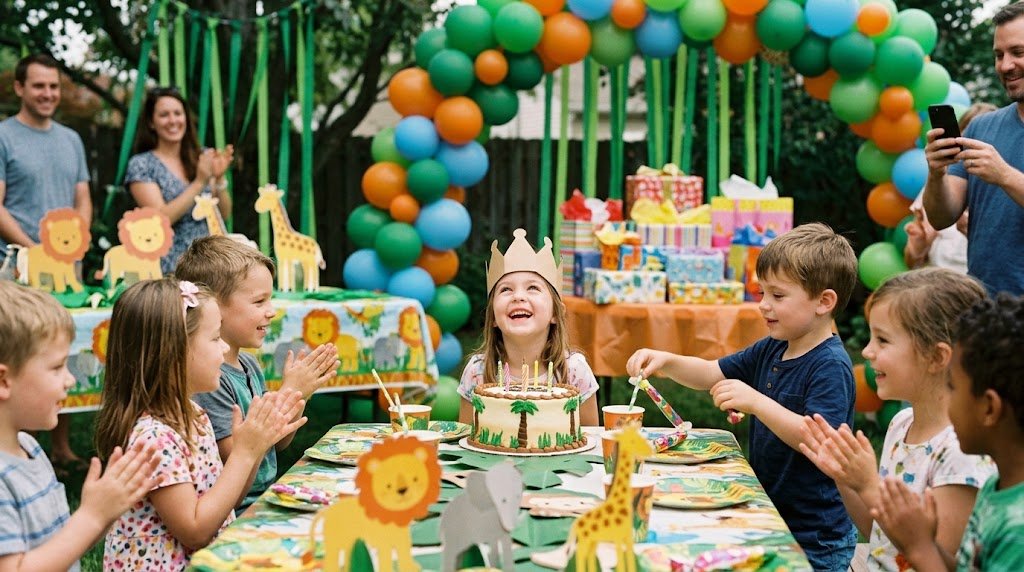
- Safari / animals — earth tones, animal print ($40–$70)
- Rainbow / art party — every color, very forgiving ($30–$60)
- Sports (soccer, basketball) — team colors ($30–$60)
- Unicorn — pastels, gold horn ($40–$80)
💡 Pro Tip: Steer your kid toward a broad theme (dinosaurs, space, rainbow) rather than one specific licensed character. Licensed party goods cost noticeably more, and a generic “outer space” party lets you mix cheap supplies from anywhere. You get the same delight for half the price.
A theme is really just a color story and a few props. Three coordinated colors, a banner, a balloon cluster, and themed plates — done. You do not need every item in the party-store aisle wearing the same cartoon face.
Step 4: Send Invitations — Timing and Method
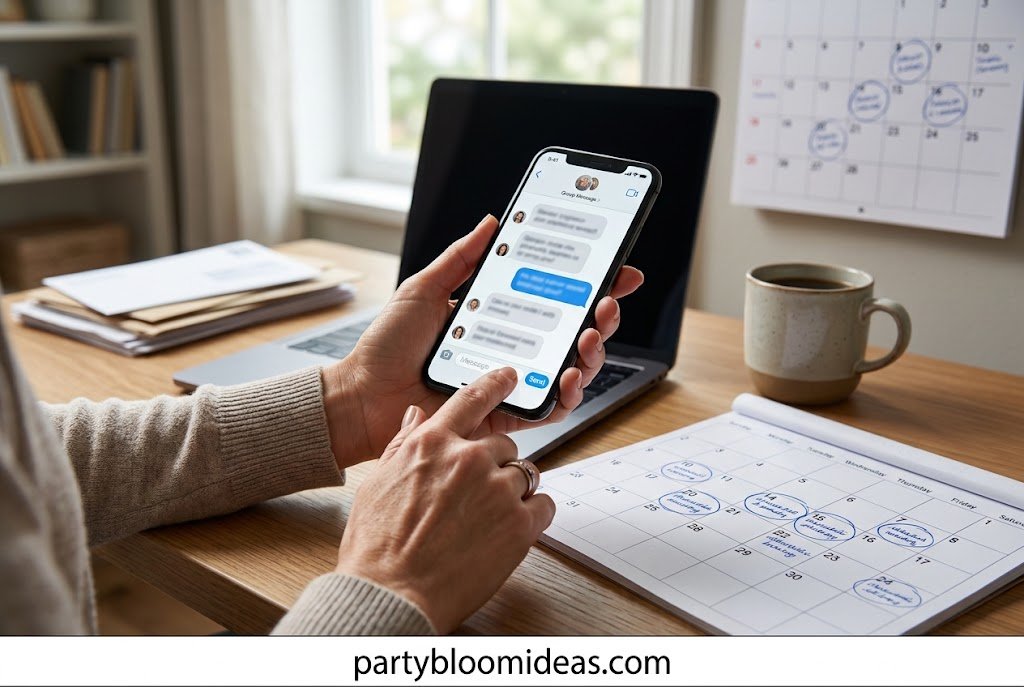
Send invitations 3–4 weeks before the party. Sooner and parents forget; later and their weekend’s already booked. For the guest list, the old “age plus one” guideline is a genuinely useful starting point — a five-year-old gets about six kids — but trust your read on your own child. Some kids thrive in a big crowd; some want four close friends and that’s it.
On method, here’s where I’ll save you money: text and digital invites (Evite, Paperless Post, even a group message with the details) work completely fine. Custom printed invitations are adorable, but they’re $20–$40 you don’t need to spend, and half of them end up at the bottom of a backpack. The information that matters — date, time, place, theme, RSVP, drop-off vs. stay — fits in a text just as well as on cardstock.
💡 Pro Tip: Spell out drop-off vs. stay-and-play directly on the invite. Parents genuinely want to know, and it shapes everything from how much food you buy to how many adult chairs you set out. Ambiguity here is the #1 source of day-of awkwardness.
One honest reality check from the survey data: getting RSVPs is the second-most-stressful part of party planning (cleanup is first). Don’t take silence as a no. A friendly “Just confirming headcount for Saturday!” text a week out is normal and expected.
How Many Kids Should You Invite?
Fewer than you think. The 2024 What to Expect survey found most kids parties had only about nine guests, and a third of parents invited fewer than five — yet just 14% invited more than sixteen children. So no, you do not have to invite the whole class. A small, well-fed, well-entertained group of kids who actually know each other beats a chaotic crowd every single time. Quality of party scales down with guest count, not up.
Step 5: Plan the Decor — What to DIY vs Buy
Decor is where budgets quietly explode and where you should hold the line hardest, because — trust me on this — the kids do not care. Pick a few high-impact pieces and skip the rest.
What’s worth DIYing (and what to buy):
- Balloon garland — a DIY strip kit runs $15–$25; a professional install is $100+. Make it yourself. (Dollar Tree balloons + an Amazon decorating strip)
- Happy Birthday banner — buy one reusable felt or wood banner ($10–$15) and reuse it for years instead of buying disposable every time
- Backdrop — a plain fabric tablecloth taped to the wall plus the balloon garland is a backdrop ($5–$10)
- Table runner / centerpiece — Dollar Tree or Target Bullseye’s Playground, $1–$5 each
- Cupcake toppers — free printables on cardstock, cut and tape to toothpicks (~$2)
- Welcome sign — a chalkboard or printed sign at the door, $5–$10
Done right, a $40 decor setup looks intentional: three colors, one focal balloon cluster, a clean table. Done wrong, you’ve spent $150 and the room looks like the party aisle exploded. More stuff is not more festive — a clear color story is.
💡 Pro Tip: Concentrate every bit of decor in one photogenic spot — usually the cake table. That’s where photos happen and where the candles get blown out. The rest of the room can be nearly bare and nobody will notice. One great corner beats a fully decorated room you spent three times as long on.
Step 6: Plan the Food and Cake
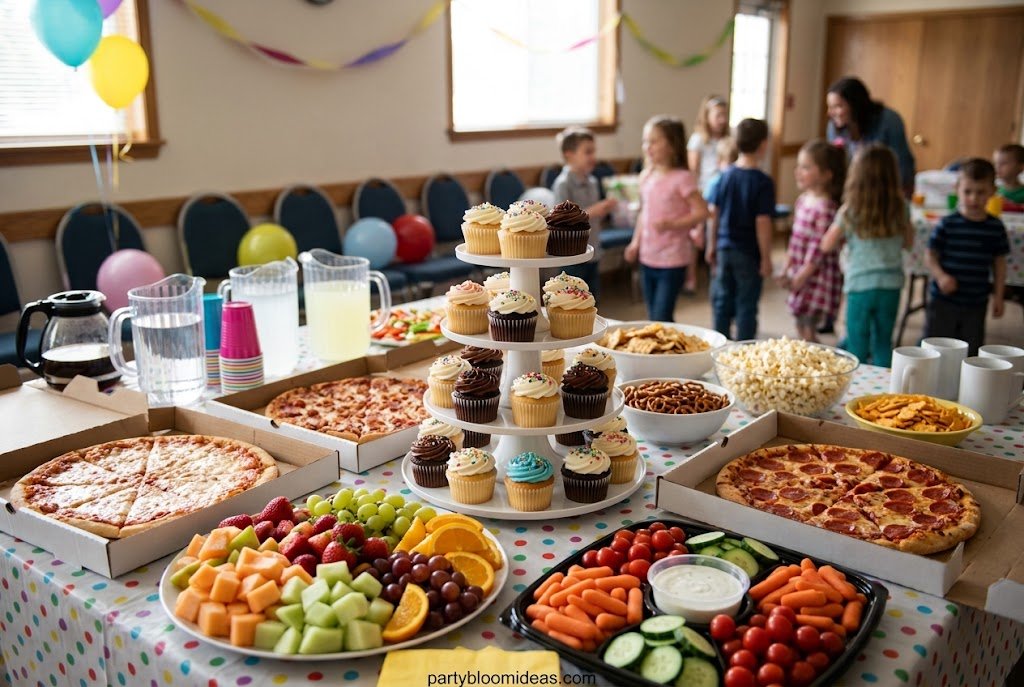
Keep it simple and keep it kid-friendly. Little kids are notoriously suspicious of food, so this is not the moment for an ambitious menu. Pizza, fruit, a veggie tray, a couple of simple snacks, and a sweet treat covers it. Plan roughly $15–$25 per guest if you’re going all-out, far less for a snacks-and-cake party.
For the cake, you’ve got three good options at very different price points: a store-bought sheet cake ($20–$30), cupcakes (easy to serve, no cutting, $15–$25), or a custom bakery cake ($50–$100+). Cupcakes are the unsung hero here — no slicing, no plates required, and kids love having “their own.”
A few things people forget:
- Feed the adults too if parents are staying — even just coffee, water, and a snack
- Ask about allergies on the invite; one nut-free or gluten-free option goes a long way
- Time the cake for about 45 minutes to an hour in, never right at the start
- Have more drinks than you think — sugar and running make kids thirsty
💡 Pro Tip: Serve cake on a schedule, not “whenever.” Cake is the natural pivot point of the whole party — it signals the wind-down and gives the day a shape. A party with no cake moment just… drifts. Anchor your timeline around it.
Step 7: Plan the Games and Activities
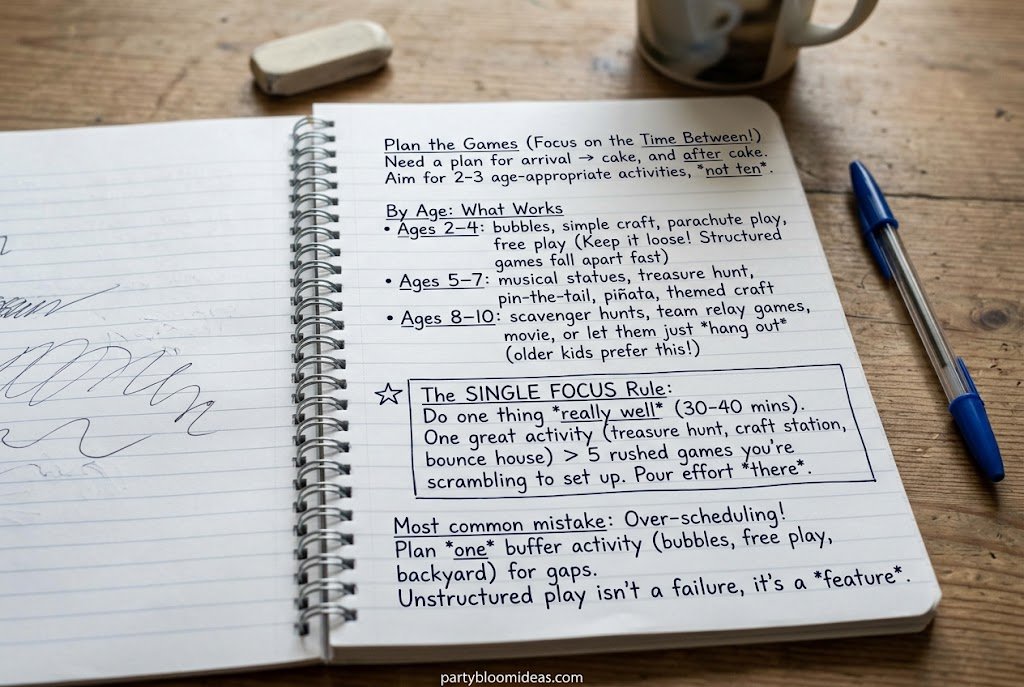
This is where parties live or die, and where you should spend your planning energy. You need a plan for the time between arrival and cake, and a plan for the time after. Aim for two or three age-appropriate activities — not ten.
By age, what works:
- Ages 2–4: bubbles, a simple craft, parachute play, free play with toys. Keep it loose; structured games fall apart fast
- Ages 5–7: musical statues, a treasure hunt, pin-the-tail, a piñata, a themed craft
- Ages 8–10: scavenger hunts, team relay games, a movie, or letting them just hang out (older kids genuinely prefer this)
Here’s the single most useful rule in this whole guide — call it the single-focus rule: do one thing really well. One great activity that runs 30–40 minutes (a treasure hunt, a craft station, a bounce house) beats five rushed games you’re scrambling to set up between melted-down kids. Pour your effort there.
The mistake most hosts make is over-scheduling — packing every minute and then panicking when the treasure hunt ends early and there are still 25 minutes before cake. Plan one buffer activity (bubbles, free play, a backyard) for exactly that gap. Unstructured play time isn’t a failure of planning; it’s a feature kids love.
Step 8: Prepare a Day-Of Timeline
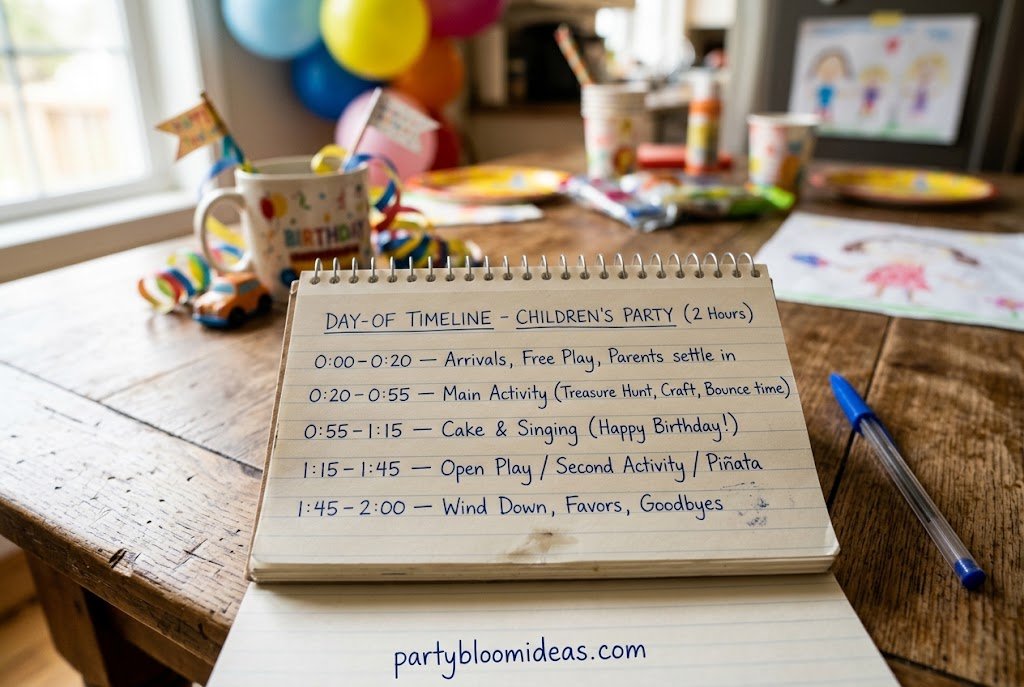
A two-hour party with a written timeline runs itself. Without one, you’re improvising in front of a dozen sugar-loaded children — not a position you want to be in. Sketch it out the week before. Here’s a reliable two-hour skeleton:
- 0:00–0:20 — Arrivals, free play, parents settle in
- 0:20–0:55 — Main activity (treasure hunt, craft, bounce time)
- 0:55–1:15 — Cake and singing
- 1:15–1:45 — Open play / second activity / piñata
- 1:45–2:00 — Wind down, favors, goodbyes
And here’s the bigger picture — the full planning runway from two months out:
| When | What to Do |
|---|---|
| 6–8 weeks before | Set budget, pick date, book venue if using one |
| 4–5 weeks before | Decide theme with your child, draft the guest list |
| 3–4 weeks before | Send invitations, order cake, plan the menu |
| 2 weeks before | Buy or DIY decor, plan 2–3 games, order favors |
| 1 week before | Confirm RSVPs, shop for food, prep DIY items |
| 2–3 days before | Prep food that keeps, charge the camera, pack the venue bag |
| Day before | Decorate, set up tables, chill the drinks |
| Day of | Final setup, greet guests, run the timeline, breathe |
How Long Should a Kids Birthday Party Last?
Two hours. That’s the answer, especially for kids under eight. It feels short when you’re planning — surely the party should last all afternoon? — but two hours is the sweet spot where kids stay happy, energy peaks at the right time, and everyone leaves on a high note instead of dissolving into overtired tears. Three-hour parties almost always end in meltdowns. End while it’s still fun and you’ll be the party every kid wants to come back to.
Step 9: Set Up and Delegate
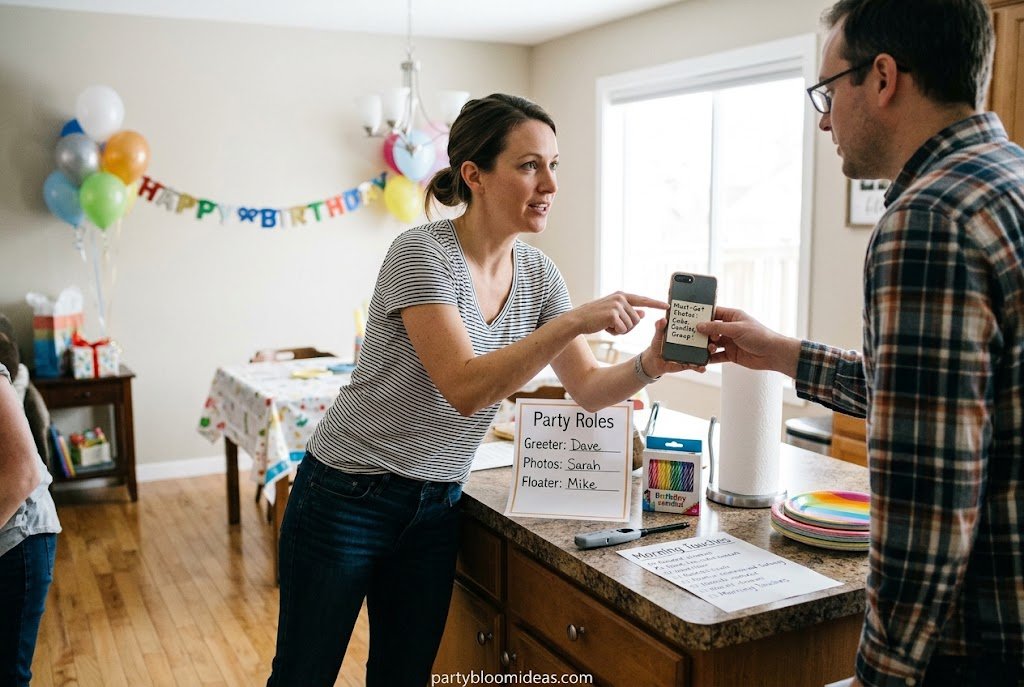
You cannot run a kids party solo and enjoy it. Recruit help and assign actual roles — vague “let me know if you need anything” help never materializes when you’re elbow-deep in candles.
Decorate the night before if you’re at home, so the morning is just food, ice, and final touches instead of a frantic balloon scramble. Then split the jobs:
- One adult on photos — designate a person, or you’ll have zero pictures of yourself
- One adult greeting at the door — checking kids in, noting who’s staying vs. dropping off
- One adult floating — refilling drinks, watching the quiet kid, managing the bathroom line
💡 Pro Tip: Assign a photographer by name before the party starts. The hosting parent is always too busy to take pictures, which is exactly why so many parents have beautiful party photos with themselves nowhere in them. Hand someone your phone and a short list of must-get shots: the cake, the candles, the group.
If it’s a home party, prep a “command station” out of kids’ reach — extra candles, lighter, paper towels, trash bags, a backup snack. When something goes wrong (and something will), you reach into one spot instead of tearing through cabinets.
Step 10: Day-Of Execution
You’ve done the work. Now the job changes from planner to host, and the best thing you can do is let go of perfection. The garland will sag a little. A kid will cry over the wrong color cup. One activity will run long and one will run short. None of it matters.
Run your timeline loosely — it’s a guide, not a script. Read the room: if the kids are blissfully lost in free play, don’t drag them to the next “scheduled” game. If energy’s crashing, pull cake forward. Flexibility is the plan.
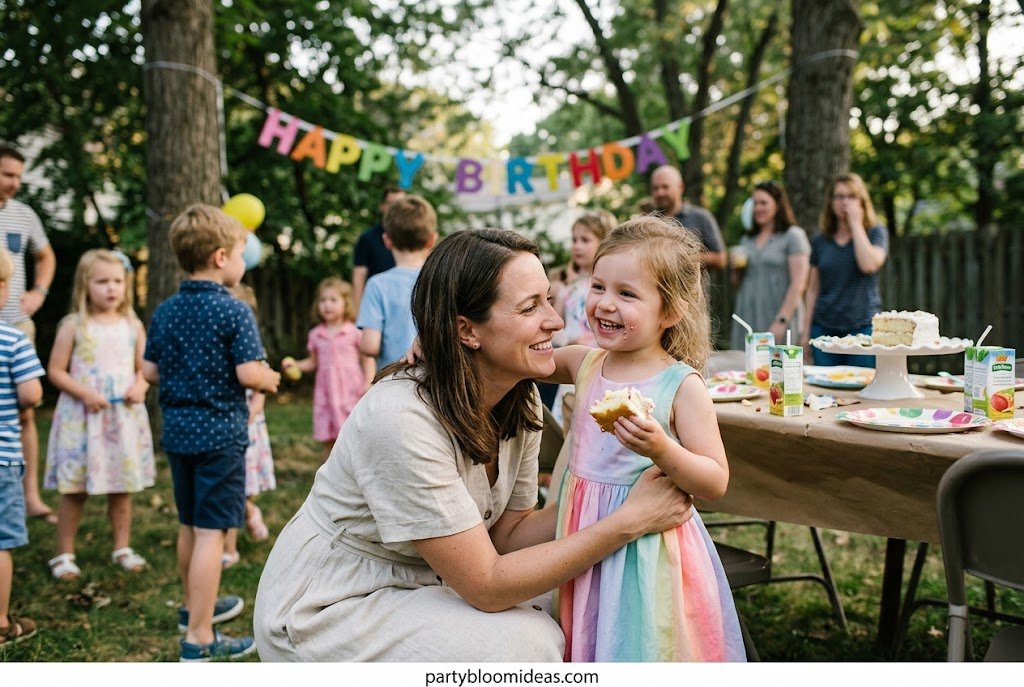
And here’s the honest truth after stripping away all the Pinterest noise: your kid will remember roughly three things — that their friends came, that there was cake, and one specific fun moment. They will not remember whether the tablescape matched. So when you feel the urge to fuss over a crooked banner mid-party, resist it. Go be present. That’s the whole point, and it’s the one thing no amount of planning can fake.
Common Mistakes Parents Make
After cutting through all the advice out there, the same avoidable mistakes show up again and again:
- Inviting too many kids. More guests means more chaos, more cost, more stress — not more fun. Keep it small.
- Letting the party run too long. Past two hours, young kids melt down. End on a high.
- Over-DIYing the decor. A $40 focal corner beats a $150 fully-decorated room nobody photographs.
- No buffer time. When the one game ends early, you need a backup activity ready or you’ve got 25 minutes of restless kids.
- Forgetting the adults. If parents stay, give them coffee and a chair.
- Building the party for the photos. The biggest mistake of all — planning for your feed instead of your kid. They want friends, food, and one fun thing. Give them that and everything else is gravy.
🎉 Quick Summary
✅ Best for: Kids ages 2–10, home or venue, any budget 💰 Budget range: $150–$300 (home/DIY) up to $400–$800+ (venue) ⏱ Setup time: Plan over 6–8 weeks; 2–3 hours of day-of setup 🌟 Top pick: A two-hour home party with one great activity and cupcakes 📌 Don’t skip: The single-focus rule — do one activity really well instead of five things badly
People Also Ask
How far in advance should you plan a kids birthday party? Start about 6–8 weeks out by setting the budget and locking the date and venue. Send invitations 3–4 weeks before the party. This runway gives parents time to RSVP and gives you breathing room without dragging the planning out so long you lose momentum.
Is it cheaper to have a party at home or a venue? Home is significantly cheaper — typically $150–$300 for ten kids versus $400–$800+ for a venue package. The trade-off is effort: at home you handle setup, food, and cleanup, while a venue handles all of it. Choose home for budget and control, a venue for low stress.
How many guests is too many for a kids party? The “age plus one” guideline (a five-year-old invites about six kids) keeps things manageable. Surveys show most kids parties have only around nine guests. Beyond roughly twelve to fifteen young kids, the chaos and cost climb fast while the fun doesn’t. Smaller almost always runs smoother.
What’s the most important part of a kids birthday party? The food kids will eat, one fun activity, and the cake moment — in that order. Decor and theme matter far less than parents think. Kids remember their friends being there and one specific fun thing, not whether the tablecloth matched the napkins.
Do you have to invite the whole class? No. Roughly a third of parents invite fewer than five kids, and only about 14% invite more than sixteen. A small group of close friends makes for a calmer, cheaper, more enjoyable party. If your child’s school has an “invite everyone or no one” policy, a low-key gathering outside school is a fine alternative.
Frequently Asked Questions
How much does the average kids birthday party cost? A 2024 What to Expect / Everyday Health Group survey of 404 parents put the average at about $314, rising with age. A 2023 LendingTree survey found a higher average near $422. But cost varies enormously — about 14% of families spend under $100 and still throw a great party. A home/DIY party realistically runs $150–$300 for ten kids.
How long should a kids birthday party last? About two hours, especially for kids under eight. It’s the sweet spot where energy peaks at the right moment and kids leave happy instead of overtired. Three-hour parties tend to end in meltdowns. Build a two-hour timeline anchored around the cake, and end while everyone’s still having fun.
When should I send out birthday party invitations? Send them 3–4 weeks before the party. Earlier and parents forget; later and weekends are already booked. Include date, time, location, theme, RSVP details, and whether it’s drop-off or stay-and-play. Text and digital invites work perfectly — custom printed invitations are sweet but rarely worth the $20–$40.
What food should I serve at a kids birthday party? Keep it simple and familiar: pizza, fruit, a veggie tray, a couple of easy snacks, and a sweet treat. Plan $15–$25 per guest for a full spread, far less for snacks-and-cake. Ask about allergies on the invite, offer one allergy-friendly option, and feed the adults too if parents are staying.
Cake or cupcakes for a kids party? Cupcakes are often the smarter choice — no slicing, no plates, and kids love having their own. A store-bought sheet cake runs $20–$30, cupcakes $15–$25, and a custom bakery cake $50–$100+. Whatever you choose, serve it about 45 minutes to an hour in, never right at the start, so it can anchor the timeline.
How many activities do I need to plan? Two or three, not ten — and follow the single-focus rule: do one really well. One great 30–40 minute activity (a treasure hunt, craft station, or bounce house) beats five rushed games. Always keep one easy buffer activity, like bubbles or free play, ready for the inevitable gap before cake.
What time of day is best for a kids party? Weekend early afternoons, around 11 a.m. or 2 p.m., work best for young children — they fall between meals and before evening crankiness. Avoid nap windows and long holiday weekends. A late-morning party means you can serve light snacks instead of a full meal, which saves money and effort.
Do I really need party favors? No, favors are optional and easy to overspend on. If you want them, keep it small and cheap — a single themed item, a treat bag, or a craft the kids made and take home (which doubles as your activity). Skip the elaborate goodie bags; they’re more for the parents than the kids.
How do I plan a kids party with short notice? Strip it to essentials and move fast. Lock a date and a simple plan, send a group text invite today, order a store cake, grab pizza and a few snacks, plan one activity, and buy a balloon cluster and a reusable banner. A great party doesn’t need eight weeks — it needs friends, food, cake, and one fun thing.
How do I keep birthday party costs down? Set the budget first and work backward. Host at home, keep the guest list small, use digital invites, DIY a balloon garland and backdrop, serve cupcakes, and concentrate decor in one photo corner. The biggest savings come from resisting scope creep — pick one or two things to splurge on and keep the rest simple.
Should I hire entertainment like a magician or character? Only if it fits the budget and the age. Entertainers run $150–$400+ and can be wonderful for ages 4–7. But they’re a “nice to have,” not a “need” — a well-run treasure hunt or bounce house often delights kids just as much for a fraction of the cost. Spend here only after the essentials are covered.
What’s the single biggest kids party planning mistake? Planning the party for the photos instead of for the child. It drives over-inviting, overspending, and over-decorating — and it adds stress without adding fun. Kids remember their friends, the cake, and one fun moment. Build around those three things and let the rest be simple.
How do I handle RSVPs and no-shows? A friendly confirmation text a week out is normal and expected — don’t read silence as a no. Plan food and favors for your confirmed count plus a small buffer of one or two. No-shows happen; they’re not a reflection on you or your child. Build a little slack into the headcount and let it go.
Do parents stay at a kids party or drop off? It depends on the age and your preference, so state it clearly on the invite. For ages 5 and under, parents usually stay. For older kids, drop-off is common. If parents are staying, plan a few extra chairs and some coffee, water, and snacks for the adults — it makes the whole event more relaxed.
Conclusion
Planning a kids birthday party doesn’t have to be complicated or expensive. The secret isn’t buying more decorations or creating the perfect Pinterest-worthy setup—it’s making a few smart decisions in the right order. Set your budget first, keep the guest list manageable, choose a theme your child genuinely loves, and focus on great food, one memorable activity, and a well-timed cake moment.
Remember, the best birthday parties aren’t the ones with the biggest budgets—they’re the ones where kids laugh, play, and leave with happy memories. Whether you’re hosting a simple backyard celebration for under $200 or booking a fun venue, your child will remember the excitement of celebrating with friends far more than the decorations or party favors.
At the end of the day, a successful kids birthday party is one where everyone—including you—gets to enjoy the celebration. Keep it simple, stay flexible, and don’t stress over the little things. A few balloons, a delicious cake, and a room full of smiling kids are all you really need to create a birthday they’ll remember for years to come.
Read More : 20 kids Birthday Party Themes
20 Backyard BBQ Party Ideas
25 Best Easter Party Ideas for Kids and Families (2026 Guide)