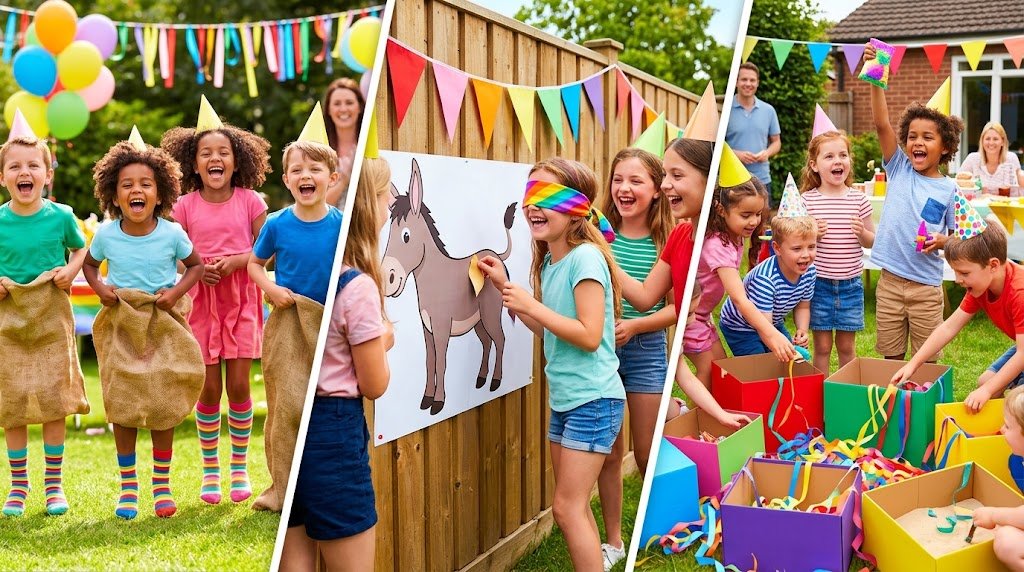
Quick Answer: The best kids birthday party games for all ages are simple, movement-based, and easy to scale up or down — freeze dance, a piñata, scavenger hunts, relay races, and capture the flag all work from toddlers to tweens. Match the energy to the age group, keep elimination games to a minimum, and always plan one calm activity right before cake.
There’s a moment at almost every kids’ party where the structure falls away and the actual fun begins. The grown-ups stop hovering, the music gets louder, and a yard full of kids goes from polite to feral in the best possible way — shrieking, sprinting, collapsing into giggles. That moment almost never comes from the elaborate themed craft station. It comes from the games.
Here’s what actually works at a kids’ party: not the most Instagram-worthy setup, but the activity that gets every kid moving and laughing at once. That’s the difference between a party where children drift and get bored and one where, by the time the cake comes out, nobody wants it to end.
This is a guide to the birthday party games that genuinely land, organized by age so you’re not handing a duck-duck-goose circle to a group of eleven-year-olds (more on that disaster later). You’ll get real games, real supply costs, honest takes on what’s overrated, and a plan for the two things that wreck more parties than anything else: the sore loser and the post-game meltdown.
Across the party plans and ideas we break down at PartyBloomIdeas, the pattern is consistent — the games that work aren’t the complicated ones. They’re the ones matched to the right age and the right energy. Let’s get into it.
What Makes a Kids’ Birthday Game Actually Work?
A good party game isn’t a performance you put on for the kids. It’s a structure that gives them permission to go wild without it tipping into chaos.
What it IS:
- Simple enough to explain in 30 seconds
- Active — bodies moving, not sitting and waiting
- Scalable to your guest count and your space
- Forgiving for the youngest or shyest kid in the group
What it isn’t:
- A complicated multi-step game with rules kids forget halfway through
- An elimination format that benches the birthday kid five minutes in
- Something that needs a $60 kit to pull off
The trick is matching the game to the age. A game that delights a four-year-old will bore an eleven-year-old to tears, and the reverse is just as true.
And you don’t need to spend big to get it right. According to a 2024 What to Expect survey of 404 parents, the average kids’ birthday party now runs about $314 excluding gifts — yet the games, the part kids remember most, are usually the cheapest line on the whole list. Trust me on this: the best ones are free or close to it.
How Many Games Should You Plan for a Kids’ Birthday Party?
Plan more than you think you’ll need, then hold them loosely. My rule is roughly 1.5 times the games you expect to play — so for a two-hour party, line up five or six options and assume you’ll actually run three or four.
Why the buffer? Because timing with kids is wildly unpredictable. One game you budgeted ten minutes for becomes the whole afternoon. Another flops in ninety seconds. Having backups means you’re never standing in front of fifteen restless kids with nothing queued up.
Here’s the part most planning guides get wrong: don’t schedule every minute. Leave a solid twenty to thirty minutes unstructured. 9 times out of 10, kids invent their own game that’s better than anything you planned. And it helps to know the crowd is usually smaller than people assume — that same 2024 survey found most parties had only about nine guests, with a third of parents inviting fewer than five kids. Smaller groups mean you can run simpler games and skip the crowd-control logistics entirely.
💡 Pro Tip: Build one calm activity into your lineup right after your highest-energy game, and again right before cake. A room full of overstimulated kids who go straight from capture the flag to candles is a meltdown waiting to happen. A two-minute reset saves the afternoon.
What Are the Best Birthday Party Games for 3 to 5 Year Olds?
Little kids have two settings: full throttle and tears. The goal at this age is constant motion, zero real “losing,” and rules a toddler can actually follow.
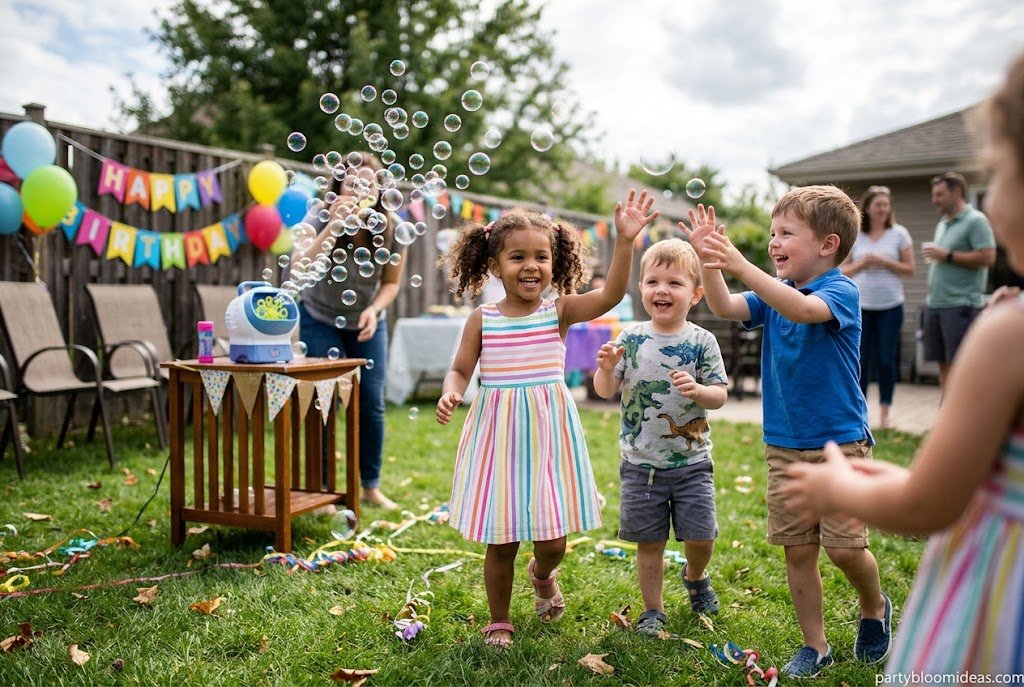
Bubble Chase
Set a bubble machine going (or just blow them by hand) and let kids chase and pop. That’s the whole game. It sounds too simple — it isn’t. For this age, popping bubbles is pure joy and it’ll hold them for a surprisingly long stretch.
- Supplies: Bubble machine $15–$25, or bubble solution $5
- Energy: High | Setup: 5 minutes
- Best for: Ages 2–5, outdoor or a non-carpeted indoor space
Freeze Dance
Play music, kids dance, stop the music, everyone freezes. Whoever’s still moving is “out” — except at this age, skip the “out” and just call out who froze the funniest. Freeze dance is the one game I’d defend at every single age group. It works for toddlers and it works for twelve-year-olds.
- Supplies: A speaker and a playlist — free
- Energy: High | Setup: 2 minutes
- Best for: All ages, any space
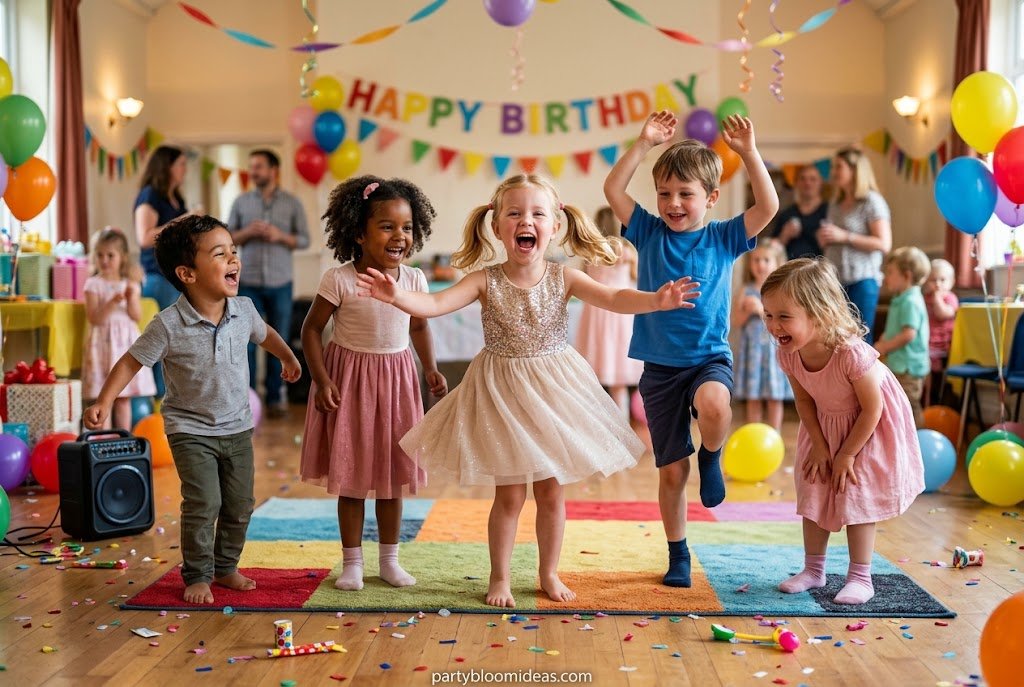
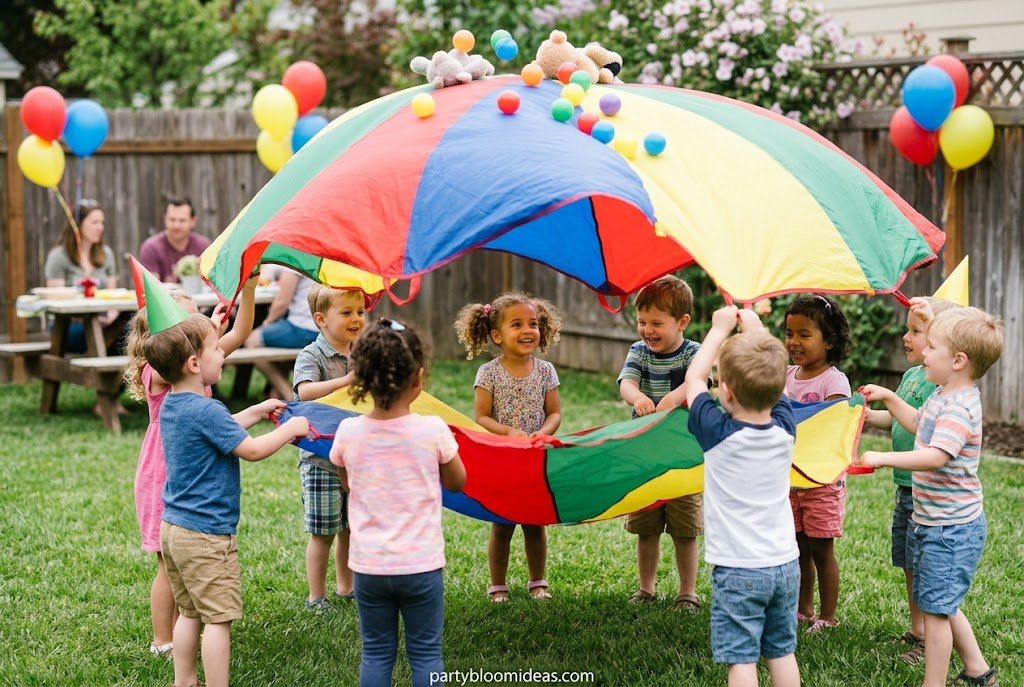
Parachute Play
A play parachute with a few lightweight balls on top turns into ten different games — make waves, bounce the balls off, run underneath. Kids this age are mesmerized by it.
- Supplies: Play parachute $20–$30
- Energy: Medium-high | Setup: 5 minutes
- Best for: Ages 3–6, groups of 6–12
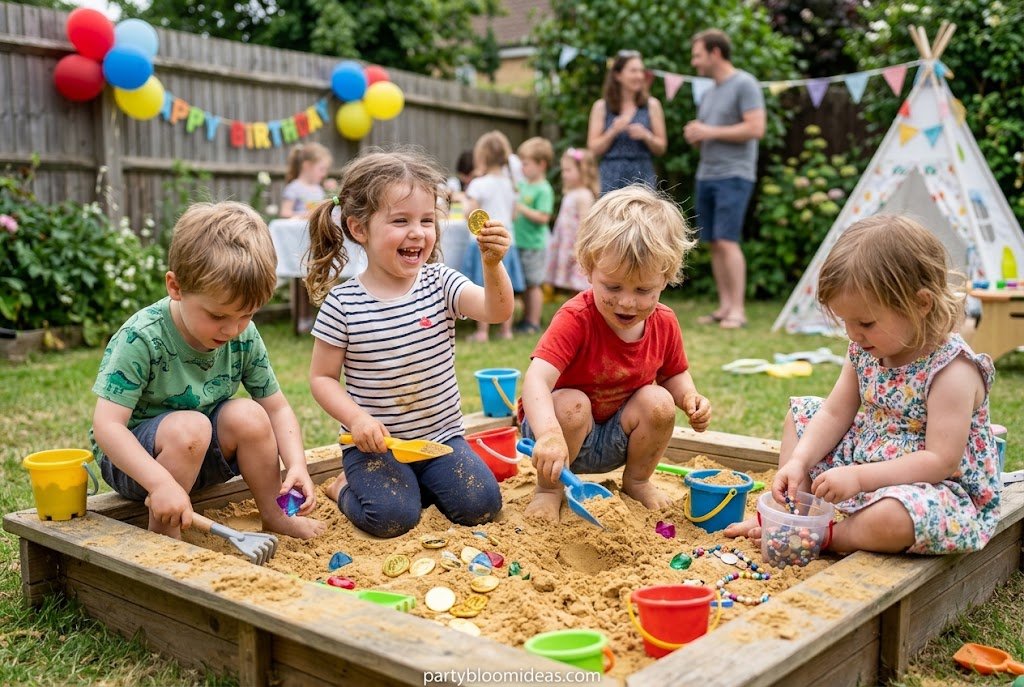
Treasure Dig
Fill a bin with rice, dried beans, or sand and bury small toys for kids to find. It’s a calmer option — useful when you need to bring the energy down a notch.
- Supplies: Bin + filler + small toys $15–$25
- Energy: Low | Setup: 10 minutes
- Best for: Ages 2–5, indoor or shaded outdoor
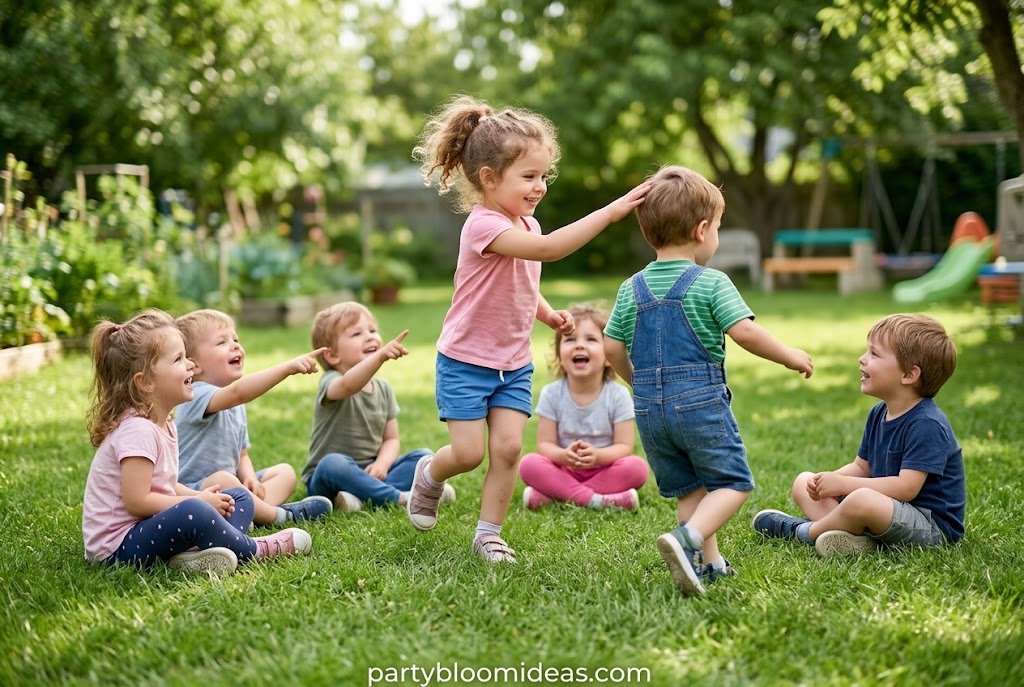
Duck, Duck, Goose
The classic for a reason. Free, needs nothing, and little kids never tire of it. Just know it has a shelf life — by age seven or eight, it reads as babyish and you’ll get eye-rolls.
- Supplies: Nothing — free
- Energy: Medium | Setup: Instant
- Best for: Ages 3–6, groups of 6–15
What Are the Best Birthday Games for 6 to 8 Year Olds?
This is the sweet spot. Kids this age can handle real rules, light competition, and teamwork — but you still have to manage feelings carefully. Let’s be honest: this is the age where a poorly chosen game produces a crying kid in under five minutes.
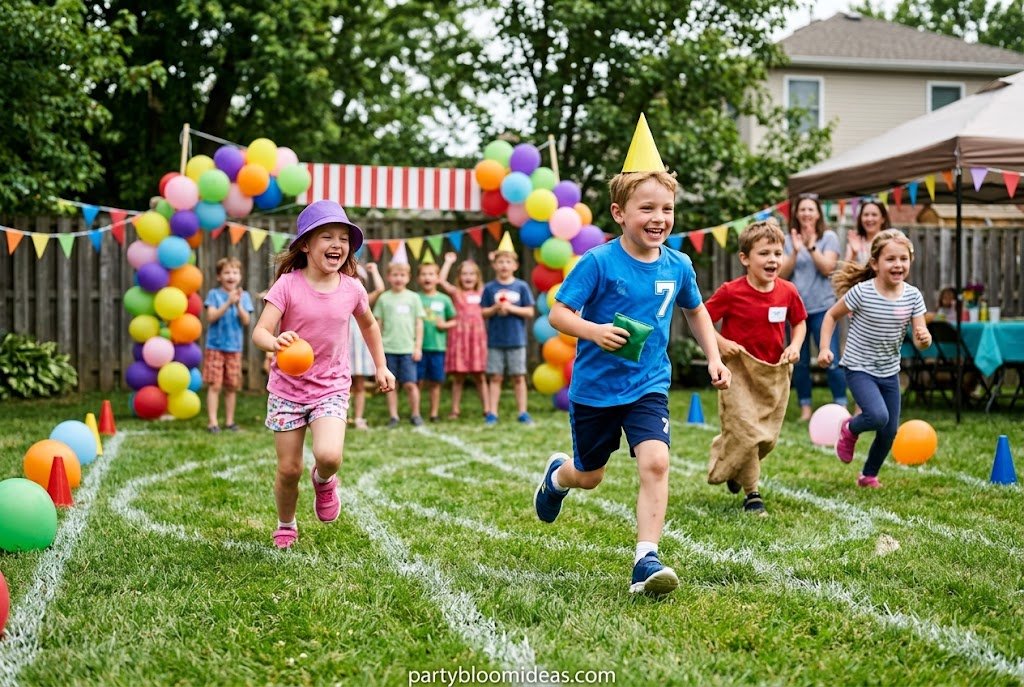
Relay Races
Sack races, egg-and-spoon, three-legged — pick a format, split into teams, and let them go. Team-based competition takes the sting out of losing because no single kid is the loser.
- Supplies: Sacks / spoons / eggs $10–$30
- Energy: High | Setup: 10 minutes
- Best for: Ages 6–10, outdoor, groups of 8+
Scavenger Hunt
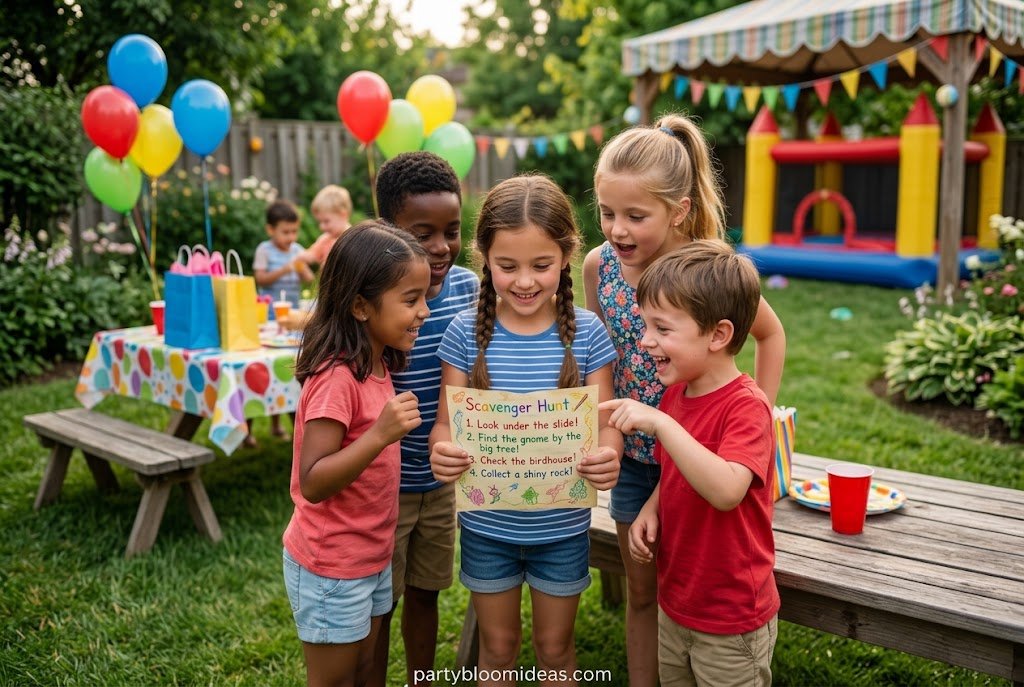
Hide items or clues around the yard or house and send kids hunting in pairs. Easy to theme, easy to scale, and it buys you a glorious fifteen quiet minutes.
- Supplies: Free, or $5–$10 for printable clue cards
- Energy: Medium | Setup: 15–20 minutes
- Best for: Ages 6–12, indoor or outdoor
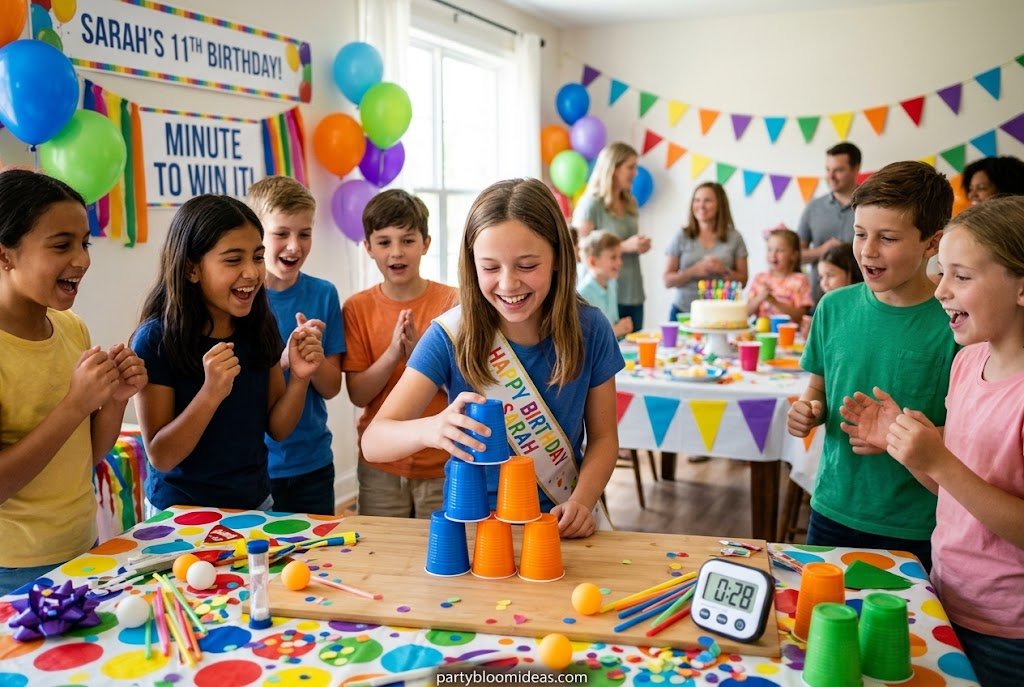
Minute to Win It
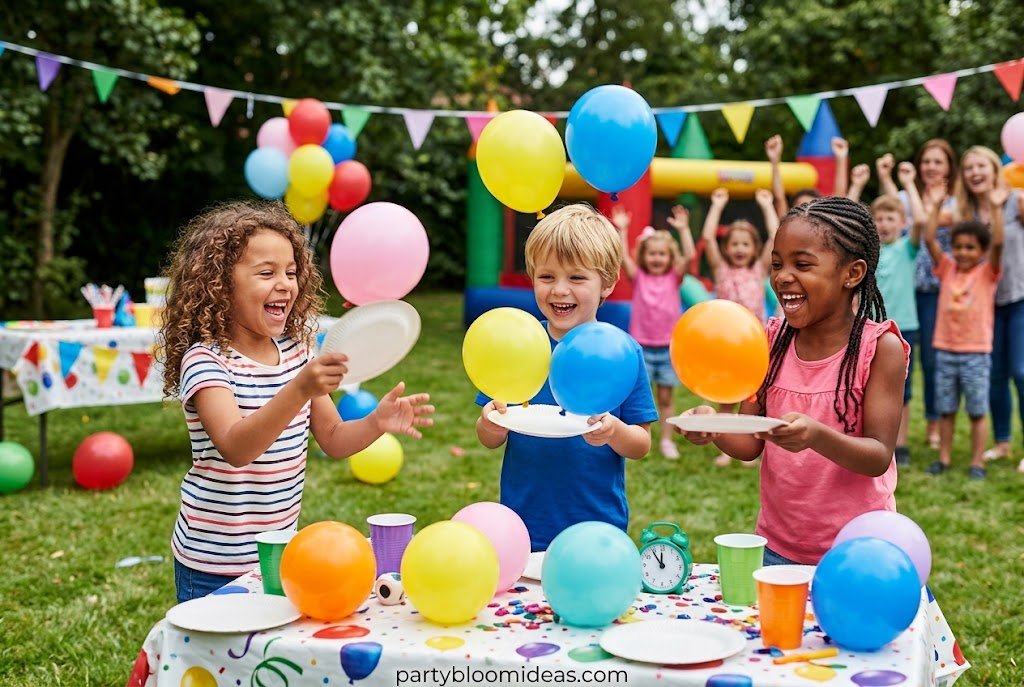
Quick challenges with household items — stack cups, move cookies from forehead to mouth, bounce a ping-pong ball into a cup. Run them one kid at a time or as team relays.
- Supplies: Cups, ping-pong balls, cookies $10–$20
- Energy: Medium-high | Setup: 15 minutes
- Best for: Ages 6–12, indoor
Limbo
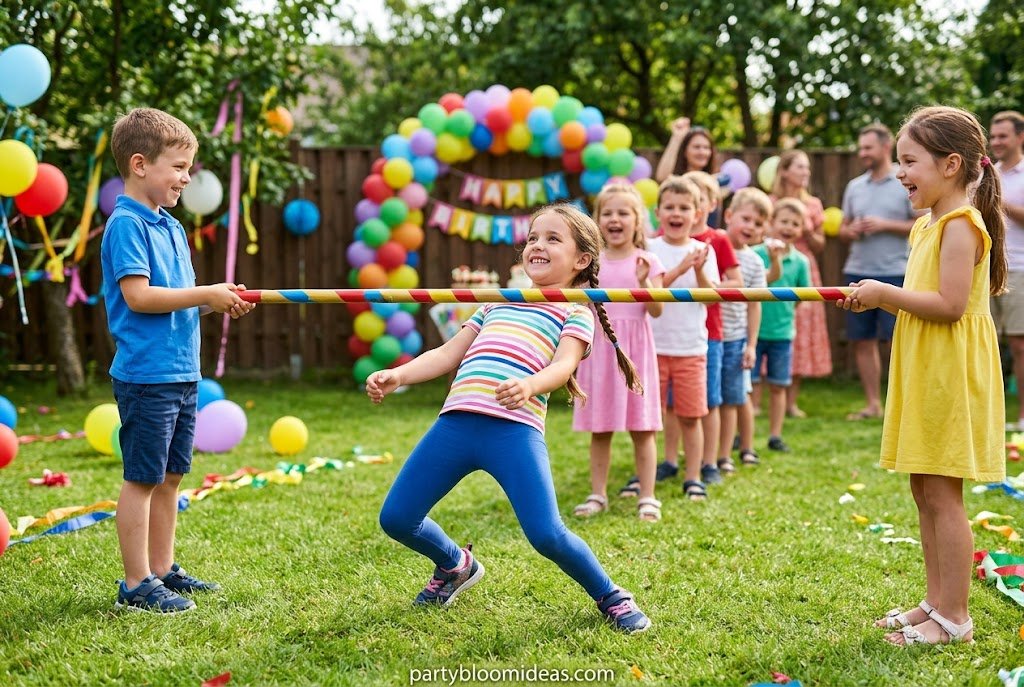
A broom handle or a pool noodle and a playlist. Lower the bar each round. Simple, hilarious, and it doesn’t need a “loser.”
- Supplies: Pool noodle / broom $0–$15
- Energy: Medium | Setup: 5 minutes
- Best for: Ages 5–12, any space
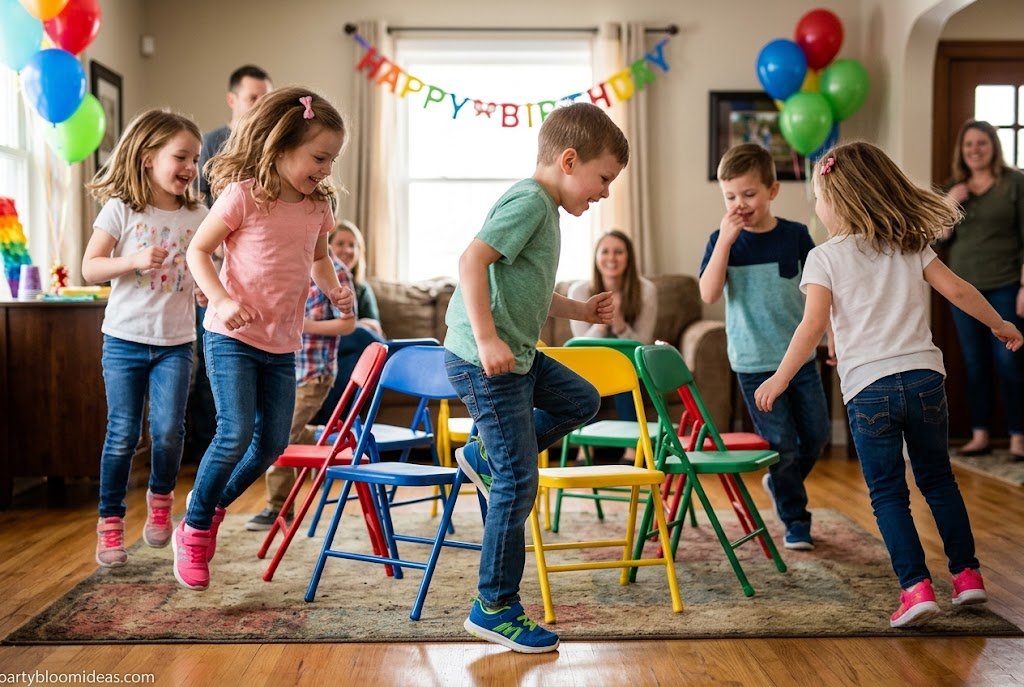
Musical Chairs (with a caveat)
I’m including the most famous party game of all so I can tell you the truth about it: musical chairs always ends in tears for somebody. The elimination is brutal at this age — one kid gets bumped early and spends the rest of the party sulking. If you run it, run the cooperative version where you remove chairs but not kids, and everyone squeezes onto what’s left. Same laughs, no casualties. Done right means nobody sits out crying.
- Supplies: Chairs + music — free
- Energy: High | Setup: 5 minutes
- Best for: Ages 5–10 (cooperative version only)
💡 Pro Tip: Skip “winner takes all.” Either give every kid the same small prize at the end, or make the activity its own reward. Ranked prizes turn a fun game into a status contest — and the kid who comes in last at their friend’s party remembers it. Done right means everyone leaves feeling like they won something.
What Are the Best Birthday Party Games for 9 to 12 Year Olds?
Tweens are the hardest group to plan for, and here’s why: most “party games” feel babyish to them, but they’re not too old for games — they’re too old for your games. The mistake most hosts make is defaulting to the same lineup that worked when their kid was six. Give this age strategy, teams, and a little bit of an edge.
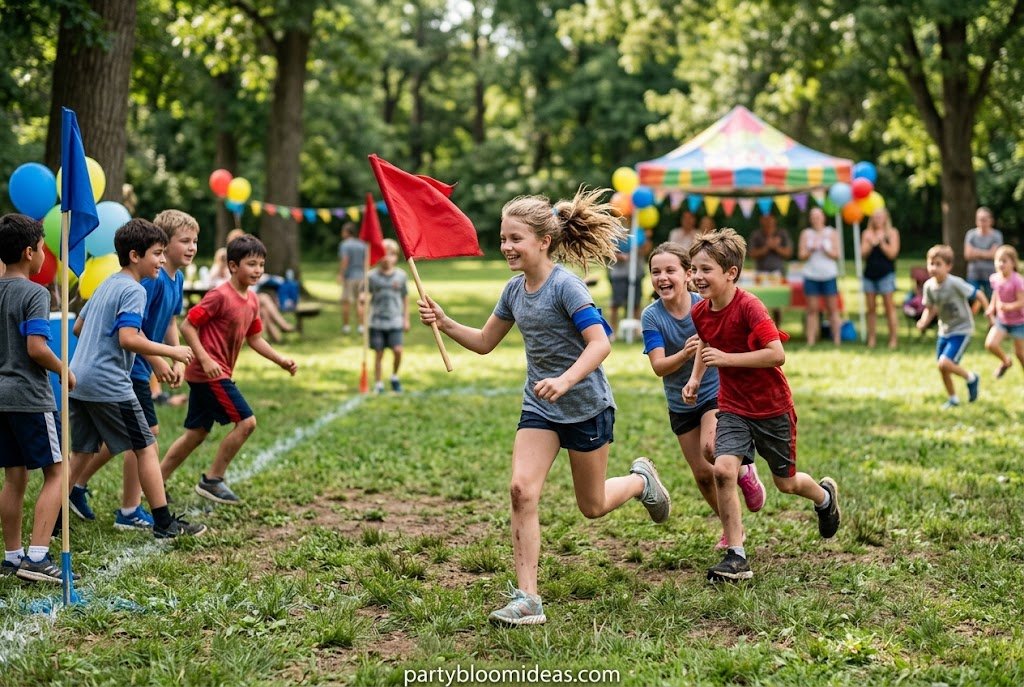
Capture the Flag
Two teams, two flags, one big space. It’s the gold standard for this age — strategic, physical, endlessly replayable. If you have a yard or a park, this one game alone can fill an hour.
- Supplies: Two bandanas or flags — free
- Energy: Very high | Setup: 5 minutes
- Best for: Ages 8–14, large outdoor space, groups of 8+
DIY Escape Challenge
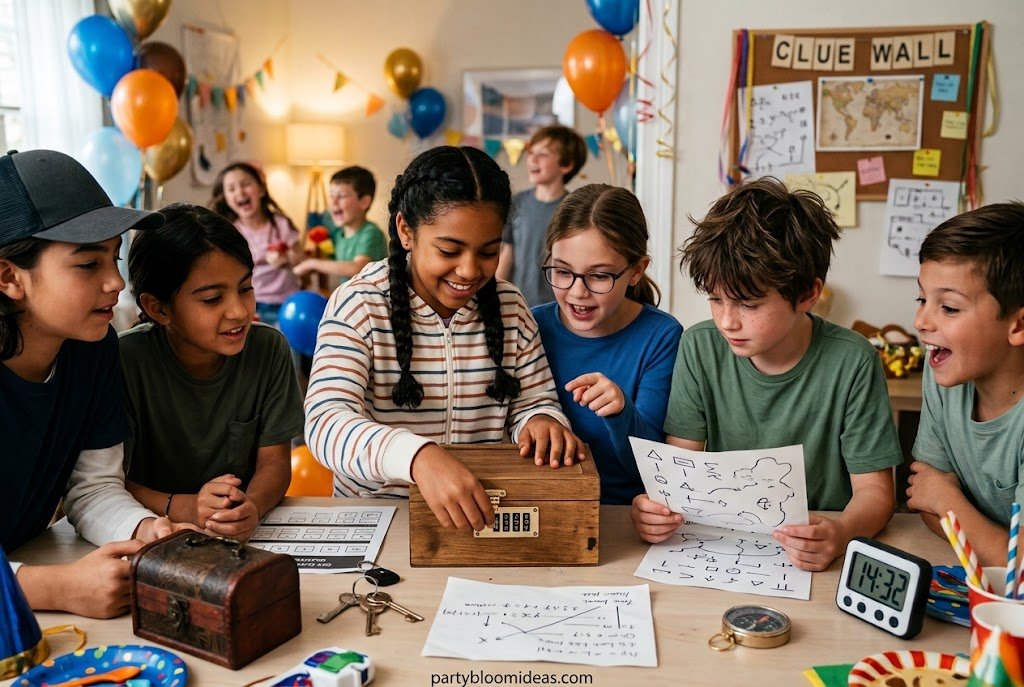
Set up a series of puzzles and a “locked box” (a cheap lockbox, or a tablet with a passcode) they have to solve together. Tweens love the challenge and the teamwork — and it scratches the escape-room itch without the venue price tag.
- Supplies: $0–$40 depending on props and locks
- Energy: Medium | Setup: 30–45 minutes
- Best for: Ages 9–13, indoor, groups of 4–10
Flashlight Tag / Glow Hide-and-Seek
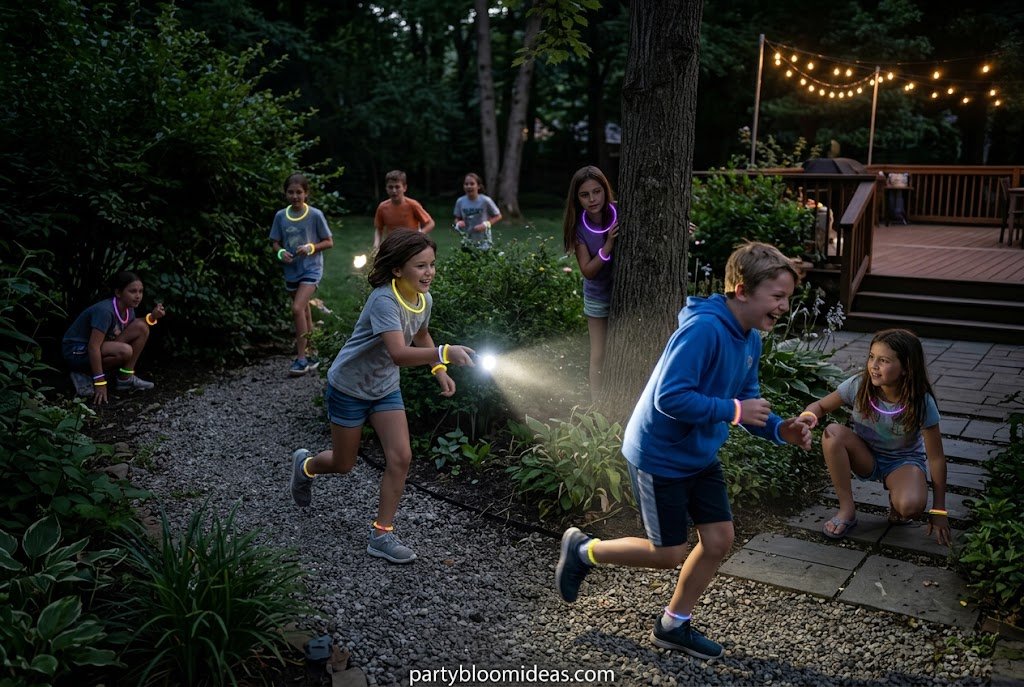
Wait for dusk, hand out glow sticks, and play tag or hide-and-seek in the dark. The glow factor makes an old game feel brand new at this age.
- Supplies: Glow sticks + flashlights $10–$15
- Energy: High | Setup: 5 minutes
- Best for: Ages 8–13, evening parties, outdoor
Minute to Win It (Tween Edition)
Same format as the younger version, harder challenges, and team scoring. Add a leaderboard on a whiteboard and you’ve got their full attention.
- Supplies: $15–$25 in household props
- Energy: Medium-high | Setup: 20 minutes
- Best for: Ages 9–13, indoor
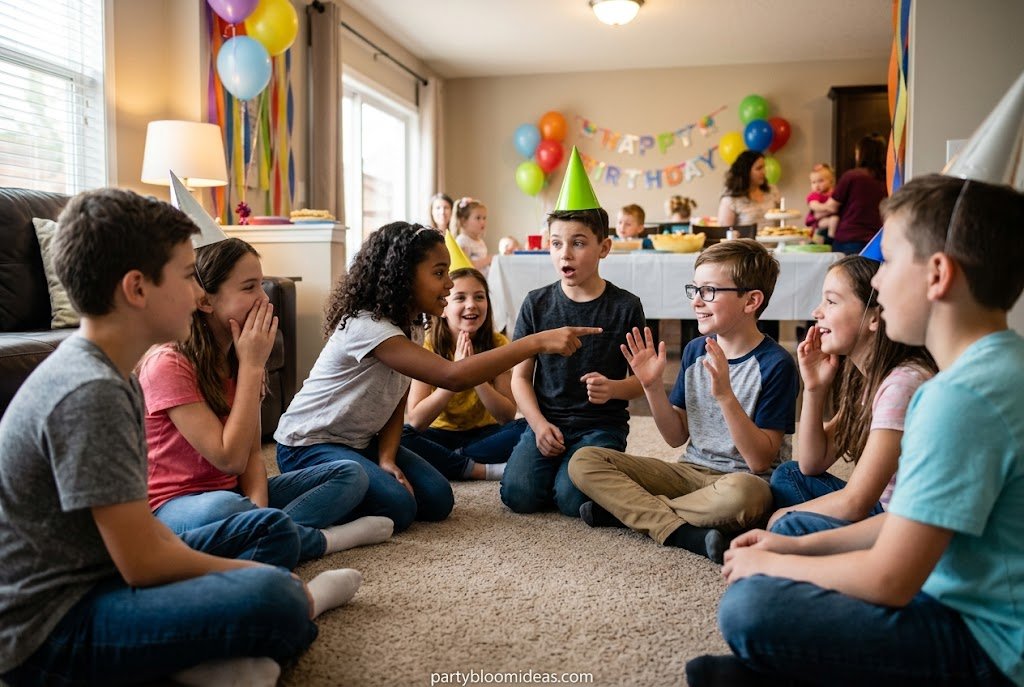
Social Deduction Games (Werewolf / Mafia)
A sit-down group game where players secretly get roles and have to bluff and deduce. Great as a wind-down, and tweens get genuinely into the drama of it.
- Supplies: Paper slips, or a $10 card set
- Energy: Low | Setup: 5 minutes
- Best for: Ages 10–14, groups of 6–15
What Birthday Games Work for a Mixed-Age Group?
This is the real-world scenario most parents face: siblings, cousins, and a guest list spanning ages four to twelve. The trick is choosing games that scale — where a little kid and a big kid can both play and both have fun.
Piñata
The great equalizer. Every age, every kid, universal joy. Just manage two things: blindfold-and-bat safety (keep the other kids well back), and the candy scramble afterward. Hand out equal goody bags so the fastest kid doesn’t sweep the floor and leave the toddlers empty-handed.
- Supplies: Piñata + filler $15–$30
- Energy: High | Setup: 10 minutes
- Best for: All ages, outdoor or high-ceilinged indoor
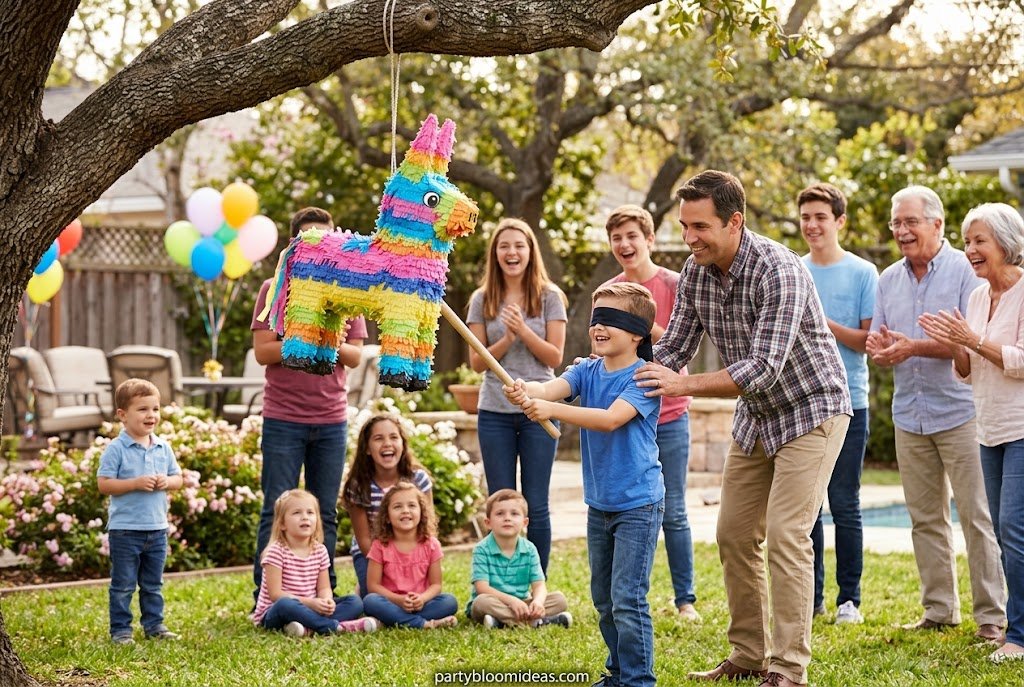
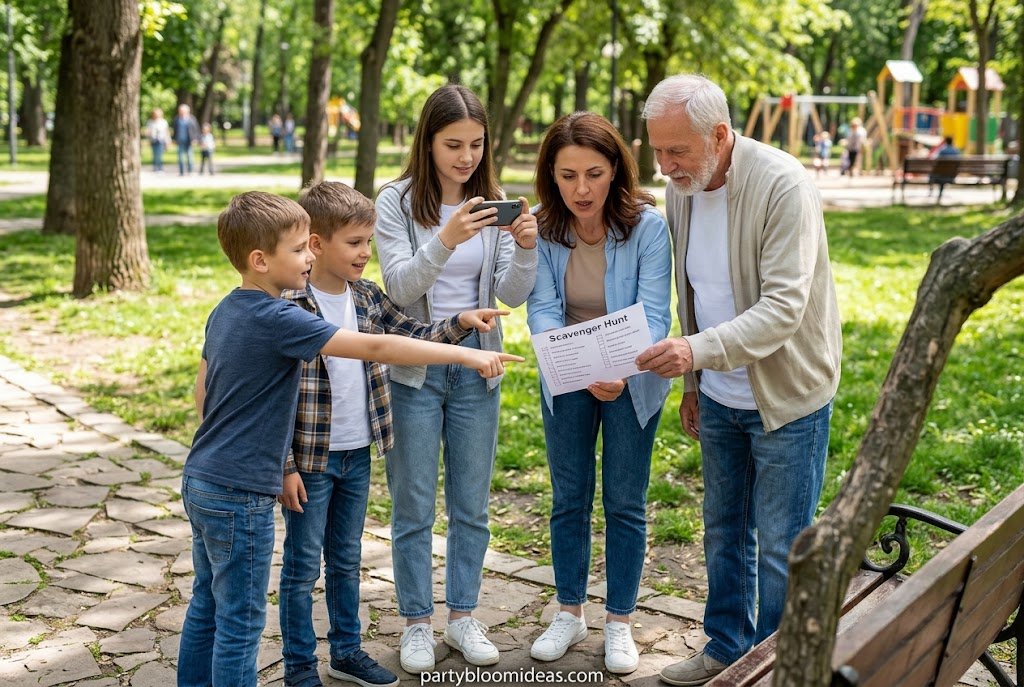
Photo Scavenger Hunt
Give mixed-age teams a list of photos to capture (“something red,” “everyone making a silly face”). Pairing a big kid with a little one makes it work and keeps the youngest included.
- Supplies: Free (a phone per team), or printed lists
- Energy: Medium | Setup: 10 minutes
- Best for: Ages 5–12, in teams
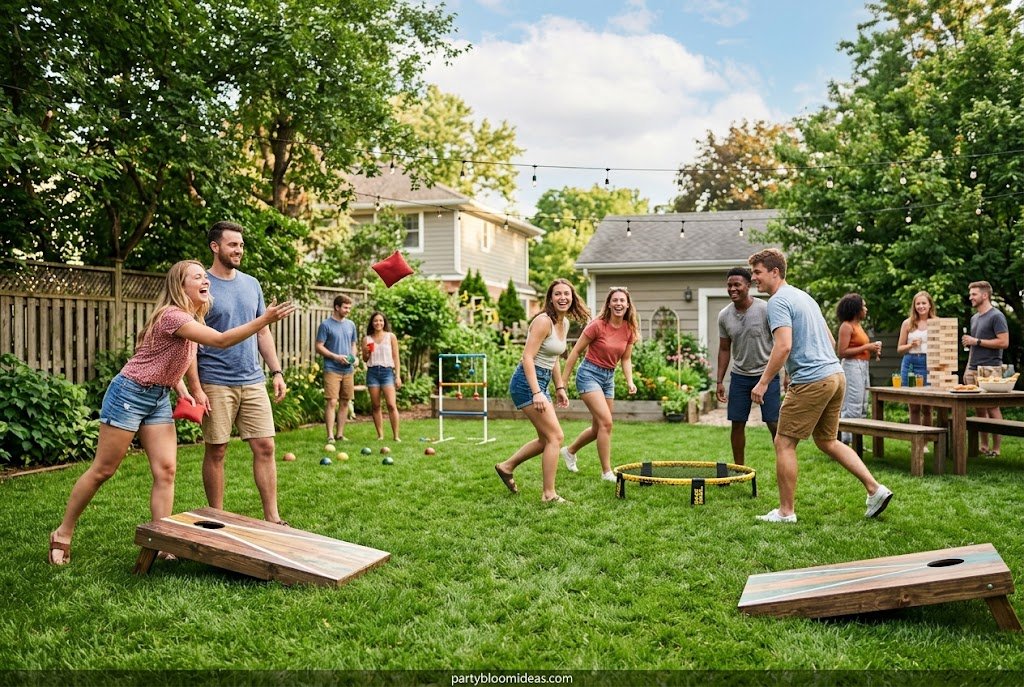
Lawn Games
Giant Jenga, cornhole, ring toss — low-stakes, drop-in games kids drift between at their own pace. Ideal for a backyard party where not everyone wants structured play.
- Supplies: $15–$60 depending on the set
- Energy: Low-medium | Setup: 5 minutes
- Best for: All ages, outdoor
Cookie or Cupcake Decorating
Your wind-down hero. Set out plain cookies, frosting, and sprinkles and let every kid decorate their own. It doubles as the calm-down before cake and as a take-home favor. Underrated, and it works for everyone from three to twelve.
- Supplies: Cookies / cupcakes + toppings $15–$30
- Energy: Low | Setup: 15 minutes
- Best for: All ages, indoor

Games by Age Group at a Glance
| Age Group | Go-To Games | Energy Level | Typical Supplies Cost |
|---|---|---|---|
| Ages 3–5 | Bubble chase, freeze dance, parachute play | High, with calm options | $0–$30 |
| Ages 6–8 | Relay races, scavenger hunt, Minute to Win It | Medium–high | $10–$30 |
| Ages 9–12 | Capture the flag, escape challenge, flashlight tag | High + strategy | $0–$40 |
| Mixed / all ages | Piñata, photo scavenger hunt, lawn games, cookie decorating | Varies | $15–$60 |
How Do You Handle the Kid Who’s a Sore Loser?
Every group has one, and it’s not a character flaw — it’s a developmental stage. Most kids under eight genuinely can’t regulate the disappointment of losing yet. So the fix isn’t lecturing the kid. It’s choosing games that don’t create a single, spotlighted loser in the first place.
Lean on team games, cooperative formats, and “everyone gets a turn” structures. When competition does happen, downplay the winner and hype effort instead. And if a meltdown comes anyway, a quiet redirect — “want to help me start the next game?” — works far better than making them apologize in front of everyone.
Common Kids’ Party Game Mistakes to Avoid
After sorting the games that consistently work from the ones that just look good on paper, the same handful of mistakes come up again and again:
- Scheduling every single minute. Over-planning backfires. Leave room for unstructured play.
- Elimination games for little kids. Musical chairs and similar formats bench kids early and breed tears. Use cooperative versions for the under-eights.
- One game list for a mixed-age crowd. A game that thrills a five-year-old bores a twelve-year-old. Plan by age, or pick scalable games.
- Ranked prizes. “Winner takes all” turns fun into a status contest. Equal prizes, or no prizes.
- No wind-down before cake. Going straight from high-energy chaos to candles produces overstimulated meltdowns. Build in a calm activity.
- Forgetting a weather backup. If your plan is all outdoor games, have two indoor options ready. The mistake most hosts make is assuming the forecast.
💡 Pro Tip: Watch the energy curve, not the clock. Run your highest-energy games in the middle of the party, not at the end. You want kids winding down as cake and goodbyes approach — not peaking right when parents arrive for pickup.
People Also Ask
Are organized games even necessary at a kids’ party? Not strictly — younger kids especially will happily free-play for an hour. But a few loose games prevent the lulls where bored kids start melting down or squabbling. Think of games as a safety net, not a requirement.
What’s the best game for a really large group of kids? Capture the flag, relay races, and freeze dance all scale beautifully to big groups because they don’t depend on tight turn-taking. Avoid anything where kids wait in a long line for a single turn — that’s where boredom and chaos creep in.
How do you entertain kids at a birthday party without any games? Set up open-ended activity stations: a craft table, a sensory bin, lawn games, a decorating station. Kids drift between them at their own pace, no host-led structure required.
What age is too old for party games? There’s no hard cutoff, but around 12 to 13 the format shifts from “led games” to “activities” — escape challenges, video game tournaments, movie nights, or just hangout time with good food. They still want fun; they just don’t want to be organized.
🎉 Quick Summary
- ✅ Best for: Birthdays ages 3–12, mixed-age parties, indoor or outdoor
- 💰 Budget range: $0–$40 per game (most under $25)
- ⏱ Setup time: 15–45 minutes total
- 🌟 Top pick: Freeze dance — the only game that genuinely works at every age
- 📌 Don’t skip: One low-energy wind-down game right before cake
Frequently Asked Questions
What are the best birthday party games for all ages? Freeze dance, piñatas, scavenger hunts, relay races, and capture the flag are the strongest all-ages picks because they scale up or down easily and don’t depend on a specific skill level. For mixed-age groups, pair older kids with younger ones and lean on team formats so everyone stays included.
How many games should I plan for a two-hour party? Line up five or six games but expect to actually run three or four. Kids’ timing is unpredictable — one runs long, another flops fast. The extra options are your backup. Leave at least 20–30 minutes unstructured for free play, which is often where the best moments happen.
What are good birthday games for 3 and 4 year olds? Bubble chase, freeze dance, parachute play, and treasure digs work best. At this age the rules need to be explainable in under 30 seconds, the game should keep bodies moving, and there should be no real “losing” — toddlers can’t yet handle elimination without tears.
What birthday games work for 10 to 12 year olds? Capture the flag, DIY escape challenges, flashlight tag, and social deduction games like Werewolf land well. Tweens aren’t too old for games — they’re too old for younger kids’ games. Give them strategy, teams, and a bit of an edge, and skip anything that feels babyish.
What birthday party games can I play for free? Plenty. Freeze dance, duck-duck-goose, capture the flag, scavenger hunts, limbo (with a broom), and Minute to Win It with household items all cost nothing or close to it. The games kids remember most are rarely the expensive ones.
How long should each party game last? Aim for 10–15 minutes per game, but stay flexible. Watch the kids, not the clock — end a game while they still want more rather than dragging it until they’re bored. One that’s clearly working can run longer; one that’s fizzling should be cut short.
What are good indoor birthday games for a small space? Freeze dance, Minute to Win It, social deduction games, treasure digs, and cookie decorating all work indoors without much room. Avoid running games and anything needing a big open area; focus on stationary or low-movement formats that won’t end with a broken lamp.
How do you handle a sore loser at a kids’ party? Choose games that don’t spotlight a single loser — team and cooperative formats spread the outcome around. Downplay winners, praise effort, and if a meltdown happens anyway, redirect quietly by giving the upset kid a small job, like helping start the next game.
Should every kid get a prize? Generally, yes. At a birthday party, ranked “winner takes all” prizes turn a fun game into a status contest, and the kid who loses at their friend’s party feels it. Give equal small prizes, or make the activity its own reward. It keeps the whole mood light.
What games work for a mixed-age group of 3 to 12? Scalable games are key: piñatas, photo scavenger hunts with mixed-age teams, lawn games, and cookie decorating all let little kids and big kids play together. Pairing an older child with a younger one for team games keeps the youngest included and engaged.
What’s a good calm game to play right before cake? Cookie or cupcake decorating, treasure digs, a craft station, or a quiet social deduction game. The goal is to bring the energy down so kids aren’t bouncing off the walls when the candles come out. Skipping this step is how you get an overstimulated meltdown mid-song.
What outdoor games are best for a backyard party? Capture the flag, relay races, water balloon games in warm weather, lawn games, and bubble chase all suit a backyard. Match the game to your space — capture the flag needs room to run, while lawn games work in a smaller yard. Always keep an indoor backup ready for weather.
How much do kids’ party games cost? Most cost between $0 and $40, and many are free. A bubble machine runs $15–$25, a piñata $15–$30, and a play parachute $20–$30, while freeze dance, capture the flag, and scavenger hunts cost nothing. Games are usually the cheapest part of a party despite being the most memorable — fitting, since the 2024 What to Expect survey found 20% of parents spend over $500 overall, almost always on venues and entertainment rather than the games themselves.
What games should I skip after age 8? Duck-duck-goose, pin-the-tail, and basic musical chairs start feeling babyish to kids 9 and up. They’re not too old to play — they just want more challenge. Swap in capture the flag, escape challenges, and strategy games that respect their growing skills.
How do you keep party games from turning into total chaos? Explain the rules before you start (not mid-game), run one game at a time, and keep an adult loosely refereeing. Build in calm activities between high-energy games to reset the room. And don’t over-schedule — paradoxically, leaving some unstructured time reduces the chaos rather than adding to it.
Final Thoughts
Here’s the thing I’d want every parent to know before their kid’s next party: the games are the part children actually remember, and they’re almost never the part you need to spend money on. A speaker and a freeze-dance playlist will outperform a $60 themed kit nearly every time.
The trick is matching the game to the age, keeping elimination to a minimum so nobody leaves in tears, and building in a calm moment before cake so the afternoon ends on a high instead of a meltdown. Plan a few more games than you think you’ll need, then loosen your grip and let the kids run.
You don’t need to be a professional entertainer to throw a party kids talk about for weeks. You just need the right games and the confidence to let things get a little wild. By the time the cake comes out, nobody will want it to end — and that’s the whole point.
Conclusion
Planning memorable kids birthday party games doesn’t have to be complicated or expensive. The best games are the ones that match your guests’ ages, keep everyone involved, and encourage laughter instead of competition. Whether you’re hosting energetic toddlers, adventurous tweens, or a mixed-age group, simple activities like freeze dance, scavenger hunts, relay races, and piñatas create the moments children remember long after the party ends.
Instead of focusing on elaborate setups or costly entertainment, prioritize fun, flexibility, and inclusion. Keep a few backup games ready, mix high-energy activities with calming breaks before cake, and avoid elimination-style games that leave kids sitting on the sidelines. With the right balance of movement, teamwork, and creativity, you’ll create a celebration that’s stress-free for parents and unforgettable for every child. After all, the happiest birthday parties aren’t about perfection—they’re about seeing every kid leave with a smile and wonderful memories.
Read More : 20 kids Birthday Party Themes
20 Backyard BBQ Party Ideas
25 Best Easter Party Ideas for Kids and Families (2026 Guide)