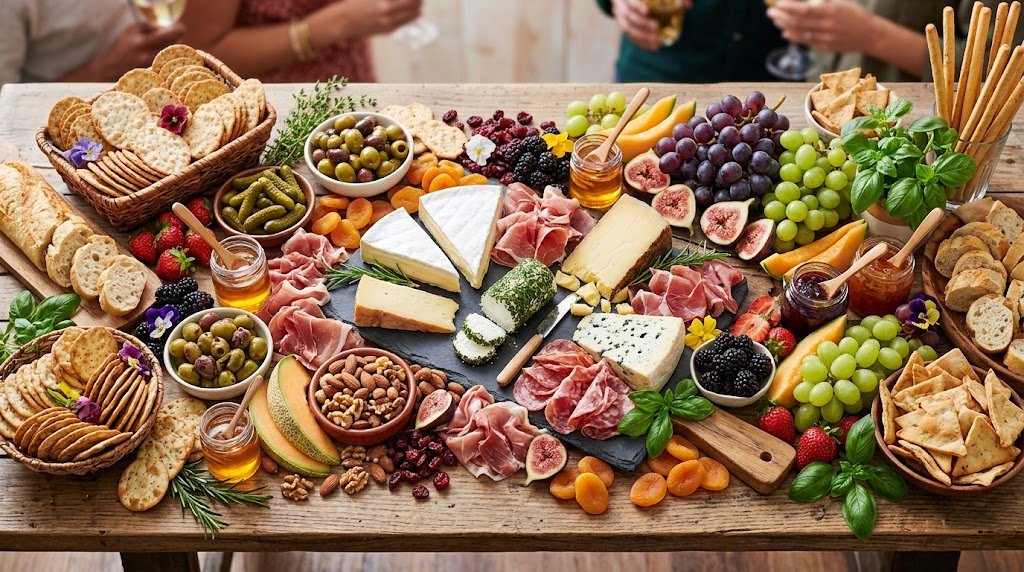
Quick Answer: Grazing Table Ideas are all about creating a beautiful, abundant spread of meats, cheeses, fresh fruit, dips, bread, crackers, and snacks arranged across a table for guests to enjoy at their own pace. The best grazing table ideas follow six simple steps: choose your surface, place anchor items, add fillers, create height, fill every gap, and finish with labels and garnishes. Expect to spend around $35–$125 for 20 guests, depending on your ingredients and presentation.
Imagine your guests walking through the door and immediately spotting a table overflowing with creamy brie, folded prosciutto, colorful berries, crisp crackers, bowls of olives, and drizzled honey. Conversations start instantly as everyone gathers around to admire—and sample—the spread. That’s the magic of great Grazing Table Ideas. Instead of a traditional appetizer tray, you create a centerpiece that encourages guests to relax, mingle, and enjoy delicious food throughout the event.
The best Grazing Table Ideas aren’t about spending a fortune on specialty ingredients. They’re about choosing the right combination of flavors, textures, and colors while arranging everything to look generous and inviting. With smart planning and a few affordable ingredients, you can create a grazing table that looks like it was professionally catered for a fraction of the cost.
In this complete guide, you’ll discover practical Grazing Table Ideas that actually work for real parties. From choosing the best ingredients and arranging them beautifully to budgeting wisely and avoiding common mistakes, you’ll learn how to create a stunning grazing table your guests will remember long after the party ends.
What a Grazing Table Actually Means (and What It Doesn’t)
A grazing table is a charcuterie board scaled up and spread out. Instead of one wooden board, you cover a whole table surface — usually on butcher paper or a runner — with a continuous, overflowing arrangement of finger foods. Guests graze standing up, small plates optional. It’s one of the most popular party snack formats going right now, and for good reason: according to the 2025 IHA At-Home Entertaining Survey, nearly half of US adults — 47% — hosted a casual food-and-drink gathering in the past year, and grazing tables fit that low-stress, no-cook style of hosting perfectly.
What it IS: abundant, varied, easy to serve, built for mingling, and flexible from $35 to $500.
What it ISN’T: a fussy plated appetizer, a reason to buy eight artisan cheeses, or something that has to look identical to the viral version you saw online.
The trick is contrast and abundance. You want a range of textures and colors packed tightly enough that there are no bare spots — that’s what reads as “lavish,” not the price of any single item.
How Do You Build a Grazing Table Step by Step?
The order matters more than the ingredients. Work in this sequence and even a first attempt comes out looking intentional rather than thrown together.
Step 1: Choose Your Surface and Size
Cover your table in food-safe butcher paper, kraft paper, or a washable runner — it protects the surface and gives you a neutral backdrop. For sizing, plan on roughly 6 inches of table length per guest for an appetizer spread, or closer to 10–12 inches each if the grazing table is the meal. A standard 6-foot folding table comfortably feeds 15–20 guests as an appetizer station.
💡 Pro Tip: Lay a few inverted bowls or upturned baking pans under the paper before you start. Those hidden bumps create the height variation that turns a flat table into a designed landscape — and they cost nothing.
Step 2: Start With Your Anchor Items
Anchors are your “big rocks” — place these first and build around them. That means your cheeses (whole wedges or blocks, never pre-sliced), your folded cured meats, and any wet items that need bowls: olives, marinated artichokes, dips, honey, jam. Space anchors evenly down the table so no single zone is all meat or all sweet. Three cheeses with different textures — something hard (aged cheddar, manchego), something soft (brie or triple cream), something crumbly or tangy (goat, blue, feta) — covers every palate without overbuying.
Step 3: Add the Fill-In Items
Now flood the space between anchors with the bulk, budget-friendly items that make the table look like it’s overflowing: crackers, sliced baguette, breadsticks, pretzels, grapes, apple and pear slices, berries, carrots, cucumber, snap peas, dried apricots, and nuts. These are cheap per pound and do most of the visual heavy lifting. Fan crackers in curved lines instead of stacking them flat — curves read as effortless, straight rows read as a checklist.
Step 4: Layer Heights and Textures
A grazing table that’s all one height looks like a buffet line. Build up. Use small bowls, cake stands, upturned glasses, and the hidden bumps from Step 1 to create high and low points. Drape prosciutto in loose folds so it has lift instead of lying flat. Pile grapes in mounds. The goal is a surface your eye travels across — valleys and peaks, not a parking lot.
💡 Pro Tip: Done right, a grazing table looks collected — layers, textures, a bit of overflow at the edges. Done wrong, it looks like a tray with everything spaced out in neat, lonely rows. Crowding is your friend here. Bare table is the enemy.
Step 5: Fill the Gaps and Add Garnishes
This is the step most people skip, and it’s the one that separates a $45 board that looks like $150 from one that just looks cheap. Tuck nuts, berries, small crackers, and herb sprigs into every gap until there’s no visible paper between items. Fresh rosemary, thyme, or eucalyptus threaded through the spread adds greenery for pennies. A drizzle of honey over the brie, a few edible flowers, clusters of grapes cascading off the edge — these finishing touches cost almost nothing and do the most.
Step 6: Label and Style
Small tented cards or mini chalkboard signs naming the cheeses and flagging allergens (nuts, dairy) make guests comfortable diving in — people graze more freely when they know what they’re eating. Add cheese knives, small tongs for the meats, and a stack of cocktail napkins or 6-inch plates at one end. Style the edges of the table with a few unlit candles or trailing greenery so the spread blends into the room instead of sitting on it like a science project.
8 Grazing Table Styles for Any Party
Pick the style that matches your crowd and budget. Each one scales up or down.
1. The Sweet Grazing Table
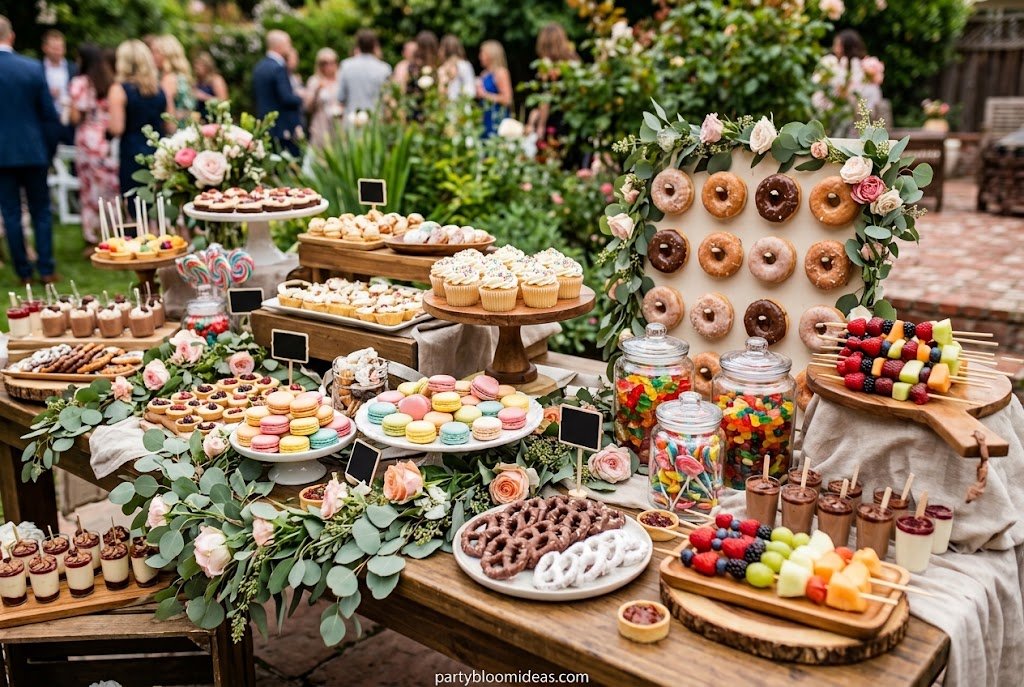
A dessert-forward spread of chocolate-dipped strawberries, brownie bites, mini cookies, macarons, donut holes, marshmallows, fresh berries, and bowls of caramel and chocolate for dipping. Palette: pinks, creams, and chocolate browns with pops of red berry. It’s the showstopper at showers and birthdays, and kids swarm it. Source brownie bites and cookies from Costco or Trader Joe’s — a fully homemade sweet table eats hours you don’t have.
Best for: baby showers, bridal showers, kids’ birthdays, dessert receptions.
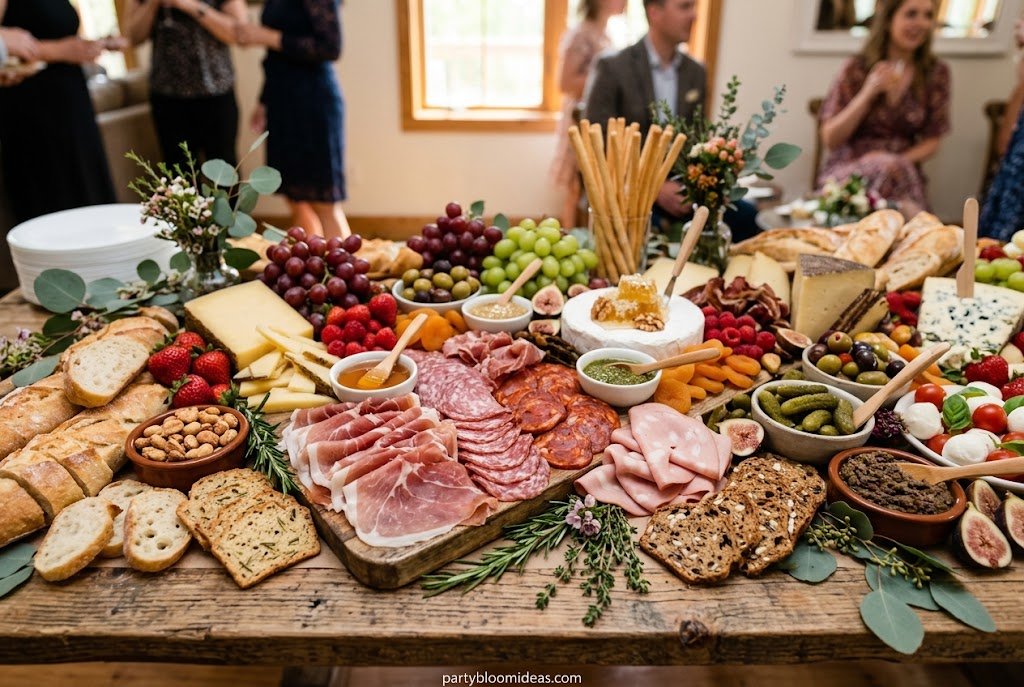
2. The Savory Charcuterie Table
The classic: cured meats (salami, prosciutto, soppressata), three or four cheeses, crackers, olives, cornichons, mustard, marcona almonds, and grapes. Palette: deep reds, creamy whites, golden crackers, green herbs. This is the big charcuterie board idea most guests picture, and demand is real — 76% of people who’ve tried charcuterie say they like or love it. Trader Joe’s and Aldi both carry affordable cured-meat trios and cheese wedges that look far pricier than they are.
Best for: adult birthdays, holiday parties, wine nights, cocktail gatherings.
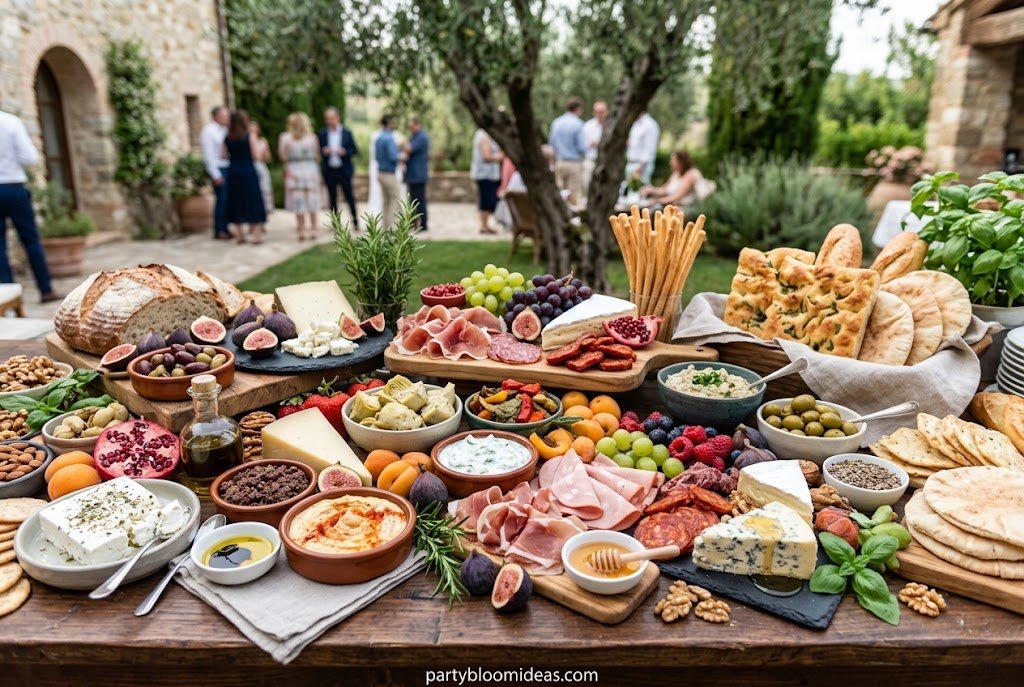
3. The Mediterranean Grazing Table
Hummus, baba ganoush, tzatziki, marinated feta, olives, stuffed grape leaves, roasted red peppers, pita and flatbread, cucumber, cherry tomatoes, and falafel. Palette: warm terracotta, olive green, creamy white. It’s lighter than a meat-heavy board and naturally vegetarian-friendly. Aldi and Walmart carry inexpensive hummus, pita, and olives, and a few fresh herbs on top make the whole thing look catered.
Best for: summer parties, vegetarian crowds, daytime gatherings, BBQ sides.
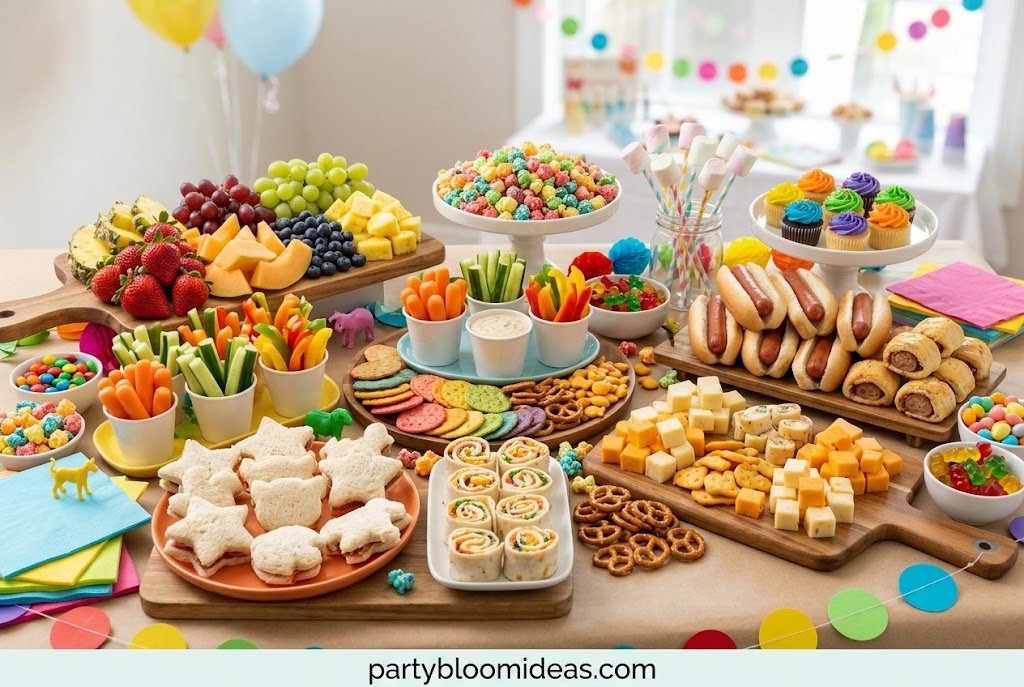
4. The Kids-Friendly Grazing Table
Cubed mild cheese, turkey and ham roll-ups, crackers, pretzels, grapes, apple slices, strawberries, baby carrots, cucumber, popcorn, goldfish, and a couple of candy bowls. Palette: bright, primary, cheerful. Skip the soft funky cheeses and anything with toothpicks for little kids. Everything here comes from one Walmart or Costco run, and it disappears faster than any other style on this list.
Best for: kids’ birthdays, family gatherings, school events, playdates.
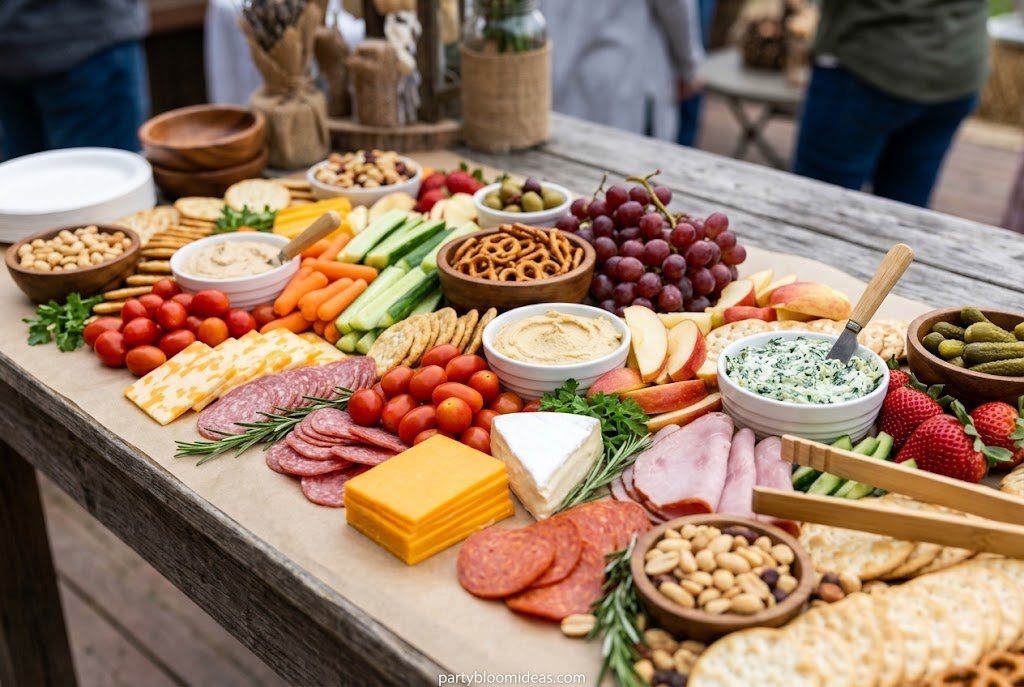
5. The Budget Grazing Table Under $35
Proof that great celebrations don’t require a big budget. Two store-brand cheese blocks, one salami, crackers, pretzels, a baguette, grapes, apple slices, carrots, celery, a tub of hummus, and a bag of nuts — heavy on the cheap fillers, light on specialty items. Build it tight so the abundance hides the price tag. Aldi is the hero here; you can feed 20 guests an appetizer spread for about $35.
Best for: budget hosts, large guest counts, casual get-togethers, potlucks.
6. The Full Spread (Meal Replacement)
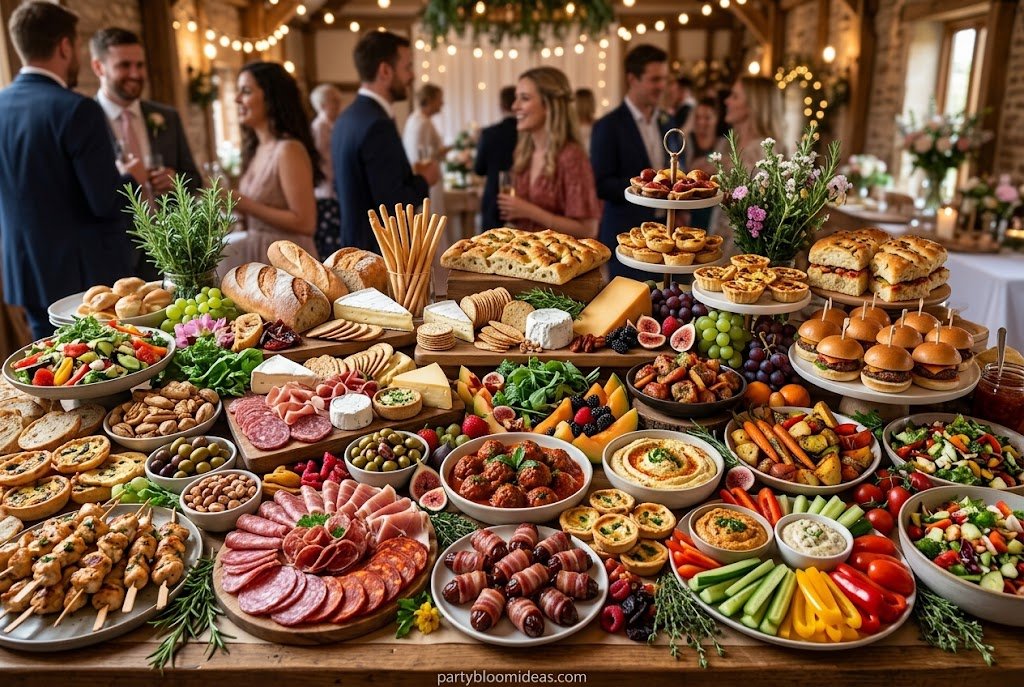
When the grazing table is dinner. Everything from the savory board plus heartier items: mini sandwiches or sliders, quiche bites, roasted vegetables, a warm dip, more bread, and a wider cheese and fruit selection. Plan 10–12 inches of table per guest and double the protein. Industry voices note grazing tables are increasingly served as the main event rather than just a starter, so size accordingly.
Best for: dinner parties, receptions, milestone celebrations, no-cook hosting.
7. The Seasonal Grazing Table
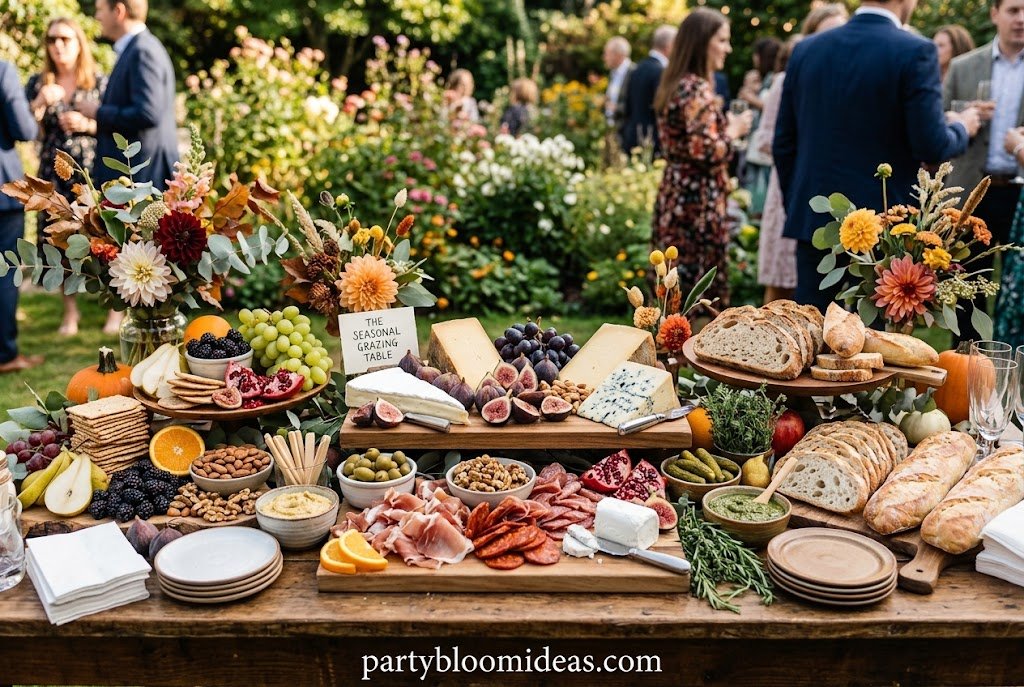
Match the calendar. Fall leans into figs, pears, pomegranate, dark grapes, and aged cheeses in oranges and deep reds; spring and summer bring apricots, peaches, strawberries, and lighter cheeses. Shopping what’s in season is cheaper and looks fresher, and a few seasonal touches — mini pumpkins in fall, edible flowers in spring — tie the spread to the occasion.
Best for: holiday parties, seasonal showers, themed events, year-round refreshes.
8. Mini Individual Boards
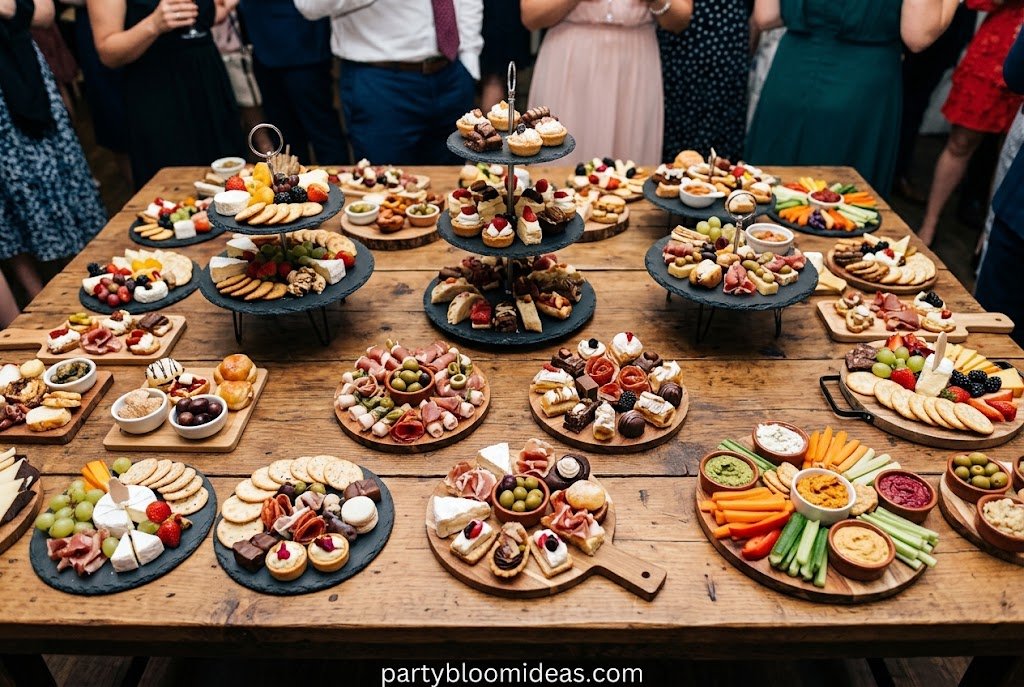
Instead of one big table, build single-serving boards or cups — a few meats, cheeses, crackers, and fruit per guest. Each one is portion-controlled, grab-and-go, and hygienic, which is why they took over weddings and corporate events. They take more prep time per head, but they solve the summer-heat and double-dipping problems in one move.
Best for: weddings, corporate events, outdoor parties in heat, individual-serving needs.
💡 Pro Tip: In summer, soft cheeses sweat and their oils separate within an hour in direct sun. Build your grazing table in the shade or indoors, keep dairy and meat out no longer than two hours (one hour if it’s above 90°F), and replenish from the fridge in waves instead of putting everything out at once.
What’s the Cheapest Way to Make a Grazing Table?
The cost driver is always specialty cheese and cured meat — everything else is cheap. Lean on bulk fillers (bread, crackers, fruit, veg, nuts, pretzels) and you can hit any budget. Here’s roughly what each tier buys for 20 guests as an appetizer spread:
| Tier | ~Cost (20 guests) | What’s on it | Best for |
|---|---|---|---|
| Budget | ~$35 | 2 store-brand cheese blocks, 1 salami, crackers, pretzels, baguette, grapes, apple, carrots, celery, hummus, nuts | Casual parties, big crowds, potlucks |
| Mid-Range | ~$75 | Adds prosciutto, a soft cheese (brie), better crackers, olives, dried apricots, berries, honey, 1–2 dips | Birthdays, showers, holiday gatherings |
| Premium | ~$125 | Specialty cheeses (manchego, aged gouda, triple cream), 2–3 cured meats, fig jam, marcona almonds, fresh figs, artisan bread, garnishes | Weddings, milestones, meal-replacement spreads |
(Prices reflect typical US grocery costs and vary by region and store.)
A useful gut check: a catered grazing table from an event company often runs $8–$20 per guest, so a 20-person spread can land at $160–$400. Building it yourself at the mid tier — about $75 — does the same job for a fraction of that. The labor is an hour or two; the savings are real. No surprise, then, that when a 2026 IHA/Morning Consult survey asked what would inspire people to host more at home, budget-friendly party ideas topped the list at 46% — ahead of recipes and theme ideas. Hosts want exactly this: high impact, low spend.
Common Mistakes to Avoid
The biggest mistake most hosts make is buying too many specialty items and not enough filler — you overspend, and the table still looks sparse. Here’s what to skip:
- Too many cheeses. Three or four with texture contrast looks just as full as eight, and styling has actually trended toward minimalism — fewer ingredients, higher quality. Let’s be honest: nobody counts your cheeses.
- Pre-sliced everything. Whole wedges and blocks look abundant and cost less. Pre-cut packs cost more and look flat.
- Spacing items out. Gaps read as cheap. Crowd everything.
- Putting out all the crackers at once. Crackers go soft and stale fast, especially outdoors — set out a third, keep the rest sealed, and refill.
- Skipping garnish. Bare paper showing through is the difference between “designed” and “dumped on a table.”
- Ignoring the heat. A soft-cheese spread melting in the sun wrecks the look and creates a food-safety problem at the same time.
🎉 Quick Summary
✅ Best for: showers, birthdays, holidays, weddings, BBQs, no-cook hosting
💰 Budget range: $35–$125 for 20 guests (DIY)
⏱ Setup time: 1–2 hours
🌟 Top pick: The Mid-Range Savory Charcuterie Table (~$75) — best balance of wow and cost
📌 Don’t skip: Fill every gap with garnish — it’s what makes a $45 board look like $150
People Also Ask
How much food do you need for a grazing table? Plan about 6 inches of table length per guest for an appetizer spread, or 10–12 inches if it’s the meal. For food weight, roughly 3–4 oz of cheese and 2–3 oz of cured meat per person works for a substantial board, plus plenty of bread, fruit, and vegetables.
What is the difference between a charcuterie board and a grazing table? A charcuterie board is a single board, usually meat- and cheese-focused, sized for a small group. A grazing table is that concept scaled across an entire table surface with much more variety and volume, built for a crowd to graze standing up.
Are grazing tables out of style? No — they’ve shifted, not faded. Hosts are moving toward minimalist, higher-quality boards and individual mini servings, and grazing tables are increasingly used as the main meal rather than just an appetizer. The format keeps evolving with the season and the crowd.
How far in advance can you make a grazing table? Prep components a day ahead — wash fruit, slice vegetables, portion cheese, fold meats — and store them separately and chilled. Assemble the table no more than 1–2 hours before guests arrive so nothing dries out, keeping dairy and meat refrigerated until the last possible moment.
What’s the cheapest grazing table you can make? A roughly $35 spread for 20 guests using store-brand cheese blocks, one salami, and heavy bulk fillers — crackers, pretzels, baguette, grapes, apples, carrots, celery, hummus, and nuts — built tightly so the abundance hides the low cost.
Frequently Asked Questions
What is a grazing table? A grazing table is an abundant spread of finger foods — cheeses, cured meats, crackers, bread, fruit, vegetables, dips, and snacks — arranged directly across a table for guests to nibble at their own pace. It works as food, decor, and an icebreaker all at once, and scales from a $35 budget setup to a lavish $500 spread.
How many cheeses should be on a grazing table? Three to four cheeses with different textures is plenty for most parties: one hard or aged, one soft and creamy, one crumbly or tangy. More than that rarely adds anything except cost. Texture and color contrast make a board look full and varied far more than the sheer number of cheeses does.
How much cheese and meat do I need per person? For a substantial grazing table, plan about 3–4 ounces of cheese and 2–3 ounces of cured meat per guest. If the table is just one of several food options, you can cut that roughly in half. Always round up on crowd favorites like brie and prosciutto, which disappear first.
What food goes on a grazing table? A typical grazing table includes cured meats, an assortment of cheeses, crackers and sliced bread, fresh and dried fruit, raw vegetables, olives, nuts, a dip like hummus, and something sweet such as honey or chocolate. The mix of salty, sweet, creamy, and crunchy is what keeps guests grazing.
How do you keep a grazing table fresh in summer heat? Set it up in shade or indoors, away from direct sun. Keep dairy and cured meat out no longer than two hours — one hour if it’s above 90°F — and replenish from the fridge in small batches instead of laying everything out at once. Mini individual boards are the safest option in real heat.
What’s the cheapest way to make a grazing table? Lean heavily on bulk fillers — crackers, bread, fruit, vegetables, pretzels, and nuts — and keep specialty cheese and cured meat minimal. Two store-brand cheese blocks and one salami, surrounded by cheap produce and crackers and packed in tightly, can feed 20 guests for around $35. Crowding the table hides the budget.
How big should a grazing table be? Plan roughly 6 inches of table length per guest for an appetizer spread and 10–12 inches per guest if the table is the meal. A standard 6-foot folding table feeds 15–20 guests as an appetizer station, or about 8–10 as a full meal replacement.
What do you put under the food on a grazing table? Food-safe butcher paper, kraft paper, or a washable table runner protects the surface and gives a neutral backdrop. Many hosts hide inverted bowls or baking pans under the paper to create height variation, which makes a flat table look like a layered, designed landscape.
Do you need plates for a grazing table? Not necessarily — grazing tables are designed for standing and picking. Many hosts set out small 6-inch plates or cocktail napkins at one end as an option, plus cheese knives, small tongs for the meats, and toothpicks. Individual mini boards skip the shared-serving question entirely.
How far ahead can I prep a grazing table? You can prep components up to a day ahead: wash and cut fruit and vegetables, portion cheeses, and fold meats, storing each separately and chilled. Assemble the full table no more than 1–2 hours before guests arrive so bread and crackers stay crisp and nothing dries out.
What’s the difference between a grazing table and a charcuterie board? A charcuterie board is a single board focused mainly on cured meats and cheeses for a small group. A grazing table is the same idea spread across an entire table with far more variety and volume — adding fruit, vegetables, dips, bread, and sweets — built to feed and entertain a crowd.
Are grazing tables worth it? For most parties, yes. They feed a crowd, double as decor, and free the host from cooking and serving during the event — and they consistently draw guests together to graze and talk. Done on a mid-range budget around $75 for 20 guests, the value beats catering by a wide margin.
What gets eaten first on a grazing table, and what gets wasted? Soft cheeses like brie, anything wrapped in prosciutto, fresh berries, and chocolate vanish fast. The usual leftovers are extra cracker varieties, obscure specialty items guests don’t recognize, and plain raw vegetables. Buy heavy on the proven favorites and light on the experiments.
Can a grazing table replace a full meal? Yes — a “full spread” grazing table sized at 10–12 inches per guest, with heartier additions like sliders, quiche bites, roasted vegetables, and warm dips alongside the usual meats and cheeses, works as dinner. Increasingly, hosts are building grazing tables as the main event rather than a starter.
Here’s the truth after all of this: a grazing table is the highest-impact, lowest-stress thing you can put on a party table. It feeds people, it fills the room, and it gives guests a reason to stand close and talk instead of scattering to the corners. And it rewards effort you can actually afford — the abundance comes from how tightly you pack cheap fillers and how well you fill the gaps, not from how much you spend on cheese.
Start with three cheeses, one or two meats, a pile of fruit and crackers, and a fistful of fresh herbs. Build it tight, give it height, and leave no bare paper. You don’t need a caterer or a big budget to make guests slow down at your table — you need good ideas and a little crowding. Trust me on this: build one, and it’ll be the first thing people photograph and the last place they leave.
Conclusion
A beautiful Grazing Table is more than just a way to serve food—it’s the centerpiece that brings people together. Whether you’re hosting a birthday party, bridal shower, baby shower, holiday gathering, backyard BBQ, or casual get-together, a thoughtfully arranged Grazing Table creates an inviting atmosphere where guests can relax, mingle, and enjoy great food at their own pace.
The secret isn’t spending hundreds of dollars on gourmet ingredients. A memorable Grazing Table comes from smart planning, balanced flavors, colorful presentation, and using affordable fillers to create an abundant look. Focus on a few quality cheeses, fresh fruits, crunchy crackers, flavorful dips, and simple garnishes, then layer everything tightly for that luxurious, overflowing appearance.
Remember, your guests won’t be counting how many cheeses or meats you served—they’ll remember the experience, the conversations, and the welcoming atmosphere your Grazing Table created. With a little preparation and creativity, you can build a stunning spread that looks professionally catered without stretching your budget.
Save this guide for your next celebration, customize your Grazing Table to match the season or occasion, and don’t be afraid to make it your own. Once you create your first Grazing Table, you’ll quickly see why it’s become one of the most popular and stress-free ways to entertain family and friends.
Read More : 20 kids Birthday Party Themes
20 Backyard BBQ Party Ideas
25 Best Easter Party Ideas for Kids and Families (2026 Guide)