Best Party Games for Adults That Actually Get People Laughing (Tested at Real Parties)
By Jamie Calloway | Entertainment, Lifestyle & Party Planning | Updated: October 2024 | 20 min read
I want to tell you about the worst party I ever threw. It was my 30th birthday — the one that was supposed to be legendary. I’d spent weeks planning: the food was great, the playlist was perfect, the decorations were Pinterest-worthy. Thirty adults showed up to my backyard, drinks in hand, and within 45 minutes… everyone was standing around in small clusters, staring at their phones.
The conversation had stalled. Nobody knew what to do next. My carefully curated Spotify playlist played on, ignored, as people checked their Instagram feeds at my own birthday party. I felt my heart slowly sink into my shoes.
That was the night I became obsessed with party games. Not the boring ones from childhood. Not “let’s play charades” with half-hearted enthusiasm. Real, chaotic, laugh-until-you-cry, strangers-become-friends kind of games.
Over the past four years, I’ve tested over 40 different adult party games at real gatherings — birthday parties, holiday get-togethers, game nights, bachelorette parties, and casual Friday hangouts. I’ve seen games that made grown men cry laughing, and games that killed the vibe so effectively that people started leaving early.
This guide contains only the winners. The games that reliably, consistently, predictably get people laughing — regardless of crowd size, personality types, or how well guests know each other. Whether you’re hosting 6 people or 60, there is something in this list for you.
What You’ll Find in This Guide
- What makes a party game actually work for adults
- Best overall party games for adults
- Best card games for adult parties
- Best games for large groups (10+ people)
- Best games for small groups (4–8 people)
- Best icebreaker games for guests who don’t know each other
- Best drinking games for adults (optional alcohol)
- Best outdoor party games
- Best games that need zero supplies
- How to choose the right game for your crowd
- Tips for hosting a party game night that actually works
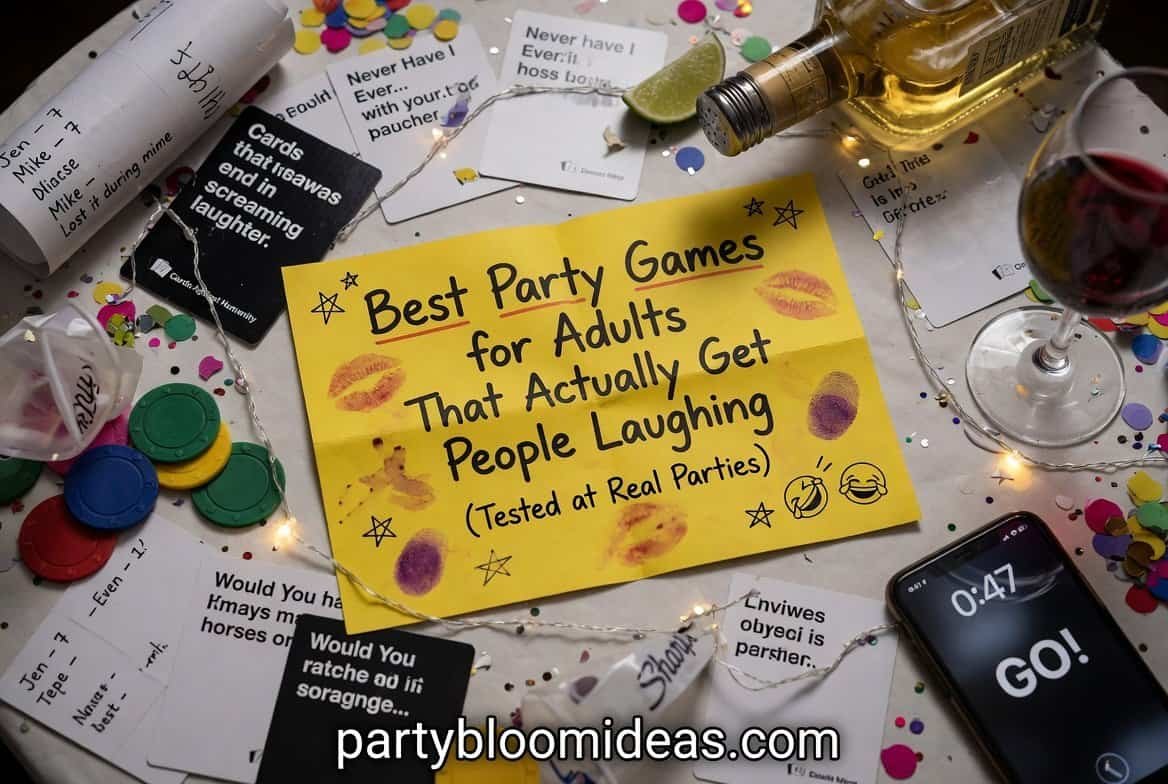
What Makes a Party Game Actually Work for Adults
Before we get into specific games, let me share the framework I developed after hosting two dozen game nights. Because not all party games are created equal — and understanding why some games land while others fall flat will help you choose the perfect game every single time.
The best party games for adults share five qualities. First, they’re easy to explain in under two minutes. If the rules take longer than that to explain, you’ve already lost half the room. Adults at parties are there to have fun, not attend a tutorial. The best games have a simple core mechanic that anyone can grasp immediately.
Second, they create moments of surprise. The funniest party game moments come from unexpected answers, unexpected alliances, or unexpected chaos. The game needs to generate situations that nobody could have predicted — that’s where the real laughter lives.
Third, they’re inclusive. A game that requires one person to perform while everyone else watches is a bad party game. The best games keep everyone simultaneously engaged — everyone is contributing, guessing, laughing, or strategizing at the same time.
Fourth, they scale. A game that only works with exactly six people is a logistical nightmare. The best party games work across a range of group sizes, making them worth the investment.
Fifth — and this is the one most people miss — they create stories. The best game nights aren’t remembered for the scores. They’re remembered for the moment Dave’s answer was so wrong it was perfect, or when your quiet coworker turned out to be absolutely ruthless at bluffing. Games that generate stories keep people talking about your party for years.
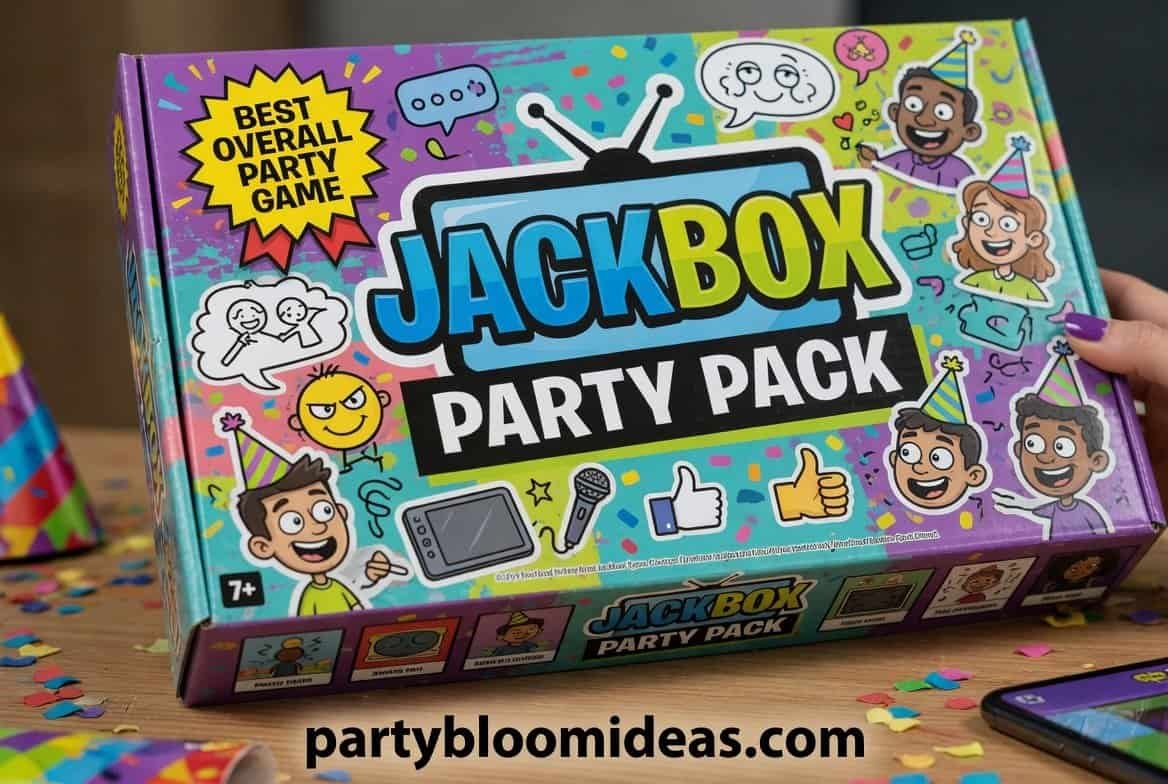
Best Overall Party Game: Jackbox Party Pack
If you’ve never played a Jackbox game at a party, you are genuinely missing out on one of the greatest entertainment inventions of the last decade. The Jackbox Party Pack is a collection of party games (5–8 games per pack, across 10 different packs) that everyone plays using their smartphones as controllers. No extra equipment needed — just a TV, one device to run the game (PlayStation, Xbox, Nintendo Switch, PC, or Apple TV), and everyone’s phones.
The standout games across the packs are legendary. Quiplash has players submit funny answers to absurd prompts, and everyone votes on the best one. Drawful has players drawing ridiculous things on their phones while others guess what they’re drawing. Fibbage has everyone making up fake answers to trivia questions and trying to trick each other. Every single one of these games generates screaming laughter within the first five minutes.
The reason Jackbox is my top overall pick is that it removes every barrier to entry. No one needs to read rules. No one needs to be good at games. You just follow along on your phone. I’ve used Jackbox at family Christmas parties, corporate team events, and chaotic 35th birthday parties — and it has never once failed to energize a room. The games also cycle quickly (20–30 minutes per game), so you can play three or four in an evening and keep the energy high.
Jackbox packs range from $10–$30 and are frequently on sale. If you only buy one thing from this entire list, make it Jackbox Party Pack 3 (contains Quiplash 2, Trivia Murder Party, and Fakin’ It) or Party Pack 4 (Survive the Internet, Fibbage 3). Both are consistently rated the funniest.
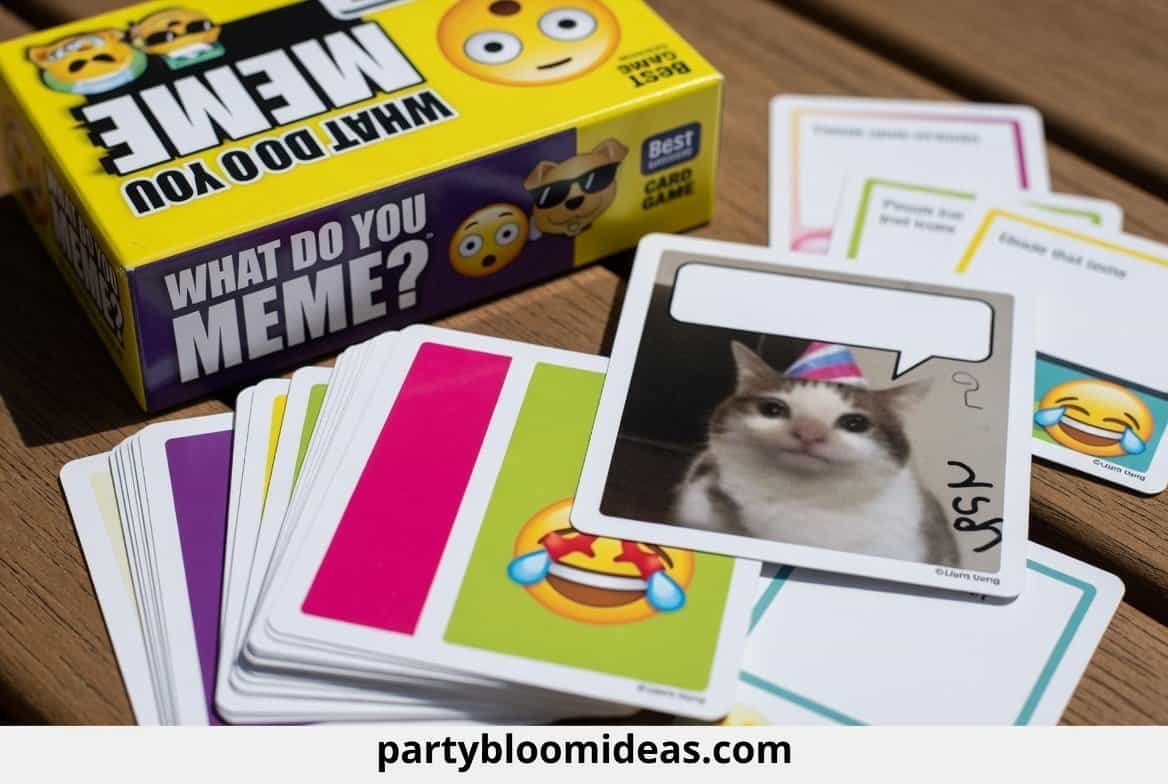
Best Card Game: What Do You Meme?
What Do You Meme? is the adult version of Apples to Apples or Cards Against Humanity — but built specifically around internet culture and memes, which means it’s immediately accessible and funny to almost everyone. The game works like this: one person plays a meme photo card face up, and everyone else plays a caption card from their hand to match the meme. The judge picks their favorite combination. Hilarity ensues.
What makes What Do You Meme? particularly good is the format itself. Memes are already funny — layering your friends’ creative captions on top of them creates a comedic structure that almost always lands. The game is endlessly replayable because the combinations are essentially infinite, and the expansion packs keep things fresh.
I played this at my friend Rachel’s bachelorette party with 12 women ranging in age from 26 to 54. Within 20 minutes, Rachel’s mother — a reserved accountant from Ohio — had made the entire room collapse with a caption that combined a photo of a confused golden retriever with a phrase that I cannot print here. That moment perfectly encapsulates why What Do You Meme? works: it gives everyone permission to be unexpectedly funny.
Best for groups of 3–20, ages 17+. Playing time: 30–90 minutes. Price: around $30.
Best Game for Dark Humor: Cards Against Humanity
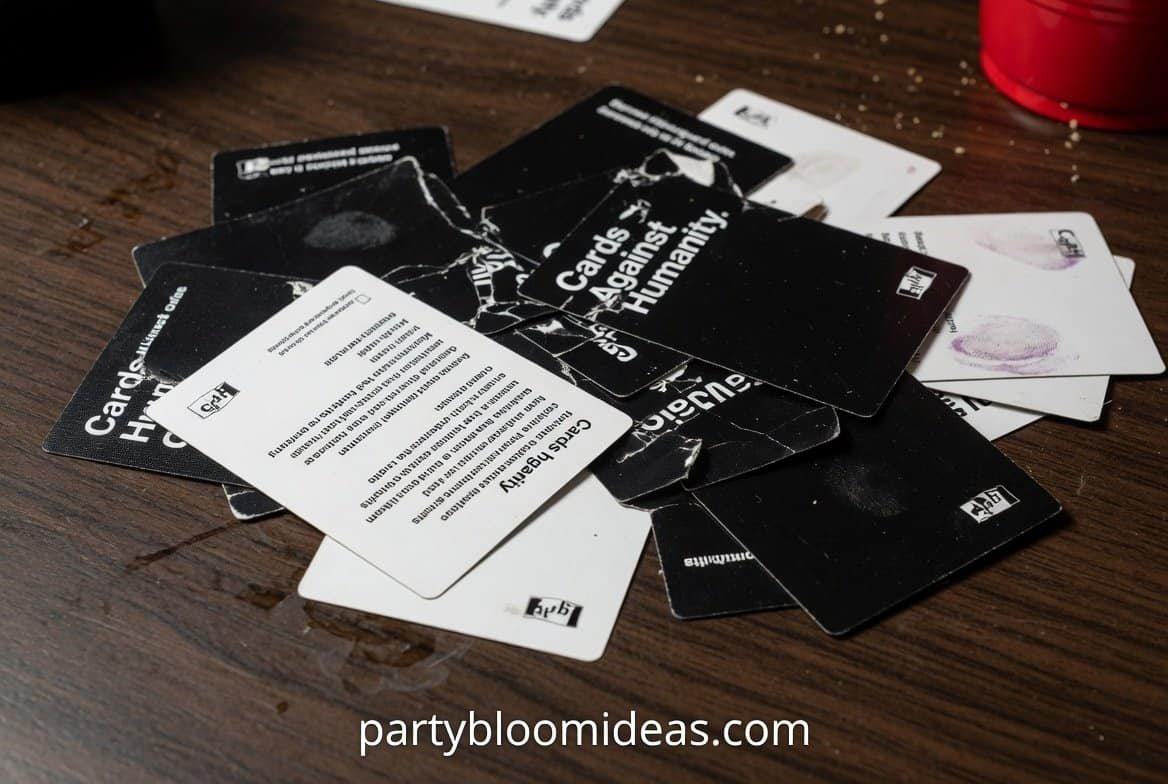
No adult party game list is complete without mentioning Cards Against Humanity — the game that basically invented the “brutally funny adult card game” genre. The premise is simple: fill in the blank with the most outrageous, inappropriate, or darkly funny card from your hand. The judge picks their favorite. The game is designed to be deeply offensive, politically incorrect, and absolutely hilarious in the right company.
Cards Against Humanity is not for every crowd — and knowing your audience is genuinely important here. With close friends who share a dark sense of humor, it produces some of the most uncontrollable laughter you’ll ever experience at a table. At a work party, a family gathering, or an event with people you don’t know well, it can go sideways fast.
The key is calibration. The base game has expansion packs that range from mildly edgy to absolutely chaotic. For a mixed or unfamiliar crowd, I recommend the “Family Edition” — which has the same gameplay mechanics but with completely clean content. It sounds counterintuitive, but the Family Edition actually generates just as much laughter because the mechanics themselves are funny — the dark content is not actually required for the humor to land.
Base game price: $29. Available online and in most major retailers. 4–30 players, 30–90 minutes.
Best Game for Large Groups (10+ People): Two Truths and a Lie (The Evolved Version)
You’ve probably heard of Two Truths and a Lie — it’s one of the oldest icebreaker games in existence. But the version I’m talking about is the evolved adult version, and the difference is everything.
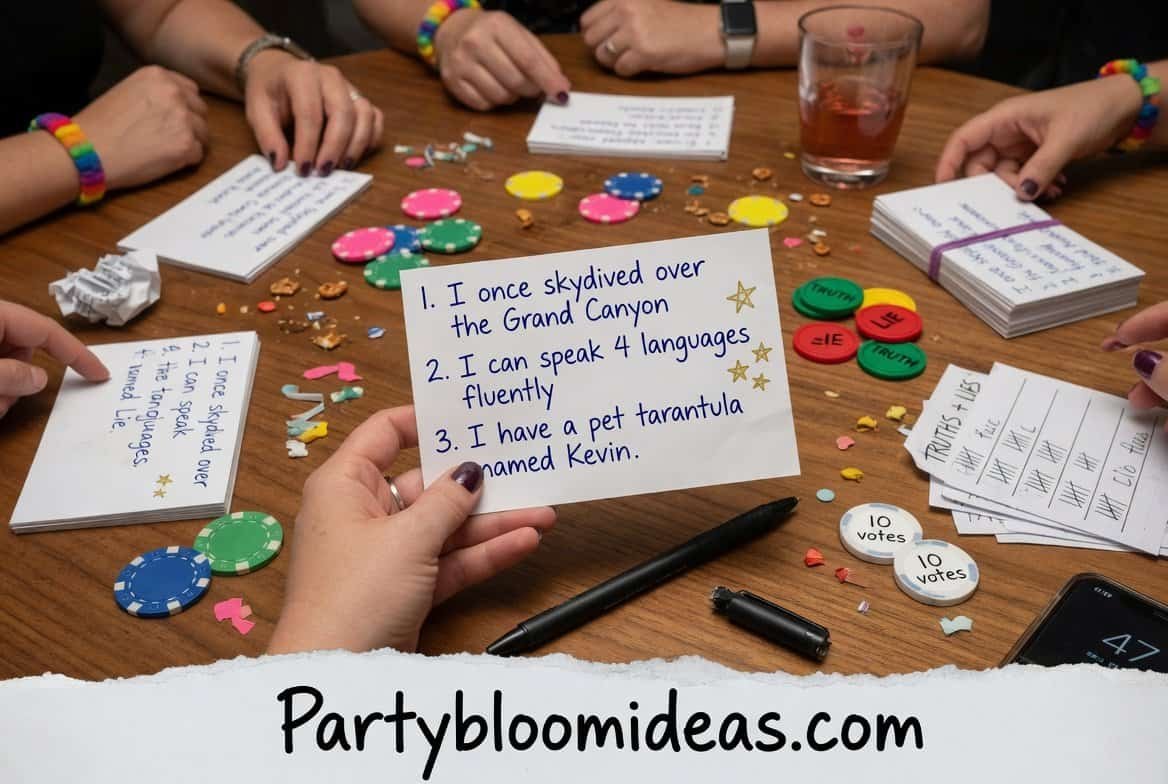
Here’s how you upgrade it: instead of just stating your truths and lie and having people guess, you add a betting round. Everyone starts with 10 poker chips (or coins, or paper scraps with numbers). When someone states their three items, everyone silently places a bet on which one they think is the lie. Reveal happens simultaneously. Winners collect from losers. The stakes — even without real money — transform the game completely.
The reason this works so well for large groups is that it requires zero supplies beyond the betting tokens, accommodates unlimited players, and generates natural conversation. Every reveal sparks follow-up questions — “wait, you ACTUALLY did that?!” — which creates organic mingling and conversation in ways that structured games often don’t.
The other genius of this game for adults specifically is that it rewards people who have lived interesting lives. And it turns out that most adults, when given permission to share, have at least one story that makes the room gasp. I’ve seen people discover that their quiet neighbor competed in a national pie-eating contest, that their coworker once accidentally started a small fire at a celebrity’s house, and that someone’s sweet-looking grandmother used to race motorcycles. This game creates genuine connection disguised as a game.
Best Game for Small Groups (4–8 People): Wavelength
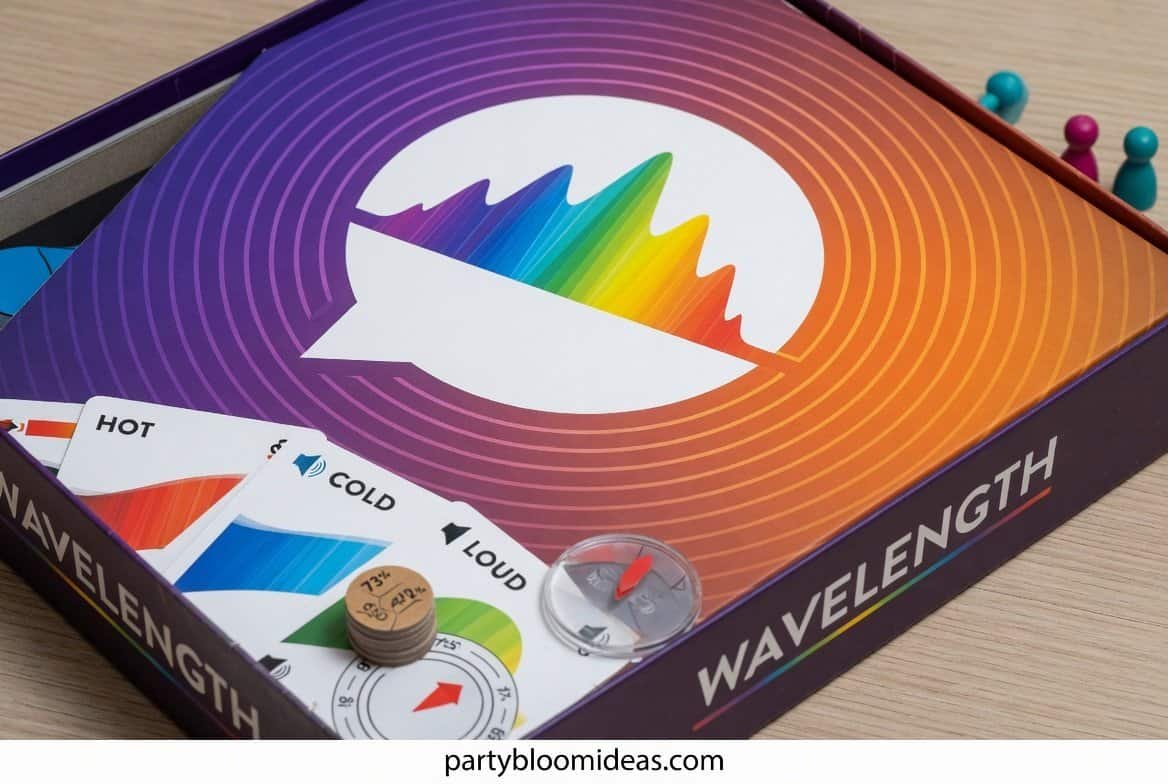
Wavelength is, in my opinion, the most underrated party game ever made. It’s not as loud as Cards Against Humanity, not as chaotic as Jackbox — but it generates a specific kind of laughter that is uniquely satisfying: the laughter of being completely misunderstood by someone you thought you knew perfectly.
Here’s how it works. A hidden dial sits somewhere on a spectrum between two opposites — say, “Hot” to “Cold.” One player sees where the dial is and must give a one-word clue that helps their team guess the position. If the dial is 80% of the way toward “Hot,” they might say “Sauna.” The team then argues about where to place their guess on the spectrum. The target is revealed, and points are awarded based on accuracy.
The game sounds simple — it is wonderfully simple — but the arguments that erupt are spectacular. “What do you mean you said ‘volcano’ and meant it was only SLIGHTLY hot?!” “How is a campfire more hot than the sun to you?!” These debates reveal how differently people think and categorize the world, and the gap between those worldviews is where all the comedy lives.
At my friend group’s regular game nights, Wavelength has become the game we always end with because it slows the energy down from chaotic to intimate — everyone leaning in, laughing, genuinely fascinated by how other people’s minds work. It’s perfect for groups of close friends or couples who want something deeper than a trivia game. Price: around $35.
Best Icebreaker Game for Strangers: Never Have I Ever (The Tactful Version)
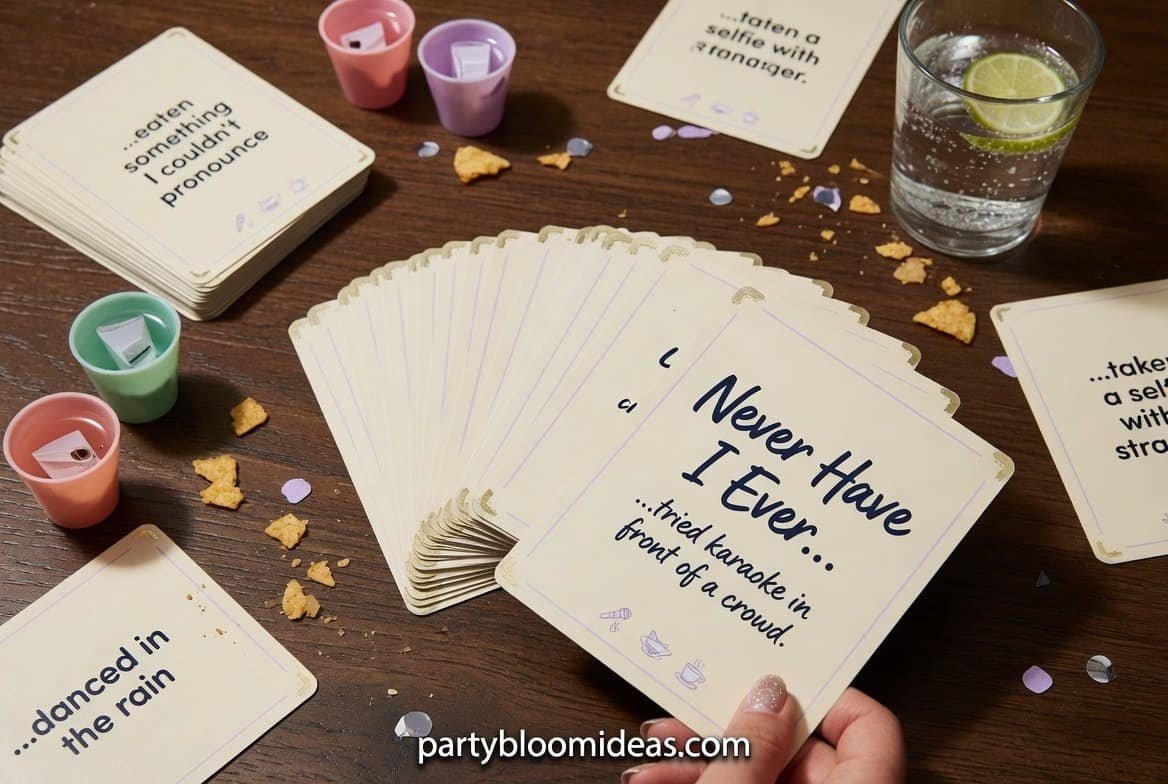
Never Have I Ever has been a party game staple for 30 years — and for good reason. The core mechanic is brilliant: players take turns saying something they’ve never done, and anyone who HAS done that thing loses a life (or takes a drink, or places a chip, depending on your version). It simultaneously reveals surprising things about people and creates immediate conversational bonds.
The “tactful version” I recommend for mixed groups involves pre-written prompt cards rather than improvised statements. This is important because left to their own devices, adults in unfamiliar company tend to either play it too safe (boring) or too wild (uncomfortable). Pre-written cards strike the right balance — they’re surprising and funny without being genuinely inappropriate for people who don’t know each other well.
The official “Never Have I Ever” card game version (available on Amazon for about $20) is excellent for this. It comes with 485 cards at varying intensity levels, and you can choose which deck to use based on your group’s comfort level. I use the mild deck for office parties and the medium deck for friends’ gatherings — and it consistently gets the room talking and laughing within the first round.
Pro tip: for non-drinking groups, replace drinks with a 10-life system using fingers. Losing all 10 fingers means you’re “out” and have to share a funny story from your past. This adds a second layer of entertainment and keeps non-drinkers fully engaged.
Best Drinking Game for Adults: Kings (Card Game)
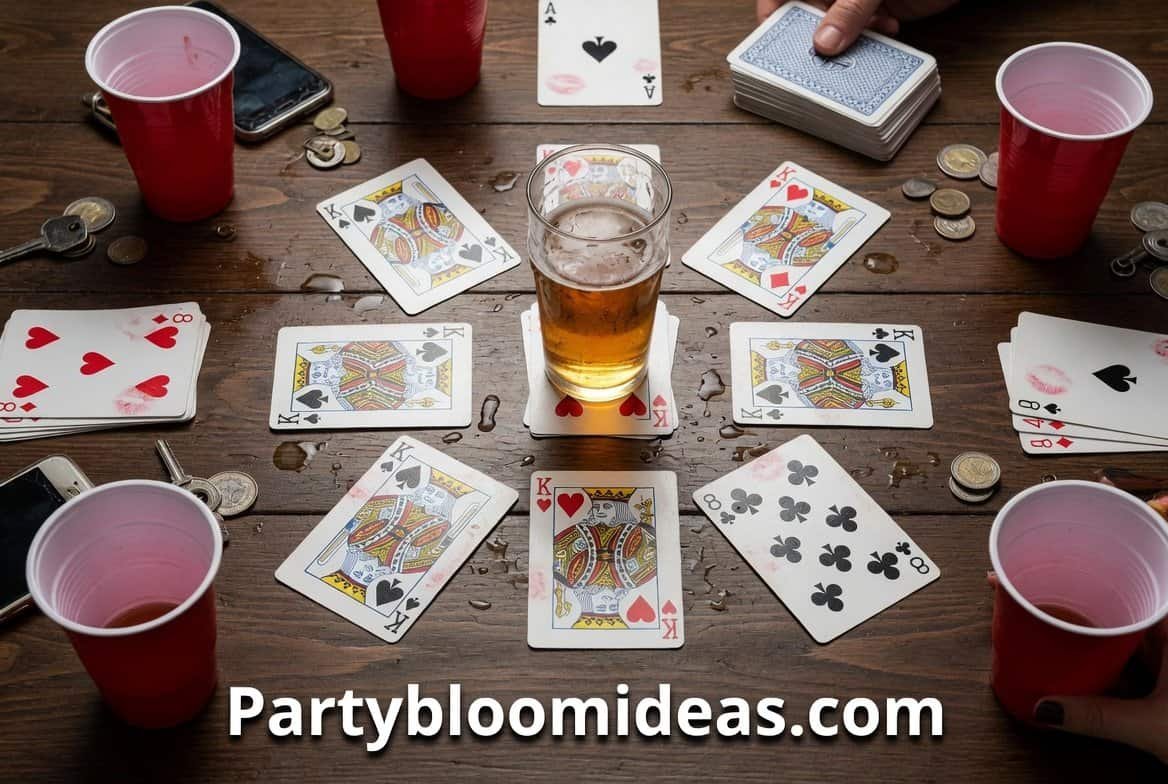
Kings — also known as Ring of Fire, Circle of Death, or King’s Cup — is the most enduringly popular adult drinking game in the world, and it deserves its reputation. The setup requires nothing but a standard deck of cards and drinks: spread the cards face-down in a circle around a central cup. Players take turns drawing cards, and each card has a rule (2 = “you” — pick someone to drink; 7 = “heaven” — last one to raise their hand drinks; King = pour some of your drink into the center cup, and the person who draws the fourth King must drink it all, etc.).
The beauty of Kings is that the rules are endlessly customizable — every friend group has their own version, and debating whose rules are “the right ones” is itself a source of entertainment. It also scales brilliantly from 4 to 20+ players and requires zero setup time beyond shuffling the cards.
Important note for your non-drinking guests: Kings works perfectly with non-alcoholic drinks. I’ve played it at mixed parties with half the group drinking sparkling water and half drinking cocktails — the game mechanics work identically, and everyone’s equally engaged. The drinking is the vehicle, but the laughter and conversation are the actual point.
For a printable custom rules card to make your game consistent and shareable, dozens of free templates are available online. Printing and laminating one for your party makes setup even faster.
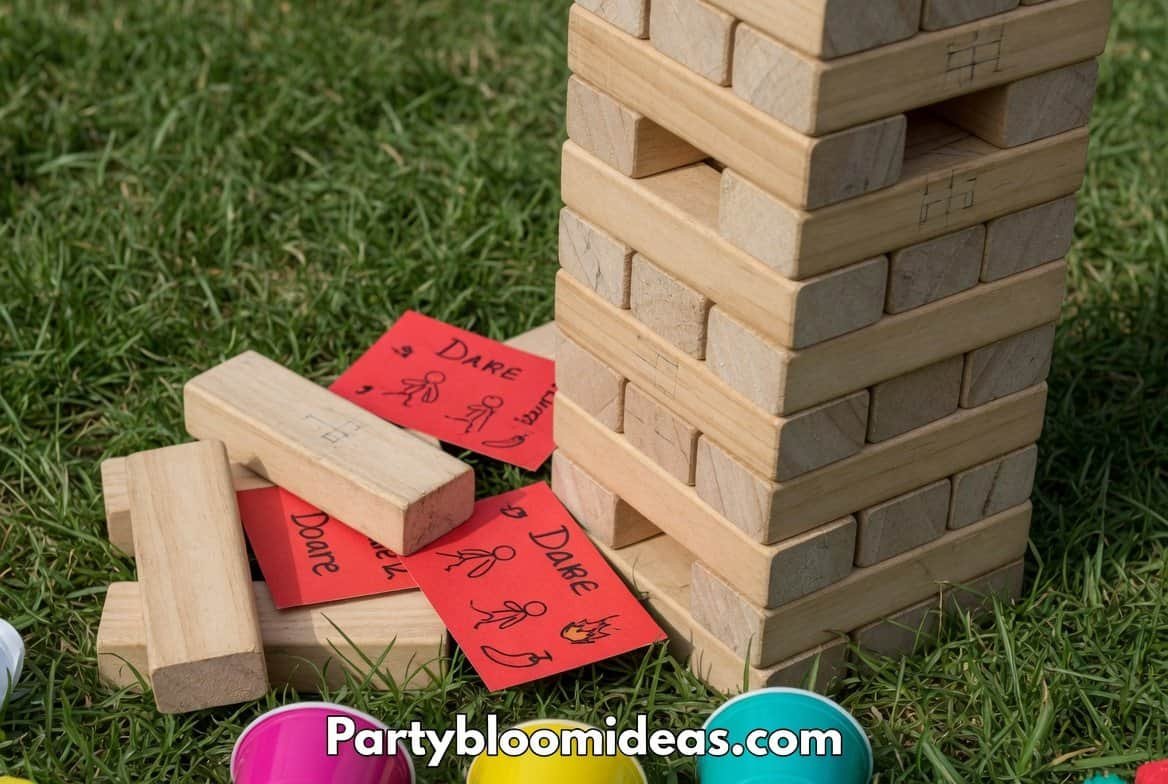
Best Outdoor Party Game: Giant Jenga with Dare Cards
Giant Jenga — the oversized version of the classic block-pulling game — has become a staple at adult outdoor parties for a very good reason: it looks spectacular, it’s completely accessible to everyone regardless of sobriety level, and the tension as a tower wobbles is universally captivating.
The upgrade that transforms it from a kids’ game into an adult party game is writing dare prompts or questions on the blocks. When you pull a block, you must do whatever the block says before placing it on top. These can range from benign (“share your most embarrassing moment”) to competitive (“challenge someone to a thumb war — loser drinks”) to physical (“do 10 jumping jacks before placing your block”).
I bought a Giant Jenga set for about $50 two summers ago and used a permanent marker to write prompts on each block. It has been to eight different parties since then, and it never fails to generate an enormous crowd. There is something primally satisfying about watching a five-foot wooden tower teeter and crash — and the gasps and laughter that follow a collapse are completely involuntary and completely joyful.
For warm-weather outdoor gatherings specifically, Giant Jenga also solves the “people are standing around not knowing what to do” problem perfectly. It gives people something to gather around and participate in at a natural pace — you can step away for a drink refill and step back in without missing much. It’s self-pacing in a way that very few party activities are.
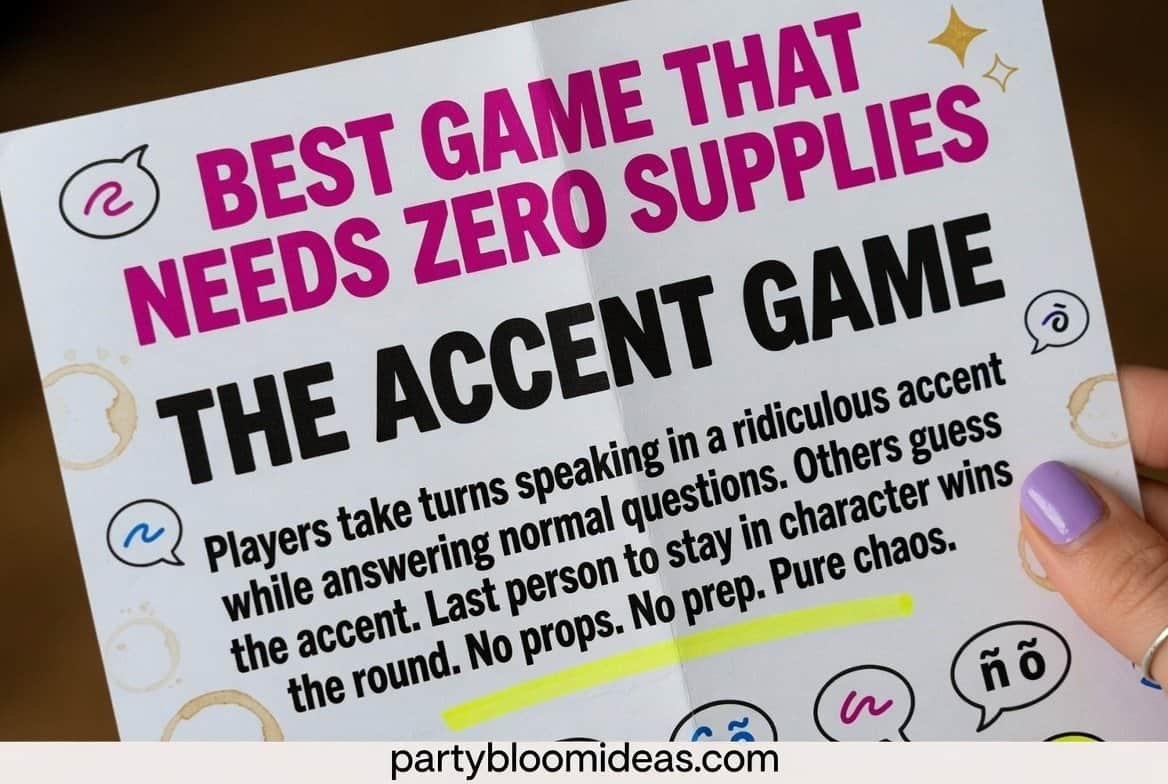
Best Game That Needs Zero Supplies: The Accent Game
Some of the best party games require nothing but people and willingness. The Accent Game is my personal favorite zero-supply game because it is simple, endlessly funny, and reveals something surprisingly authentic about people.
Here’s how it works. Everyone sits in a circle. Someone starts by choosing a random accent — British, Southern American, French, Australian, Pirate, Robot, whatever they like — and says their name and one fact about themselves in that accent. The next person must do the same accent AND add their own fact. The third person can either continue the accent or “challenge” by introducing a new one, which the entire group must then switch to. Anyone who breaks character or can’t maintain the accent owes a drink (or chip, for non-drinkers).
The game seems simple but gets hysterically funny within a few rounds. Adults who are usually reserved or self-conscious find that the “character” of an accent gives them permission to perform in a way that feels safe. I’ve seen extremely introverted people absolutely dominate this game because their impression of a Cockney accent was inexplicably perfect. And there is nothing funnier than watching a group of adults try to maintain a Swedish chef accent while having a serious conversation.
Zero cost, zero setup, unlimited players, maximum chaos. This is my go-to for parties that had no games planned but where the energy has started to flag.
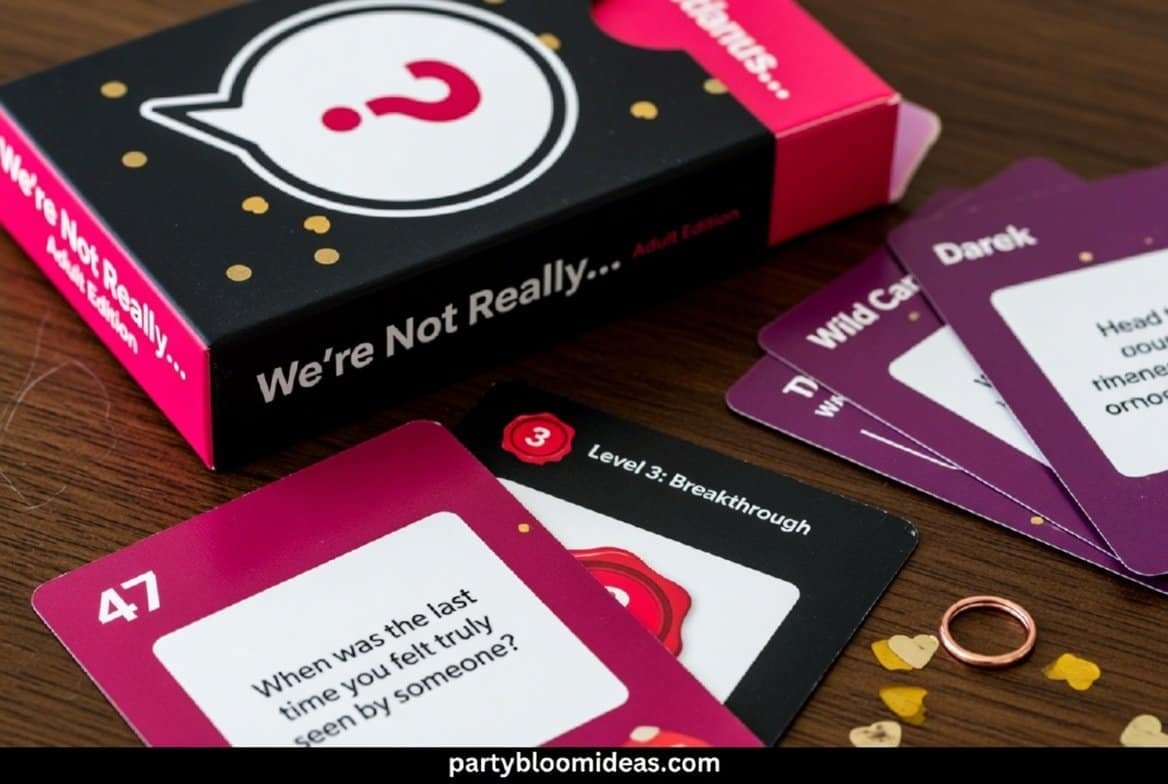
Best Game for Couples: We’re Not Really Strangers (Adult Edition)
We’re Not Really Strangers started as a card game designed to create deep connection between strangers — but the adult edition turns it into something genuinely revelatory and often unexpectedly funny. The game proceeds through three levels of questions: Perception, Connection, and Reflection, each getting progressively deeper and more personal.
At a surface level this sounds like it belongs at a therapy retreat, not a party. But here’s what actually happens in practice: the questions generate answers that no one expected, and the gap between who you thought someone was and who they actually are is where the real comedy — and real connection — lives.
I played this with three couples at a dinner party last Valentine’s Day. By the end of the second level, we had discovered that my husband’s college roommate, who we’d known for ten years, had once spent a week pretending to be a professional violinist at a resort in Mexico. We knew nothing about it. He’d never mentioned it. The story that followed — including why he couldn’t actually play violin, how he kept the act going, and when it eventually collapsed — had us crying with laughter for 20 minutes.
This game doesn’t work at high-energy crowded parties. It works best with 4–10 people in an intimate setting, ideally after dinner when the energy has naturally slowed. Think of it as the game that makes a good dinner party unforgettable. Price: $25.
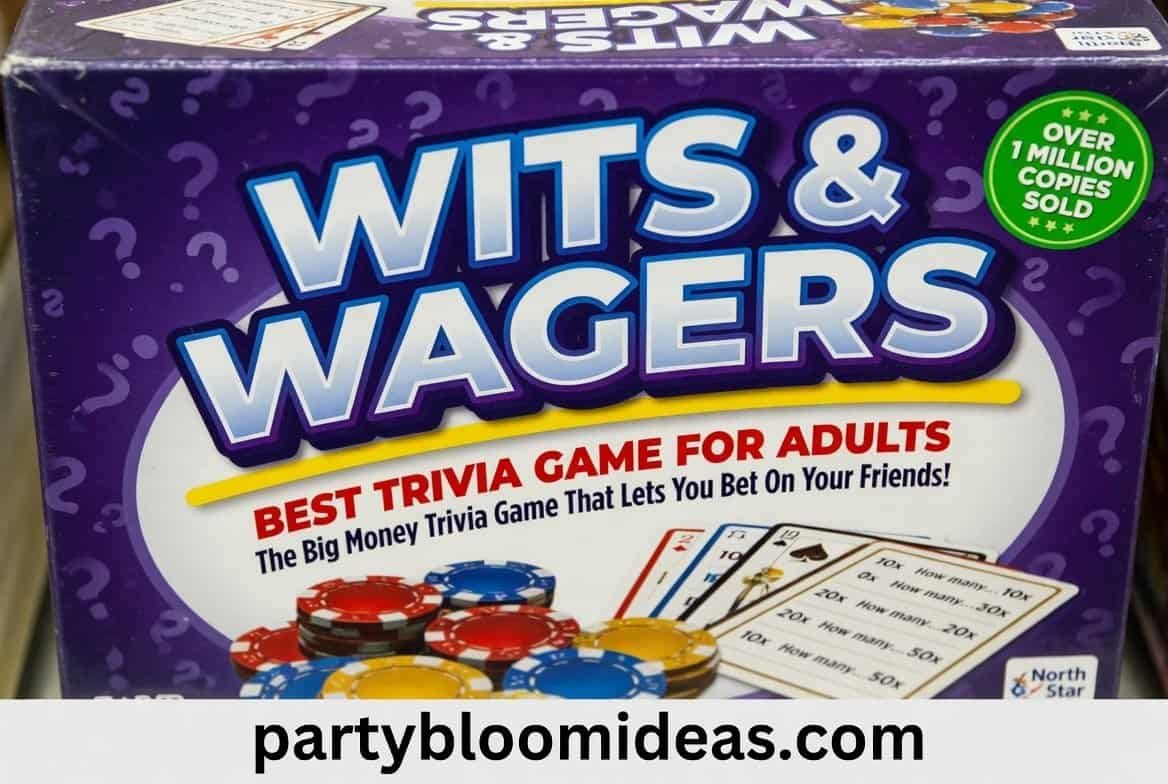
Best Trivia Game for Adults: Wits & Wagers
Trivia games at parties have a fundamental problem: if you don’t know the answer, you’re excluded. Most people don’t know enough trivia to enjoy a game that’s purely about being right. Wits & Wagers solves this brilliantly by making the game about betting rather than knowing.
Here’s how it works: every question has a numerical answer (What year was the first iPhone released? How many feet long is a blue whale?). Everyone writes down their guess. All the guesses are laid out in order. Then everyone bets on which guess they think is closest — including bets on other people’s guesses. You don’t have to know the right answer. You just have to judge which of the guesses on the table is most likely correct.
This changes everything. Someone who knows nothing about sports history can win against a sports encyclopedia, because they’re better at reading which guess is most reasonable. The game rewards a kind of social and intuitive intelligence that trivia games normally ignore — and that makes it genuinely fair and genuinely fun for mixed-knowledge groups.
In my experience, Wits & Wagers creates a specific type of laughter: the laughter of total confidence in a wrong answer. Nothing is funnier than watching someone bet all their chips on a guess that turns out to be off by 400 years. This game is particularly great for groups of 6–20 people. Price: $35.
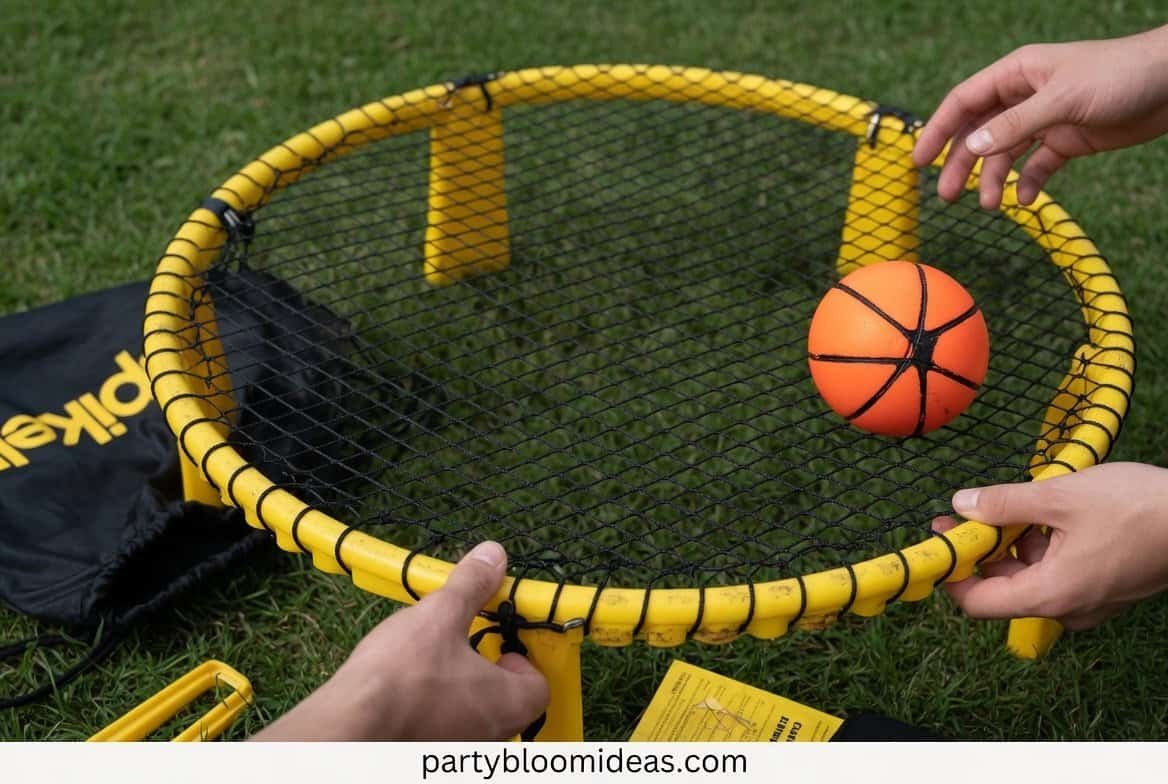
Best Physical Game for Adults: Spikeball
For parties that extend into the outdoors — backyard gatherings, beach parties, park meetups — Spikeball is the single most effective physical game for adults. It’s played 2-on-2 on a small circular trampoline-like net on the ground. Players spike a ball onto the net and opponents have three hits (like volleyball) to return it. Points are scored when the opposing team can’t return the ball.
Spikeball hits the sweet spot for adult parties: it’s competitive enough to be exciting, active enough to be engaging, but doesn’t require any real athletic skill to start playing. The learning curve is about five minutes. And watching adults who haven’t been truly athletic since college throwing themselves after a yellow ball while their friends scream from the sidelines generates a specific kind of joyful, self-deprecating laughter that’s uniquely satisfying.
The game also works brilliantly as party infrastructure — you set it up, a rotation of players cycles through, and it runs itself for hours. People who aren’t playing gather to watch and heckle, which creates its own entertainment. I’ve had Spikeball running at backyard parties from 3pm to 10pm with a continuous rotation of players who’d never met each other at the start of the day.
Spikeball starter sets run about $60 and are built to last several seasons. The investment pays off within the first party.
Best App-Based Game: Houseparty (or Kahoot! for Adults)
App-based party games have exploded in quality and variety over the last few years, and for good reason — everyone already has a smartphone in their pocket, making setup instantaneous. The two apps I recommend most for adult parties are dramatically different in tone but both reliably produce laughter.
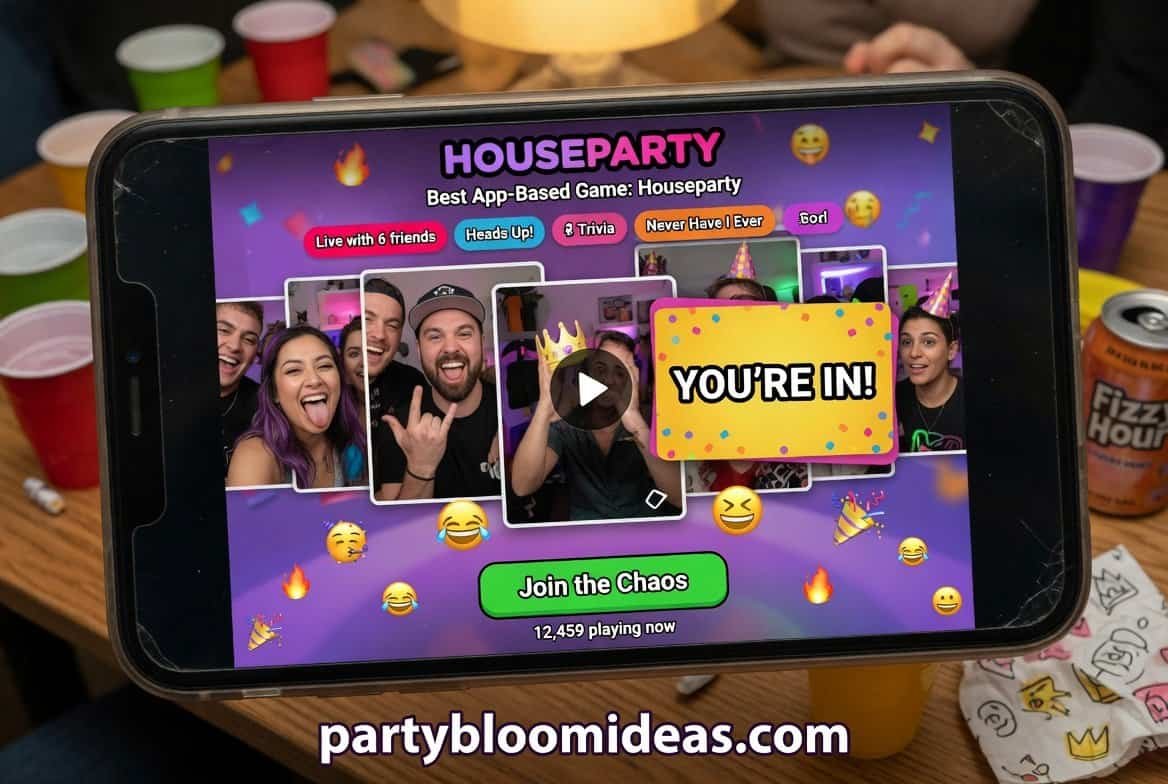
Houseparty includes a suite of quick games (Heads Up!, trivia, Chips and Guac) that are fast, easy, and designed specifically for party conditions — short attention spans, varying sobriety levels, and backgrounds noise. The games are designed to be played in 10-minute bursts, which makes them perfect for in-between-meal entertainment or energizing a party that’s starting to wind down.
Kahoot! is primarily known as an educational tool, but setting up a custom Kahoot! quiz about the guests at your party is one of the most hilariously memorable things you can do as a host. Before your party, create a quiz with questions about your guests — “Which of these people once ate an entire jar of peanut butter as a dare?” “Who here holds a world record for something?” “Which of these is a real tattoo that someone in this room has?” — and watch the chaos unfold. People are simultaneously embarrassed, flattered, and astonished by what others do and don’t know about them. It’s free, requires no physical supplies, and you can set it up in an afternoon.
How to Choose the Right Party Game for Your Crowd
After four years of party game testing, I’ve developed a simple decision framework that takes the guesswork out of choosing. Before selecting a game, answer these four questions.
1. How well do the guests know each other? For strangers or new acquaintances, icebreaker games (Never Have I Ever, Two Truths and a Lie, Jackbox’s Fibbage) work best because they reveal information in a low-stakes way. For close friends, deeper or edgier games (Cards Against Humanity, We’re Not Really Strangers) can go places that strangers couldn’t.
2. What’s the energy level? High-energy parties call for physical or high-speed games (Spikeball, Jackbox, Kings). Lower-energy settings — dinner parties, couples’ evenings — call for conversational games (Wavelength, We’re Not Really Strangers, Wits & Wagers).
3. How many people? For 4–8 people, intimate games like Wavelength or Wits & Wagers work beautifully. For 10–30 people, you need something that accommodates a crowd — Jackbox, Kahoot!, Two Truths and a Lie, Kings. For 30+, outdoor physical games (Giant Jenga, Spikeball) or app-based games become the best options.
4. Is everyone drinking? If your party has a mix of drinkers and non-drinkers, choose games where drinking is optional. Almost every game on this list works without alcohol — substitute drinks with chips, lives, or dare cards. Never make a party activity contingent on drinking; it excludes people and changes the energy in ways that aren’t always positive.
Pro Tips for Hosting a Game Night That Actually Works
Choosing the right game is only half the equation. How you run the game night matters just as much. Here are the lessons I’ve learned — sometimes painfully — from hosting over 20 adult game nights.
Start with something easy. The first game of the night should be low-pressure and quick to learn. Never open with a complex game that requires a long explanation. Jackbox, Two Truths and a Lie, or a quick round of Wits & Wagers are perfect openers. Get people laughing early, and the rest of the night follows naturally.
Know when to switch games. The biggest mistake new game night hosts make is playing one game too long. When the energy starts to dip — when people are checking their phones, when conversation is happening more than the game — it’s time to switch. A good game night moves through 3–4 different games rather than playing one game for 3 hours.
Don’t force participation. Some guests genuinely don’t enjoy competitive games, and that’s fine. Have a “spectator option” for every game. People who watch and heckle are just as valuable to a game night’s energy as active players — sometimes more so. If someone doesn’t want to play, never pressure them. Let them cheer from the sidelines.
Manage rules confidently. Read the rules before guests arrive so you can explain any game in under two minutes. If someone challenges a rule during the game, make a quick call and move on — don’t spend five minutes debating the rulebook. Speed and momentum matter more than perfect rule accuracy.
Feed people before games. This sounds obvious but is chronically underestimated. Hungry adults are irritable adults. Make sure everyone has eaten and has a drink in hand before you start the first game. The logistics of food mid-game break concentration and kill momentum.
Quick Reference: The Complete Party Game Cheat Sheet
Here’s a quick summary of every game recommended in this guide:
- Jackbox Party Pack: Best overall — works for any group, any age, any size. $10–$30.
- What Do You Meme?: Best card game — perfect for 5–15 people with pop culture fans. $30.
- Cards Against Humanity: Best for dark humor — know your audience. $29.
- Two Truths and a Lie (evolved): Best for large groups — free, no supplies needed.
- Wavelength: Best for small groups — deep, funny, and surprisingly revealing. $35.
- Never Have I Ever (card game): Best icebreaker for strangers. $20.
- Kings: Best drinking game — just a deck of cards. Free if you have cards.
- Giant Jenga with dares: Best outdoor game — visual, exciting, all ages. $50.
- The Accent Game: Best zero-supply game — free, unlimited players, hilarious.
- We’re Not Really Strangers: Best for couples/intimate groups. $25.
- Wits & Wagers: Best trivia game — works even if no one knows trivia. $35.
- Spikeball: Best physical game for outdoor parties. $60.
- Kahoot! (custom quiz): Best app game — free, no supplies, endlessly customizable.
Frequently Asked Questions About Adult Party Games
What are the best party games for adults who don’t drink?
Almost every game on this list works without alcohol. Replace drinks with poker chips, finger-lives, or dare cards. Jackbox, Wavelength, What Do You Meme?, Wits & Wagers, and Giant Jenga are all naturally non-drinking games. For “drinking” games like Kings, simply substitute sparkling water or juice — the mechanics work identically.
What are good party games for mixed ages?
For mixed-age groups (say, 25 to 65), stick to games with universal mechanics that don’t rely on generational references. Jackbox’s Drawful and Fibbage work brilliantly across age ranges. Wits & Wagers works for any age. Giant Jenga is universally accessible. Avoid games that rely heavily on internet meme culture (What Do You Meme?) with significantly older guests.
What party games work for 20 or more people?
For large groups, the best options are: Jackbox (plays up to 10 active, unlimited audience), Two Truths and a Lie (unlimited players), Kahoot! custom quizzes (unlimited players), Kings (can work up to 20), Giant Jenga (spectator sport with a natural rotation), and Spikeball (ongoing rotation with crowd watching).
What is the funniest party game for adults?
Based on four years of testing, Jackbox’s Quiplash generates the most consistent, uncontrollable laughter across the widest variety of groups. If I could only bring one game to any party for the rest of my life, it would be Jackbox Party Pack 3.
How many games should I plan for a game night?
Plan for 3–4 games for a 3–4 hour game night. Open with a quick, easy game (20–30 minutes), move to a medium-length game (30–45 minutes), then do one longer or more intensive game (45–60 minutes), and optionally close with a low-key conversation game. Variety in game type — physical, card, app, word — keeps energy levels from flatlining.
Final Thoughts: The Right Game Changes Everything
Looking back at that terrible 30th birthday party — the one where everyone stood around staring at their phones — I don’t feel embarrassed anymore. I feel grateful. That night taught me something I use every single week: adults desperately want to play, laugh, and connect. They’ve just forgotten how, or lost the permission to do it.
The right party game gives people that permission. It creates a shared context where no one needs to be impressive, where strangers can become friends, and where even the quietest person in the room can become the funniest one for a moment. That’s not a small thing. In a world where everyone is slightly too online and slightly too isolated, a really good game night is an act of genuine hospitality.
The games on this list have been tested, refined, and played in real conditions with real people. They work. They’re worth every penny, and most of them cost less than a single round of drinks.
So pick one. Buy it tonight. Text your friends. Set a date. Your best party is still ahead of you — it just needs the right game to set it on fire.
If this guide helped you, pin it for later and share it with whoever in your life is planning a party. And if you have a game I haven’t mentioned that deserves to be on this list — drop it in the comments. I’m always looking for the next obsession.
— Jamie Calloway
You Might Also Like:
- Best Hosting Tips for a Stress-Free Dinner Party
- How to Plan a Game Night Everyone Will Actually Enjoy
- Best Cocktail Recipes for a Crowd (Batch Drinks That Work)
- Best Outdoor Party Ideas for Backyard Gatherings
Read more : 30 Best Summer Party Ideas for the Ultimate Backyard Bash (2026)