25 Party Food Ideas That Are Easy, Cheap, and Crowd-Pleasing
Easy Cheap Party Food Ideas are usually the ones people remember the most at gatherings, not the complicated dishes that take hours to prepare. I learned this the hard way after years of hosting parties where I would spend days cooking elaborate meals, only to find that guests kept asking for the simplest things on the table.
I used to host parties the hard way. I would spend two days cooking, produce eight different dishes of varying complexity, exhaust myself completely before the first guest arrived, and then spend the evening too tired and too proud of my effort to actually enjoy any of it. The feedback was always kind. But the recipe people asked for was never the French onion tart or the hand-rolled pasta. It was always the dip. The sliders. The thing I’d thrown together in fifteen minutes from things I already had.
What followed was a years-long education in the art of party food that actually works — food that travels well, feeds a crowd without requiring a second mortgage, keeps people coming back to the table, and leaves the host standing upright and happy at the end of the evening. These 25 ideas are the best of everything I’ve learned. They work. Every single one of them.
1. Build a Seven-Layer Dip That Does All the Work for You
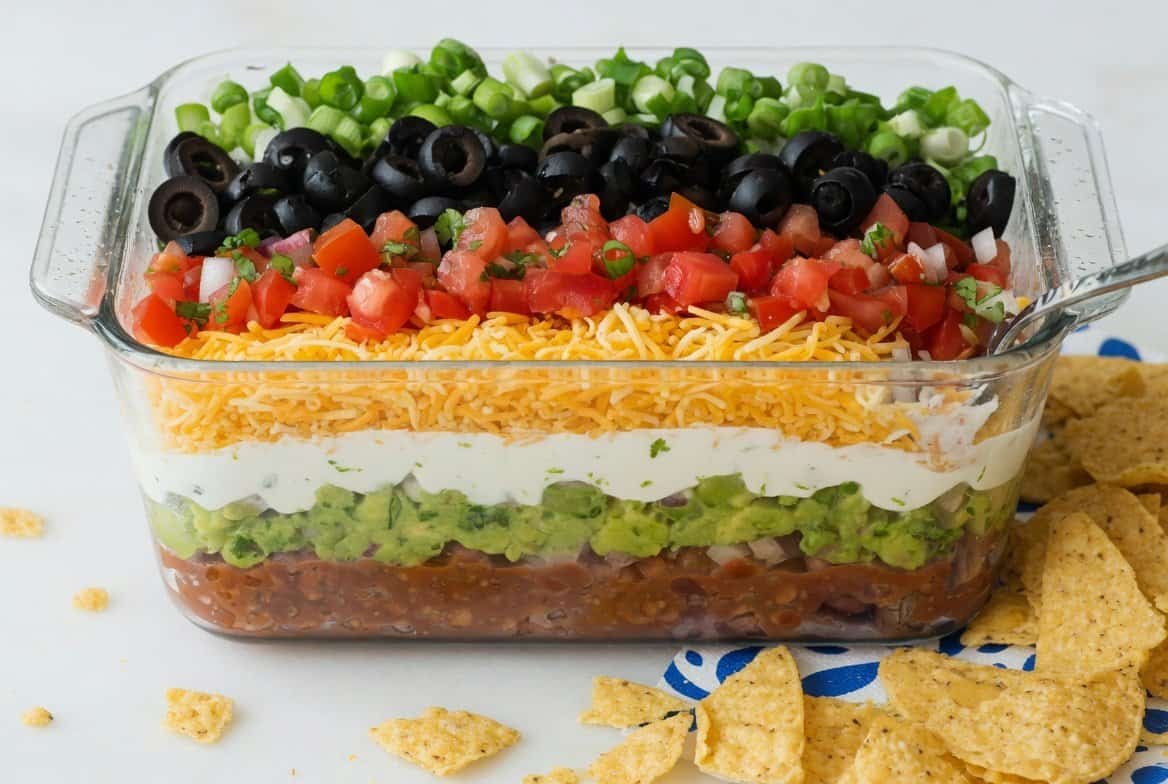
If there is a single party food that has achieved genuine cultural immortality in American entertaining, it is the seven-layer dip. Every generation rediscovers it. Every gathering benefits from it. It requires zero cooking, scales from a 9-by-13 pan for twenty people to a single serving dish for six, and produces a food experience — the combination of creamy, spicy, fresh, and salty in a single scoop — that is genuinely difficult to walk away from once you’ve started.
The classic seven layers, built from bottom to top: refried beans (seasoned with a little cumin and lime juice — don’t skip the seasoning), a layer of sour cream blended with taco seasoning, a layer of guacamole made fresh or purchased high-quality store-bought, shredded Mexican cheese blend, diced fresh tomatoes with the seeds removed so they don’t water the dip down, sliced black olives, and a generous scatter of sliced green onions across the top. Each layer should be thick enough to see distinctly when the dip is viewed from the side in a glass dish — the cross-section is part of the visual appeal.
Two details elevate seven-layer dip from good to genuinely great: first, using a clear glass dish so the layers are visible from the side; second, making the guacamole layer properly rather than spreading plain mashed avocado. Season it with lime, salt, a pinch of cumin, and fresh cilantro. The guacamole layer is the heart of the dip — if it’s flat and underseasoned, the whole thing suffers. If it’s bright and well-made, it carries every layer above and below it. Serve with thick, sturdy tortilla chips that can handle a proper deep scoop without breaking.
2. Make Mini Sliders on Hawaiian Rolls — The Party Sandwich That Never Fails
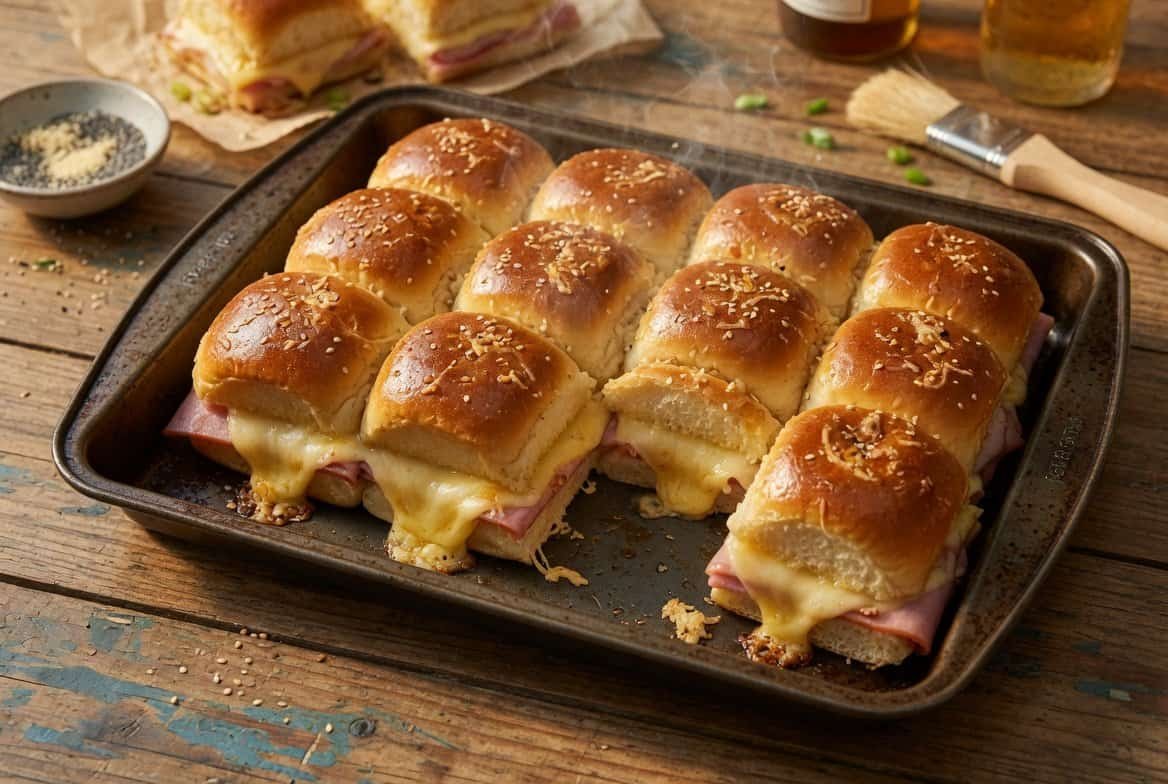
Hawaiian roll sliders are one of the most reliably beloved party foods in existence, and their popularity is completely deserved. The pillowy sweetness of Hawaiian rolls creates a contrast with savory fillings that is almost addictively appealing. They are bite-sized, which means guests feel no commitment in picking one up, yet substantial enough that two or three constitute a real portion of food. They can be prepared almost entirely in advance, baked just before serving, and held warm for up to an hour without losing quality.
The classic version uses thin-sliced deli ham and Swiss cheese melted inside the rolls, topped with a buttery Dijon-poppy seed glaze that goes over the entire pan of rolls before baking. But the format is endlessly versatile: pulled pork and coleslaw, cheeseburger with pickles and mustard, buffalo chicken with blue cheese, or a vegetarian version with roasted mushrooms and brie all work brilliantly within the same structural concept.
The technique is the key: slice the entire sheet of rolls in half horizontally without separating them, keeping the top and bottom connected. Layer your filling across the bottom half, replace the tops, pour the butter glaze over everything, cover tightly with foil, and bake at 350°F for fifteen minutes covered and five minutes uncovered until golden. Slice between the rolls along the perforations and serve directly from the pan. The shared pan format — where guests pull their own slider from a communal arrangement — is inherently social and creates the kind of casual, communal energy that elevates a gathering from a meal into a party.
3. Set Up a Chips and Dips Station With Three Homemade Dips
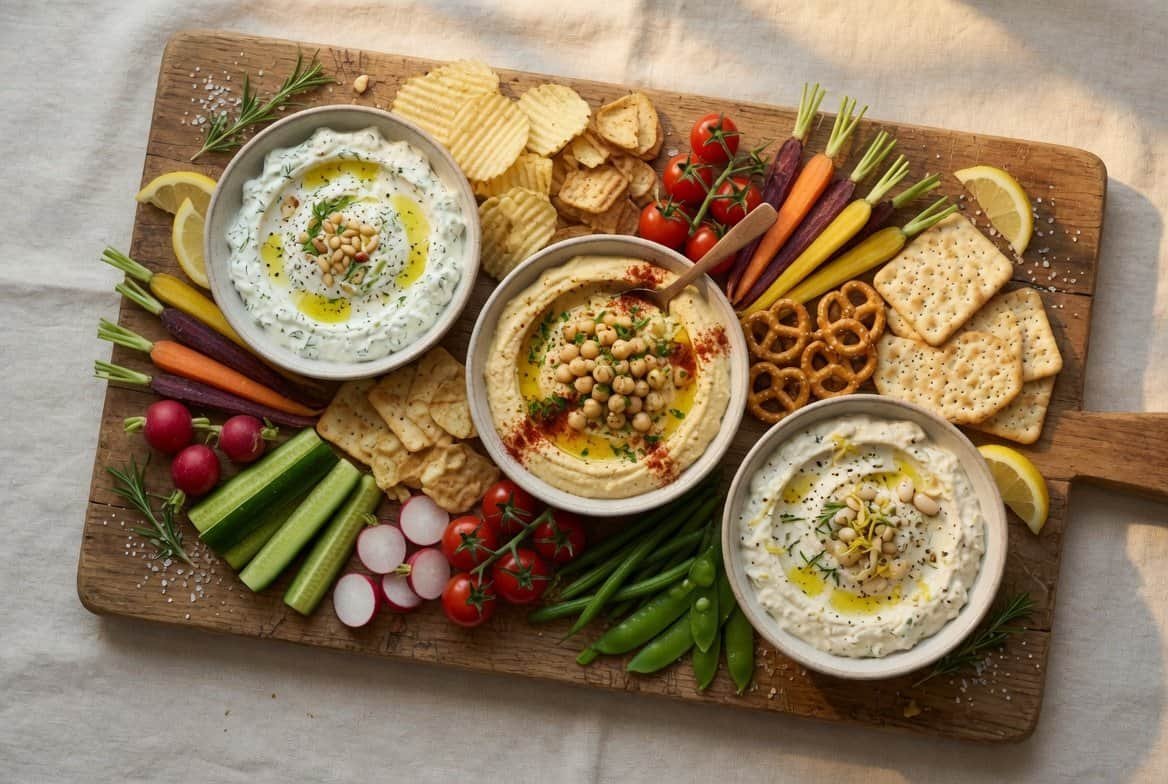
A chips and dips station sounds simple — and it is — but the difference between a chips-and-dips setup that guests walk past once and one they return to throughout the entire party lies entirely in the quality and variety of the dips. Store-bought salsa and ranch from a bottle are fine. Three housemade dips presented in beautiful bowls surrounded by an assortment of chips and crackers are a destination.
Three dips that are genuinely easy, genuinely impressive, and genuinely inexpensive to make in large quantities: first, a whipped feta dip — blend one block of feta cheese with half a cup of Greek yogurt, a squeeze of lemon, a clove of garlic, and a drizzle of olive oil in a food processor until smooth. Top with a drizzle of honey and cracked pepper. It takes five minutes and tastes like something from a Mediterranean restaurant. Second, a white bean and herb dip — blend two cans of rinsed cannellini beans with olive oil, garlic, fresh rosemary, lemon juice, and salt. Smooth, creamy, and deeply savory. Third, a roasted red pepper hummus — add two roasted red peppers (jarred works perfectly) to a standard hummus base for a slightly smoky, intensely colored dip that is as beautiful as it is delicious.
Surround the three dips with variety: pita chips, classic tortilla chips, sliced cucumber rounds, celery sticks, baby carrots, and sturdy crackers in two or three styles. The variety of vehicles is as important as the variety of dips — guests with different textures preferences and dietary needs find something that works for them, and the visual abundance of a well-stocked dip station communicates generosity in a way that a single bowl of salsa simply does not.
4. Serve Caprese Skewers — Elegant, Fresh, and Ready in Minutes
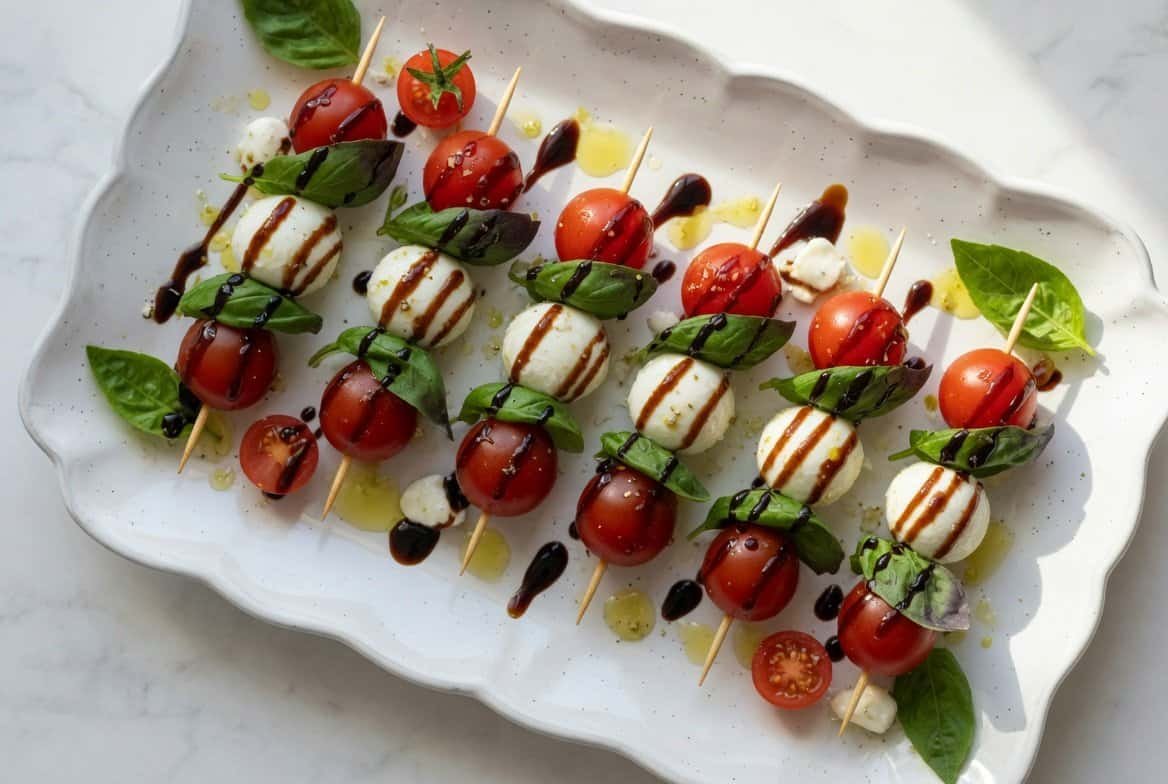
Caprese skewers are the party food equivalent of a little black dress: effortlessly elegant, universally flattering, and appropriate at every occasion from a casual backyard cookout to a formal cocktail party. They require no cooking, minimal preparation, look spectacular on a serving platter, and deliver a flavor combination — fresh mozzarella, ripe tomato, fresh basil, good olive oil — that is fundamentally, reliably delicious in a way that elaborate preparations often fail to be.
Thread each skewer with one cherry tomato, one small fresh mozzarella ball (ciliegine), and one folded fresh basil leaf. Arrange them on a platter in a radiating pattern or neat rows. Immediately before serving, drizzle generously with good extra virgin olive oil and a high-quality balsamic glaze — not balsamic vinegar, but the thick, sweet, concentrated glaze that comes in a squeeze bottle and has the consistency of light syrup. Finish with flaky sea salt and cracked black pepper.
The budget version of this that tastes just as good: buy the largest fresh mozzarella ball available, slice it into bite-sized pieces, and use grape tomatoes cut in half if cherry tomatoes are expensive. The components are the same; the presentation is slightly less pristine but equally delicious. At a party where food is competing with conversation, music, and movement for attention, the flavor matters more than the precise size of each mozzarella piece.
5. Make a Giant Charcuterie Board — The No-Cook Crowd Pleaser
The charcuterie board has earned its place as the default impressive-looking no-cook option at any gathering, and for excellent reasons: it requires no recipes, no timing, no cooking skill whatsoever, and yet produces a visual result — the abundance of a well-loaded board — that consistently generates admiration from guests who assume more effort went into it than actually did. It is the most honest party deception available to any host.
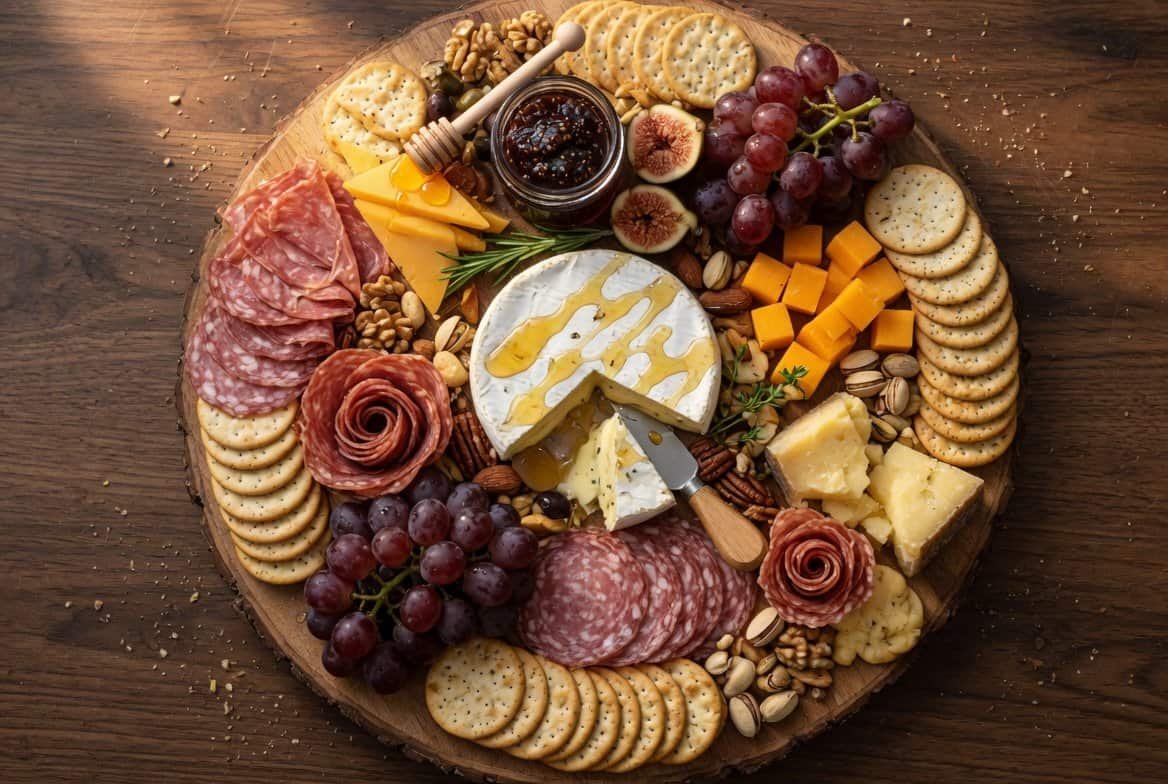
The principle of a great charcuterie board is contrast and abundance. Contrast of flavor (salty, sweet, sharp, mild), contrast of texture (soft, crunchy, chewy, spreadable), and contrast of color (pale cheese against dark meat against bright fruit against golden crackers). Abundance communicates generosity — a charcuterie board where you can see the wood through the ingredients is a board that wasn’t built with enough commitment. Cover every inch.
For a budget-conscious party board: buy one or two meats in larger, less expensive formats (a whole salami to slice yourself rather than pre-sliced charcuterie, a block of prosciutto-style ham rather than individually packaged slices), choose two or three cheeses at different price points (a sharp cheddar, a soft brie, and a hard parmesan represent excellent variety at minimal cost), and fill the gaps with items that are cheap but visually effective — grapes, apple slices, crackers, almonds, olives, cornichons, and a small jar of honey or fig jam. A board assembled this way for twenty people costs $30–50 and looks like it cost three times that.
6. Bake Pigs in Blankets — They Disappear Before You Set Them Down
There is a specific phenomenon that occurs whenever pigs in blankets appear at a party: they vanish. Not gradually, not steadily — they vanish within minutes, often before the host has made it from the kitchen to the main room. I have watched adults who moments earlier were insisting they weren’t hungry suddenly consuming their fourth miniature sausage wrapped in pastry without any apparent awareness of doing so. Something about the combination of flaky pastry and savory sausage activates a primal enthusiasm in virtually every human being who encounters it.
The recipe is as simple as party food gets: cut sheets of crescent roll dough or puff pastry into small triangles, place a cocktail sausage (Lit’l Smokies work perfectly) at the wide end, roll toward the point, and bake at 375°F for twelve to fifteen minutes until golden brown. That is the entire recipe. The variations available within this simple structure are worth exploring: brush with honey mustard before rolling for a sweet-spicy interior; wrap in bacon strips instead of pastry for a more indulgent version; add a small square of sharp cheddar inside each roll before wrapping for a cheese pull effect; or sprinkle everything bagel seasoning over the tops before baking for an everything-bagel pig in blanket that is genuinely remarkable.
Make them in the largest quantity your oven can handle. A sheet pan of 24 pigs in blankets is not enough for a party of twenty. Two sheet pans are a reasonable starting point. Three is better. The cost per piece is genuinely negligible — a pack of cocktail sausages and two tubes of crescent dough feeds a group of fifteen people as an appetizer for under ten dollars. No party food offers better value per unit of crowd-pleasing impact.

7. Prepare Deviled Eggs With a Twist on the Classic
Deviled eggs occupy an interesting place in the social history of American party food: they went through a long period of being considered old-fashioned and unfashionable, and then quietly, without announcement, became one of the most beloved and requested party dishes across all age groups and demographics. Every generation rediscovers them independently. Every generation is slightly surprised by how good they are. They are a party food that never actually went away — it just spent some years being underappreciated.
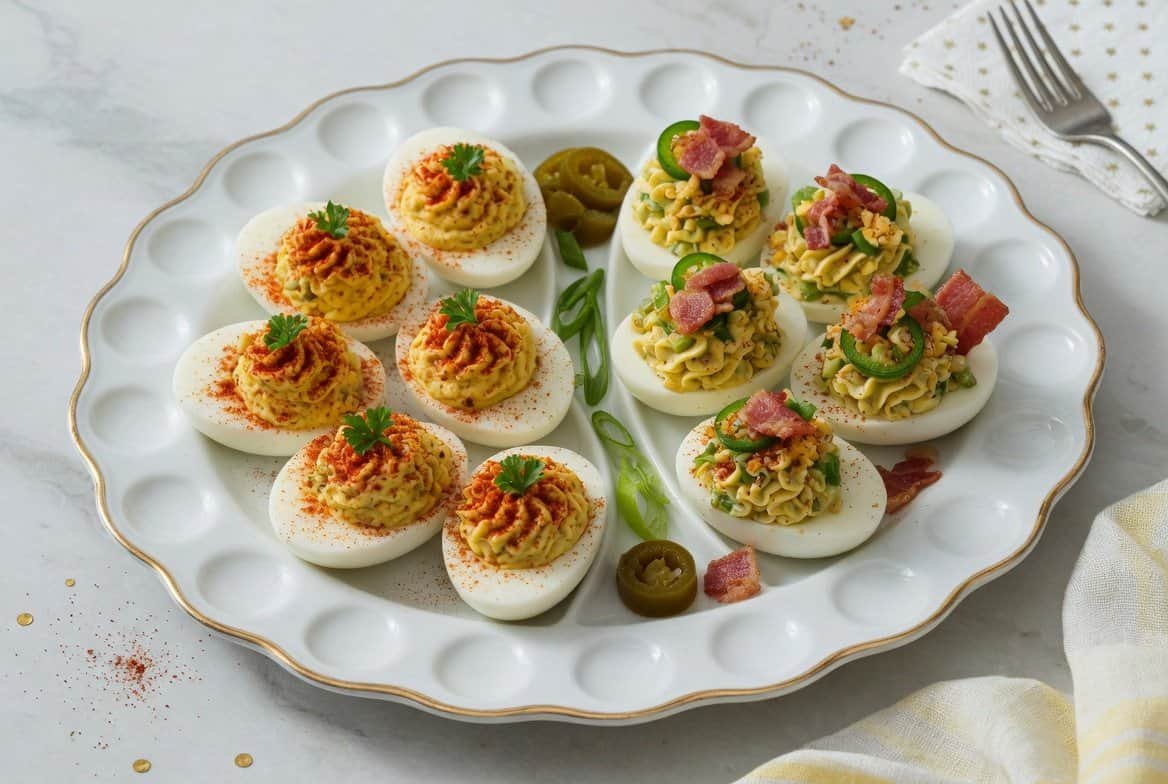
The classic deviled egg filling — yolks mashed with mayonnaise, yellow mustard, a splash of pickle juice, salt, and white pepper, piped or spooned back into the white halves and finished with a dusting of paprika — is genuinely excellent and should not be abandoned in the pursuit of novelty. But the variations available within the deviled egg format are worth exploring, and offering two versions on the same platter creates interest and choice without significantly more effort.
Variations worth making: a smoked salmon deviled egg, where the yolk filling is enriched with cream cheese, capers, and dill, topped with a small piece of smoked salmon and a tiny frond of fresh dill — elegant and impressive. A jalapeño popper deviled egg, where diced pickled jalapeños and shredded cheddar are folded into the filling and topped with a crispy bacon crumble — essentially a jalapeño popper in egg form, which is as good as it sounds. Make both, alternate them on the platter, and label them with small toothpick flags so guests know what they’re choosing. Two versions on one platter makes the whole arrangement feel considered rather than cobbled together.
8. Make Buffalo Chicken Dip in a Slow Cooker and Leave It There
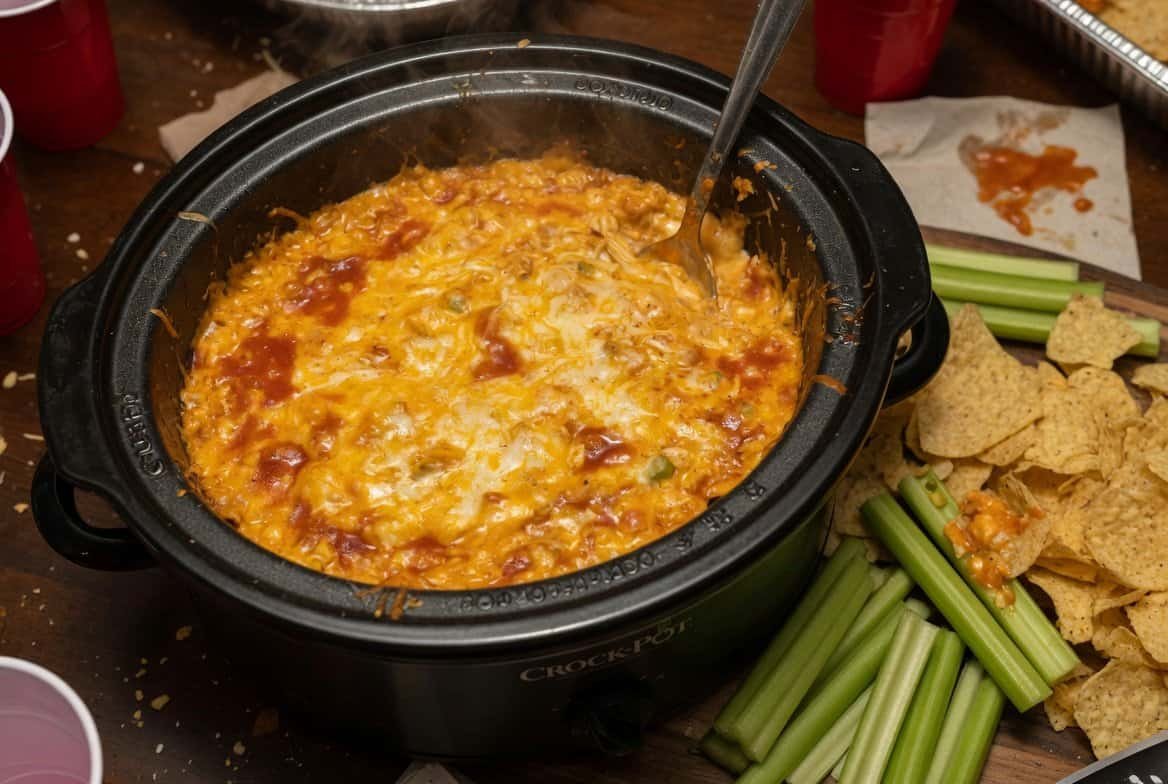
Buffalo chicken dip is the kind of recipe that seems almost too simple to produce results this good — and yet produces results this good, every single time, with no exceptions and no failures. It is warm, creamy, tangy, slightly spicy, and deeply satisfying in a way that cold dips simply cannot replicate. It is also, crucially, a slow cooker recipe, which means it requires about ten minutes of preparation, four hours of completely unattended cooking, and then stays warm and ready for the entire duration of the party without any further intervention from you.
The recipe: combine two cans of shredded chicken (or two cups of shredded rotisserie chicken — the rotisserie version tastes better and is worth the small extra effort), one block of cream cheese cut into cubes, half a cup of Frank’s RedHot sauce (this is not the place for substitutions — Frank’s is the correct answer), half a cup of ranch dressing, and one cup of shredded cheddar in your slow cooker. Cook on low for three to four hours, stir well to combine, and serve directly from the slow cooker set to warm. Provide sturdy dippers: celery sticks, pita chips, tortilla chips, and sliced baguette all work beautifully.
The practical genius of the slow cooker approach is the elimination of active serving effort. You make it, you plug it in, and it handles itself for the rest of the party while you do other things. Guests serve themselves whenever they want. The dip stays at the perfect temperature. You never have to think about it again until cleanup. For a host managing twelve simultaneous responsibilities on the day of a party, a dish that takes care of itself is not a convenience — it is a lifeline.
9. Roll Up Pinwheel Sandwiches the Night Before
Pinwheel sandwiches are the most prep-friendly party food in this entire list — they are made entirely the night before the party, wrapped tightly in plastic wrap, refrigerated overnight, and sliced into rounds the morning of the event. They require no reheating, no assembly on the day, and no active maintenance during the party. If you are a host who panics about last-minute kitchen chaos, pinwheel sandwiches are your best friend.
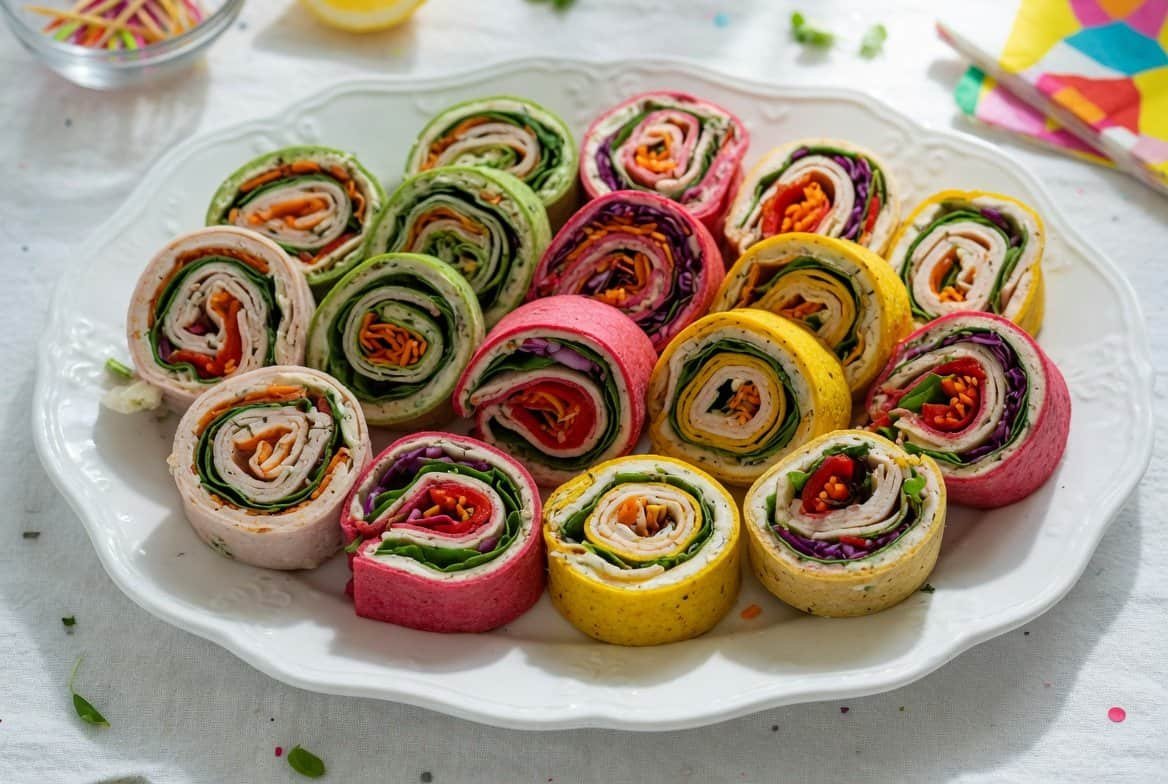
The method: lay a large flour tortilla flat on a clean surface, spread a thin, even layer of cream cheese across the entire surface, then layer toppings across the lower two-thirds of the tortilla (leaving the top third clear for rolling). Roll tightly from the bottom, pressing gently as you go to keep the roll compact. Wrap tightly in plastic wrap, twist the ends closed, and refrigerate for at least four hours and up to overnight. Slice into one-inch rounds just before serving.
Filling combinations that work consistently well: cream cheese with thin-sliced turkey, spinach, sun-dried tomato, and pesto; cream cheese with smoked salmon, capers, and dill; cream cheese with roasted red pepper, arugula, and fresh mozzarella; or a crowd-pleasing classic with cream cheese, deli ham, cheddar, and a thin layer of yellow mustard. For a party with mixed dietary needs, offer two varieties — one meat-based and one vegetarian — on the same platter. The pinwheel cross-section, showing the colorful filling spiral, looks visually impressive and professional with essentially no technical skill required.
10. Serve Bruschetta on a Platter With Two Toppings
Bruschetta is one of those party foods that consistently surprises guests with how good it is despite being composed of entirely humble ingredients. Great bread, good olive oil, ripe tomatoes, fresh basil, garlic — these are not luxury ingredients, but their combination, particularly when the bread is properly toasted and the topping is freshly made and well-seasoned, produces something genuinely extraordinary. It is one of the few party foods that gets appreciably better every time you slightly improve one of its elements.
Toast your bread correctly: slice a baguette into half-inch rounds, brush both sides lightly with olive oil, and place on a baking sheet in a 400°F oven for eight to ten minutes, turning once, until golden and crisp. Alternatively, grill them over direct heat for two minutes per side — the grill marks and slight char add flavor and visual character that oven-toasting alone doesn’t achieve. While still warm from the oven or grill, rub each slice with the cut side of a raw garlic clove. The raw garlic melts slightly into the warm bread and perfumes it in a way that adding minced garlic to the topping does not replicate.
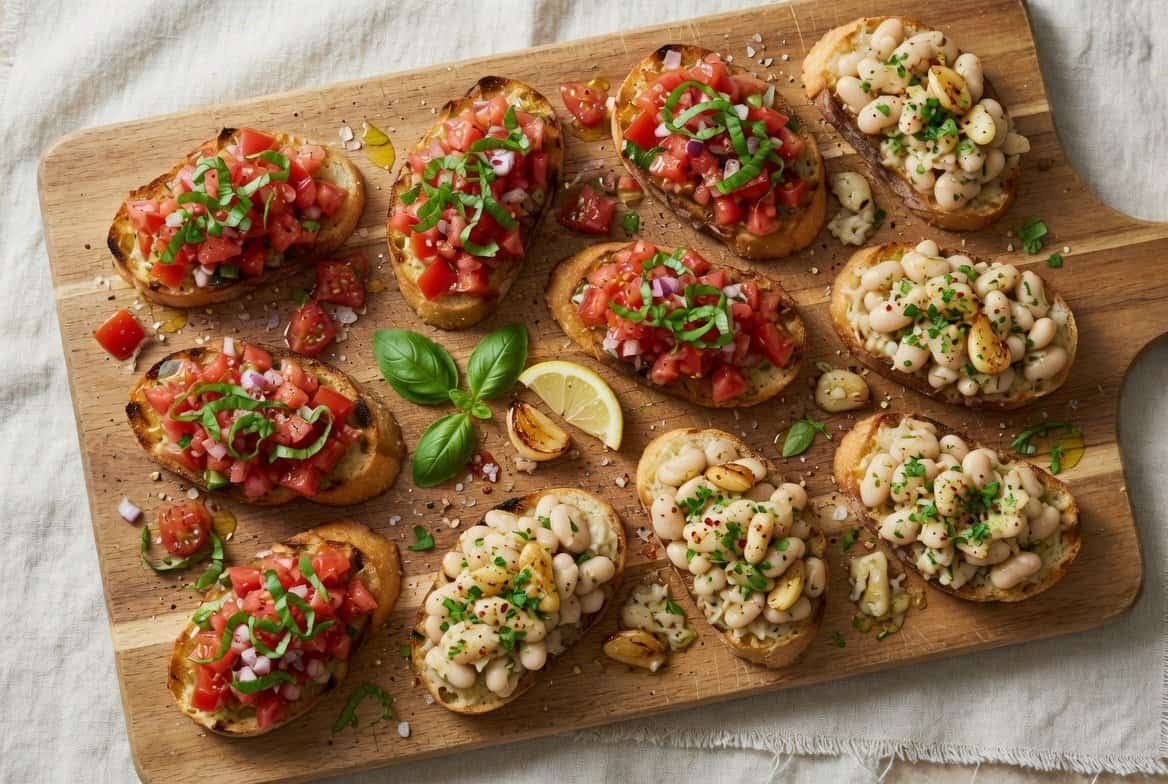
Offer two toppings for variety and visual interest: the classic tomato bruschetta (ripe tomatoes diced small, fresh basil chiffonade, olive oil, balsamic vinegar, salt, and pepper — mixed and allowed to macerate for at least thirty minutes before serving so the flavors develop) alongside a white bean and roasted garlic bruschetta (canned cannellini beans mashed with roasted garlic paste, olive oil, lemon zest, and fresh thyme). The contrast of the bright red tomato topping and the creamy pale bean topping on the same platter is visually striking and offers guests a genuine choice rather than a single option.
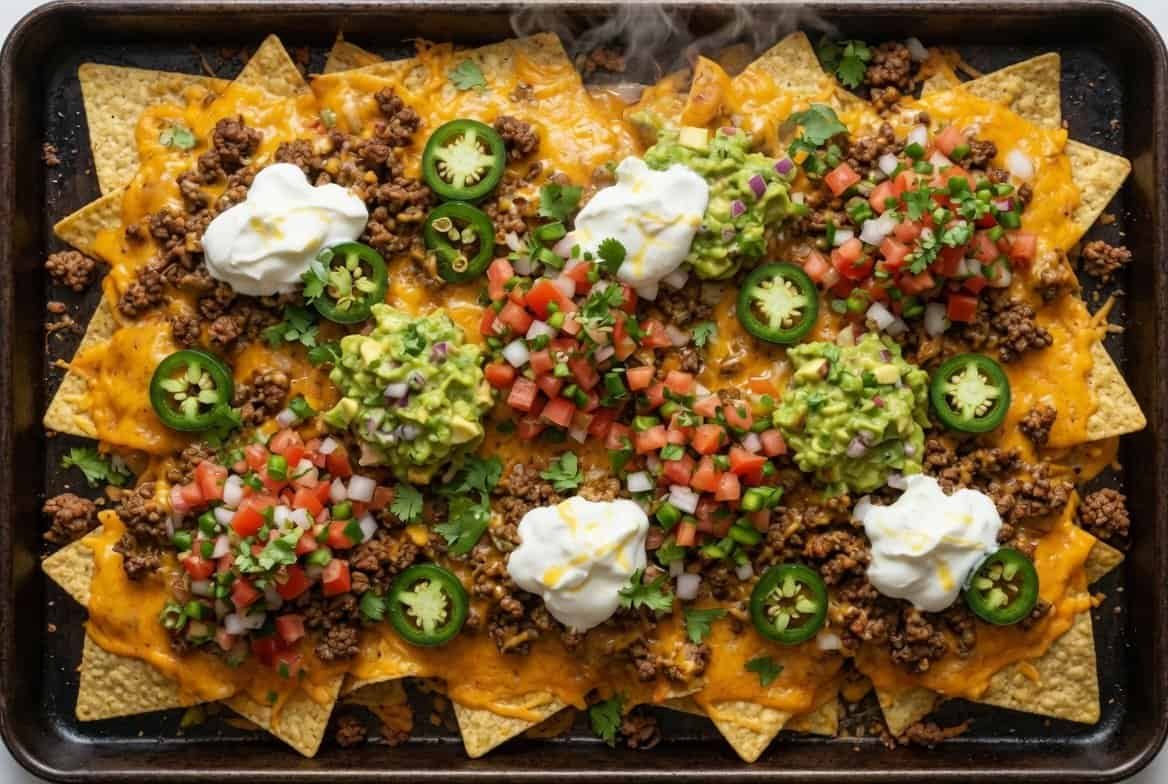
11. Make Sheet Pan Nachos for Effortless Crowd Feeding
The crucial difference between nachos that are spectacular and nachos that are disappointing is structural — and the most common structural failure of nachos is the pile format, where chips are heaped in a bowl and toppings are added on top, resulting in the top layer having everything and every subsequent layer having progressively less until the bottom chips are completely bare. Sheet pan nachos solve this problem by forcing a single layer and even topping distribution.
Spread thick tortilla chips in a single layer across a large rimmed sheet pan — they can touch but should not overlap more than slightly. Distribute your toppings evenly across the entire surface: seasoned ground beef or chicken, black beans, shredded cheese (use two types — a good melting cheese like Monterey Jack plus sharp cheddar for flavor), sliced jalapeños, and diced onion. Every chip gets toppings. Every chip gets cheese. Bake at 400°F for eight to ten minutes until the cheese is fully melted and beginning to bubble at the edges.
Finish with cold toppings added after baking: dollops of sour cream, spoonfuls of guacamole, fresh pico de gallo, and sliced avocado. These cold elements create a temperature contrast with the hot cheese and warm chips that is one of the defining pleasures of good nachos. Serve directly from the sheet pan — slide it onto the table on a trivet and let guests serve themselves with tongs or a large spatula. The communal, slightly chaotic nature of sheet pan nachos is part of their charm: everyone is leaning in, navigating around each other’s favorite corner of the pan, negotiating for the best chip.
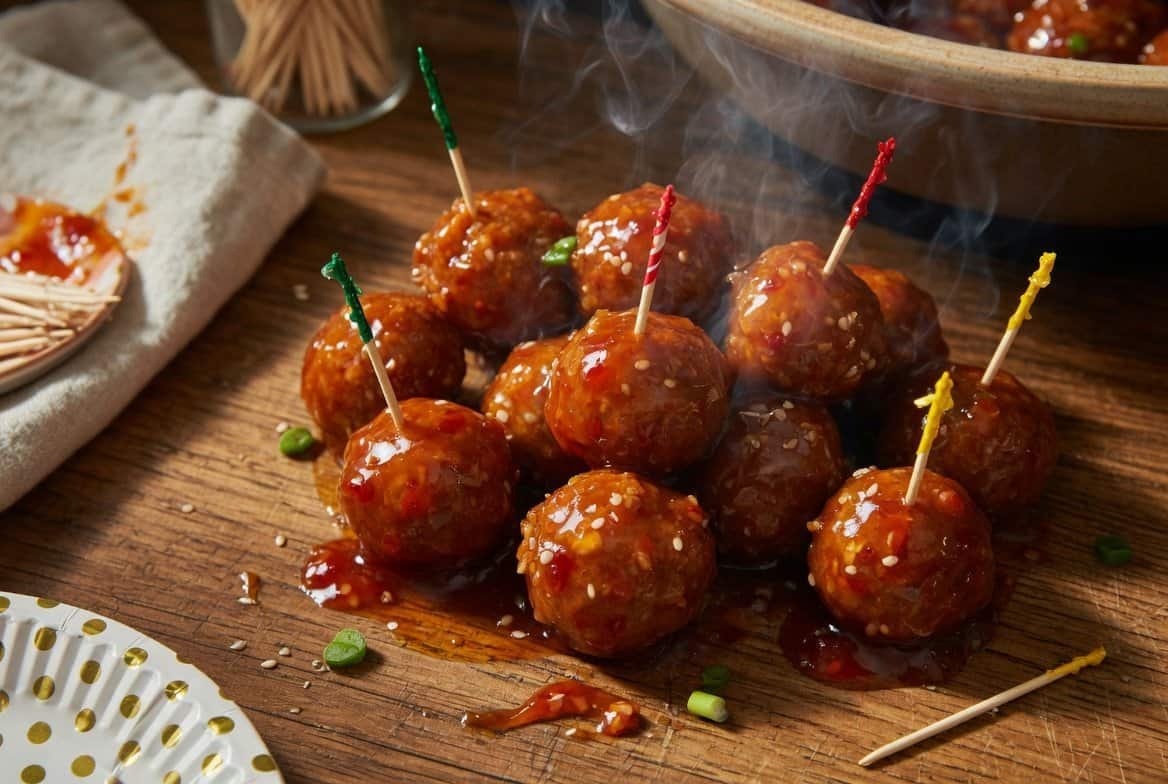
12. Cook Meatballs in the Slow Cooker With Grape Jelly Sauce
I know what you’re thinking. Grape jelly? In a savory dish? At a party? Yes. I’m asking you to trust a combination that has been making people happy at potlucks, parties, and holiday gatherings since the 1950s, because the sweet-tangy-savory combination of grape jelly and chili sauce over meatballs is one of the most genuinely crowd-pleasing flavor profiles in the entire canon of American party food. It works. Everyone eats them. Everyone asks for the recipe. And the recipe is, almost comically, two ingredients plus frozen meatballs.
Combine one jar of grape jelly and one bottle of Heinz chili sauce (the tomato-based, moderately spiced chili sauce found in the condiment aisle — not hot sauce) in a slow cooker. Stir to combine. Add one to two bags of frozen fully-cooked cocktail meatballs directly from the freezer — no thawing, no browning, straight in frozen. Cook on high for two to three hours or low for four to five, stirring occasionally, until the sauce is thick and glossy and the meatballs are heated through. Serve directly from the slow cooker with toothpicks for spearing.
The grape jelly breaks down completely during cooking, contributing sweetness and body without any discernible “jelly” flavor in the finished dish. The chili sauce provides tomato richness, vinegar tang, and mild spice. Together they coat the meatballs in a sauce that is impossible to categorize precisely — sweet, savory, tangy, and warming simultaneously — and that inspires in guests the slightly puzzled enjoyment of something that tastes better than any description of its ingredients could prepare you for.
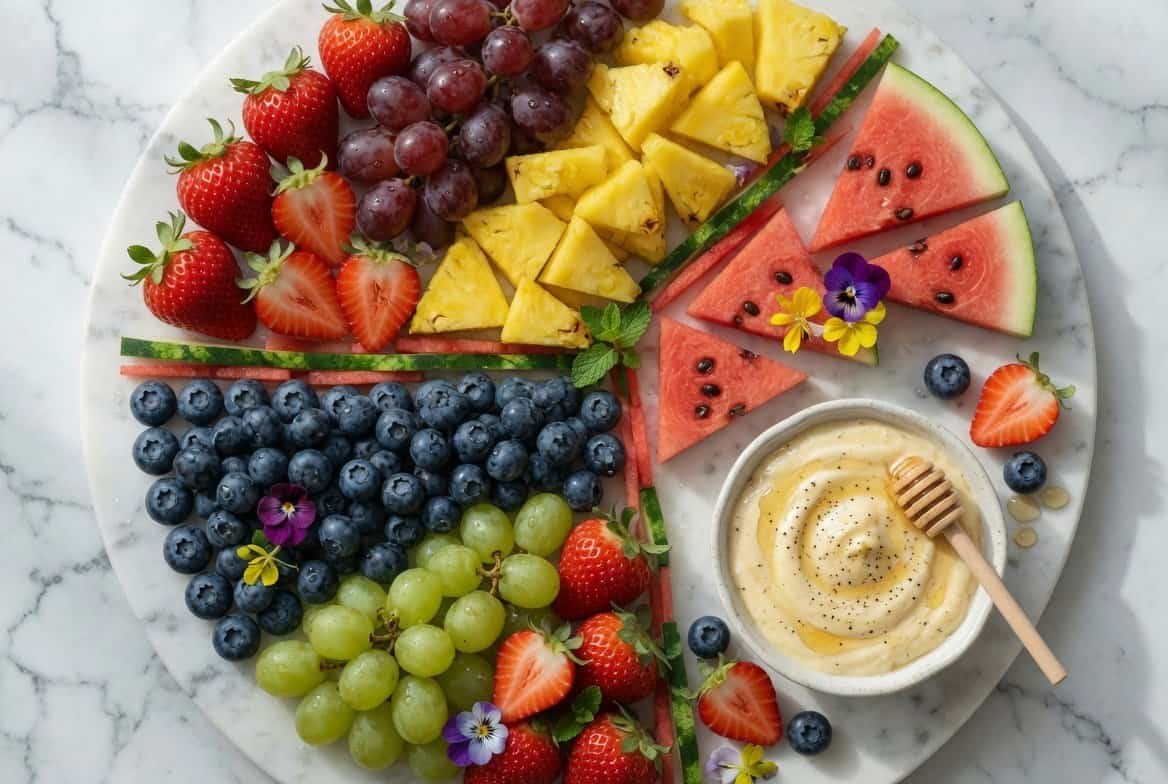
13. Assemble a Fresh Fruit Platter That Actually Looks Beautiful
Every party needs a fresh element — something that cuts through the richness of cheese, meat, and fried things and reminds guests that the natural world produces food of extraordinary beauty and flavor. A fresh fruit platter fulfills this function, but only if it is assembled with care. A pile of mixed fruit in a bowl is not the same thing as a thoughtfully arranged fruit display, and the difference in how guests respond to each is significant.
Build your fruit platter around color and shape variety. Use fruits that hold their form and color for several hours at room temperature: strawberries, halved with stems on for visual drama; green and red grapes in small clusters rather than individual berries; watermelon cut into neat triangles or star shapes using a cookie cutter; fresh pineapple cut into spears; blueberries and blackberries as gap-fillers; and sliced kiwi arranged in a fan for color contrast. Arrange them in sections rather than mixed together — each fruit in its own zone, colors alternating around the platter — so the visual effect is organized abundance rather than colorful confusion.
Add two accompaniments that elevate the platter from fruit bowl to destination: a small ramekin of vanilla yogurt mixed with honey for dipping, and a small dish of Tajín or flaky sea salt with lime zest for those who want contrast. The dipping option makes the fruit interactive rather than passive, and the salt-lime option introduces an unexpected dimension that reliably surprises and delights guests who try it on strawberries or watermelon for the first time.
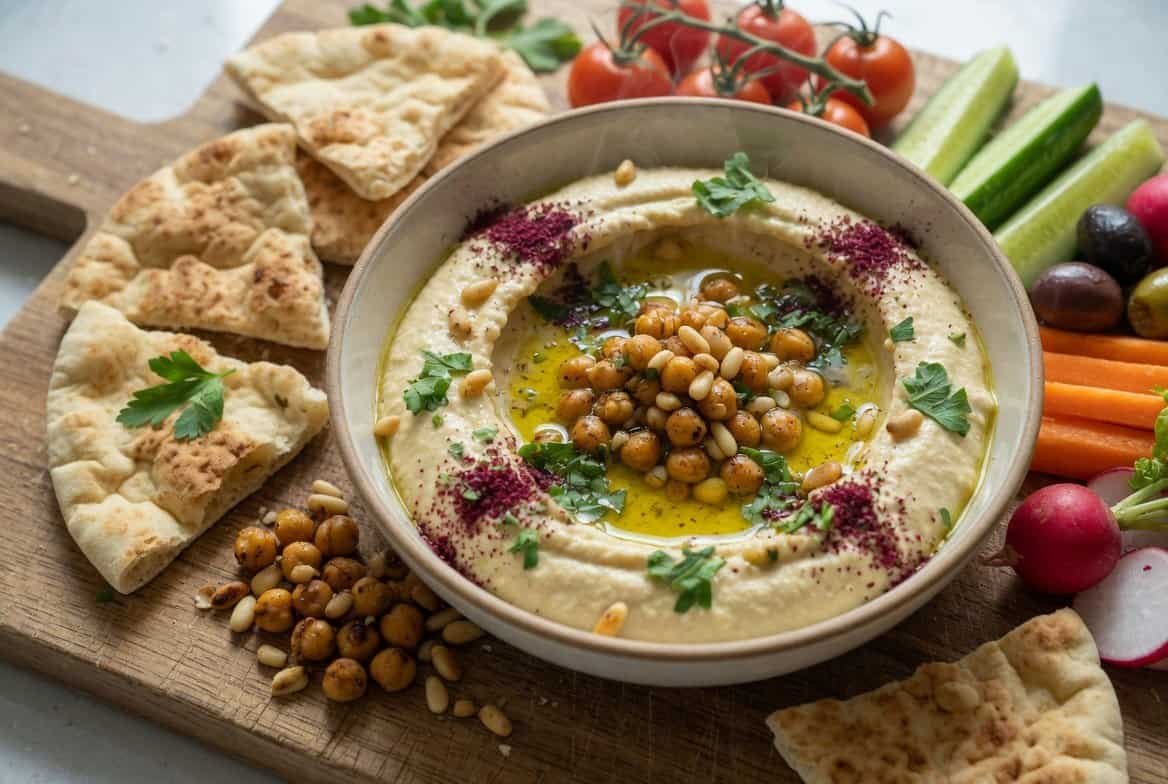
14. Make Homemade Hummus With Fancy Toppings
Store-bought hummus has improved dramatically over the past decade, and there is no shame in using it. But homemade hummus, made with canned chickpeas and a food processor in ten minutes, tastes noticeably and significantly better than anything in a plastic container — and when it is topped with the right garnishes, it looks like something from a restaurant menu. The investment of ten minutes produces a result that lasts for hours and feeds many.
The key to smooth, creamy homemade hummus is removing the skins from the chickpeas before blending — a meditative five-minute process where you rub each chickpea gently between your fingers and the skin slips off. It sounds fussy, but the texture difference in the finished hummus is remarkable. Blend the skinned chickpeas with tahini, lemon juice, a small clove of garlic, olive oil, ice water (this is the secret to light, airy hummus — the cold water creates emulsification and a fluffier texture), and salt until completely smooth, stopping to scrape down the sides as needed. Taste and adjust.
The topping is where homemade hummus becomes party food rather than just a spread. Make a dedicated “hummus board” with the hummus as the center: swirl the hummus in a shallow bowl and press a well in the center with the back of a spoon. Fill the well with high-quality extra virgin olive oil. Add toppings in small sections radiating from the center: whole roasted chickpeas tossed in cumin and paprika for crunch, a scatter of pine nuts toasted in butter until golden, a pinch of sumac for color and acidity, torn fresh parsley, and a few slices of pickled red onion. Surround the bowl with warm pita, pita chips, sliced radishes, cucumber, and carrots. The finished board is genuinely beautiful and genuinely impressive for under fifteen dollars total.
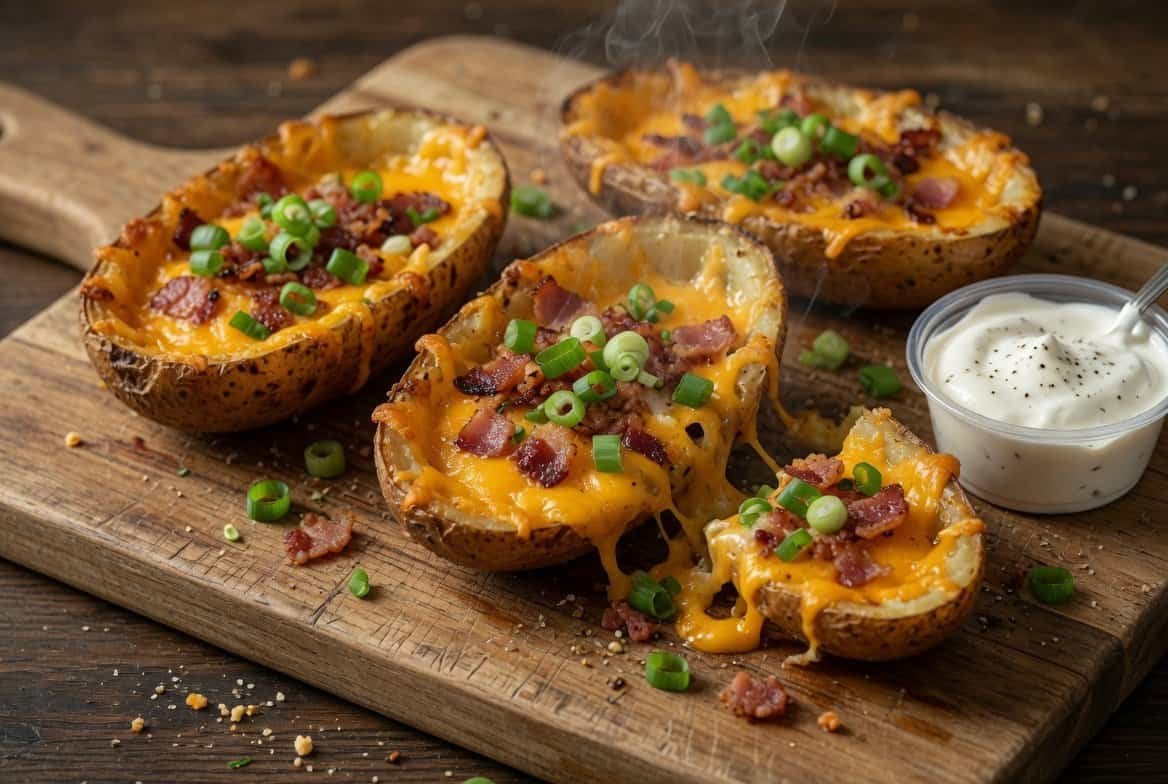
15. Serve Loaded Potato Skins From the Oven
Potato skins occupy a category of party food that might be called “nostalgic but permanently relevant” — they are associated with sports bars, game nights, and the satisfying excess of a meal where no one is pretending to eat lightly. They are filling enough to sustain guests through a long party, substantial enough to anchor a food table around, and inexpensive enough to make in quantities large enough to genuinely satisfy a crowd without breaking a budget.
Bake russet potatoes whole at 400°F for about an hour until completely tender. Allow to cool enough to handle, then slice in half lengthwise and scoop out the interior, leaving a quarter-inch shell of potato attached to the skin. Brush both the inside and outside of the shells with melted butter seasoned with garlic powder, salt, and paprika. Place cut-side up on a baking sheet and bake at 425°F for fifteen minutes until crispy and golden.
Fill the crispy shells: top each with shredded cheddar and crumbled cooked bacon, then return to the oven for five minutes until the cheese is fully melted and bubbling. Serve with sour cream and sliced green onions for topping. The reserved potato flesh is not wasted — mash it with butter, cream, and chives for a side dish or save it for another use. The skins themselves, with their combination of crispy shell, melted cheese, and smoky bacon, are among the most crowd-pleasing oven-made party foods available at any price point.
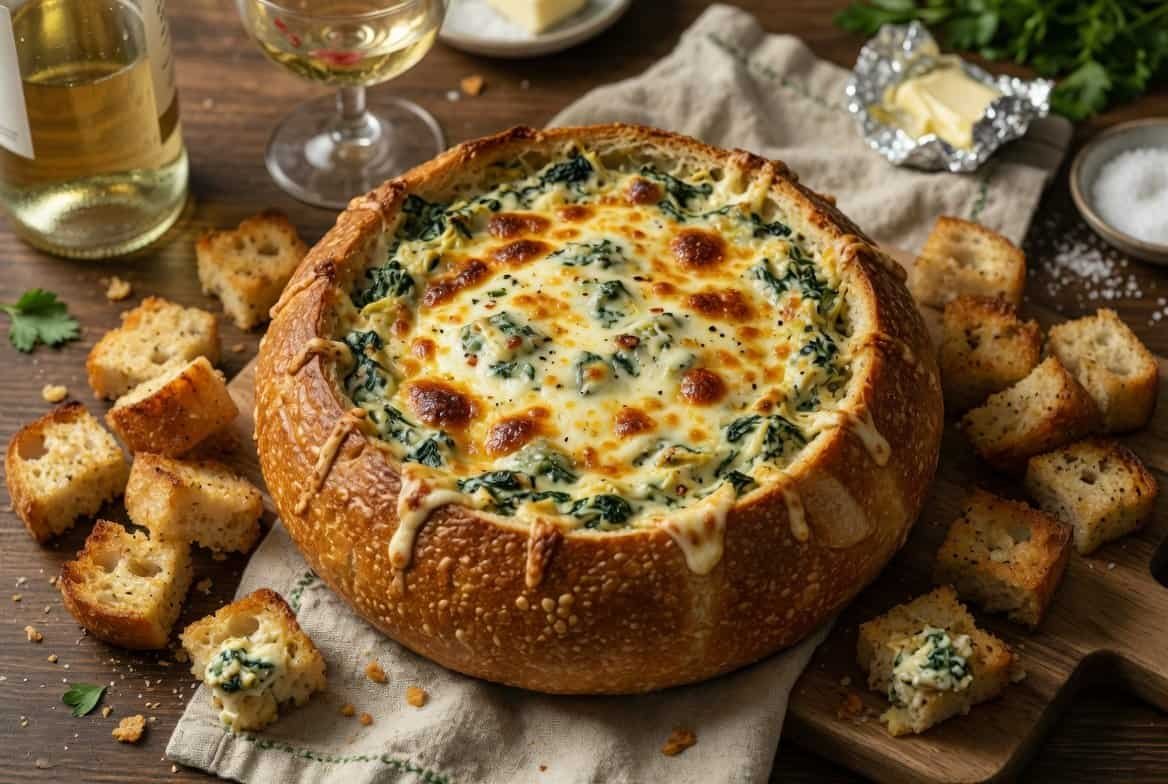
16. Prepare Spinach and Artichoke Dip Baked in Bread Bowls
Spinach artichoke dip is one of the classics of the party food world — creamy, rich, savory, slightly indulgent, and universally welcome at virtually any kind of gathering. But serving it baked inside a hollowed bread bowl rather than in a casserole dish transforms it from a side attraction into a centerpiece. The bread bowl format combines the dip and its vehicle into a single dramatic object, and the visual of a golden, bubbling dip-filled loaf of bread consistently produces an “oh wow” reaction from guests who see it for the first time.
The dip: combine one package of frozen spinach (thawed and very thoroughly squeezed dry — this step is critical, wet spinach will make the dip watery), one can of drained artichoke hearts roughly chopped, one block of cream cheese softened, half a cup of sour cream, half a cup of mayonnaise, one cup of grated Parmesan, and one cup of shredded mozzarella. Season with garlic powder, salt, pepper, and a pinch of red pepper flakes. Mix thoroughly.
For the bread bowl: hollow out a round sourdough loaf, leaving a thick wall and base. Fill with the dip mixture, top with additional shredded cheese, and bake at 375°F for 25–30 minutes until the dip is heated through, bubbling at the edges, and golden on top. Cube the removed bread interior and arrange around the filled loaf for dipping, alongside additional sturdy crackers and sliced baguette. As guests dip and the bread bowl empties, they begin tearing pieces from the bowl itself — the spinach artichoke-soaked bread in the final stages of a well-used bread bowl is, many people would argue, the best part of the entire arrangement.
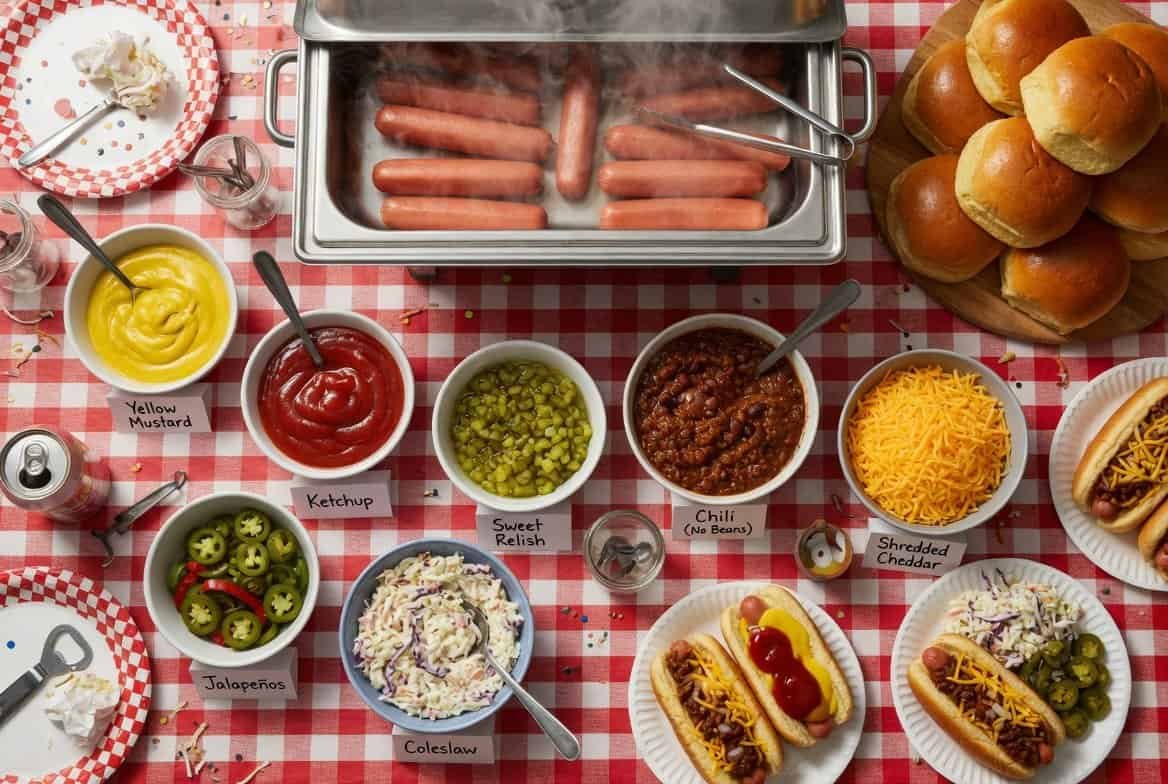
17. Stack a Hot Dog Bar With All the Toppings
Hot dogs are party food that has never needed defending and never will. They are fast, cheap, filling, beloved by every age group, and endlessly customizable. The hot dog bar format — where guests build their own from a selection of toppings spread across a dedicated table — transforms a simple food into an interactive event that gives people agency, generates conversation about topping preferences and regional variations, and feeds large groups quickly without requiring complex coordination.
Keep the hot dogs themselves warm in a slow cooker or chafing dish with a small amount of water — they stay perfectly juicy and warm for hours this way. Provide two bun options: classic soft white hot dog buns and a brioche bun alternative for a more elevated option. Then build the topping bar with both classic and unexpected options: yellow mustard, spicy brown mustard, ketchup, relish, diced onions, shredded cheddar, chili, coleslaw, pickled jalapeños, crispy fried onions, and at least one unexpected addition — mango salsa, kimchi, and cream cheese with caramelized onions are all excellent options that immediately distinguish your hot dog bar from a standard cookout setup.
Label each topping clearly and include a few regional inspiration cards: “Chicago style” (yellow mustard, relish, diced onion, tomato, pickle spear, celery salt, no ketchup), “New York style” (sauerkraut and spicy brown mustard), “Sonoran style” (bacon, pinto beans, tomato, onion, mayonnaise). These labels teach guests about regional hot dog culture while giving them a ready-made starting point if they’re uncertain how to begin building. The educational element, however slight, makes the station feel thoughtful rather than simply convenient.
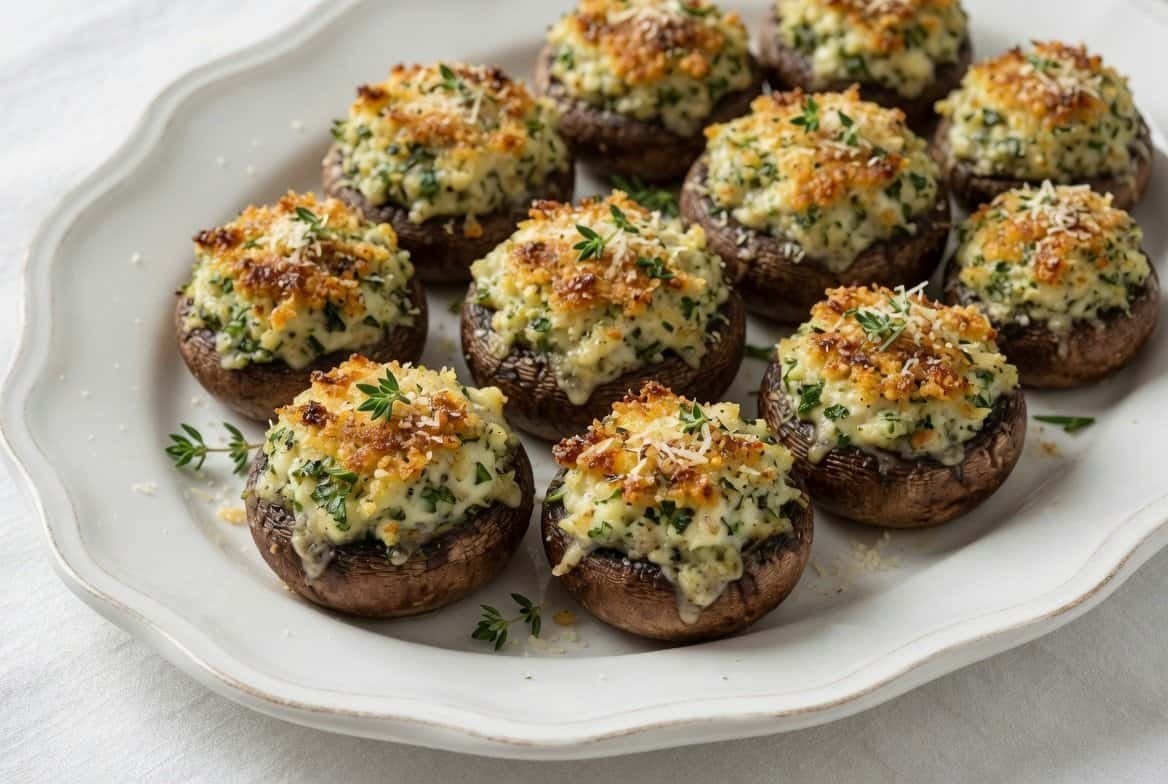
18. Bake Stuffed Mushrooms That Look Fancy but Cost Almost Nothing
Stuffed mushrooms are one of the great equalizers of party food: they look like they belong at a catered event, they taste complex and restaurant-quality when made well, and they cost almost nothing to produce in large quantities. A serving platter of golden, cheese-filled stuffed mushrooms reads as sophisticated in a way that their price tag entirely belies, and they function as both an appetizer and a conversation piece — guests inevitably pick them up, examine them, and comment on how good they are before they’ve finished chewing.
Remove the stems from cremini or baby bella mushrooms and finely chop the stems. Sauté the chopped stems with diced shallots, garlic, fresh thyme, and a splash of white wine until dry and fragrant. Combine with cream cheese, grated Parmesan, breadcrumbs, and fresh parsley. Season well with salt and pepper. Fill each mushroom cap generously — slightly overfill rather than under, because the filling shrinks slightly during baking and a mushroom stuffed to the brim is more visually impressive than one that looks half-empty. Top each with a small mound of Parmesan mixed with panko breadcrumbs for a golden crust.
Bake at 400°F for 20–25 minutes until the mushrooms are tender, the filling is set, and the tops are golden and slightly crispy. They can be baked up to an hour in advance and rewarmed briefly just before serving. Arrange on a platter over a bed of fresh arugula or herbs for a finished, professional presentation that takes thirty seconds and costs nothing extra. This is one of those party foods where the effort-to-impression ratio is so heavily weighted toward impression that experienced hosts come back to it for every event, every time.
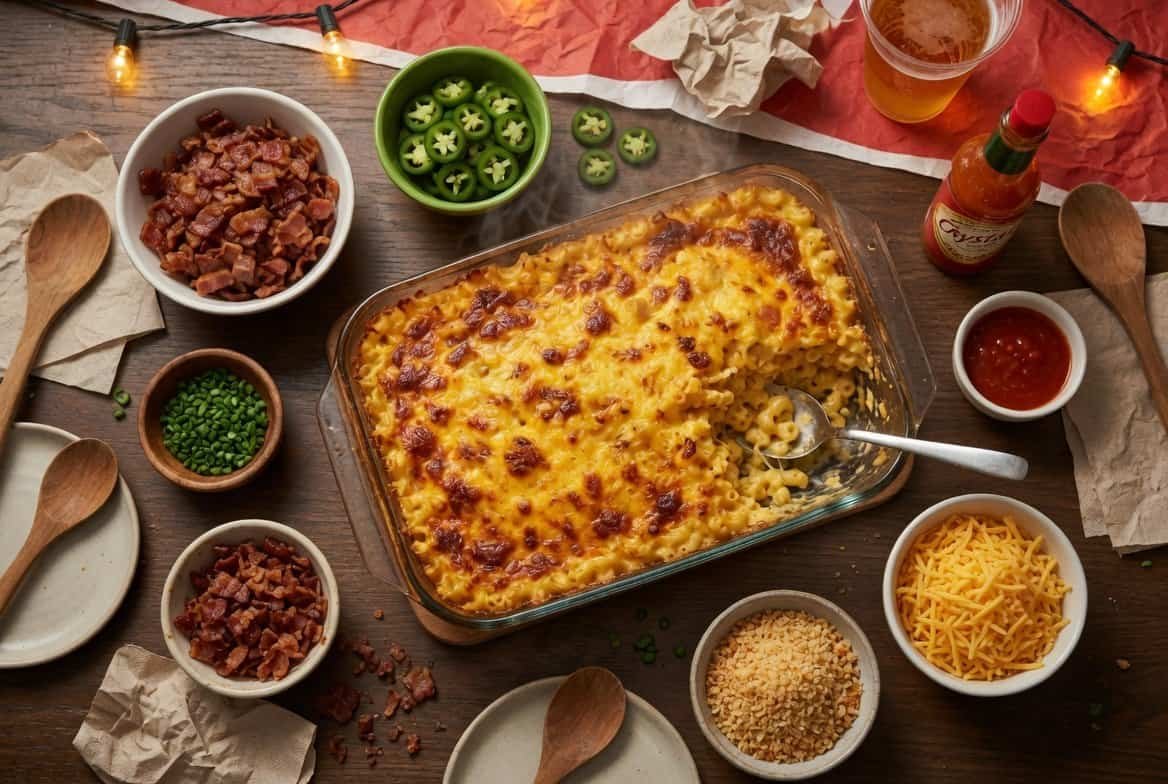
19. Offer a Mac and Cheese Bar as the Comfort Food Station
At any party where mac and cheese makes an appearance, it becomes the most popular item on the table. This is a law as reliable as gravity, and it applies regardless of how many other impressive things you’ve made. People are drawn to mac and cheese with a warmth and enthusiasm that no other party food generates so consistently, and a mac and cheese bar — where guests can load their bowl with toppings — takes that enthusiasm and multiplies it into something that keeps guests at the food table for longer than almost anything else.
Start with a large pot of genuinely good baked mac and cheese: make a proper cheese sauce (butter, flour, warm milk, and a blend of sharp cheddar with a small amount of gruyère for nutty depth), season aggressively with salt, dry mustard, a pinch of cayenne, and garlic powder, fold in cooked macaroni, and bake in a large dish topped with breadcrumbs until bubbling and golden. This is a dish that benefits from being made in large quantities — the ratio of sauce to pasta only improves as the pot grows.
The toppings bar is what makes this a station rather than a side dish: offer crispy bacon crumbles, diced jalapeños, hot sauce of several varieties, caramelized onions, truffle oil in a small pour bottle for guests who want an instant upgrade, fresh chives, and panko breadcrumbs toasted in butter for additional crunch. A small sign that says “Build Your Bowl” is all the invitation guests need. Once the first person loads their bowl with three toppings and takes a bite, the rest of the group follows.
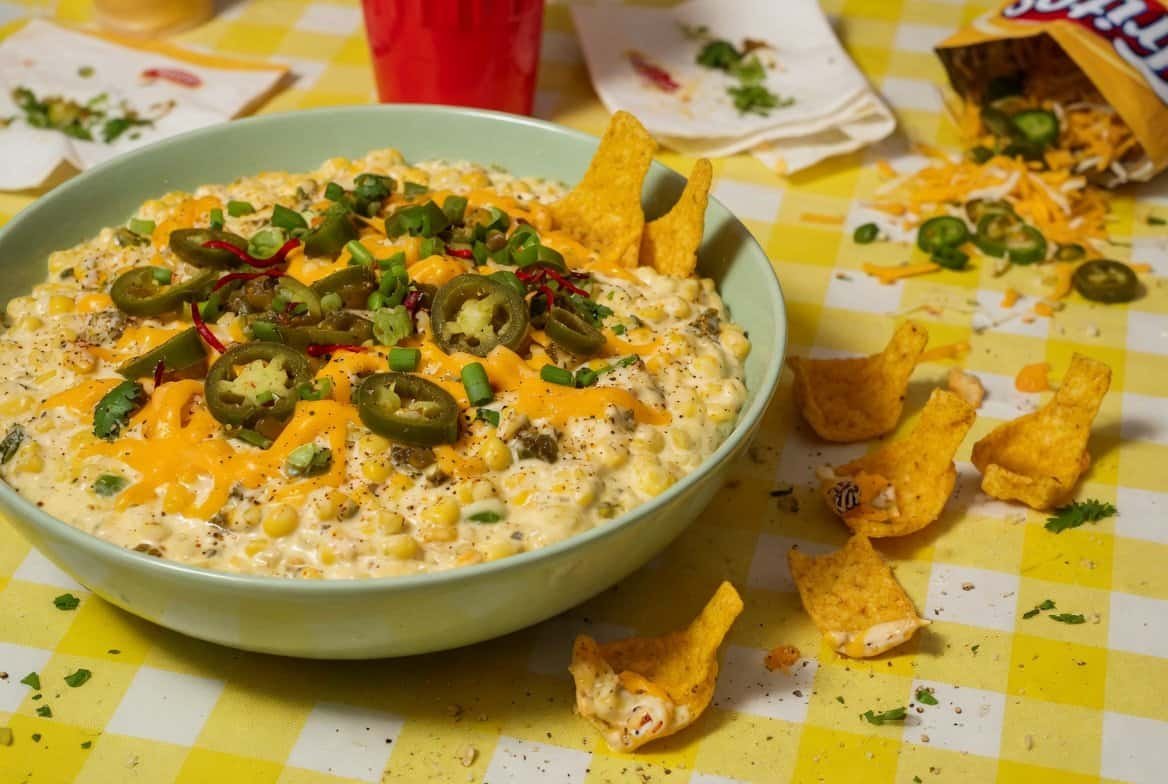
20. Make Corn Dip With Cream Cheese — The Addictive Unknown Classic
If you have never encountered corn dip at a party, you are about to meet one of the most criminally underrated items in the party food universe. It is not as famous as seven-layer dip or buffalo chicken dip. It is not as visually dramatic as a charcuterie board or a stuffed bread bowl. It is made from completely humble ingredients that you likely have in your kitchen or can acquire from any grocery store for under eight dollars. And it is consumed with a speed and enthusiasm that suggests people have been waiting for it their entire lives without knowing it.
Combine: two cans of corn (drain one can completely; leave the liquid in the other for moisture), one block of cream cheese at room temperature, half a cup of mayonnaise, one cup of shredded cheddar, one cup of pepper jack for heat, one can of diced green chiles, a diced jalapeño, a teaspoon of garlic powder, a teaspoon of cumin, and the juice of one lime. Mix thoroughly. That’s the entire recipe.
Serve it cold, directly from the mixing bowl, with sturdy corn chips or Fritos scoops — the latter are ideal because their curved shape holds a generous amount of dip per scoop. This dip can be made two days in advance and improves with time in the refrigerator as the flavors develop. It is vegetarian, it requires no cooking of any kind, and it costs approximately six to eight dollars to make a portion that serves fifteen people. The gap between what it costs, what it takes to make, and how enthusiastically people respond to it is one of the most reliable disparities in party food.
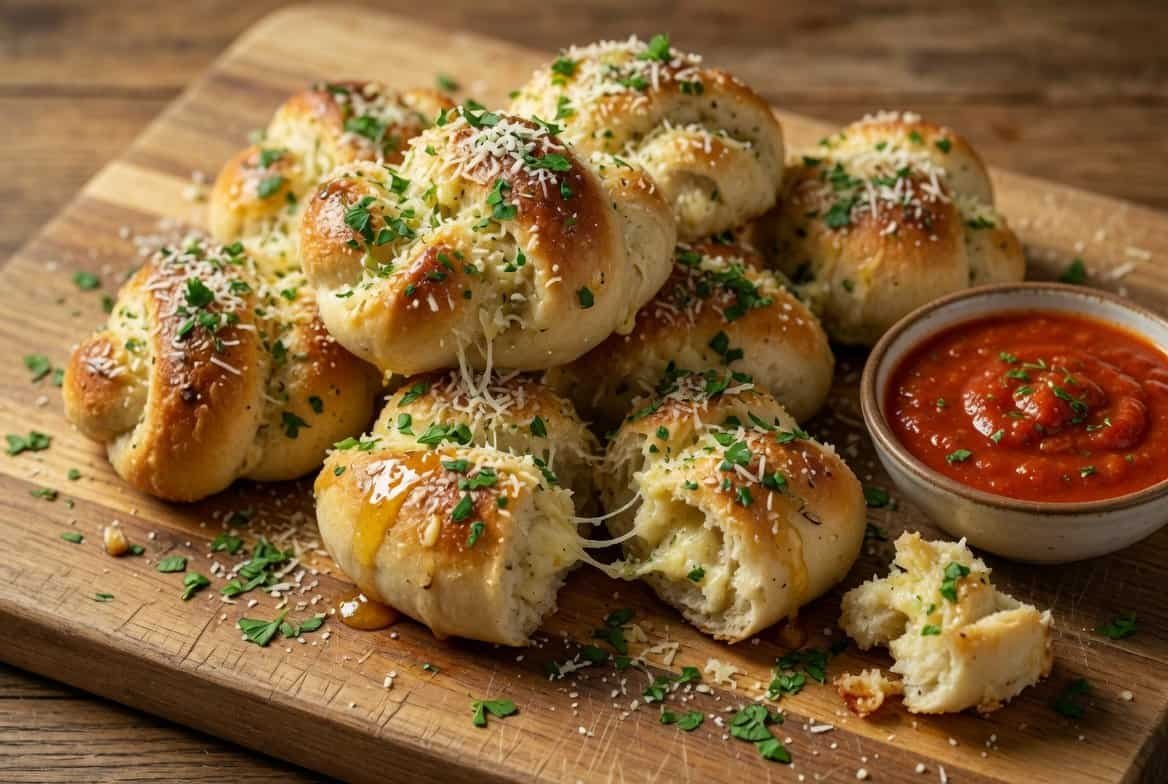
21. Serve Garlic Knots With Marinara for Dipping
Garlic knots are party food that generates a specific and immediate happiness in whoever encounters them — warm, garlicky, buttery, slightly chewy, and in the presence of a good marinara sauce, genuinely difficult to stop eating. They are also one of the easiest things to make in large quantities from a very small amount of effort, particularly if you use store-bought pizza dough or refrigerated biscuit dough as your base.
Take a tube of store-bought pizza dough, pull it into ropes roughly six inches long and half an inch thick, tie each rope into a simple overhand knot, and place on a parchment-lined baking sheet. Bake at 375°F for fifteen minutes until golden. While the knots are still hot from the oven, toss them in a bowl with a generous amount of melted butter that has been cooked briefly with several cloves of minced garlic and a pinch of red pepper flakes — cook the garlic in the butter just until fragrant, about two minutes, then pull it off the heat. Toss the warm knots in this garlic butter until fully coated, then finish with a shower of grated Parmesan and fresh chopped parsley.
Arrange on a platter with a bowl of good marinara on the side — jarred marinara warmed gently with a splash of olive oil, a pinch of dried oregano, and a small clove of garlic is entirely serviceable and takes five minutes. The garlic knots stay warm for about thirty minutes from the oven and are good at room temperature beyond that. Make more than you think you need. Experience suggests that the estimate of how many garlic knots a group of people will eat consistently falls significantly short of reality.
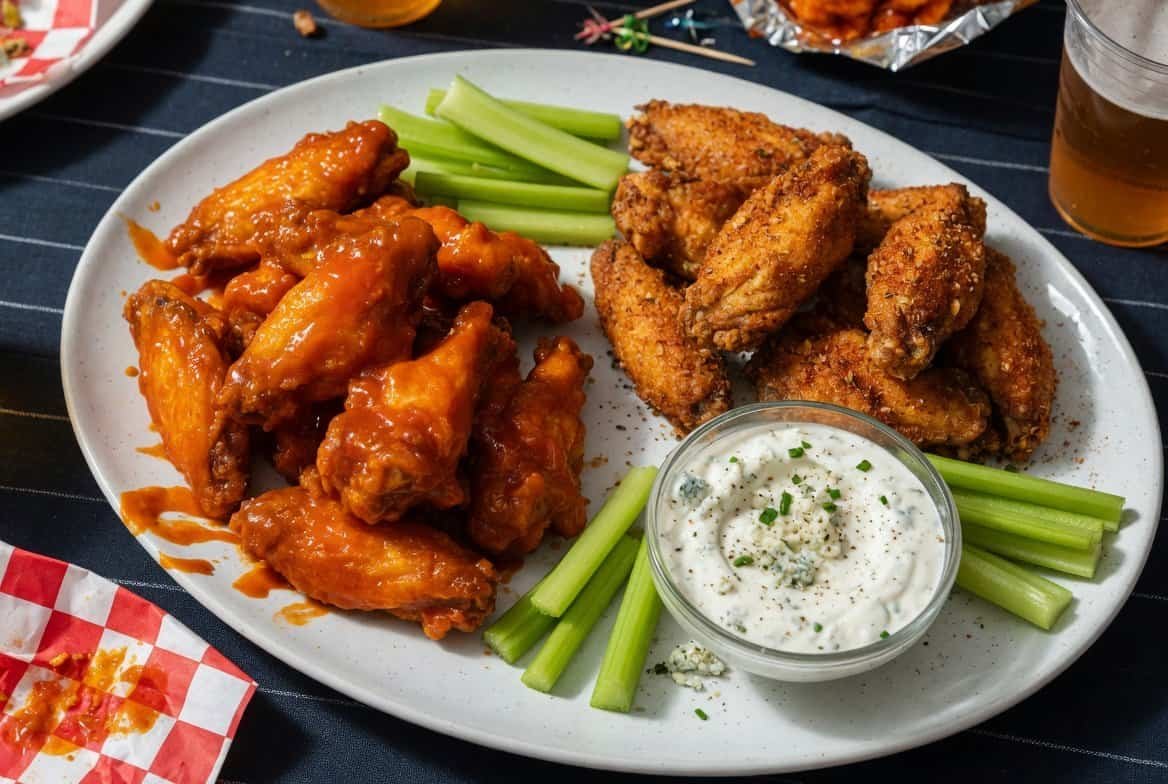
22. Make Crispy Chicken Wings Two Ways
Chicken wings at a party are not a side note — they are an event. Few party foods generate the level of collective enthusiasm that a platter of well-made wings produces, and the conversation they inspire (dry rub or sauced? Buffalo or honey garlic? Blue cheese or ranch?) is itself a form of party entertainment. The debate about wing superiority is one of the most reliably pleasant arguments that strangers have ever found reason to have.
For genuinely crispy oven wings without deep frying: toss wings in a mixture of baking powder (not baking soda — this is critical), salt, garlic powder, and black pepper, then arrange in a single layer on a wire rack set over a baking sheet. Refrigerate uncovered for at least an hour or overnight if possible — this drying step is what creates the crackling skin. Bake at 250°F for thirty minutes, then increase to 425°F and bake for an additional 40–45 minutes, flipping once, until deeply golden and genuinely crispy. The baking powder raises the pH of the skin, promoting browning and crisping in a way that produces results comparable to fried wings without a deep fryer.
Sauce half the batch immediately after baking with classic buffalo sauce (Frank’s RedHot mixed with melted butter in a 2:1 ratio — this is the canonical formula and it exists for good reason). Leave the other half dry-rubbed and unsauced for the guests who prefer crispy, naked wings that showcase the flavoring of the rub. Serve with both blue cheese dressing and ranch alongside celery and carrot sticks. Both camps of the wings debate will be satisfied, and the party will be improved by the fact that everyone has something they chose themselves and feels strongly about.
23. Set Up a Nacho Cheese Fountain for Pure Theatrical Fun
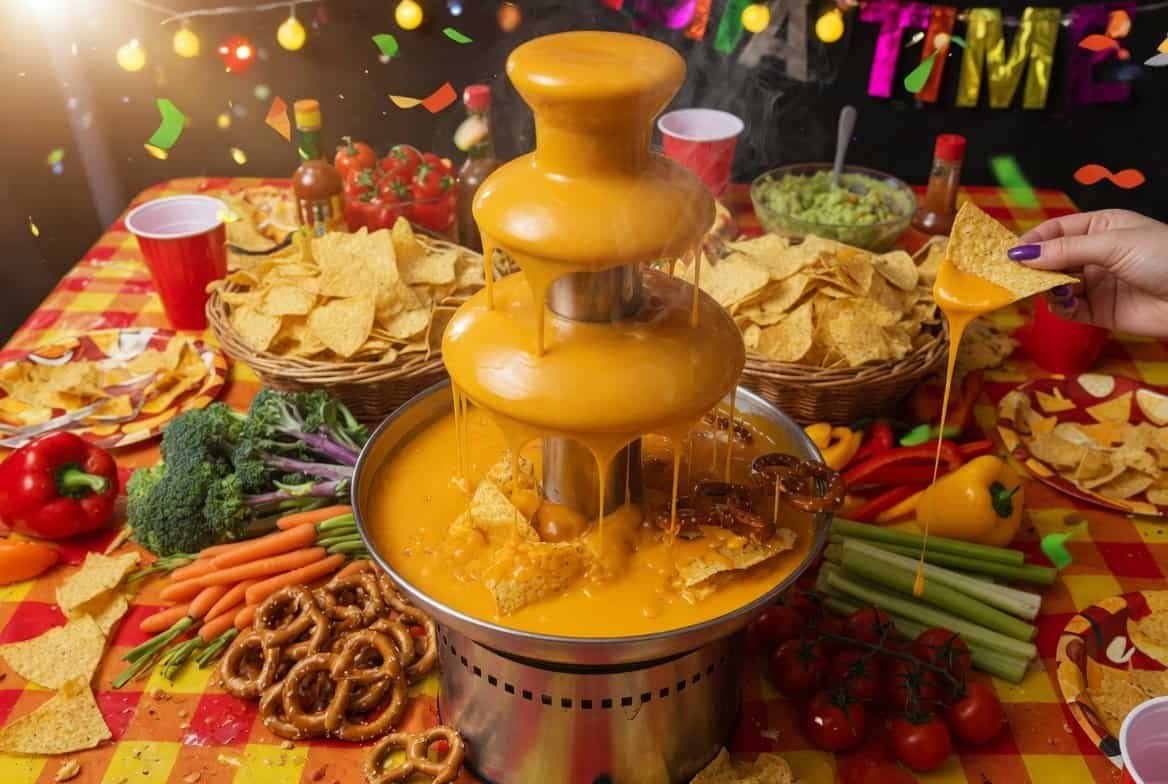
This one is for the host who wants to create a moment — a single element at the party that generates immediate excitement, gets photographed by every guest, and is talked about for weeks afterward. A nacho cheese fountain is not subtle. It is not refined. It is a cascading column of warm, liquid nacho cheese flowing in a continuous golden stream, surrounded by dippers and accompanied by the kind of delighted disbelief that marks genuinely memorable party experiences.
Electric cheese fountains are available on Amazon and other retailers for $30–50. They use the same mechanism as a chocolate fountain — a central spiral that pulls liquid up from the base and allows it to cascade down the outside in a continuous flow. The key is using the right cheese: a proper nacho cheese sauce made with Velveeta (melted with a can of diced green chiles, a splash of milk for viscosity, and a pinch of cumin) flows perfectly through the fountain mechanism without clogging. Standard store-bought nacho cheese sauce also works well.
Surround the fountain with an assortment of dippers on a large tray: tortilla chips, pretzels, breadsticks, sliced apples (the sweet-salty combination of apple and nacho cheese is genuinely excellent and consistently surprises people), broccoli florets, and soft pretzel bites. The fountain handles itself once running — occasional refilling is the only required maintenance. The result is a self-service cheese station that requires no active hosting, generates constant foot traffic throughout the party, and produces the specific kind of joy that comes from food that is simultaneously delicious and slightly ridiculous.
24. Make Overnight No-Bake Energy Bites for the Health-Conscious Corner
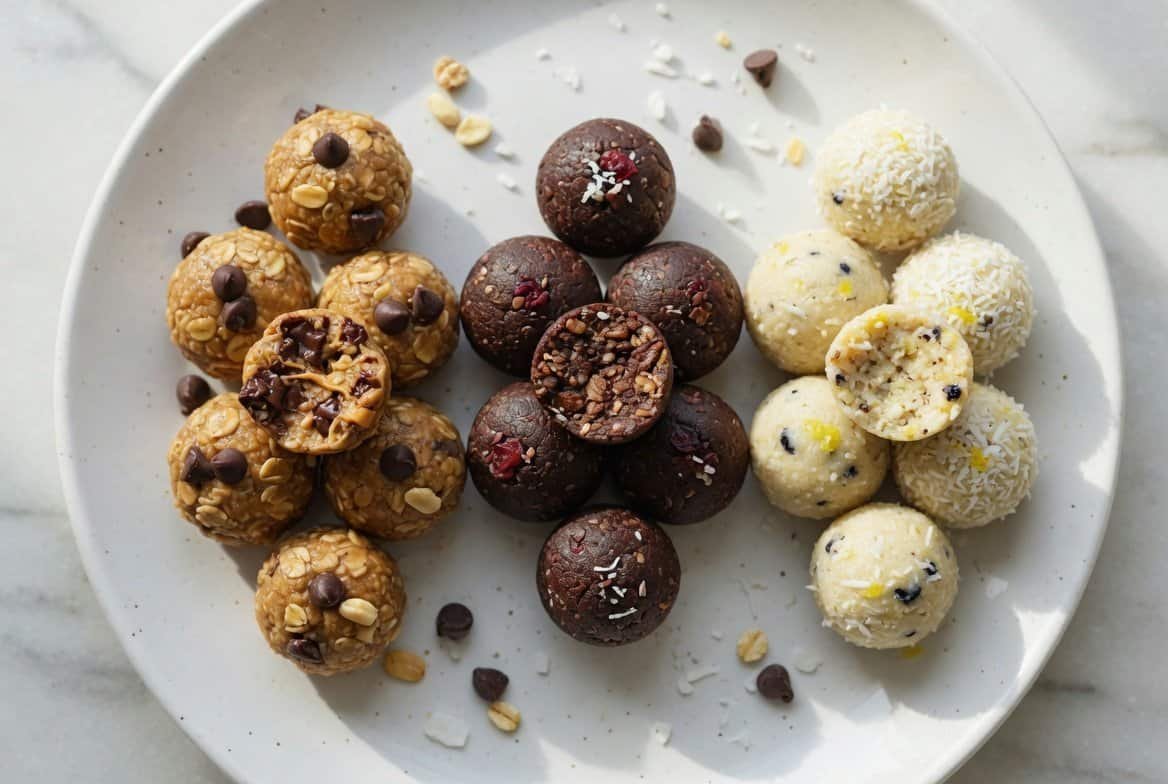
Every party food table benefits from having at least one item that guests who are eating carefully, avoiding particular ingredients, or simply wanting something lighter can reach for without having to ask questions or calculate consequences. No-bake energy bites fulfill this role while also being genuinely delicious — sweet enough to feel like a treat, substantial enough to be satisfying, and easy enough to make the night before in a batch of fifty pieces without particular effort.
The base recipe: combine two cups of old-fashioned rolled oats, half a cup of natural peanut butter, one third cup of honey, half a cup of mini chocolate chips, two tablespoons of ground flaxseed, and one teaspoon of vanilla extract in a large bowl. Stir thoroughly until everything is evenly combined. Refrigerate the mixture for at least thirty minutes until it is firm enough to roll. Use a tablespoon to portion the mixture and roll between your palms into compact balls about one inch in diameter. Store in the refrigerator on a parchment-lined tray until serving.
Variations that expand the flavor range and accommodate different dietary needs: use sunflower butter instead of peanut butter for nut-free versions; add dried cranberries and white chocolate chips for a more festive flavor; incorporate coconut flakes and a small amount of coconut oil for a tropical version; or add cocoa powder and dark chocolate chips for a chocolate-forward version. A plate with three varieties — labeled clearly — gives the health-conscious guests a genuine choice and signals that the host thought about their experience specifically, which is one of the most meaningful things a host can communicate through food.
25. End the Night With a DIY Dessert Platter That Requires Zero Baking
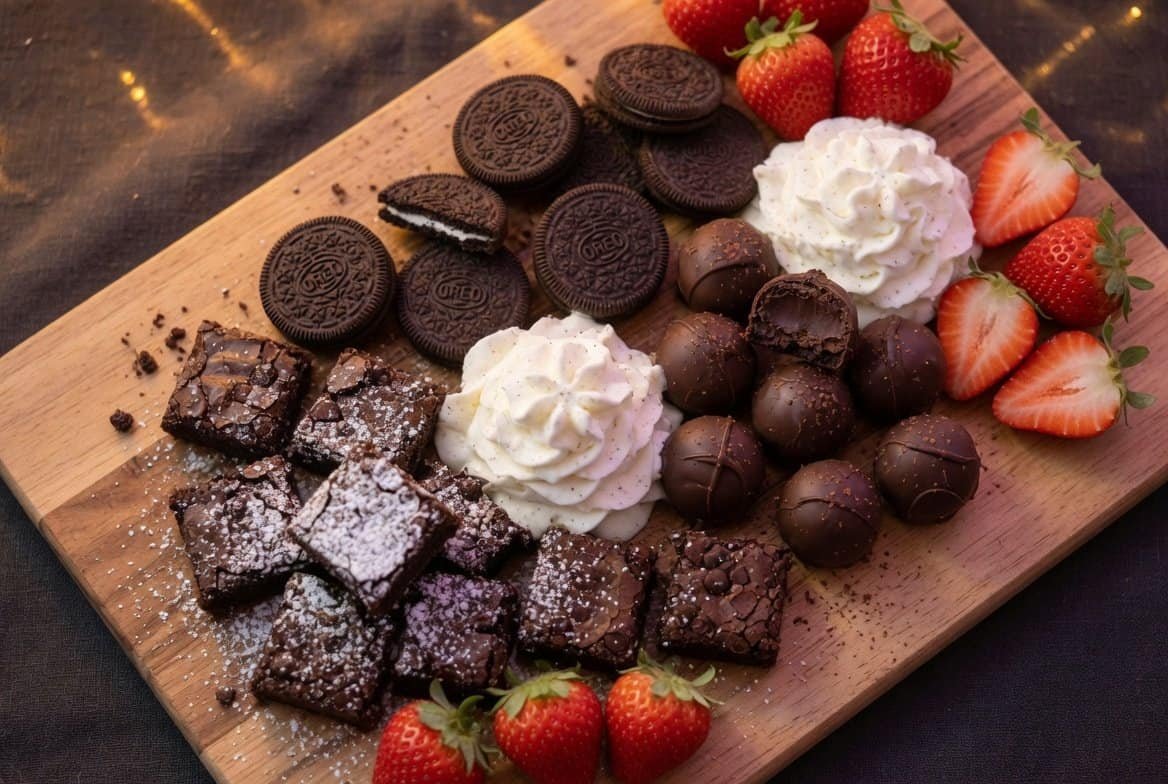
A party dessert does not need to be baked, iced, layered, or decorated to be memorable. The most successful no-bake dessert platters I’ve assembled at parties have produced as much enthusiasm as any three-layer cake I’ve ever made — because they offer variety, they look abundant, and they give guests the choice of tasting everything rather than committing to a single portion of a single thing.
Build your no-bake dessert platter around bought items elevated by a few simple additions: a sleeve of purchased Oreos arranged in a fan alongside a bowl of chocolate dipping sauce; a selection of good chocolate truffles from a grocery store chocolate case, placed in mini cupcake liners for visual organization; fresh strawberries with stems on, arranged around a small bowl of whipped cream; a stack of brownies from the bakery section, cut into bite-sized pieces and dusted with powdered sugar; and a small cluster of fruit and cheese — a gentle, palate-cleansing end to a rich evening of food.
The trick is presentation: a well-organized no-bake dessert platter on a beautiful board looks significantly more impressive than the sum of its parts, many of which cost very little individually. Variety is the value proposition — guests can try three things instead of one, and the freedom to browse and sample rather than commit to a portion is itself a form of hospitality. End the food portion of your party this way, and guests will leave full, satisfied, and carrying the particular happiness of an evening where they were well fed at every stage from the first chip to the last strawberry.
The Real Secret to Party Food That Works
After everything — twenty-five ideas, hundreds of hours of hosting, and more batches of buffalo chicken dip than I can accurately count — the real secret to party food that works is simpler than any recipe: make things you enjoy making, that you enjoy eating, and that you can prepare far enough in advance to be genuinely present at your own party.
The food is never the whole party. It is the setting. The background. The shared experience that gives people something to do with their hands while they talk, something to gather around, something to bond over in the moment of “oh my god, what is in this?” The party itself is the people — their laughter, their stories, the connections made and reinforced over a table loaded with things you made with care.
Pick five or six ideas from this list. Make them well. Set them out generously. Then put down the oven mitt, walk into the room, and enjoy the party you threw. That last step is the one most hosts forget. It is also, by a significant margin, the most important one.
Save this to Pinterest and share it with whoever is in charge of food at your next gathering — they will thank you for it.
Read More : 10 Graduation Party Ideas (2026)