Last October, Emma texted me at 11 p.m. on a Tuesday: “I think people are still talking about the trivia night.”
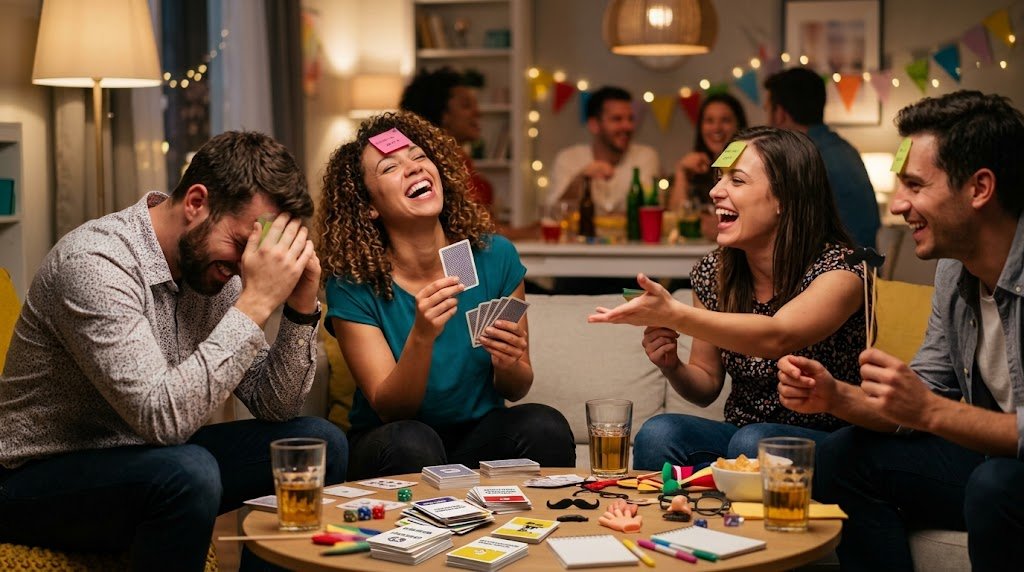
She’d hosted a birthday gathering for 12 friends that Saturday — nothing elaborate. Dining table pushed against the wall, two lopsided teams formed with zero coordination (her neighbor’s husband ended up on the wrong team and nobody fixed it), a cocktail napkin with team names scrawled in Sharpie. Emma had spent three hours building a 30-question quiz on Kahoot. Total investment in the game itself: $0.
By 10 p.m., nobody wanted to leave. By 11, two people were still arguing about a disputed answer from round two that had nothing to do with the correct answer and everything to do with principle. The music was still playing. Someone had refilled the snack bowls twice.
That’s party games for adults done right. The game disappears into the night, and what’s left is a room full of people who didn’t notice three hours had passed.
After hosting and attending over 50 parties in the past decade, I’ve watched the game segment clear a room — and I’ve watched one well-chosen game make an entire night. The difference isn’t which game you pick. It’s knowing why you’re picking it, when to introduce it, and which ones to skip entirely. Here’s what actually works.
What Adult Party Games Actually Mean (And What They Don’t)
Let’s be honest: most adults don’t actually want to play a game. What they want is a reason to laugh, a conversation starter they didn’t have to manufacture, and permission to be a little ridiculous in a low-stakes way.
What it IS:
- A social lubricant, not the main event
- A structure that gives the room something to do together
- An excuse to be competitive, funny, or a little embarrassing without it being weird
What it ISN’T:
- A mandatory activity every guest must love
- Something that needs to come in a box to be worth doing
- An hour-long commitment when the conversation was already flowing
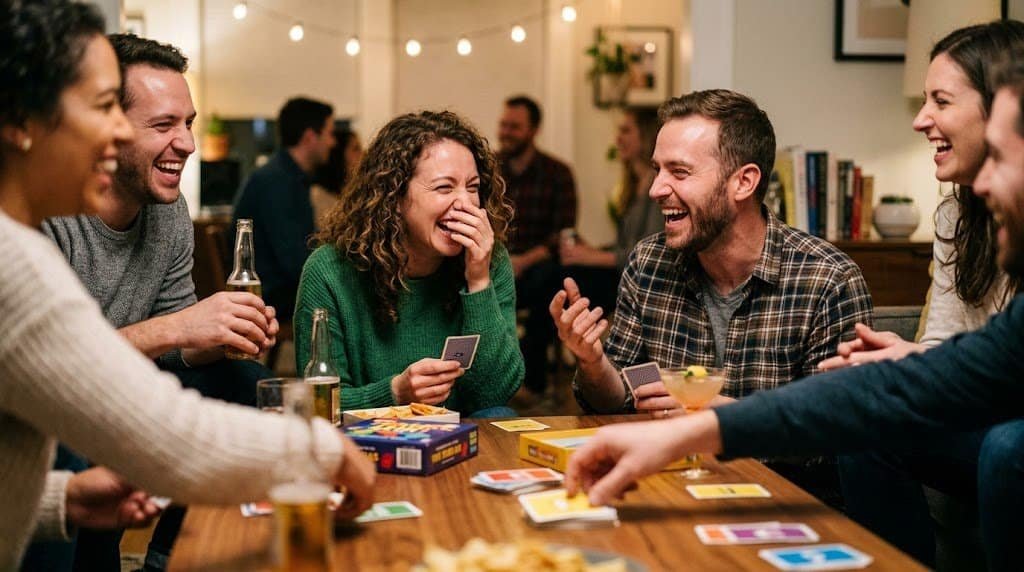
The trick is choosing a game that fits the crowd, not just the occasion. A bachelorette party and a birthday gathering might both benefit from Jackbox — but one group wants roasting humor and the other wants clean absurdity. Read the room first.
What Are the Best Party Games for Adults in 2025?
According to Eventbrite’s Party Trends Report (2023), 67% of adult party hosts say interactive activities — not décor — are the single thing guests remember most after a party. And according to Statista (2024), the US board game and puzzle market reached $3.08 billion, fueled largely by adult social and party game purchases. Yet the games that perform best at actual parties are almost never the ones with the biggest marketing budgets.
Here are the 12 adult party games that actually deliver.
Jackbox Party Pack — The One Game That Works for Almost Everyone
Best for: Birthday parties, game nights, mixed groups of 4–8 | Energy Level: Medium–High | Cost: $25–$30
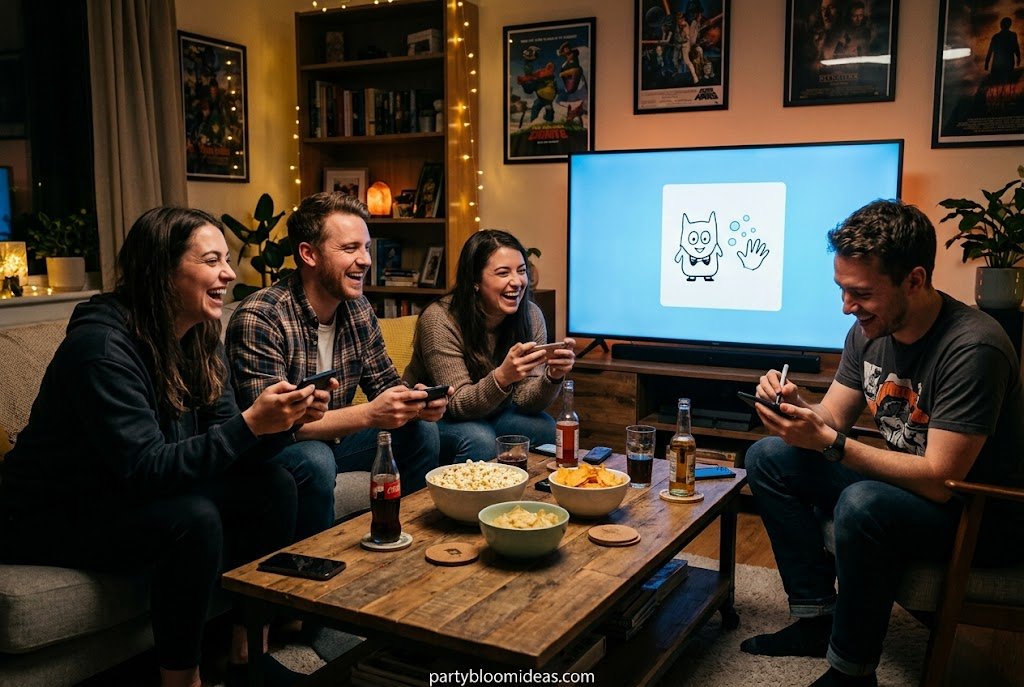
If I could only recommend one game to buy, this is it. Here’s what actually works about Jackbox: every player uses their own phone as a controller. No explaining rules. No setting up a board. No “wait, how do you play again?” You connect a laptop to your TV, the host picks a game from the pack — Quiplash, Drawful, Trivia Murder Party, there are dozens — and within 60 seconds, everyone is playing.
The genius is that the humor is generated by your actual friends, not a deck of cards someone else wrote. The game asks a prompt; your group gives absurd answers; everyone votes. The funniest people in the room look even funnier. The quiet ones surprise everyone.
How to play: One player hosts on a TV or monitor. Everyone else joins via jackbox.tv on their phones. Games rotate in 20–30 minute rounds.
Supplies and cost:
- Jackbox Party Pack 3 or 9 on Steam, PlayStation, or Xbox: $25–$30
- TV or monitor to display the game
- No additional supplies needed
Done right: Quiplash 2 with 6–8 people who are comfortable with each other, drinks in hand, TV visible from the couch. Done wrong: Trivia Murder Party with your aunt who hasn’t played a video game in 15 years — read the room when choosing which pack game to load.
💡 Pro Tip: Start with Jackbox Party Pack 3. Quiplash 2 is the best single game in the entire Jackbox catalog and it’s in that pack. Don’t overthink it.
Murder Mystery Dinner — The High-Commitment Game That Always Pays Off
Best for: Dinner parties, 6–12 guests, hosts who plan ahead | Energy Level: Medium | Cost: $20–$35 (or $0 with free printables)
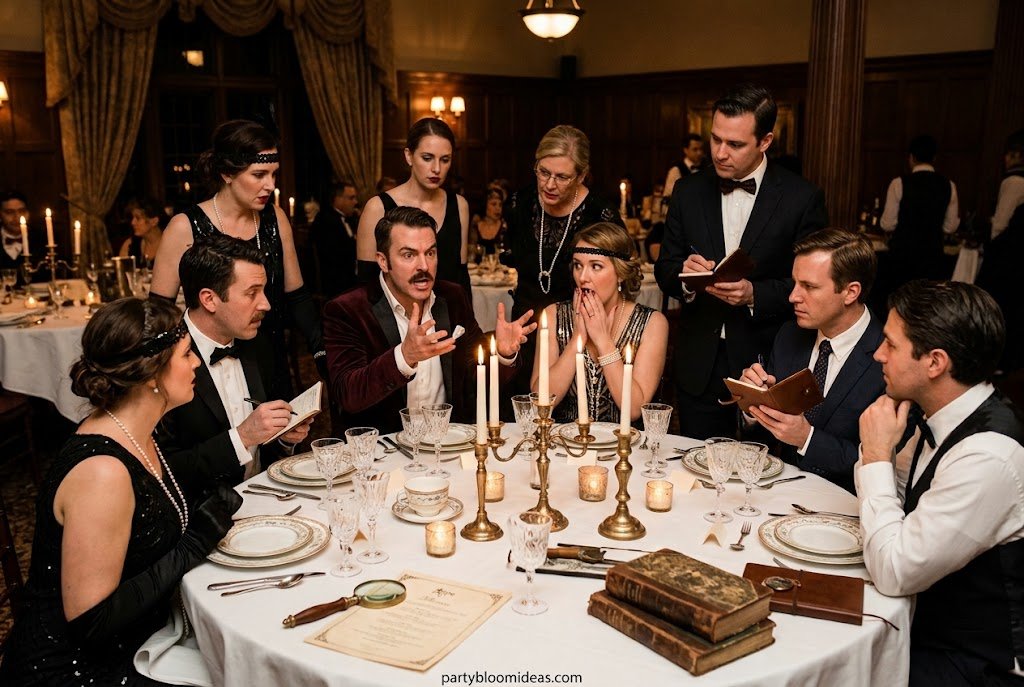
Murder mystery dinner games have a reputation for awkwardness — and they can be, if you don’t brief guests beforehand. Done right, it’s the most memorable thing you’ll do all year.
I co-hosted one three winters ago with Emma for a group of 10 friends. We used a free printable set from MurderMysteryGames.com, printed and folded character cards, made “crime scene cocktails” with clever names tied to the characters, and served dinner between the interrogation rounds. By dessert, the accusations were flying across the table and someone was taking notes. Nobody wanted the night to end.
How to play: Each guest receives a character card with backstory and clues. Over dinner, players question each other, reveal clues, and try to identify the murderer. Usually 2–3 rounds of questioning before the big reveal.
Supplies and cost:
- Pre-made kit (Amazon): $20–$35 for 6–12 players
- Free printable version: MurderMysteryGames.com — print at home for $3–$5 in paper and ink
- DIY costume element: Dollar Tree accessories $5–$10 per person
The key most hosts miss: Send character cards to guests 48 hours early so they can read their role. A prepared guest is a confident guest. An unprepared guest stands in your entryway reading their card while everyone waits.
💡 Pro Tip: Assign the most theatrical guest as the “prime suspect.” They’ll lean into the role and do half your entertainment for you.
How Can You Host a Free Game Night for Adults?
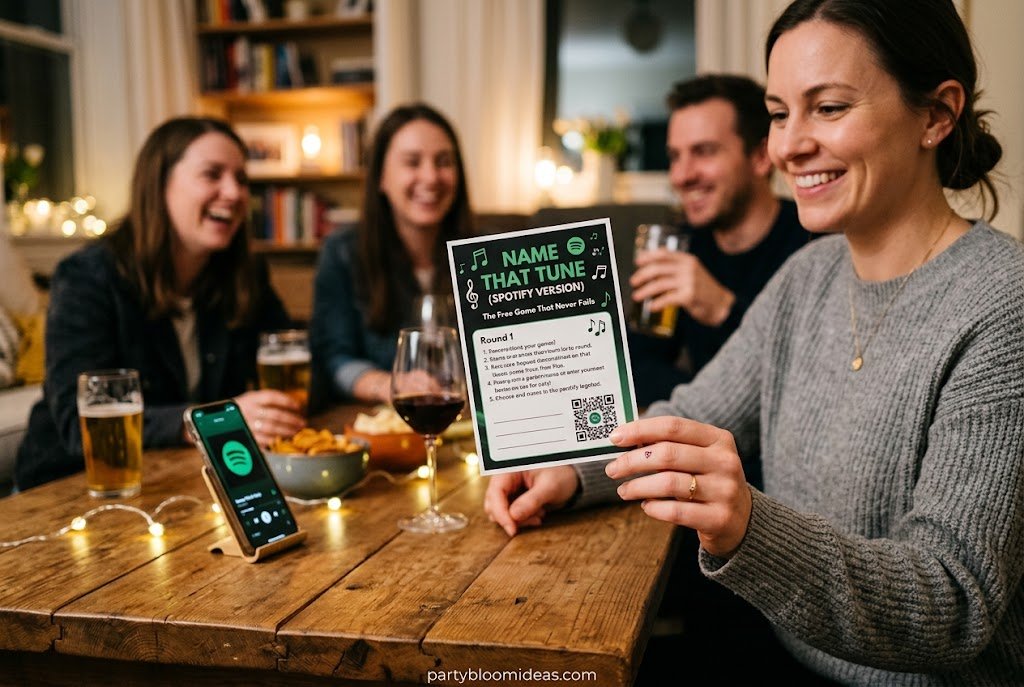
Name That Tune on Spotify is the most underrated adult party game that costs absolutely nothing, and I’ve watched it rescue more parties than any bought game.
Name That Tune (Spotify Version) — The Free Game That Never Fails
Best for: All groups, mixed ages, parties of 10–30 | Energy Level: Medium | Cost: $0
Build a Spotify playlist of 15–20 songs — mix decades, mix genres, include two or three that are specifically meaningful to the birthday person or relevant to the group. Play 10-second clips. First team to shout the correct song and artist gets the point.
That’s the whole game.
I used this at a work Christmas party two winters ago — 25 coworkers who barely talked outside of meetings. By the second round, someone’s director was belting out a Taylor Swift chorus. The game does the social work for you. Music is a universal language; people don’t have to be funny or clever to participate.
How to play: Split into 2–4 teams. Host plays 10 seconds of a song via Bluetooth speaker. Team shouts out song title + artist. First correct answer gets the point. Play 20–25 clips, tally scores. Done.
Supplies and cost:
- Spotify (free or paid): $0–$11/month (you probably already have it)
- Bluetooth speaker you own: $0
- Point tracker: pen and paper
The moment someone names an obscure late-’90s track and the room erupts — that’s the magic. It triggers memory and nostalgia in a way no card game can replicate.
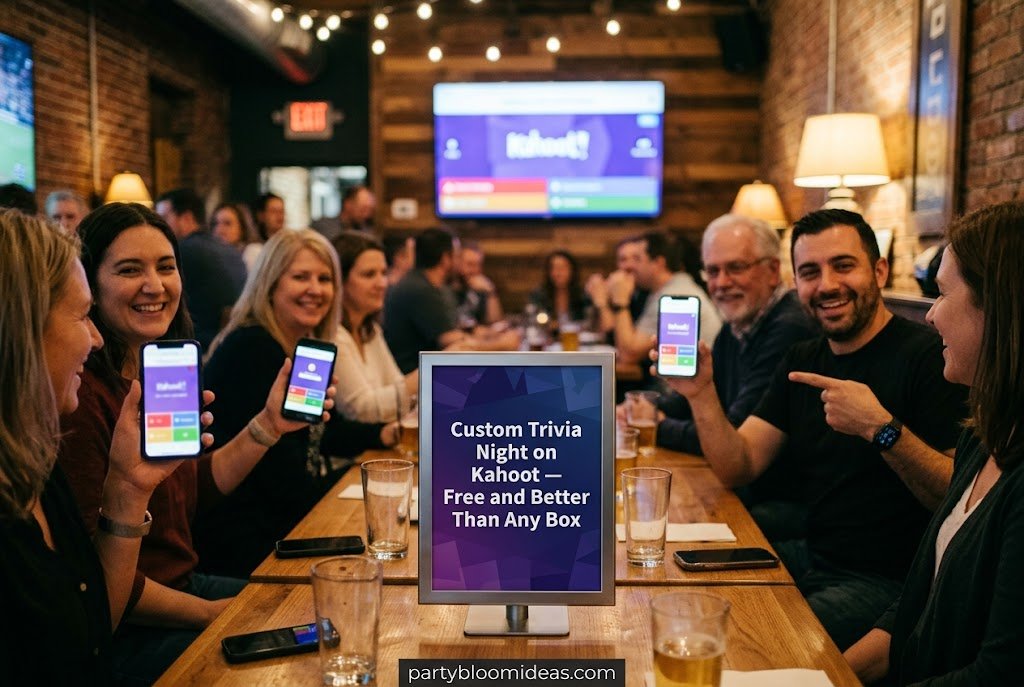
Custom Trivia Night on Kahoot — Free and Better Than Any Box
Best for: Birthday parties, holiday gatherings, competitive groups of 8–30 | Energy Level: High | Cost: $0–$20**
Store-bought trivia is fine. Custom trivia built around the birthday person, inside jokes, and shared memories? That’s what Emma built that October night, and that’s why people were still texting about it 48 hours later.
The difference: “What year was the Eiffel Tower built?” versus “What movie did [birthday person] cry at in public?” The personal question wins every time because social stakes go up when the answer involves someone in the room.
How to play: Build a quiz on Kahoot (completely free), Google Forms, or just read questions aloud with a paper scoreboard. Suggested categories: general trivia, pop culture by decade, questions about the guest of honor, local trivia, food and drink questions.
Supplies and cost:
- Kahoot app or website: $0
- Printed answer sheets + pens: $2
- Small prizes for winning team: $10–$20 from Dollar Tree
💡 Pro Tip: Include at least five questions about the birthday person. Not embarrassing ones — funny ones. “What is [name]’s go-to karaoke song?” gets a better reaction than any general knowledge question.
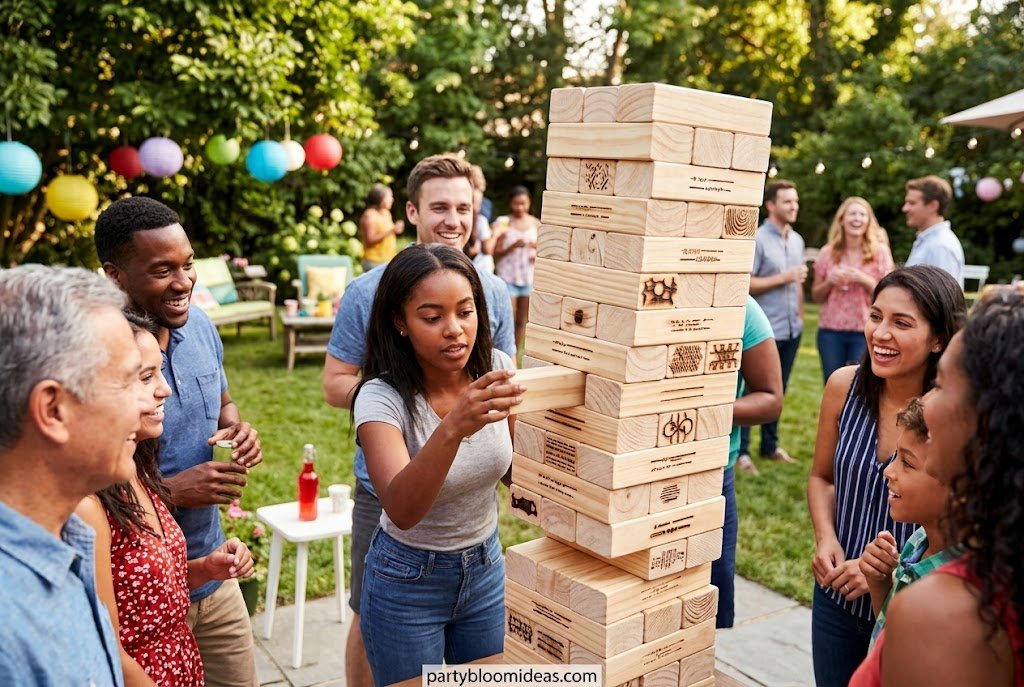
Giant Jenga With Prompts — The Backyard Game That Always Draws a Crowd
Best for: Backyard BBQs, summer parties, 10–25 guests | Energy Level: Low–Medium | Cost: $20–$45
Giant Jenga earns its place at any outdoor gathering because the visual alone makes the party look like something is happening. A tower of oversized wooden blocks in the backyard pulls people in. The tension of the structure wobbling never gets old, no matter how many times people have played.
Take it further: write prompts on the blocks in black Sharpie before the party. “Tell a story about a time you got caught.” “Do your best celebrity impression.” “Ask someone at the party a question you’ve always wanted to ask.” Pull a block, complete the prompt.
How to play: Standard Jenga rules — pull a block from below the top, place on top, don’t topple. With prompts: the player who pulls must complete what’s written.
Supplies and cost:
- GoSports Giant Tumbling Timbers: ~$45 (reliable mid-range)
- DIY with 2×4 lumber from Home Depot: ~$20 (six 8-foot boards, cut to 10.5″ lengths, sand lightly)
- Sharpies: $3
Done right, this is a conversation game wrapped in a physical game. Done wrong, it’s just Jenga without the prompts, and at a party, the prompts are the whole point.
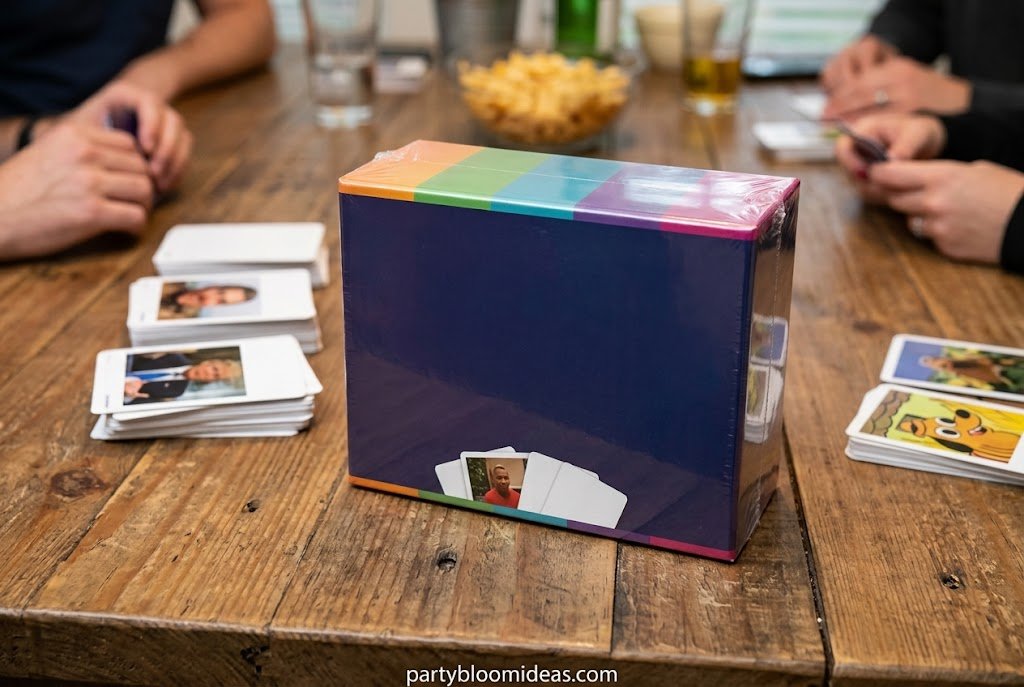
What Do You Meme? — For Groups Who Live Online
Best for: Millennial + Gen Z groups, small birthday parties, groups of 3–8 | Energy Level: Medium | Cost: $25–$30
What Do You Meme? is Cards Against Humanity for people who communicate primarily in memes. One player holds up a meme image card; everyone else plays a caption card from their hand; the image holder picks their favorite. It’s faster than Cards Against Humanity, less dark, and doesn’t require people to be edgy to participate.
Supplies and cost:
- What Do You Meme? base game: $25–$30 on Amazon
- Expansion packs available if you want more variety: $15–$20 each
It works best for groups of people who share cultural references — the laugh comes from recognition, not explanation. If your group spans multiple decades and not everyone is on social media, the memes that are current for some players will be blank looks for others.
Beer Olympics — The Party Format, Not Just a Game
Best for: Large backyard gatherings, summer birthdays, 20–40 guests | Energy Level: High | Time: 3–4 hours | Cost: $20–$60
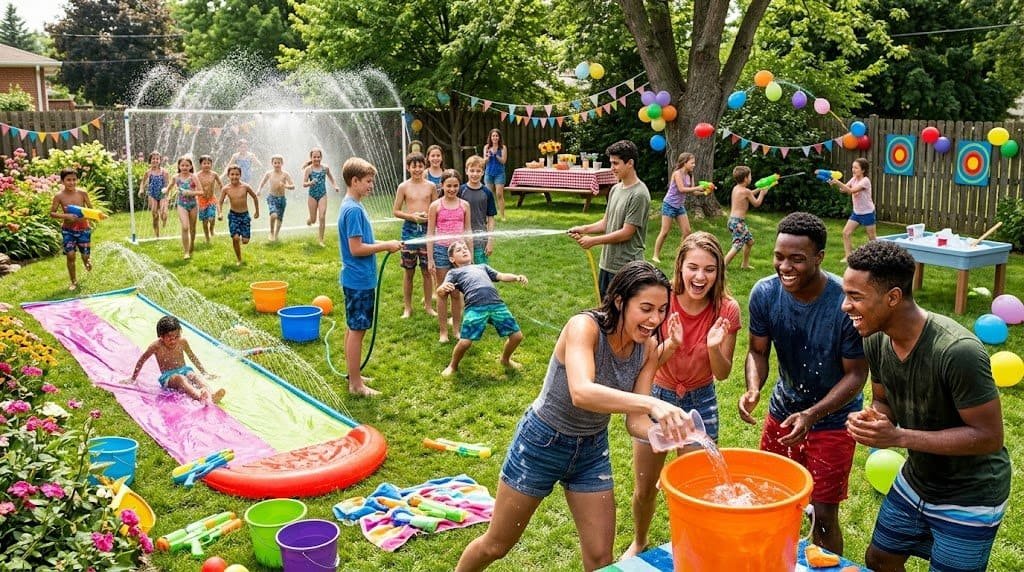
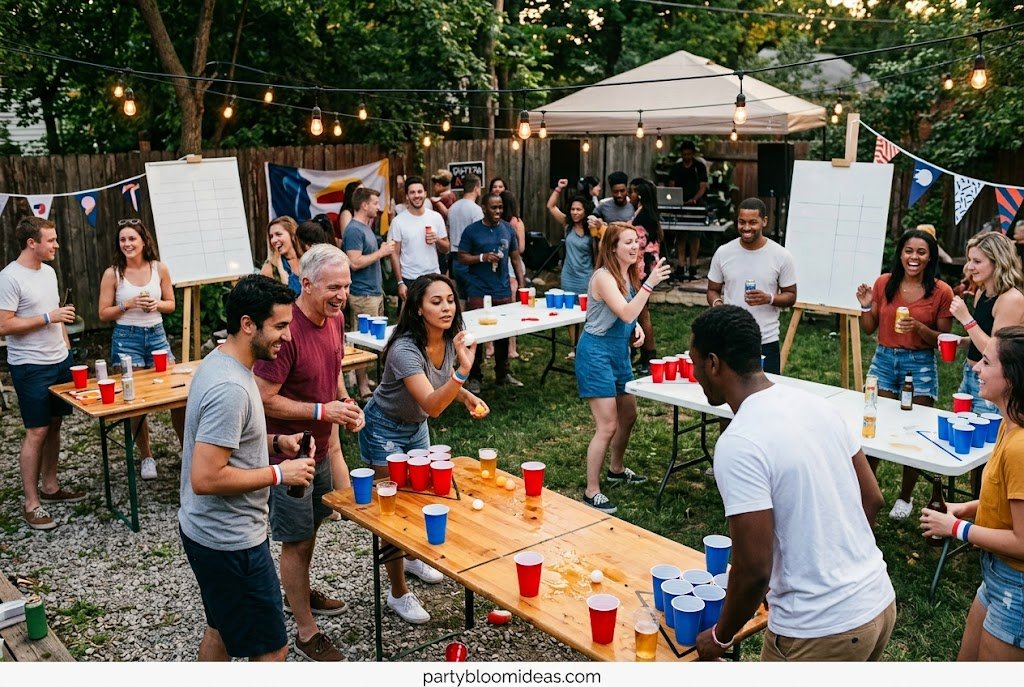
Beer Olympics isn’t a single game — it’s the entire party structure. Teams of 2–4 compete across 4–6 lawn games over the course of the evening. A whiteboard tracks standings. Winning team gets “gold medals” (Dollar Tree has actual plastic medals for $1.25).
Games to rotate (mix and match what you have):
- Beer Pong: $3 in ping pong balls + plastic cups
- Flip Cup: cups you already have
- Cornhole: borrow if you don’t own ($30–$60 to buy)
- Giant Jenga (see above)
- Ring Toss: $12 at Target
Why it works for large groups: The tournament bracket does the social organizing. People have a team to belong to from the moment they arrive. Conversation happens naturally within teams and between opponents. You don’t need to “introduce the game” — the structure introduces itself.
💡 Pro Tip: Make team shirts. Iron-on letters from Amazon ($15), blank tees from Walmart or Dollar Tree ($5 each). When guests arrive and see teams in matching shirts, the competitive energy is set before a single game starts.
 Werewolf / Mafia — The Psychological Game for Sharp Groups
Best for: 8–20 people, evening parties, groups who know each other | Energy Level: Medium | Cost: $0–$8
Werewolf requires no physical components, no technology, no supplies you don’t already own — and it creates more genuine tension than almost any other party game. Some players are secretly Werewolves. Each “night” round (everyone eyes closed), the Werewolves silently eliminate a player. Each “day” round, the group debates and votes on who to eliminate. Town wins by eliminating Werewolves. Werewolves win if they outnumber the town.
The accusations get heated in the best possible way. People who are good at reading others become stars. The social dynamics that the game surfaces are always more interesting than the game itself.
Supplies and cost:
- Free printable role cards: $0 (Google “Werewolf party game free printable”)
- Werewolf card game box (if you want a polished version): $8 on Amazon

Escape Room in a Box — For Groups Who Want a Full Experience
Best for: Small groups 4–6, couples parties, game-night lovers | Energy Level: High | Time: 60–90 min | Cost: $25–$40
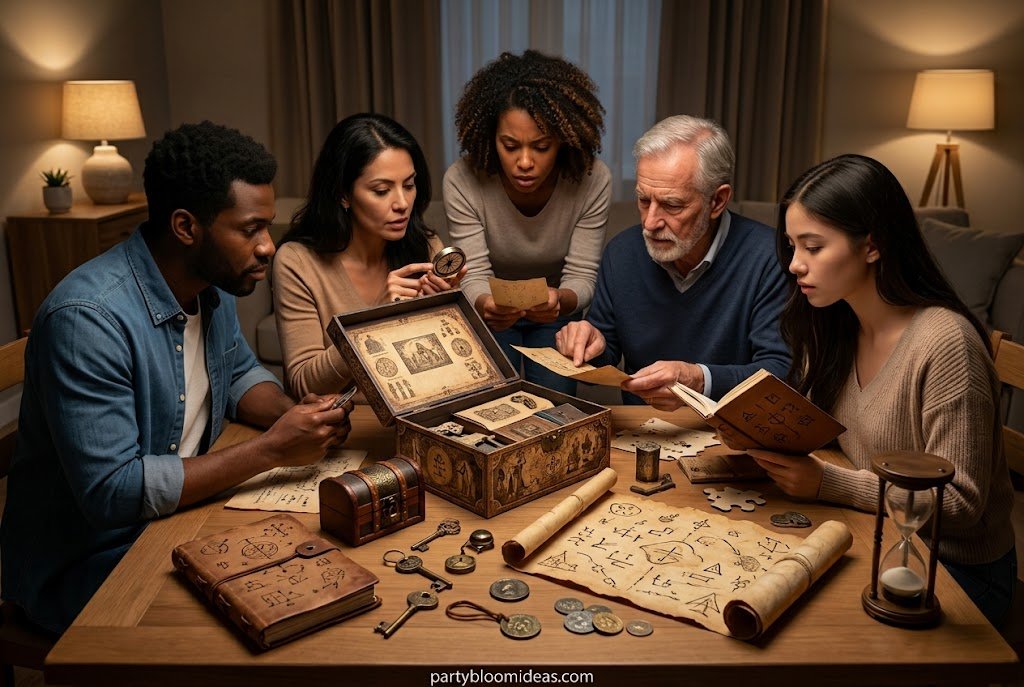
Collaborative, not competitive. Everyone’s working together against the puzzle, not against each other. For groups who find competitive games stressful, this is the answer. It has a beginning, middle, and satisfying end.
Supplies and cost:
- Escape Room in a Box (Werewolf-themed, highly rated): $25 on Amazon
- ThinkFun or Unlock! brand alternatives: $20–$35
💡 Pro Tip: Do this before dinner, not after. Puzzle-solving after food and drinks doesn’t work the way hosts expect.
Spicy UNO — The $6 Game That Gets Surprisingly Competitive
Best for: All groups, 4–10 players | Energy Level: Medium | Cost: $6**
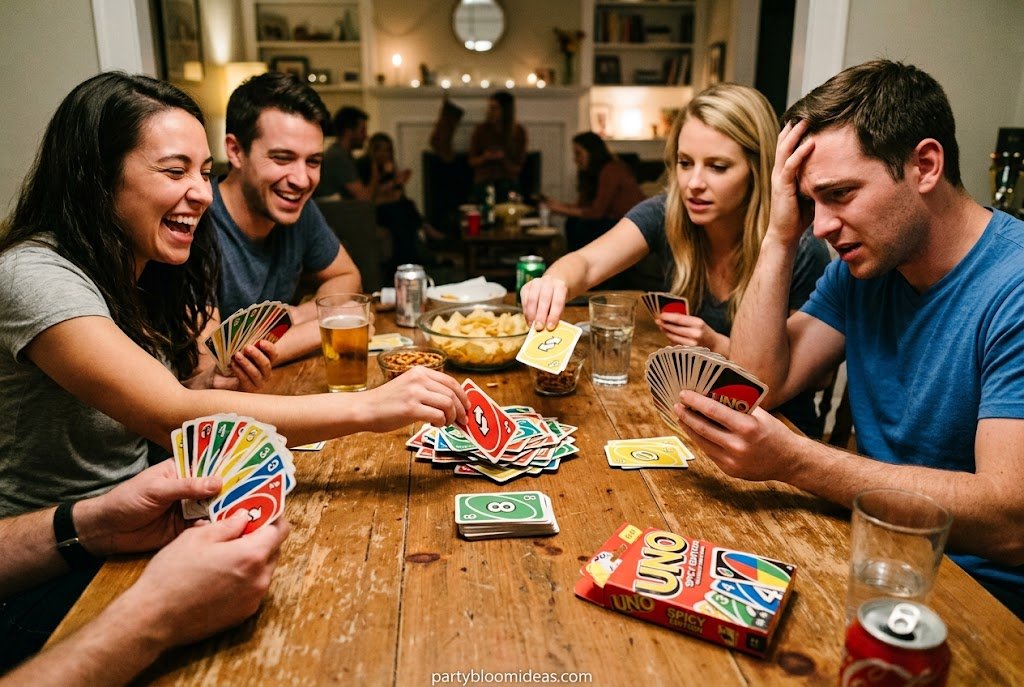
UNO with house rules is one of those games that requires zero explanation and somehow gets more intense the older your guests are. The “spicy” version just means stacking rules and wild card penalties that make the game faster and louder.
Common house rules: stacking +4 cards (next player draws 8 instead of 4), jump-in rule (play an identical card out of turn), 7-0 rule (7 = swap hands with someone; 0 = everyone passes left).
Write the rules on an index card before the party. Tape it to the table. Arguments prevented.
Custom Bingo — The Versatile Game That Works for Any Themed Party
Best for: Bridal showers, baby showers, birthday parties, 10–30 guests | Energy Level: Low | Cost: $3–$15**
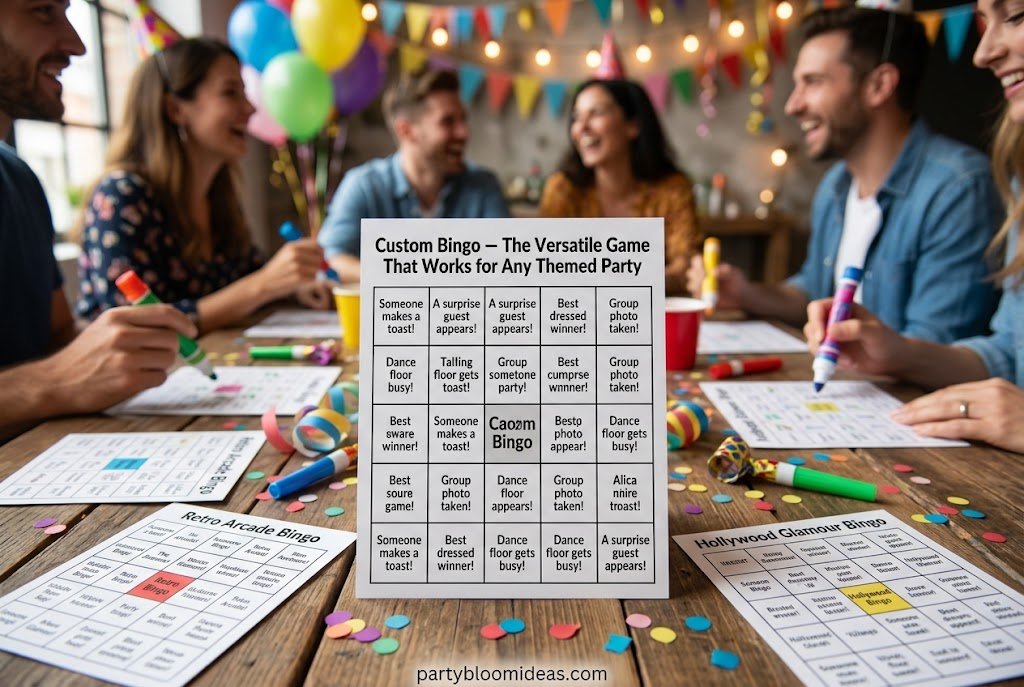
Bingo built around a specific occasion — squares filled with things likely to happen at a bridal shower, or baby items the couple will receive — turns it from a grandma game into something the group actually cares about winning.
Supplies and cost:
- Free custom cards from MyFreeBingCards.com: $0 (print at home)
- Daubers from Dollar Tree: $1.25 each
- Prizes: $5–$15
Free vs. Bought Party Games: What’s Actually Worth the Money?
| Game | Cost | Setup Time | Group Size | Customizable? | Best For |
|---|---|---|---|---|---|
| Name That Tune (Spotify) | $0 | 30 min build | 10–30 | ✅ Yes | All groups, mixed ages |
| Custom Trivia (Kahoot) | $0 | 60–90 min build | 8–30 | ✅ Yes | Birthday parties, competitive groups |
| Custom Bingo (printable) | $3–$5 | 20 min | 10–30 | ✅ Yes | Themed parties, showers |
| Scavenger Hunt (DIY) | $5–$10 | 45 min | 15–40 | ✅ Yes | Large outdoor gatherings |
| Murder Mystery (printable) | $3–$5 | 30 min print | 6–12 | ✅ Partially | Dinner parties |
| Jackbox Party Pack | $25–$30 | 5 min | 4–8 | ❌ No | Mixed groups, digital-friendly |
| What Do You Meme? | $25–$30 | 2 min | 3–8 | ❌ No | Millennial/Gen Z groups |
| Murder Mystery (kit) | $20–$35 | 10 min | 6–12 | ❌ Limited | Dinner parties |
| Escape Room in a Box | $25–$40 | 5 min | 4–6 | ❌ No | Small groups, game lovers |
| Hot Takes Card Game | $18–$22 | 2 min | 4–10 | ❌ No | Discussion-based groups |
Bottom line: Free games outperform bought games for large groups because they’re customizable to the specific people in the room. Bought games shine for smaller groups who want a polished, no-prep experience.
The Common Mistakes That Kill Game Night
The biggest mistake most hosts make is treating games as mandatory. The moment you announce “okay, everyone, it’s game time!” and clap your hands, you lose a third of the room. Instead: set up the game nearby where people are already gathered. Natural curiosity pulls people in. Then invite casually.
Other mistakes I’ve made or watched others make:
Starting too early. Give guests 30–45 minutes minimum to arrive, get a drink, and settle before introducing a game. Games that start cold, when people are still in their coats, always land flat.
Never Have I Ever (the verbal version) with mixed groups. This game has a 90% chance of making someone visibly uncomfortable when played in a circle with people who don’t know each other well. Use the written card version instead — everyone writes their answers simultaneously, reveals together. Totally different energy.
Running one too many rounds. Every game has a peak. End slightly before you’ve reached it. “Let’s do one more round” is where games go to overstay their welcome.
Explaining rules for longer than the game takes. If you can’t explain it in 60 seconds, pick something simpler. Jackbox explains itself. Spicy UNO takes 30 seconds. Murder Mystery needs a briefing but does it through printed cards, not the host talking.
Matching the wrong game to the crowd’s familiarity. Personal trivia only works when guests know the subject well. Name That Tune works for strangers. Read who’s in the room before you decide what to play.
🎉 Quick Summary
✅ Best for: Birthday parties, backyard BBQs, dinner parties, bachelorette gatherings, holiday parties
💰 Budget range: $0 (Spotify trivia, Kahoot) to $45 (Giant Jenga, Jackbox)
⏱ Setup time: 5 minutes (bought games) to 90 minutes (custom Kahoot quiz)
🌟 Top pick: Jackbox Party Pack (bought) | Custom Kahoot Trivia (free)
📌 Don’t skip: The 30–45 minute warm-up window before introducing any game — this is where most game nights fail
People Also Ask
What party games do adults actually enjoy? Adults tend to enjoy games that feel social rather than performative — Jackbox, custom trivia, Name That Tune, and Murder Mystery score consistently well because they generate humor and connection organically. According to a 2023 survey by The Bash, icebreaker activities ranked second among the most requested adult birthday party add-ons, just behind food.
How do you plan a game night for adults? Choose one game that fits your group size and familiarity level. Buy supplies or build your digital game in advance. Set up in a space where guests are already comfortable. Wait 30–45 minutes for guests to settle before introducing the game. One well-run game is better than three mediocre ones.
What games should you avoid at an adult party? Never Have I Ever (verbal, in a circle) consistently makes people uncomfortable at mixed-group parties. Truth or Dare reliably fizzles for adults past their mid-20s. Games with complex rule explanations also underperform — if you’re still explaining rules five minutes in, you’ve lost the room.
How long should a game last at an adult birthday party? 30–60 minutes is the sweet spot for most party formats. Beer Olympics can anchor a full 3–4 hour backyard event. Escape Room in a Box runs 60–90 minutes. For casual birthday gatherings, plan for one 45-minute game followed by open conversation.
What are good free party games for adults? Name That Tune on Spotify, custom Kahoot trivia, printable Bingo cards from MyFreeBingCards.com, DIY scavenger hunt, and Werewolf with printed role cards are all completely free or nearly free and outperform many bought games when customized for your specific group.
Frequently Asked Questions
What are the best party games for adults that don’t require alcohol? Jackbox, Murder Mystery, Name That Tune, Escape Room in a Box, and custom Trivia all work completely without alcohol. The games that use drinking mechanics are usually just variations of games that are equally fun without them. If you have a mixed crowd (designated drivers, non-drinkers, different preferences), keep the game itself alcohol-free and let guests manage their own drinks.
How do you introduce party games without making it awkward? Don’t announce “it’s game time!” with a clap — that’s the fastest way to lose half your guests. Instead, start setting up the game near where people are already gathered. Natural curiosity kicks in. Then invite casually: “We’re doing a quick trivia round if anyone wants in.” The people who want to play will gravitate over, and the people who’d rather chat can keep chatting without feeling left out.
What party games work best for large groups of 20 or more adults? Name That Tune (teams), Beer Olympics, Kahoot trivia, and DIY Scavenger Hunt all scale well to large groups. Most card games cap out at 8–10 players effectively. For 20+ guests, structure the game around teams — it gives everyone a smaller group to belong to within the larger event, which makes the social dynamics work naturally.
What icebreaker games work for adults who don’t know each other? Name That Tune is the safest icebreaker for strangers — it gives everyone a shared activity that doesn’t require personal disclosure. Two Truths and a Lie also works well in small groups of 6–12. Avoid trivia based on personal knowledge about the host or guests of honor, and skip Never Have I Ever in any group where people don’t know each other well.
Do party games work for mixed-age groups that include people in their 30s through 60s? Yes — with the right choices. Name That Tune with a multi-decade playlist, custom Bingo, Charades, and Giant Jenga span age ranges effortlessly. Avoid games that depend heavily on recent internet memes or current social media culture. Jackbox can work for older guests who are comfortable with smartphones.
How long should party games last at an adult birthday party? 30–60 minutes is the sweet spot. Beer Olympics can structure an entire backyard party at 3–4 hours. Escape Room in a Box runs 60–90 minutes. For most birthday gatherings and dinner parties, one well-run 45-minute game is more memorable than two games back-to-back.
What party games require no supplies at all? Two Truths and a Lie (purely verbal), Werewolf (if you have notecards and pens to make role cards), a hot takes debate format, and Name That Tune if you already own a smartphone and a speaker. These work as spontaneous additions when you want to add a game element without any advance planning.
What card games work better than Cards Against Humanity for most groups? What Do You Meme? (lighter, faster, less dark), Hot Takes Card Game (discussion-based rather than shock-based), Jackbox Quiplash (digital equivalent but funnier and more customizable), and Exploding Kittens (strategy + chaos). Cards Against Humanity works well for specific close friend groups — it just gets repetitive and the dark humor doesn’t land for every guest.
When should you skip party games entirely? When conversation is already flowing naturally, don’t interrupt it. The best parties I’ve been to had no planned game at all — just the right people, the right food, and a space that encouraged lingering. Games are for moments when energy needs a boost, the room needs a shared activity, or the crowd doesn’t know each other well enough for conversation to find its own footing.
What party games are best for a bachelorette party? Custom “How Well Do You Know the Bride?” trivia, Bachelorette Bingo with occasion-appropriate squares, and What Do You Meme? all work well. Keep games to 45 minutes maximum — bachelorette celebrations are about the group connection, not the game. Save longer games for a dedicated game night.
How do you keep introverts engaged during party games without putting them on the spot? Choose games with low individual pressure. Jackbox lets players participate from behind their phone screen without any spotlight. Kahoot trivia with a team format means no one person has to perform. Escape Room in a Box is fully collaborative with no competitive element. Avoid anything requiring physical performance, public speaking, or individual spotlight moments for guests you know tend to be quieter.
What’s the funniest party game for adults right now? Jackbox Quiplash 2 consistently gets the biggest laughs because the humor is generated by the specific people in the room. Custom trivia with personal questions about the birthday person comes in a close second. The funniest games are always the ones that reflect the group back at themselves.
Is Never Have I Ever still a good party game? The verbal, in-a-circle version is tired and consistently makes people uncomfortable in mixed groups. The written card version — where everyone writes answers simultaneously and reveals together — is a genuinely better format and worth trying if you love the concept. But I’ve stopped playing the traditional version at parties after watching it land flat at three events in a row.
What party game is best for a birthday party of 30+ adults? Kahoot custom trivia (everyone on their own phone, instantly scalable), Name That Tune with team brackets, Beer Olympics structure, or a DIY Scavenger Hunt with teams of 4–6. Any game where the group is broken into teams handles large numbers better than single-round games where everyone competes individually.
How much should you spend on party games for adults? You can run an excellent game night for $0 using Kahoot, Spotify, and free printables. If you want a reliable bought game, Jackbox ($25–$30) is the best investment. For a single-occasion game (bridal shower bingo, birthday trivia), free printables always outperform their price.