🎈 Quick Summary
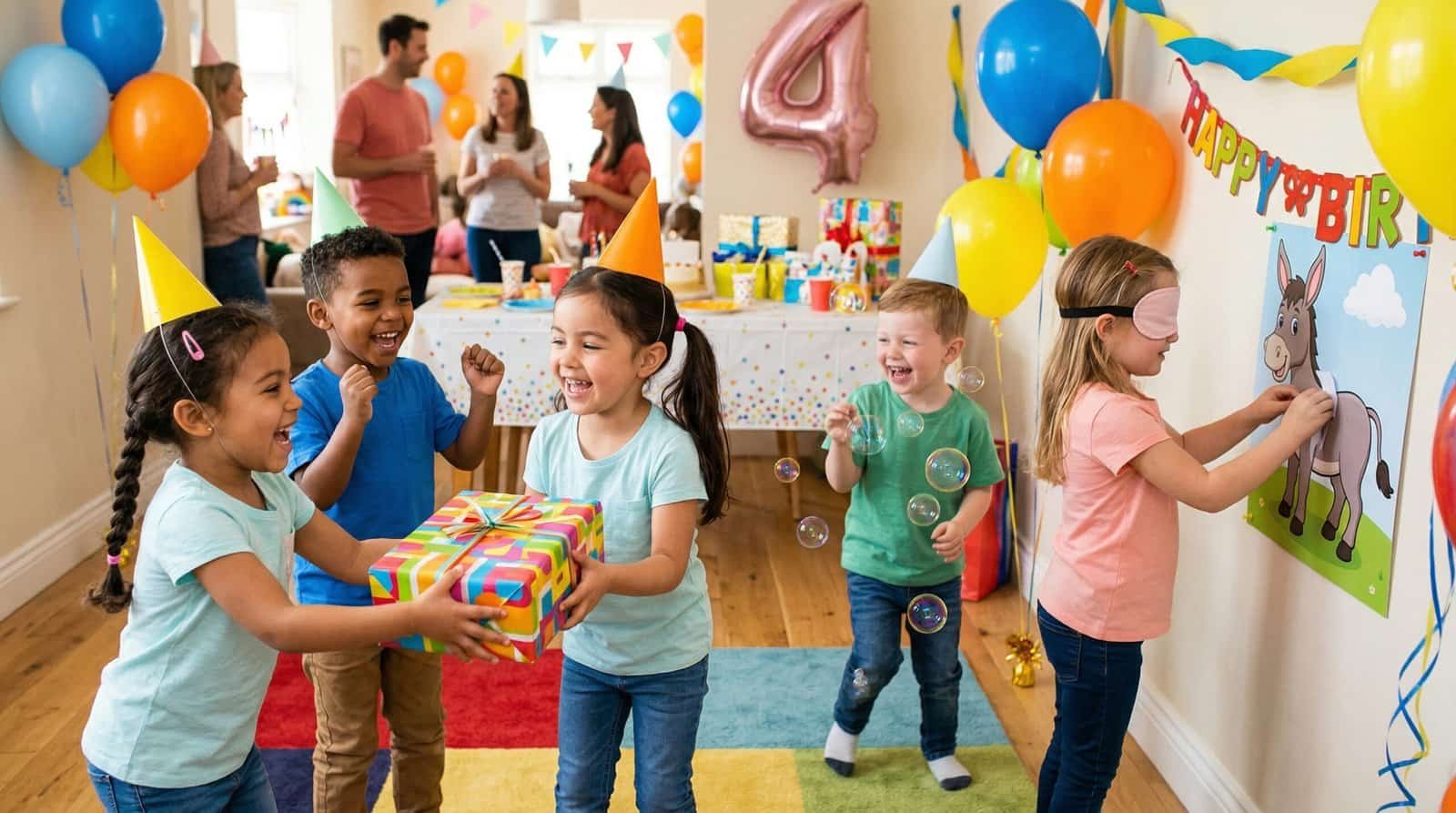
Four-year-olds are the most enthusiastic party guests on earth — they have boundless energy, zero self-consciousness, and the ability to find joy in the simplest activities if they’re presented with enough color, movement, and silliness. But planning games for this age requires understanding that attention spans are short (5-8 minutes per activity maximum), rules must be extremely simple, winning and losing need to be handled with care, and physical safety is paramount. These 17 games are perfectly calibrated for the preschool set — high energy, low rules, maximum fun.
🎈 17 High-Energy Birthday Party Games for 4-Year-Olds (2026)
By PartyBloomIdeas Team | Updated 2026 | Preschool Birthday Party Guide
📋 Table of Contents
🏃 Movement & Energy Games
Animal Movement Parade

Call out different animals one at a time and have all the children move around the party space imitating that animal — hop like a bunny, stomp like an elephant, slither like a snake, gallop like a horse, waddle like a penguin — with transitions between animals every 15-20 seconds to maintain maximum engagement and energy. Four-year-olds are in a developmental stage where imaginative physical play is their primary mode of joy, and the animal parade format gives them a safe, guided context to express that imaginative physicality with their peers. Add sound effects to each animal — everyone roars for lion, oinks for pig, ribits for frog — because the collective noise of a room full of preschoolers making animal sounds simultaneously is a genuinely magical party moment. This game requires zero equipment, zero prep, and works for any group size from 4 to 40 children, making it the ideal opening game that gets everyone moving immediately upon arrival without any setup delay.
Freeze Dance Party
Play upbeat children’s music and have everyone dance freely — when the music stops suddenly, everyone freezes in whatever position they’re in, and anyone who moves after the stop is “caught” but simply gets a silly task (do three hops, spin twice, give the nearest person a high five) before rejoining. At this age, elimination creates tears and disrupts the party energy significantly, so the “caught” consequence should always be an inclusive, fun task rather than sitting out — every child stays active and engaged throughout the entire game. Use songs from the birthday child’s favorite playlist or favorite movie soundtrack to make the dancing feel personally meaningful to the guest of honor. The moment the music stops and 12 four-year-olds freeze simultaneously in their wildest dance positions is one of the most photographically spectacular moments of any preschool birthday party — always have a camera ready at this exact moment.
Simon Says: Birthday Edition
Play Simon Says with commands themed specifically around the birthday party — “Simon says eat some invisible birthday cake!”, “Simon says blow out the candles!”, “Simon says put on your invisible party hat!”, “Simon says wave to the birthday child!”, and “Simon says do the birthday dance!” The familiar game structure combined with birthday-specific commands makes even children who know Simon Says well re-engage with fresh enthusiasm because the content is novel and celebratory. Four-year-olds are just developing the inhibitory control required to genuinely play Simon Says — following a command when “Simon says” precedes it and holding still when it doesn’t — making this game genuinely developmentally appropriate and educationally valuable while being completely disguised as pure fun. Always allow children who make mistakes to rejoin immediately on the next round so the game maintains an inclusive, joyful atmosphere rather than becoming a competition between those who’ve been eliminated and those still playing.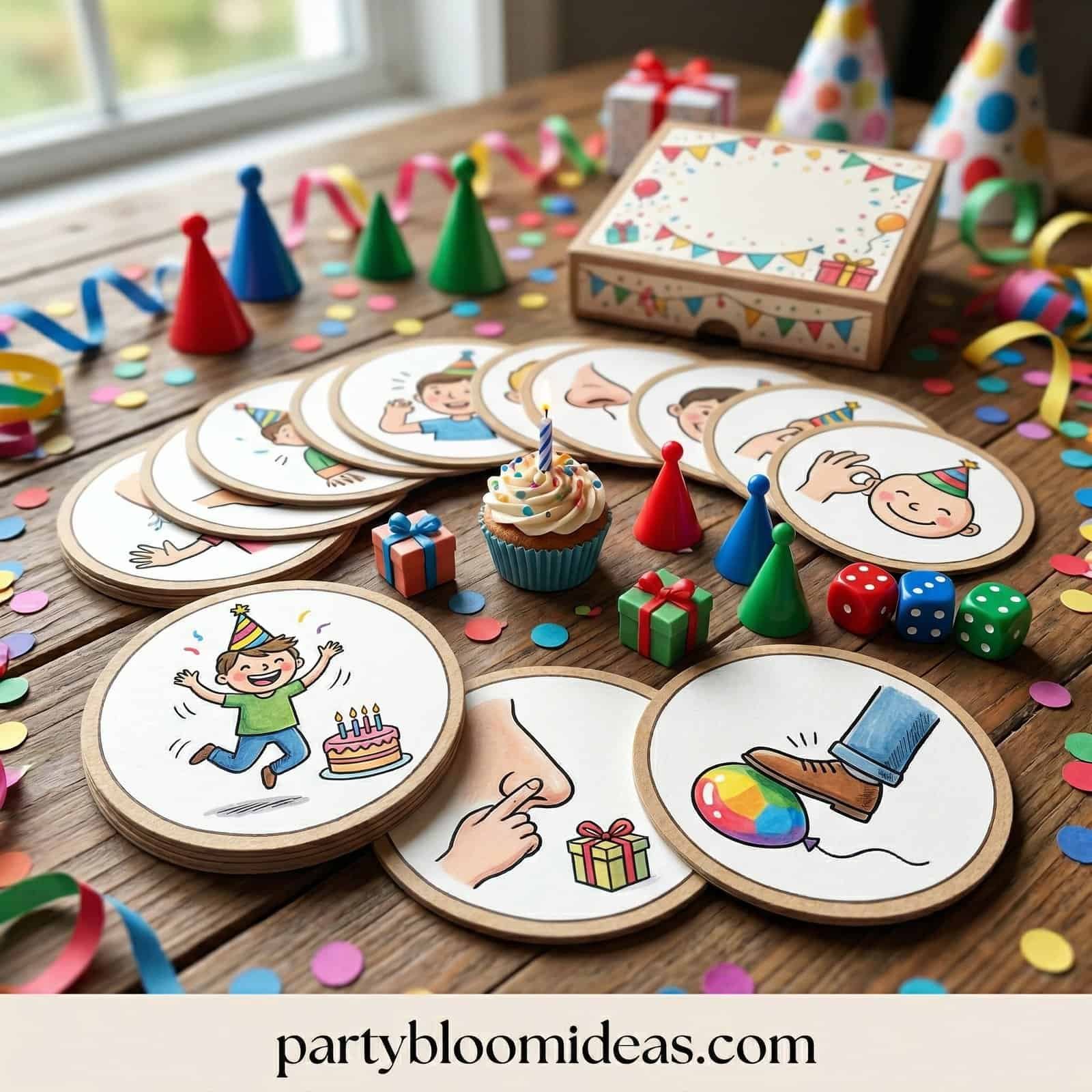
Balloon Tap Race
Give each child an inflated balloon and challenge them to keep it in the air using only gentle taps — traveling from one end of the room to the other while keeping the balloon aloft, racing against each other to a finish line at the far wall. Balloons move slowly and unpredictably enough that four-year-olds can successfully manage them with the fine motor control they have at this age, making this a genuinely achievable challenge that produces real pride rather than frustration. Use different balloon colors so each child has a clearly identifiable “their” balloon, and provide spare balloons for any that pop during the game so no child is left out mid-race. The beautiful visual of 10 colorful balloons drifting through the air above the heads of racing preschoolers is one of the most photogenic images any children’s birthday party can produce — it encapsulates the specific joy and color of early childhood celebration in a single frame.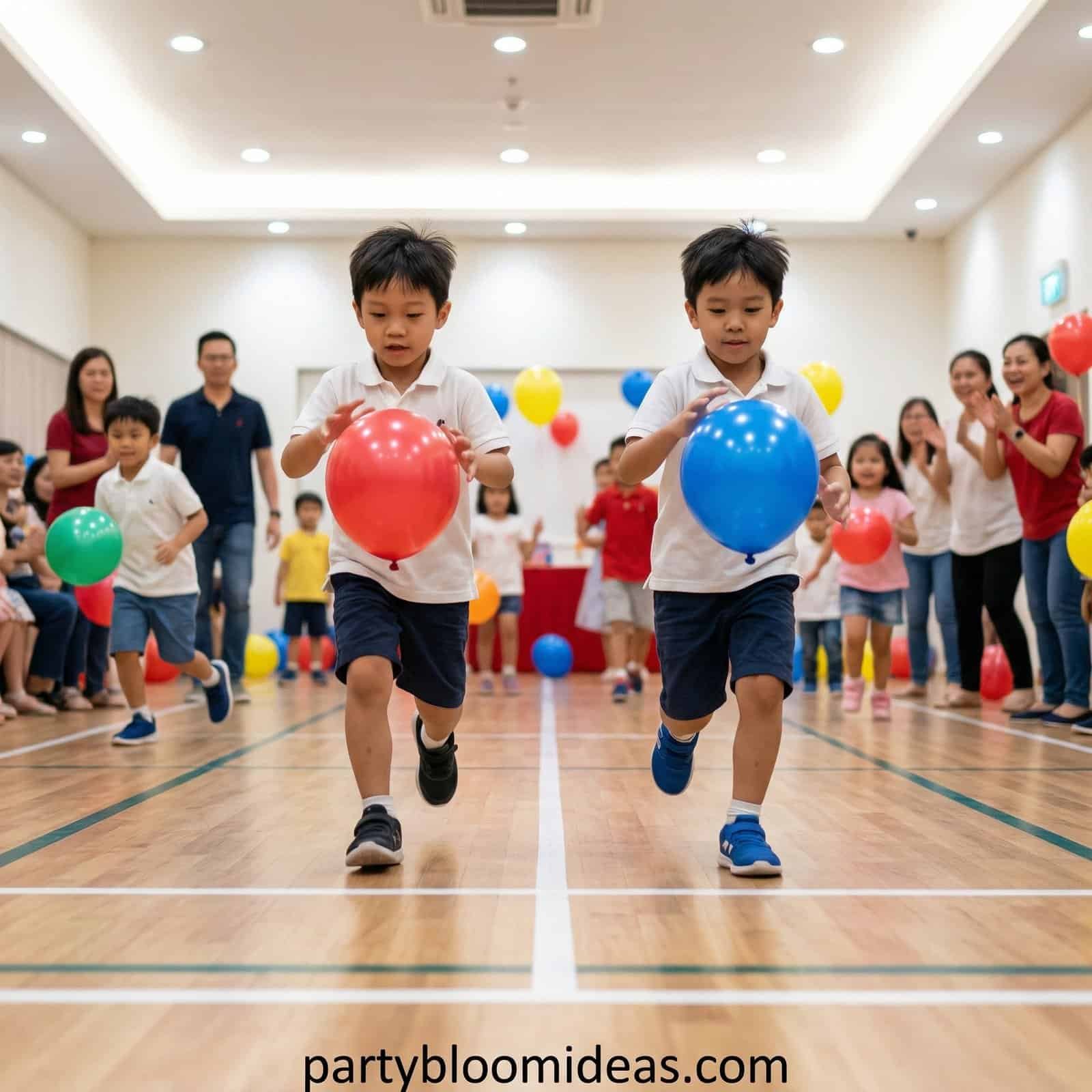
Rainbow Parachute Play
Gather all children around a large colorful parachute (available for $20-30 on Amazon), have them hold the edges, and run through a series of parachute activities — waves (ripple the parachute up and down), mushroom (everyone lifts together until the parachute forms a mushroom dome and then runs under), and popcorn (place lightweight balls in the center and shake the parachute so they “pop” like popcorn). Parachute play is specifically identified by early childhood development researchers as one of the most beneficial group activities for four-year-olds because it develops cooperation, motor skills, and spatial awareness while feeling like pure play. Change activities every 2-3 minutes to maintain engagement since the magic of each activity for four-year-olds lasts approximately the time it takes to do it twice — variety within the parachute format keeps energy high for 15-20 minutes. The “mushroom” move where everyone runs under the lifted parachute simultaneously and it floats down over the group like a colorful dome is genuinely one of the most joyful physical experiences available to four-year-olds at a birthday party.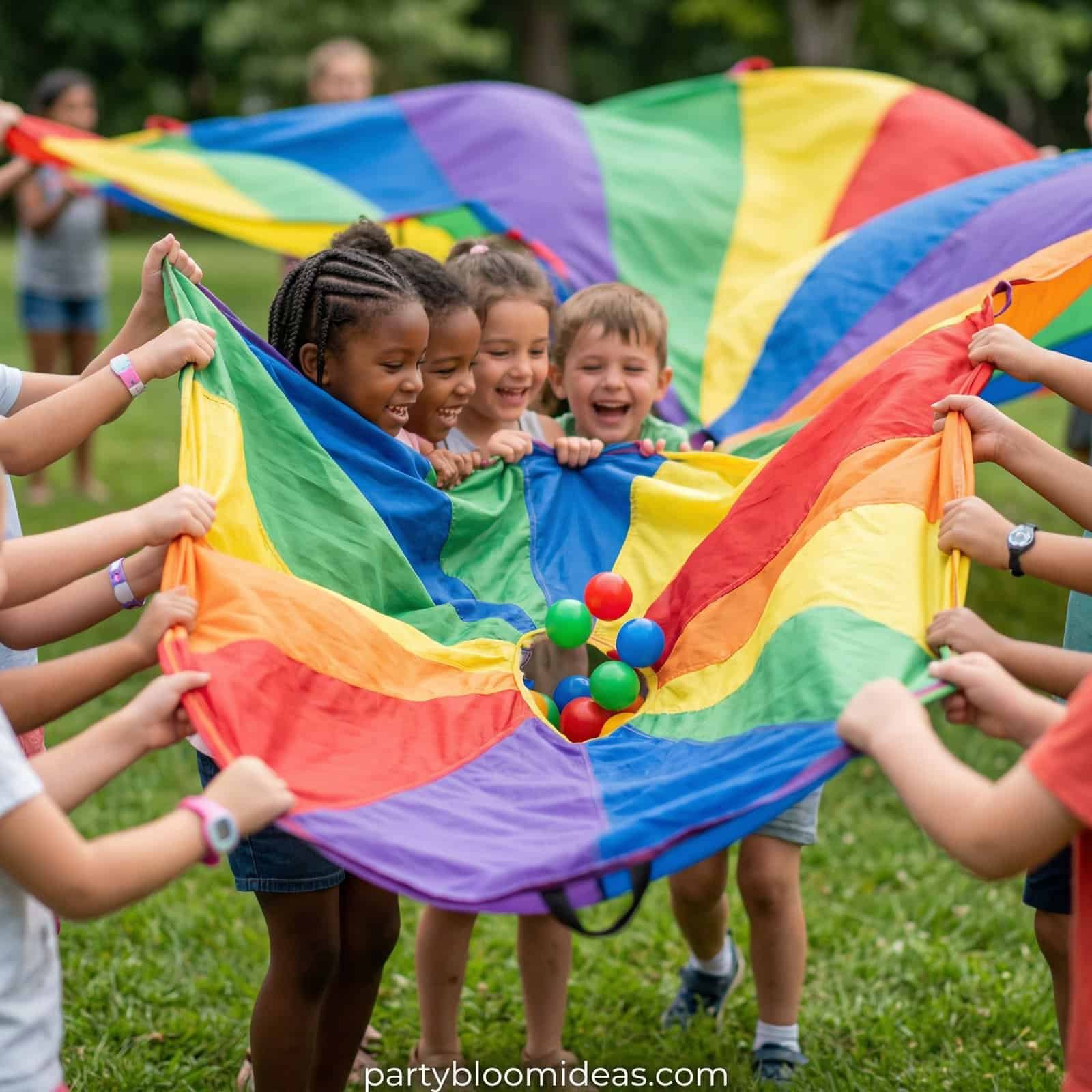
🎨 Creative & Sensory Play
Sponge Painting Station
Set up a painting table with large sheets of paper, washable paint in bright colors, and various sponge shapes — stars, hearts, circles, letters — that children can dip and stamp onto their paper to create colorful artwork to take home as a party favor. Washable paint is a non-negotiable requirement for a four-year-old painting activity since hands, faces, and clothes will inevitably become part of the artwork regardless of supervision level. Provide smocks or cover children in paint-friendly clothing before the activity begins, and set up a washing station (bucket of water and paper towels) nearby for quick hand cleaning between color changes. The finished paintings, when labeled with each child’s name and date, become genuinely precious keepsakes for parents — tangible evidence of creativity and joy from their child’s friend’s birthday party that many families display in their homes for years.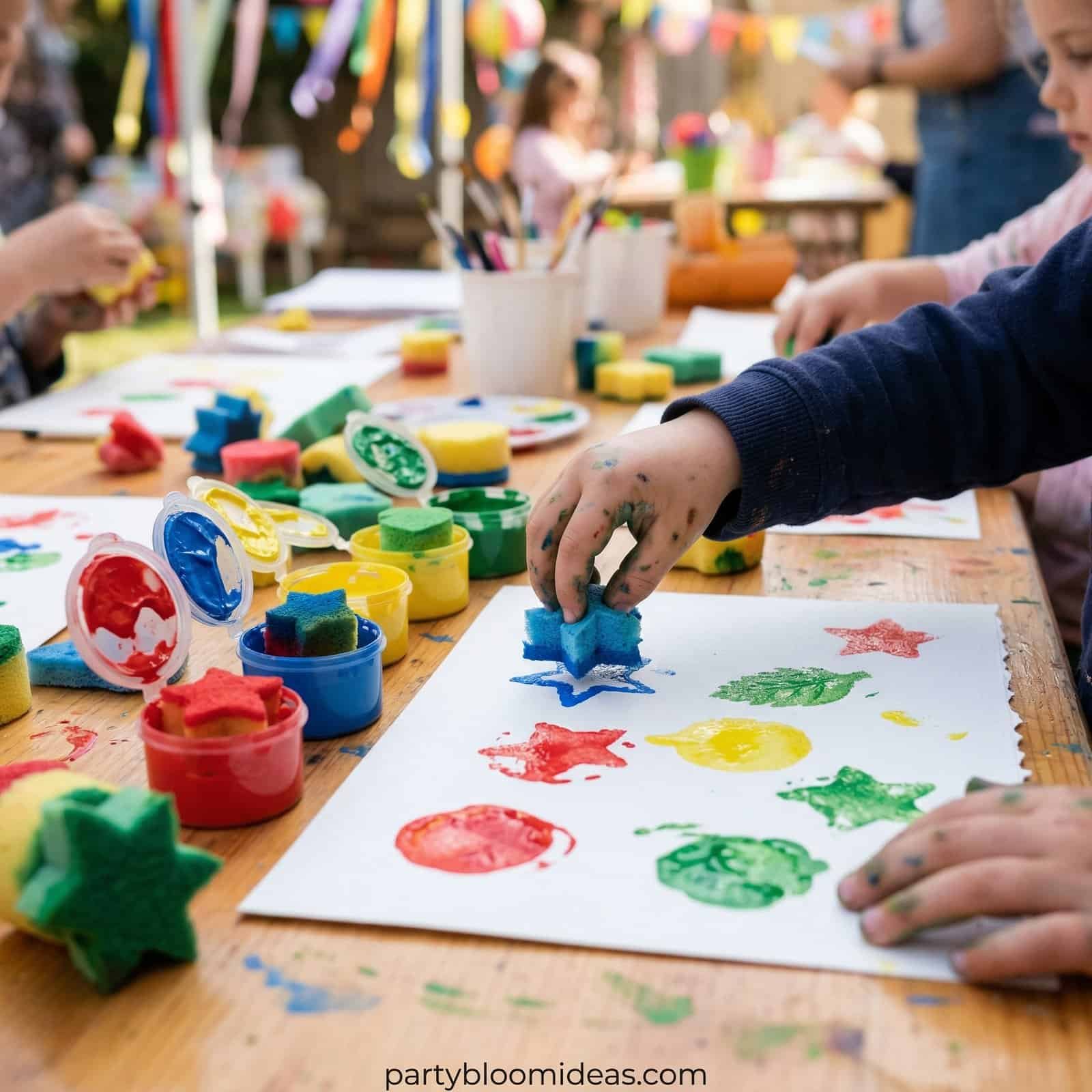
Sensory Bin Dig
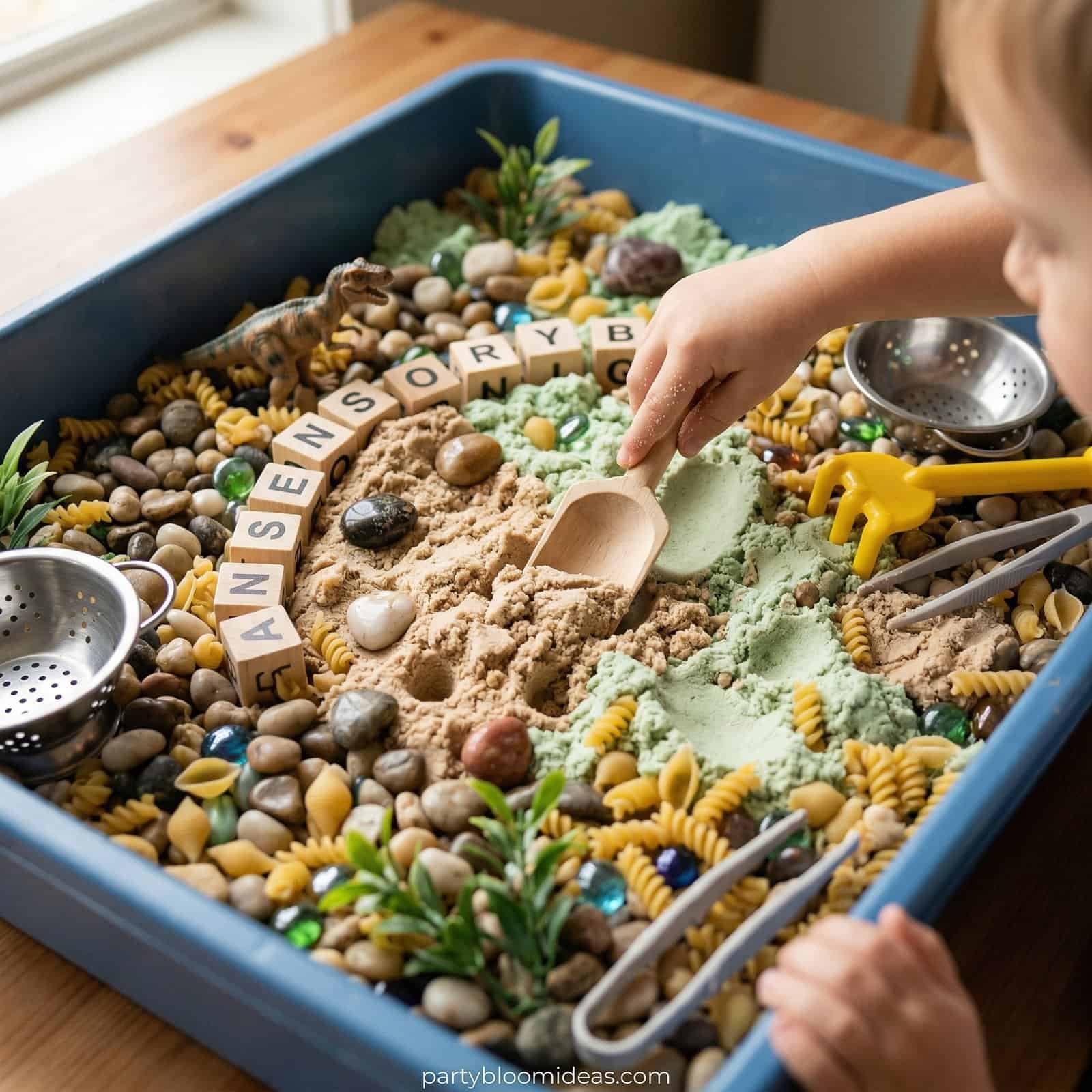
Fill a large plastic storage bin with colored kinetic sand, dried rainbow rice, or cloud slime, and hide small birthday-themed treasure items (tiny plastic animals, gem stones, mini birthday cakes) throughout — children dig through the sensory material to find as many treasures as possible and keep what they find. Four-year-olds are in the height of their sensory exploration developmental stage, making this activity profoundly satisfying at a neurological level as well as an entertainment level — the texture, weight, and movement of sensory bin materials engages their nervous systems in a way that purely visual or auditory activities simply can’t replicate. Set up the bin in a space where mess is manageable and have a broom nearby for inevitable overflow, because the digging enthusiasm of four-year-olds cannot be contained to the interior of any container however large. Let children keep their found treasures in a small zip-lock bag as a party favor so the sensory bin experience produces a tangible souvenir that extends the birthday excitement all the way to bedtime.
Playdough Party
Set up a playdough station with multiple colors of playdough (store-bought or homemade), cookie cutters in birthday and seasonal shapes, plastic rolling pins, and simple molds — with a challenge to build the most creative birthday cake, the funniest animal, or the most detailed pizza within 10 minutes. Four-year-olds have the fine motor development to use rolling pins and cookie cutters productively, making playdough sessions genuinely satisfying rather than frustrating at this age — they can execute simple planned creations rather than just exploring the material randomly. Display finished creations on a table and do a group gallery walk where everyone looks at all the playdough sculptures before the station closes — this creates a moment of collective appreciation that validates each child’s creative effort with peer recognition. Allow children to take home a small portion of their favorite playdough color in a sealed bag as part of their party favor so the creative activity extends beyond the party itself.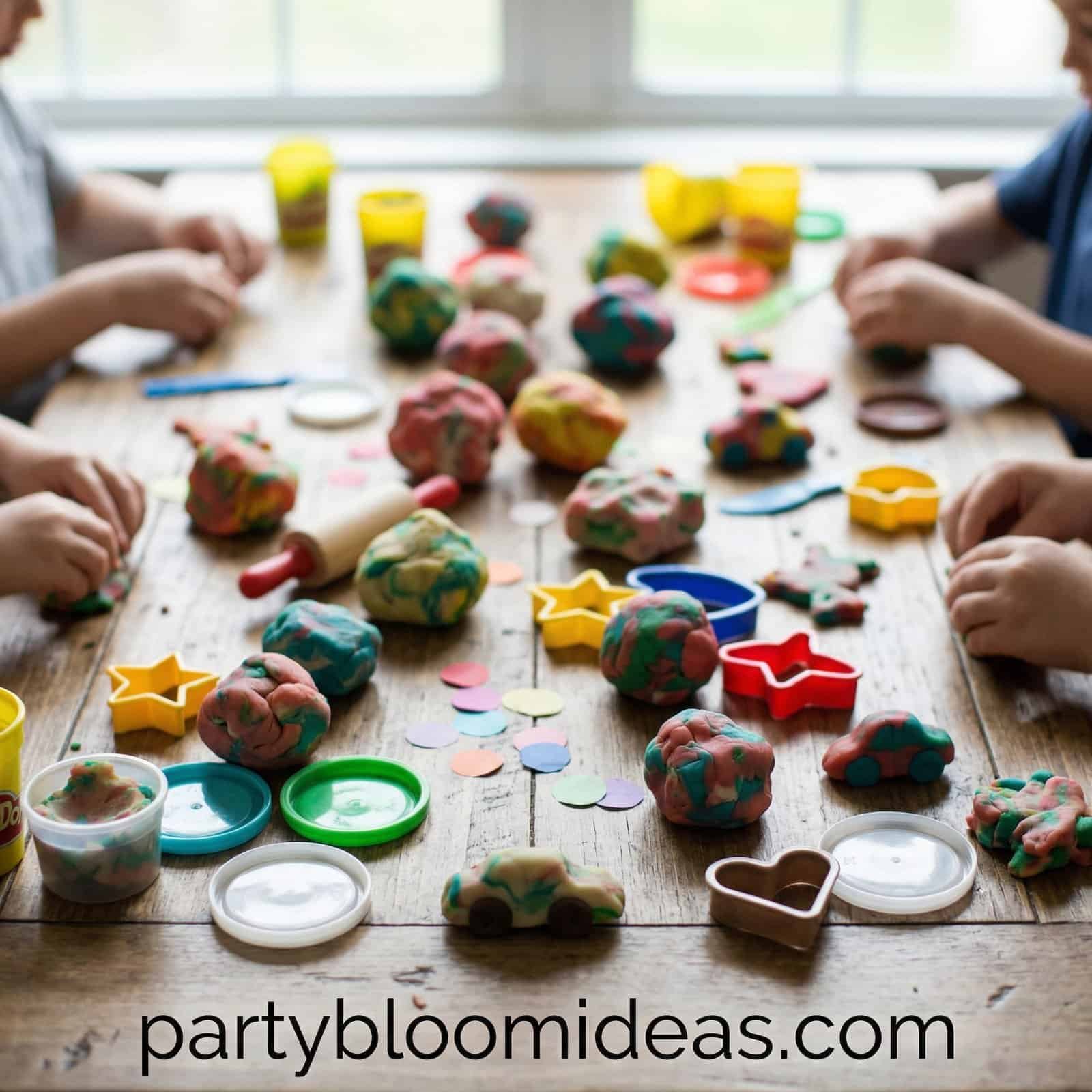
Musical Statues (No-Elimination)
Play music and have children dance freely — when the music stops, everyone freezes as still as a statue, and instead of eliminating the least-still child, the adult leader awards a small sticker to one child who froze in the funniest or most creative position, before the music restarts and everyone dances again. Every child receives at least one sticker before the game ends — track who has received one and make sure to award everyone before concluding — so the game ends with universal participation prizes rather than a single winner and multiple children who got nothing. The sticker award for “most creative freeze” rather than “who moved” shifts the competition from penalizing error to celebrating creative performance, which is developmentally appropriate and more enjoyable for four-year-olds who haven’t yet developed robust disappointment management skills. Use themed stickers that match the party theme — dinosaur stickers for a dino party, princess stickers for a princess party — so the stickers themselves function as part of the party’s visual identity and feel specifically chosen rather than generic.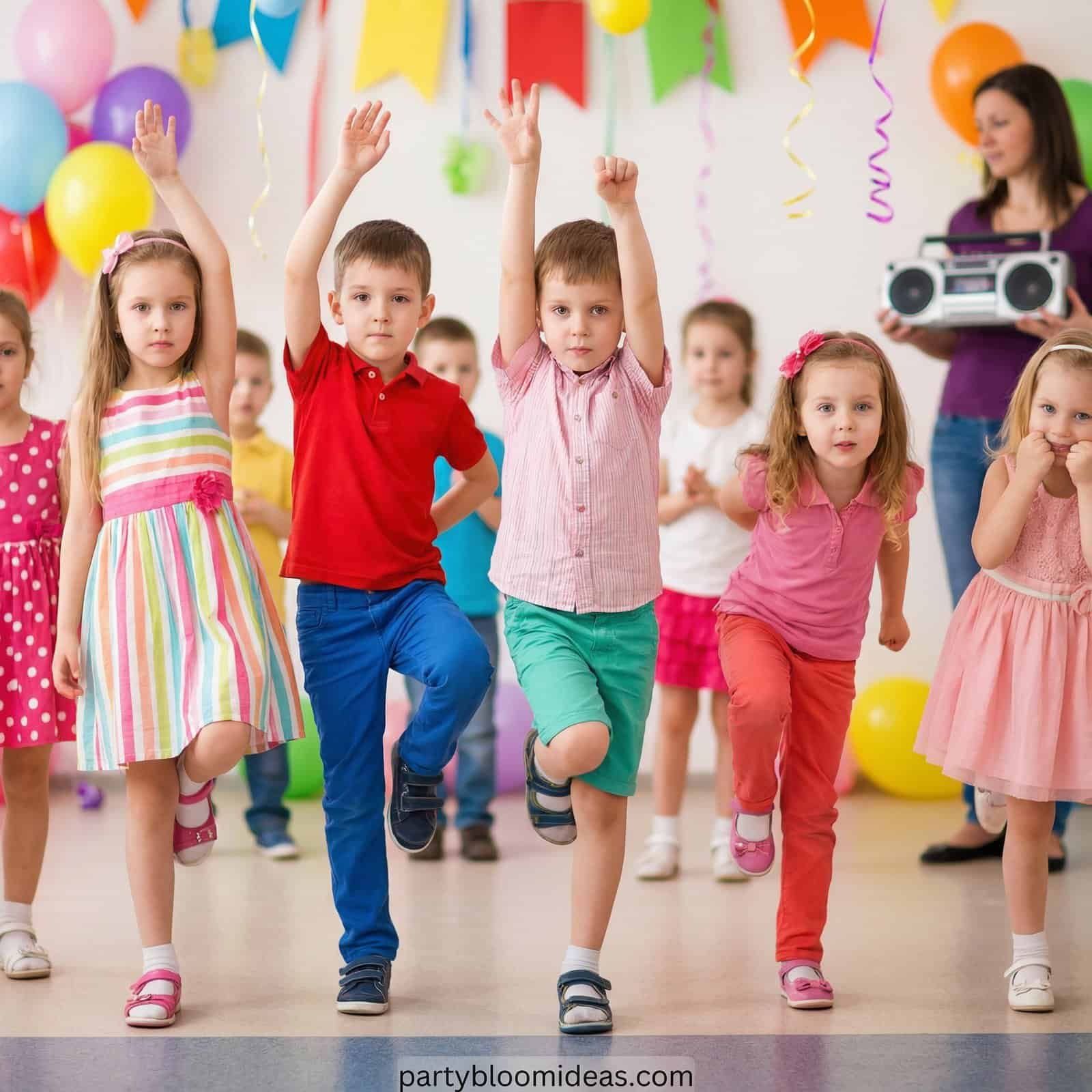
🎉 Classic Party Games (4-Year-Old Edition)
Duck Duck Goose: Themed Version
Play the classic Duck Duck Goose but replace “duck” and “goose” with words from the birthday party theme — for a dinosaur party it becomes “dino dino ROAR!”, for a unicorn party it becomes “sparkle sparkle MAGIC!”, for a superhero party it becomes “hero hero SUPER!” — making the familiar game feel freshly exciting and completely tailored to the celebration. Four-year-olds may not always run in the correct direction around the circle or remember to sit down at the right moment, and this is completely expected and part of the charm — adults should gently redirect without any tone of correction, keeping the atmosphere celebratory rather than instructional. The moment a child is chosen as “Goose” (or “ROAR!” or “MAGIC!”) and realizes they need to run is one of the purest expressions of preschool excitement available — their face goes from surprised to delighted to fully committed sprint in about half a second. Run this game for 8-10 minutes maximum before children’s attention naturally shifts, and transition directly to the next activity while energy is still high.
Piñata Party
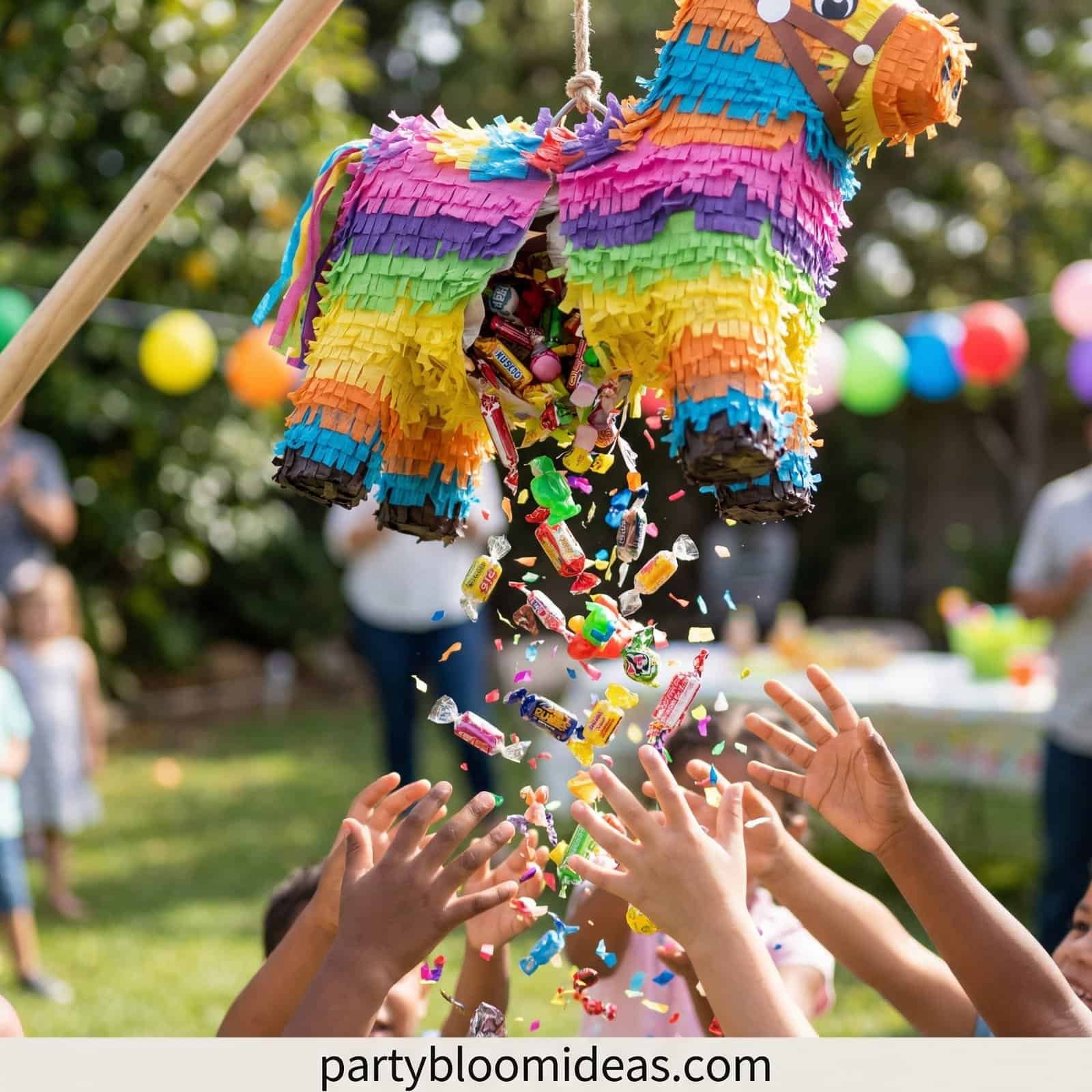
Hang a colorful piñata filled with wrapped candy, small toys, stickers, and individually packaged treats at a height appropriate for four-year-olds to swing at — provide a soft bat (pool noodle or wrapped foam bat rather than a wooden stick) for safety, blindfold each child loosely, spin them gently twice, and give them 3-4 swings before passing to the next child. At four, the piñata doesn’t need to last more than two full rounds of the group — if it’s still intact after everyone has had two turns, an adult can help it along so the actual candy release happens before children’s patience expires. Prepare numbered candy bags in advance so the collection phase is orderly — each child collects their designated bag (pre-filled with an equal amount of candy and one small toy) rather than scrambling on the floor, which prevents tears from children who feel they got less than others. The collective anticipation during each child’s swings, the adult dramatic commentary (“almost!”, “so close!”, “this might be the one!”), and the explosion of candy when the piñata finally breaks are three genuinely magical party moments that four-year-olds remember and talk about afterward.
Musical Chairs: Cooperation Version
Set up musical chairs but play it as a cooperation challenge rather than elimination — every time the music stops, one chair is removed, but children must work together to ensure everyone has PART of a seat, which means progressively more children must share each chair as the game continues, until the entire group is somehow balancing on two or three chairs together. This cooperative version eliminates the crying that inevitably accompanies traditional elimination musical chairs with four-year-olds, while maintaining the core excitement of the music-stop-scramble dynamic that makes the game fun in the first place. The increasingly creative ways children find to share shrinking chair space — sitting on laps, holding each other, creating human chair towers — produces genuine collaborative problem-solving that four-year-olds find both funny and deeply satisfying. End the game by celebrating the creative solution the group found rather than declaring a winner, reinforcing the cooperation framing throughout.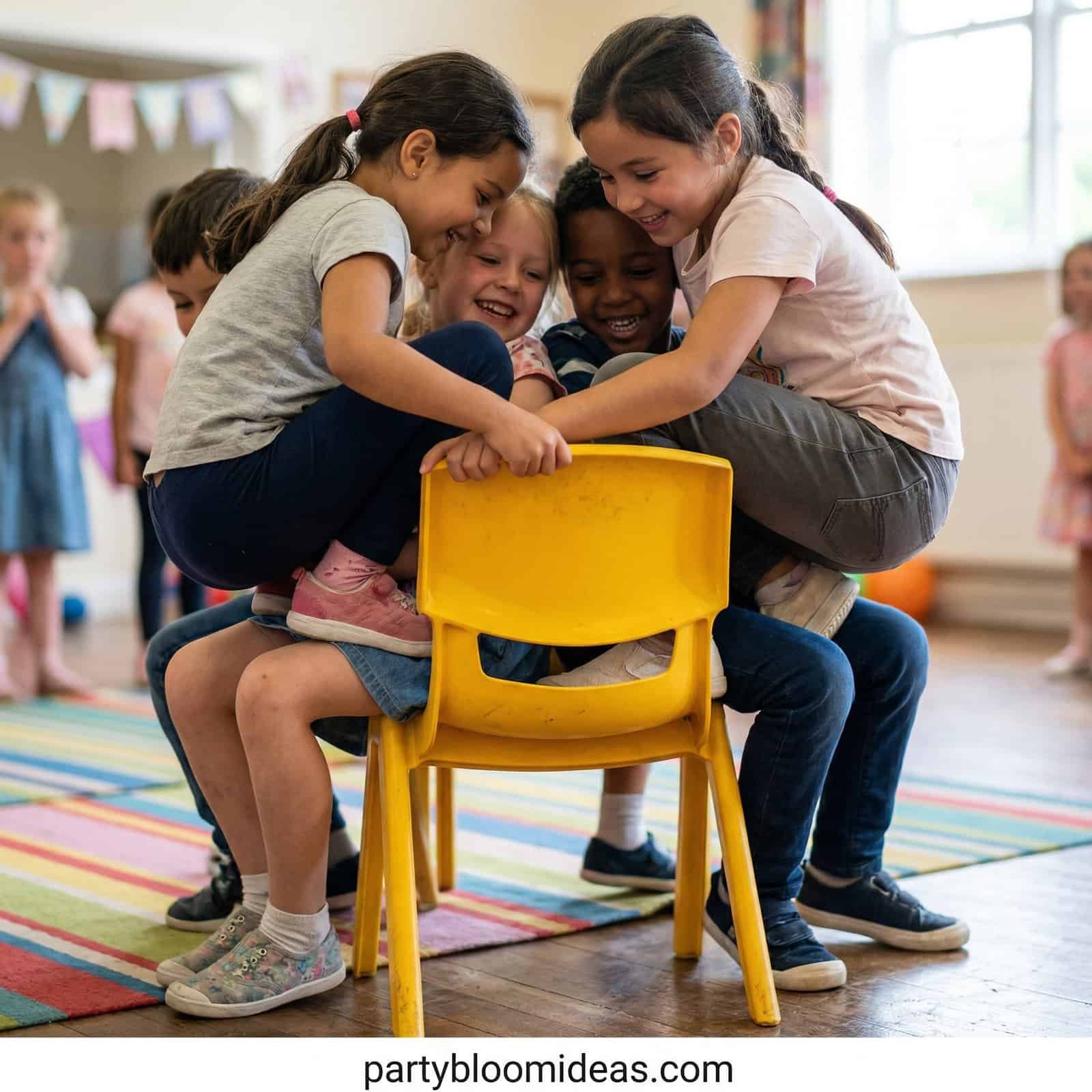
Treasure Hunt Adventure
Create a simple 5-stop treasure hunt using picture clues rather than written clues — a photo of the slide (go to the slide!), a photo of the birthday cake table (go look by the cake!), a photo of a tree (find the biggest tree!) — leading to a treasure box filled with small party favors for every child. At four, reading is not universal and picture clues are genuinely necessary rather than just decorative — the visual format also makes the hunt more accessible and equally exciting for all participants regardless of reading readiness. Involve all children in finding each clue rather than having competitive individual hunting, so every child experiences the excitement of the discovery at each stop. The final treasure box moment — where children open it together and discover their prizes inside — creates a shared peak experience of discovery and delight that serves as one of the party’s most memorable collective moments and gives every child a specific “the thing that happened at the party” story to tell their parents afterward.
🌞 Outdoor & Active Games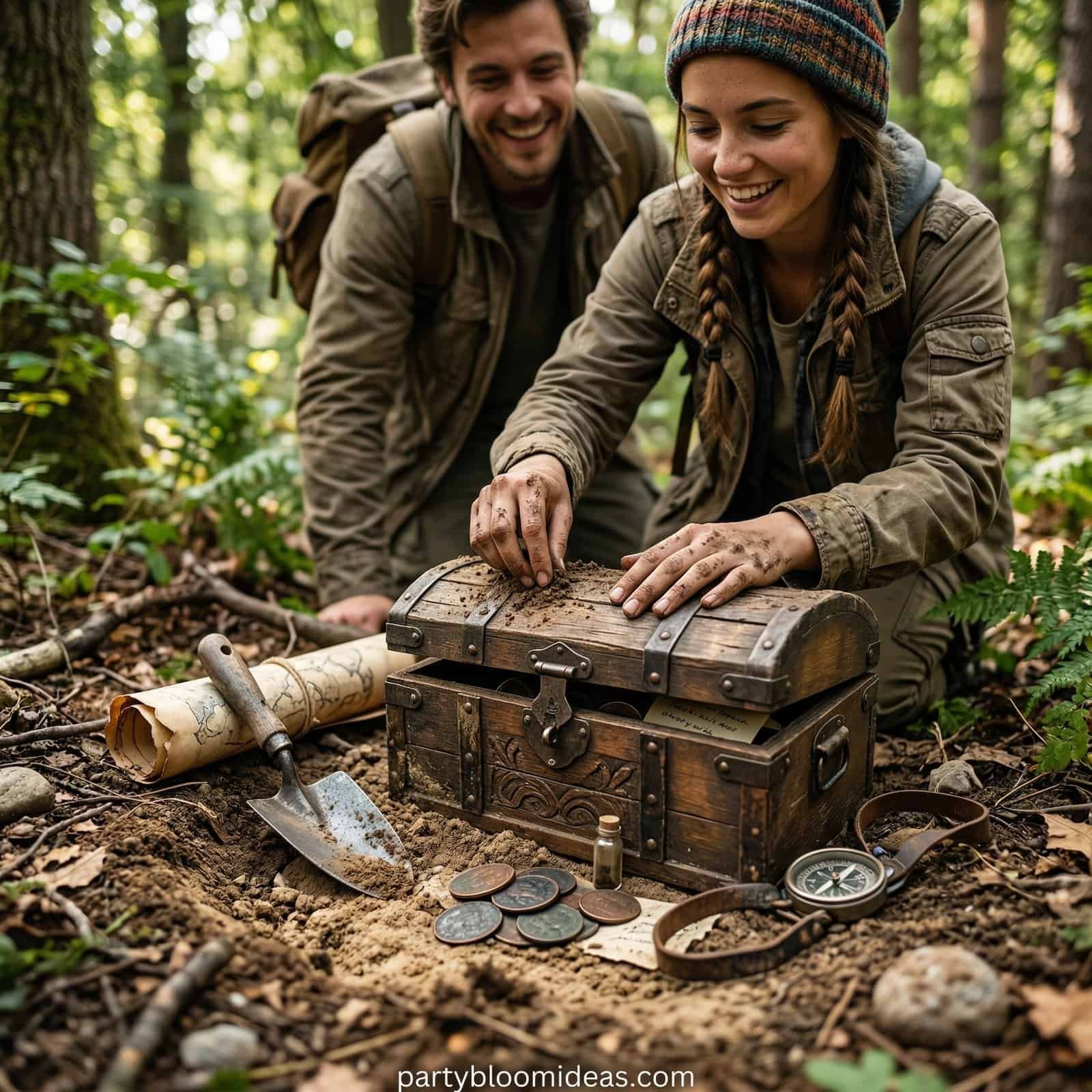
Giant Bubble Making
Mix a large batch of giant bubble solution (water, dish soap, glycerin, and a touch of corn syrup) and provide children with large wand loops made from string tied between two sticks — then let them create the largest bubbles possible in an open outdoor space, chasing and popping each other’s bubbles in equal measure. Giant bubbles are one of those rare activities that completely entrances four-year-olds — the iridescent shimmer, the improbable size, the delicate tension before the inevitable pop — and the combination of creation (making the bubble) and destruction (popping it) satisfies both impulses that coexist constantly in this age group. Have multiple solution trays set up at low heights so multiple children can make bubbles simultaneously rather than waiting in line, and refill the trays frequently since four-year-olds use bubble solution at an extraordinary rate when given unlimited access. Parents at the party are equally mesmerized by giant bubbles — which is actually a feature rather than a bug, since having parents genuinely engaged creates a more relaxed monitoring atmosphere that benefits everyone.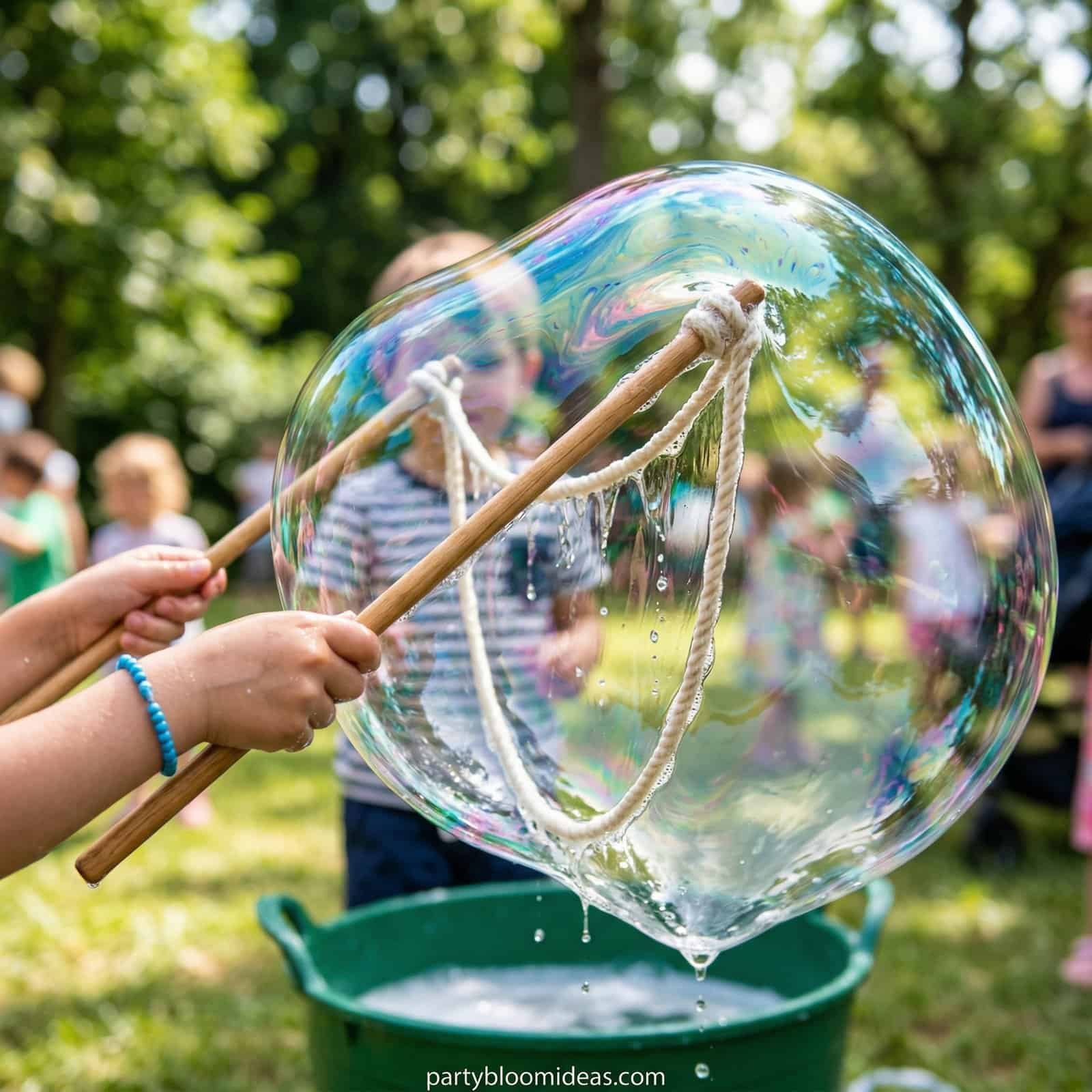
Sprinkler Run
Set up one or two sprinklers in the backyard and let children run through them freely while music plays — the combination of cool water, running, sunshine, and music hits every sensory and physical pleasure center that four-year-olds possess simultaneously. Have towels and dry clothes (request that parents bring a spare outfit) ready at the sprinkler exit point, and designate a dry zone where children who want to watch but not get wet can cheer from the sidelines without pressure to participate. Add a twist where children must complete a specific movement challenge before entering the sprinkler zone — three jumps, a spin, a silly walk — to create a gentle structure that makes the activity feel like a game rather than just free play. For summer birthday parties specifically, the sprinkler run creates the specific combination of physical relief (the heat), physical pleasure (the water), and social joy (everyone doing something together) that makes four-year-olds experience peak happiness in a way that no indoor activity can fully replicate.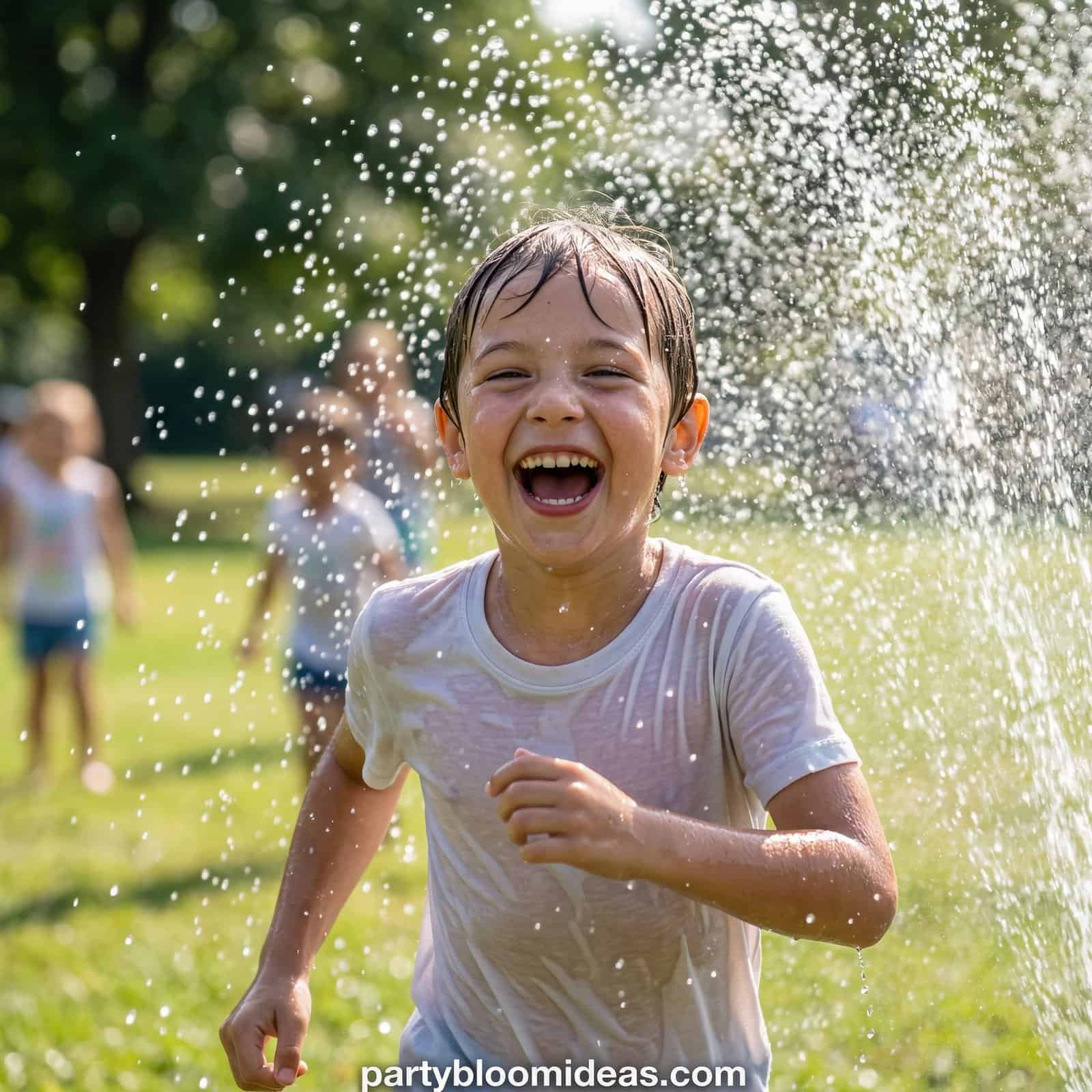
Ring Toss with Pool Noodles
Stick pool noodles vertically into soft foam bases at varying heights and distances, and give each child a set of pool ring toss rings (or use hula hoops for toddlers needing larger targets) to toss onto the noodles from a marked starting line. The pool noodle targets are forgiving — larger than traditional ring toss pegs and positioned at heights specifically appropriate for four-year-olds — creating a challenge level where success happens frequently enough to be exciting without being so easy it becomes instantly boring. Count each child’s successful rings and celebrate every single successful toss with enthusiastic collective cheering from the adult spectators — at four, the anticipation of adult celebration for their success is as motivating as the game itself. For an added skill progression, place one noodle at a very close “beginner” distance, one at medium distance, and one far away, and let children choose their challenge level — the act of self-selecting challenge level teaches risk assessment and self-knowledge that are genuinely valuable developmental skills being exercised under the cover of a birthday party game.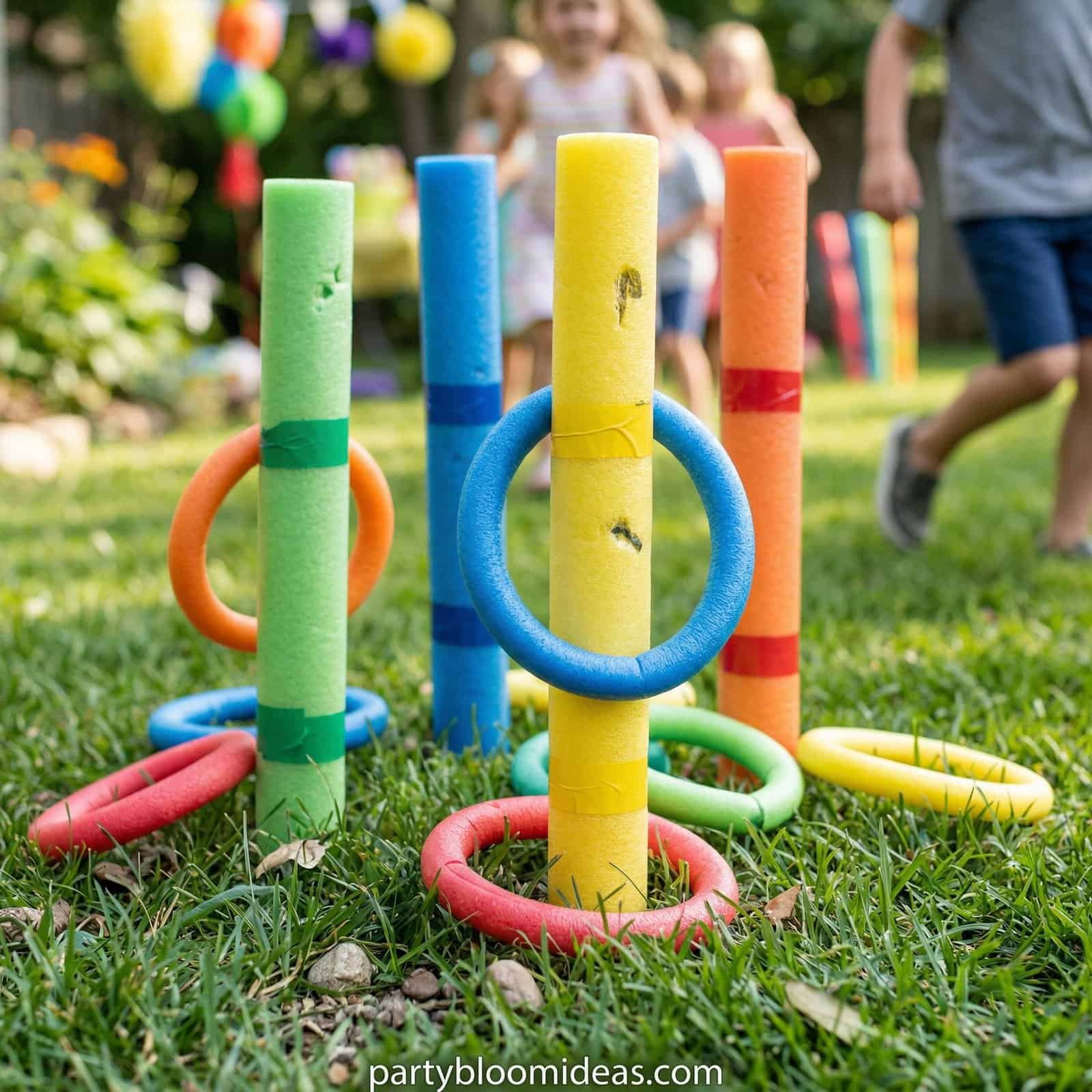
Birthday Dance Party Finale
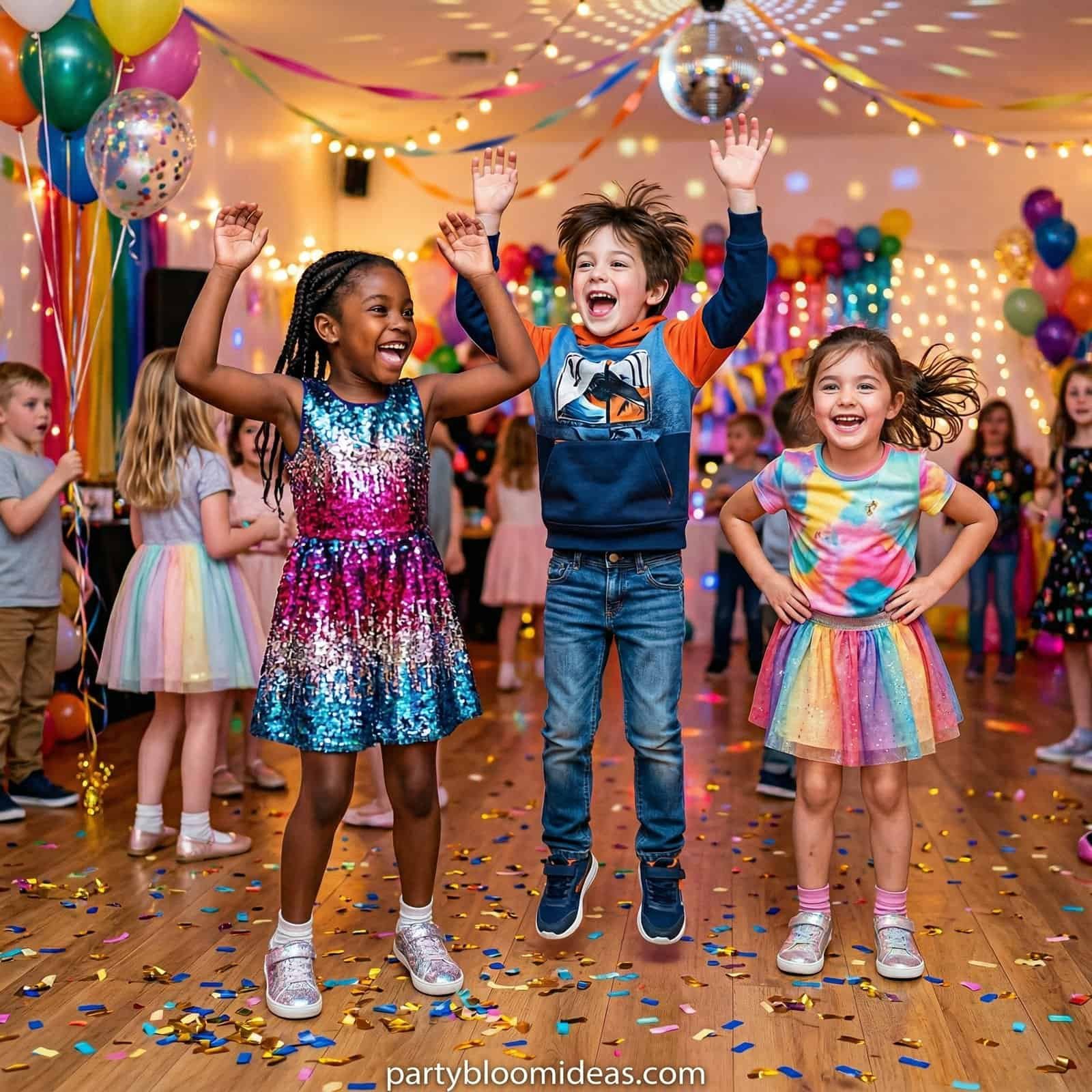
End the party’s active game portion with a full-group birthday dance party — clear a large space, crank up the birthday child’s favorite songs, and encourage everyone including parents and siblings to join for 10-15 minutes of completely free, unstructured dancing. At four, the transition from structured games to free dance is genuinely energetically different — there’s a specific quality of physical freedom and joy in unstructured group dancing that structured games, however fun, can’t produce, and ending with it creates an emotional crescendo that makes the party’s final active memory a peak experience. Designate the birthday child as the “DJ” who can request songs, giving them specific authority and centeredness during the finale of their own celebration. A single synchronized moment — “everyone do the [birthday child’s name] dance!” — where adults do whatever the birthday child demonstrates creates a memory of being the center of joyful collective attention that four-year-olds carry for years after the party itself has faded into the warm blur of early childhood memory.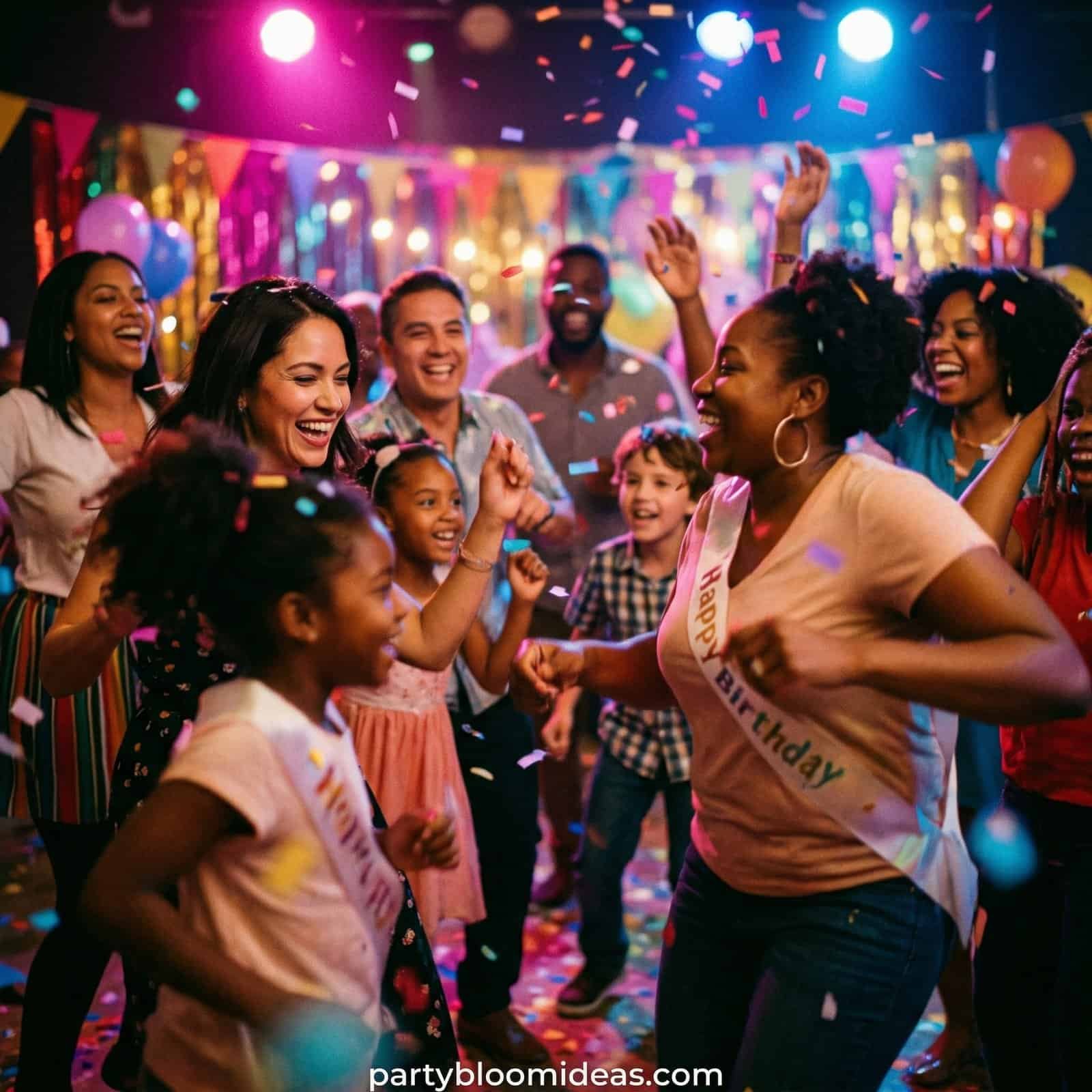
🎈 Four Years Old — The Best Age for Pure Birthday Joy!
Four-year-olds bring a quality of pure, unedited excitement to birthday parties that is genuinely one of life’s great pleasures to witness and facilitate. With these 17 games, you have everything you need for a party that matches their energy, honors their imagination, and creates memories that both children AND parents will carry with them long after the balloons deflate.
🎈 More kids’ party ideas at PartyBloomIdeas.com 🎈
Read More : How to Throw a Perfect Spring Garden Party on Any Budget