Quick Answer: A wine and cheese party at home works best small and simple. Pick 3–4 bottles (one sparkling, one white, one red, maybe a rosé), build a board with 3–5 cheeses across different textures, and serve everything at room temperature with bread, fruit, and nuts. Budget runs about $40–$120 for 6–8 guests.
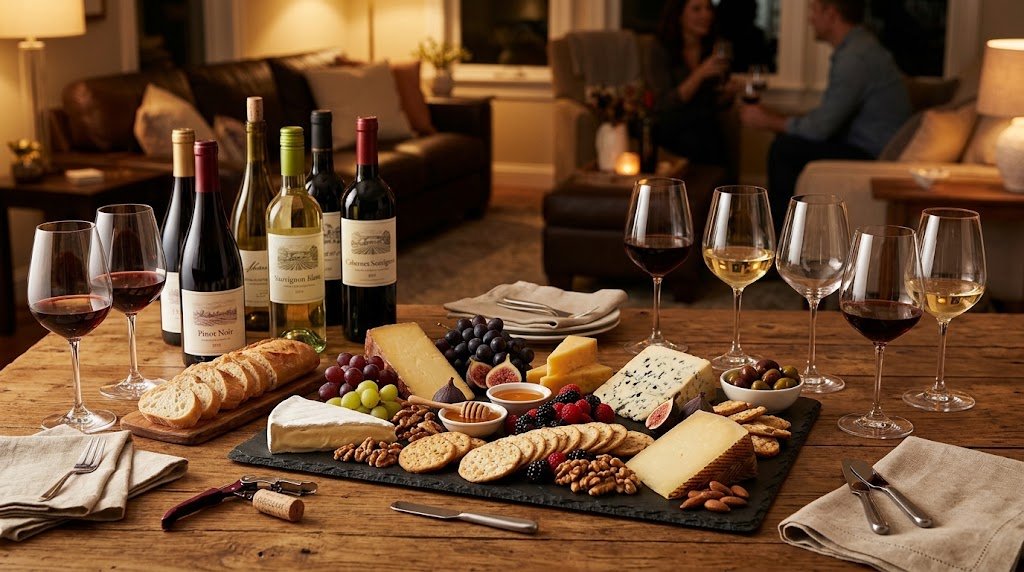
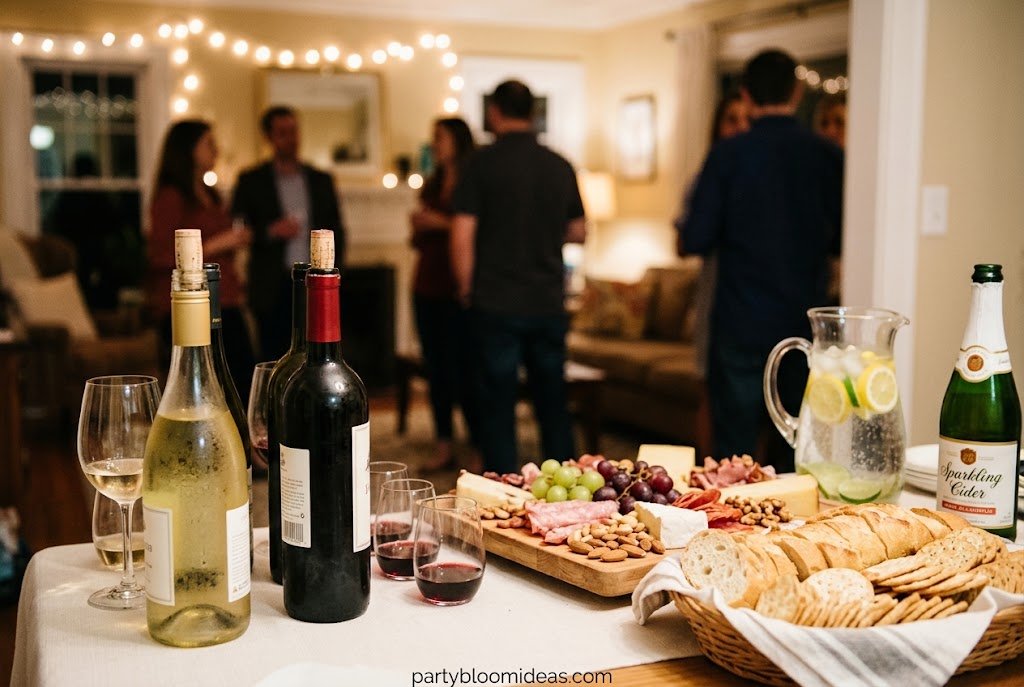
The best wine and cheese nights don’t look like the ones on Pinterest. They look smaller. Picture a board sitting in the middle of a coffee table — a wedge of brie going soft at the edges, a little pile of marcona almonds, grapes, a knife stuck in an aged cheddar. Four or five bottles, half of them already open. Six or eight people pulled in close, plates balanced on knees, the overhead lights off and a few candles going instead. Somebody’s refilling glasses without being asked. Nobody’s looking at the clock.
That’s a wine and cheese party done right. Not a formal tasting with spit buckets and tasting mats — just good cheese, a few honest bottles, and enough structure that people relax into it. The mistake most hosts make is treating it like a performance. It isn’t. This is the easiest kind of gathering to host well, because the food does the work and the wine does the rest.
Here’s everything you actually need: how to pick the wine, build the board, set the room, and keep the night flowing — plus eight ways to shape it, what’s overrated, and how to pull it off without spending a fortune.
What a Wine and Cheese Party at Home Actually Means (And What It Doesn’t)
A wine and cheese party is a casual gathering built around a shared board and a handful of bottles, where tasting and conversation matter more than rules. It sits somewhere between a dinner party and drinks — more substantial than just cocktails, lighter than a sit-down meal.
What it IS:
- A grazing setup people return to over a couple of hours
- 3–4 bottles for a group, not a dozen
- A board with real variety in texture and milk type
- Low lighting, easy music, room to linger
What it ISN’T:
- A formal tasting with scorecards and silence (unless you want that)
- An excuse to buy ten expensive bottles
- A fussy production where everything has to match
The trick is restraint. A focused board with five good cheeses beats a sprawling one with fifteen mediocre ones, every single time.
What Do You Need to Host a Wine and Cheese Party at Home?
You need less than you think. The short list: 3–4 bottles of wine, 3–5 cheeses, something neutral to put the cheese on (sliced baguette and plain crackers), a few accompaniments (grapes, nuts, honey, maybe cured meat), enough glasses, small plates, cheese knives, and candles or warm lamps instead of overhead light. That’s the whole kit. Everything below is just how to use it well.
Step 1: Plan Your Wine Selection
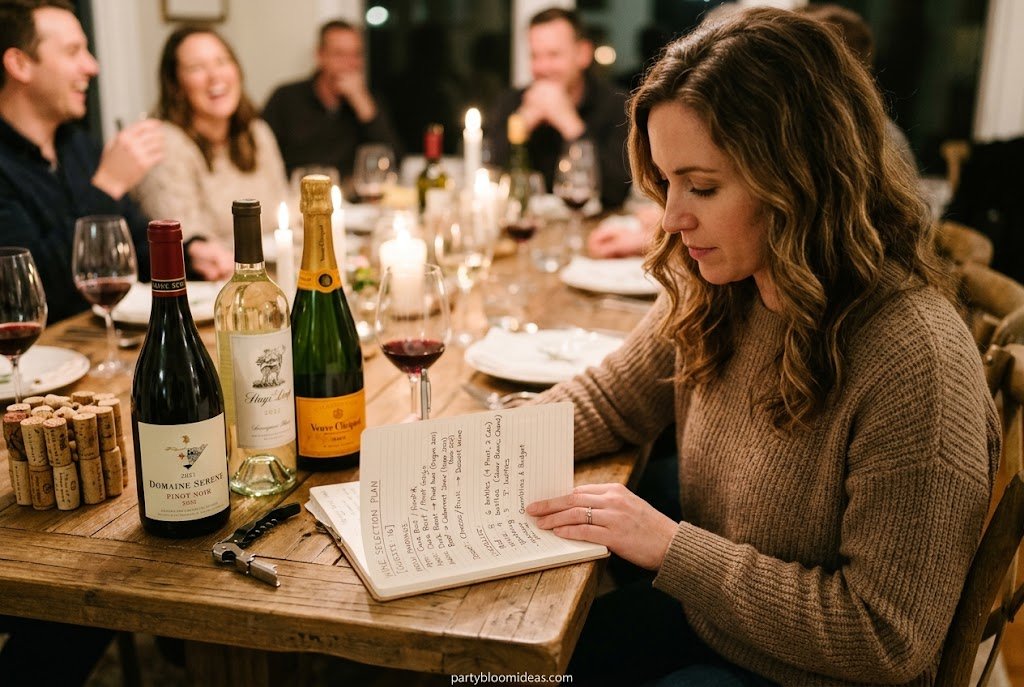
Aim for range, not volume. For a group of 6–8, four bottles covers it: one sparkling, one crisp white, one easy red, and a rosé or a second white. Bubbles are the most food-friendly wine on any board — they cut through rich, salty, fried, and creamy alike — so always open with sparkling. Plan on most guests drinking 2–3 glasses across an evening, and roughly one bottle for every two to three people.
Here’s what actually works: you do not need to spend $40 a bottle. A $12–$18 bottle is plenty for casual grazing. Trader Joe’s, Aldi, and Costco’s Kirkland line all punch well above their price. Save the splurge bottle, if you want one, for the end of the night when palates are warmed up.
Step 2: Build the Cheese Board
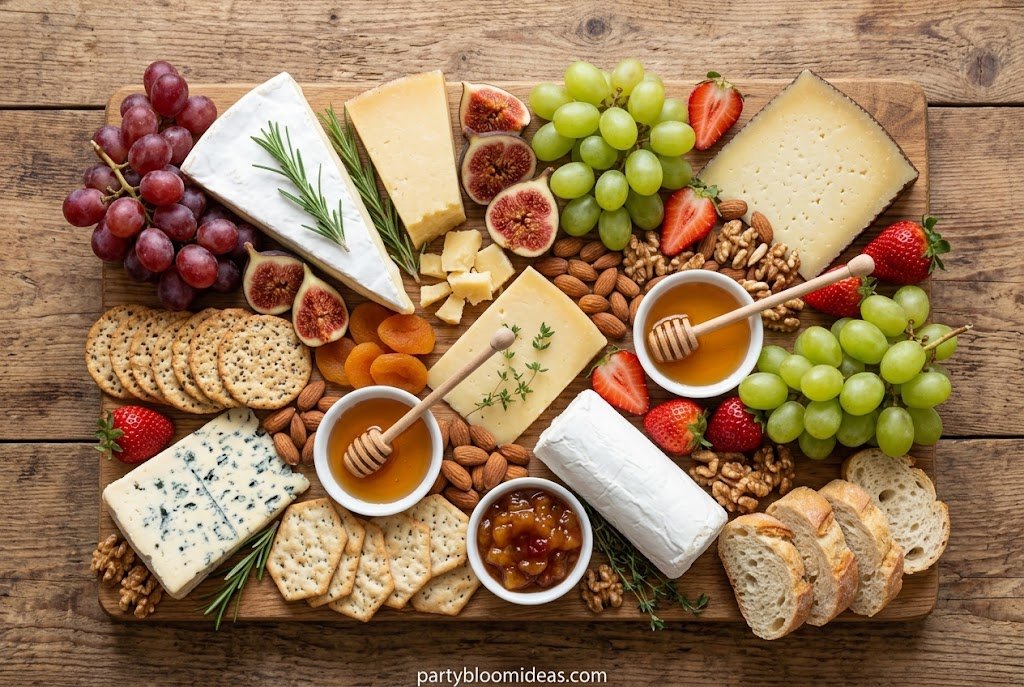
This is the part that actually decides whether the night lands. Pick 3–5 cheeses and spread them across textures and milks: something soft (brie, camembert, fresh goat), something semi-firm (gouda, havarti, young manchego), something hard and aged (cheddar, aged gouda, parmesan), and one wildcard (a blue, or a washed-rind if your crowd is adventurous). Three or four milks — cow, goat, sheep — keeps it interesting.
Plan about 2 ounces of each cheese per person, or 3–4 ounces total per person if the board is the main event. Then the rule almost no one follows: take every cheese out of the fridge 45–60 minutes before guests arrive. Cold cheese is muted, waxy cheese. Room-temperature cheese is where the flavor lives. This single step does more than any garnish.
💡 Pro Tip: Three cheeses done well beat seven done lazily. If you only remember one rule, it’s this — one soft, one hard, one blue or wildcard, all at room temperature. That’s a complete board for under $25.
Step 3: Set Up the Space
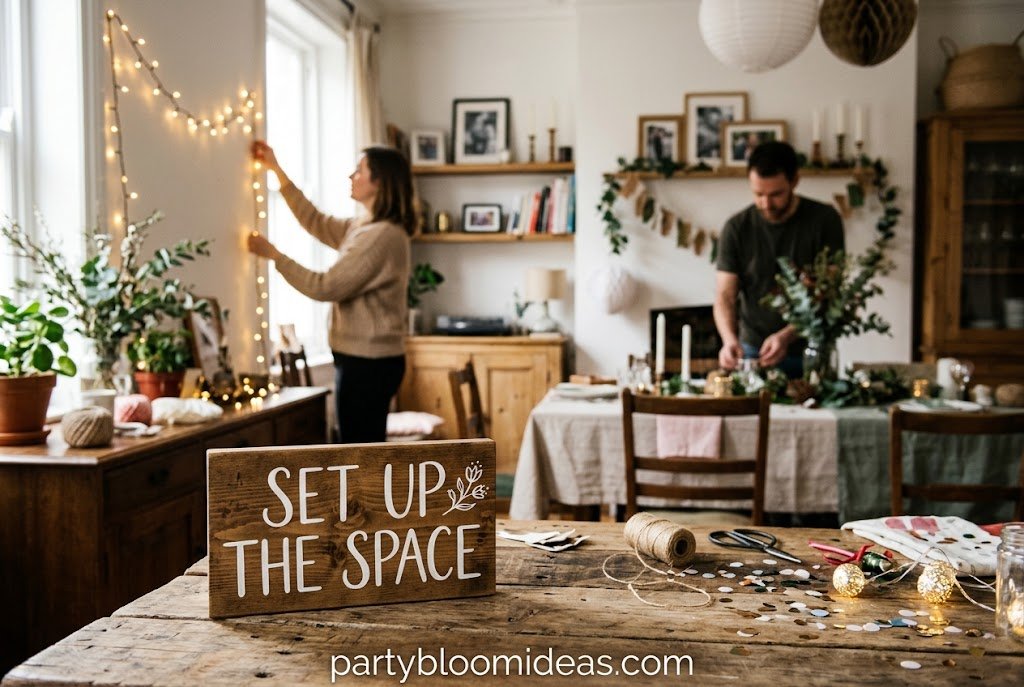
Put the board where people gather — a coffee table or a low communal surface, not a kitchen counter people have to stand at. Kill the overhead lights and bring in candles and a couple of warm lamps. Set out small plates, cloth napkins, a cheese knife per cheese, and a water pitcher with glasses (palates need a reset between bites and sips). Give people a way to track their wine glass — simple charms, or a marker to write names on the stem. Keep the music low enough that nobody has to raise their voice.
Step 4: Create Your Pairing Guide
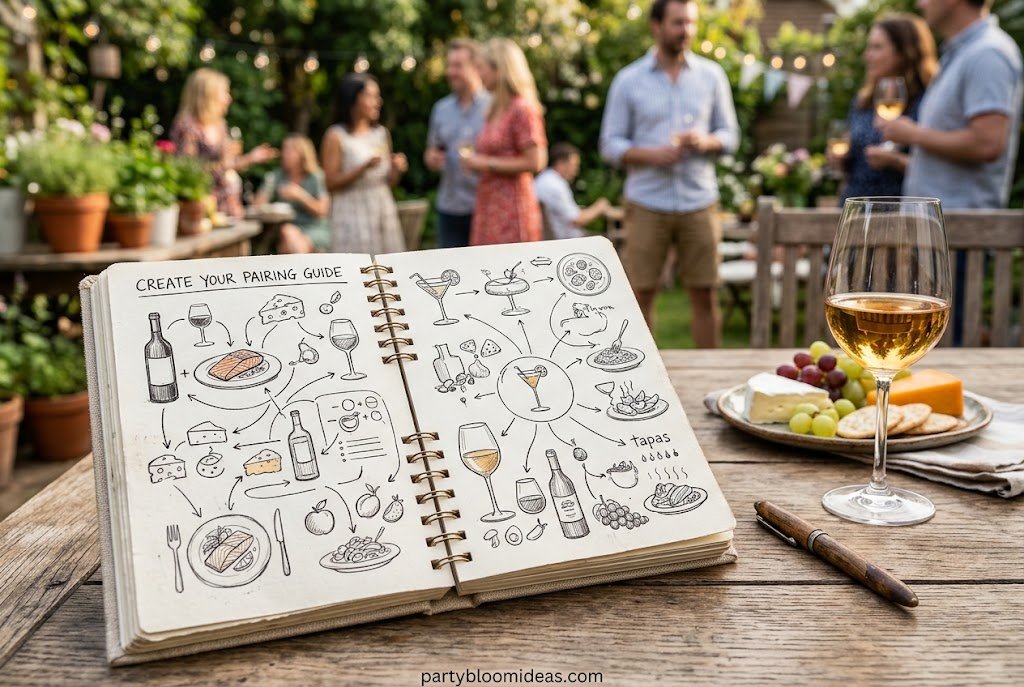
You don’t need a sommelier’s chart — just a few good matches and the freedom to break them. Two principles do the heavy lifting: match intensity (delicate cheese with light wine, bold cheese with bold wine), and let acidity and bubbles cut richness. Here’s the thing most blogs skip: white wine and sparkling actually pair with cheese more reliably than big reds, because tannin and aged cheese can clash. Write three or four pairings on a little card so guests have a starting point. The full guide is in the table below.
Step 5: Manage Service Through the Night
Open whites and sparkling chilled, reds slightly cool — about 15 minutes out of the fridge for a red beats dead-room-temperature. Pour small. Smaller pours mean people taste more bottles and stay steadier. Replenish bread and crackers before they run out, fill the board’s gaps, and always have a good non-alcoholic option — sparkling water with citrus, or an alcohol-free sparkling — so the non-drinkers aren’t an afterthought. A loose order helps: start light and dry, move to fuller and richer, end with anything sweet.
Which Wines Pair Best With Which Cheeses?
Here’s what actually works. These are reliable, crowd-pleasing matches you can build a board around — and every one is easy to find at a regular grocery store or Trader Joe’s.
| Wine | Cheese to Pair | Why It Works | Price Range |
|---|---|---|---|
| Sparkling (Champagne, Cava, Prosecco) | Brie, Camembert, triple-crème | Bubbles and acidity cut through the cream | $10–$25 |
| Sauvignon Blanc | Fresh goat cheese (chèvre) | Bright, herbaceous wine matches tangy cheese | $12–$20 |
| Chardonnay (oaked) | Gruyère, aged Gouda | Rich, nutty cheese meets a fuller white | $14–$25 |
| Pinot Noir | Brie, young Gruyère, Comté | Low tannin makes it the friendliest red | $15–$28 |
| Cabernet Sauvignon | Aged Cheddar, aged Gouda | A bold tannic wine needs a bold, firm cheese | $15–$30 |
| Off-dry Riesling | Aged Gouda, spicy or washed-rind cheese | A touch of sweetness balances salt and funk | $12–$20 |
| Port or sweet wine | Blue cheese (Stilton, Roquefort, Gorgonzola) | The classic sweet-and-salty match | $15–$30 |
Trust me on this: if you’re nervous, just pour sparkling and put out a soft cheese, an aged cheese, and a blue. That trio covers almost every wine on the table.
How Much Wine and Cheese Do You Need Per Person?
For a relaxed evening, plan on 2–3 glasses of wine per guest, which works out to about one bottle for every two to three people. For 6–8 guests, four bottles is comfortable. On cheese, budget 2 ounces of each variety per person, or 3–4 ounces of cheese total per person when the board is the main event rather than a starter. A board for 8 people with five cheeses means roughly 1.5–2 pounds of cheese total. Round up — leftover cheese is never a problem, running out mid-party is.
8 Wine and Cheese Party Ideas for Every Kind of Night
The setup stays the same — wine, board, candles, people. What changes is the angle. Here are eight ways to shape the night depending on who’s coming and what you’re after.
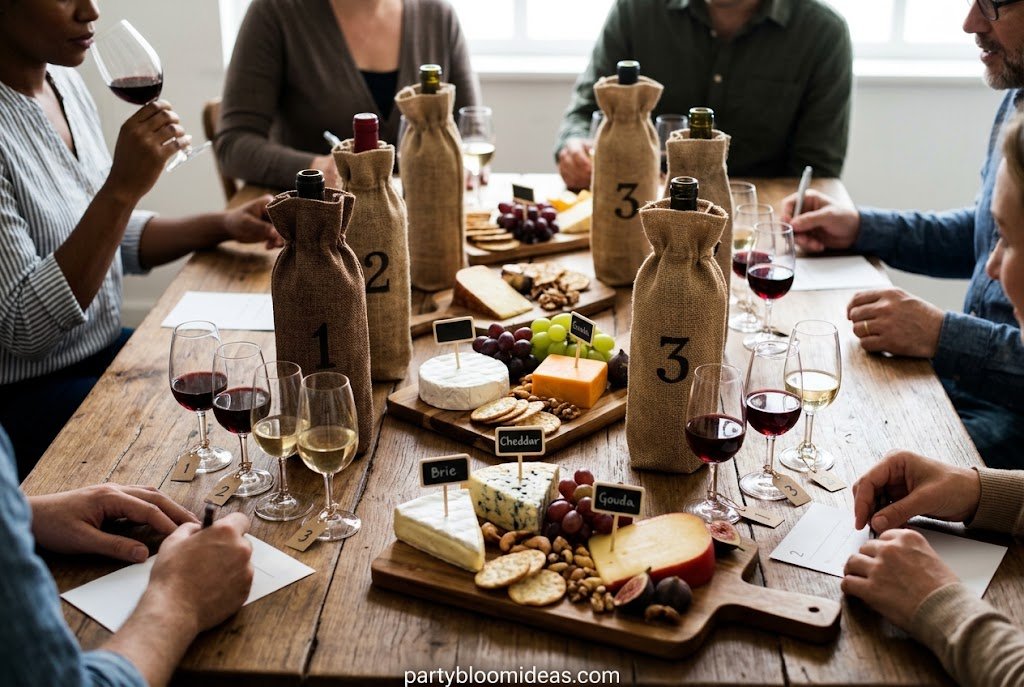
1. The Blind Tasting
Wrap each bottle in foil or a paper bag, number them, and hand out little scorecards. Guests guess the grape, the price, or just rank their favorites, then you reveal at the end. It turns passive sipping into a game and gets even quiet groups talking. Keep it to four or five wines so nobody’s palate gives out. The reveal is always the best part — the $12 bottle beating the $35 one happens more often than you’d think.
Best for: Curious friend groups, 6–10 people, anyone who likes a little competition.
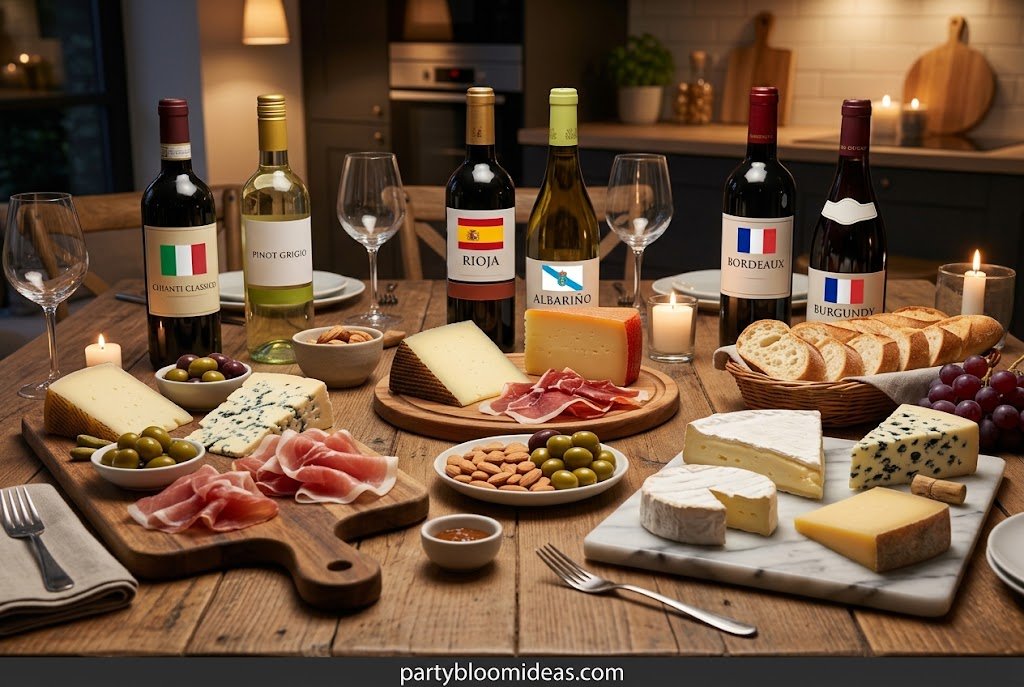
2. The Region Focus
Pick one place and pour only from there — an all-French night, an all-Italian night, an all-Spanish night — and match the cheeses to the region. Rioja with Manchego. Chianti with Pecorino. Sancerre with chèvre. “What grows together goes together” is an old wine rule, and it mostly holds. It gives the evening a theme without any extra effort and teaches everyone something almost by accident.
Best for: Foodie friends, date nights, 4–8 people who want a little structure.
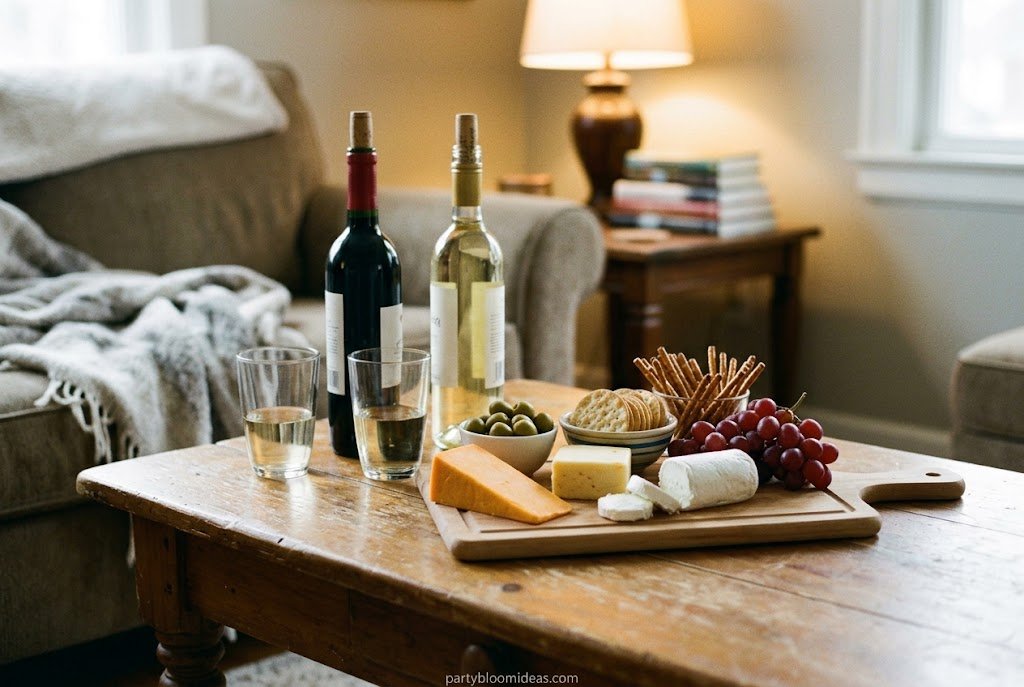
3. The Under-$40 Budget Night
Proof that this doesn’t have to be expensive. A Trader Joe’s or Aldi run gets you two bottles, three cheeses, crackers, grapes, and nuts for under $40 total. Charles Shaw or an Aldi house wine, a wedge of brie, an aged cheddar, a log of goat cheese, a sleeve of water crackers — done. Let’s be honest: most guests can’t tell a $12 bottle from a $30 one once there’s cheese involved.
Best for: Casual hangs, students, anyone proving great nights aren’t pricey. 2–6 people.
4. Romantic Date Night
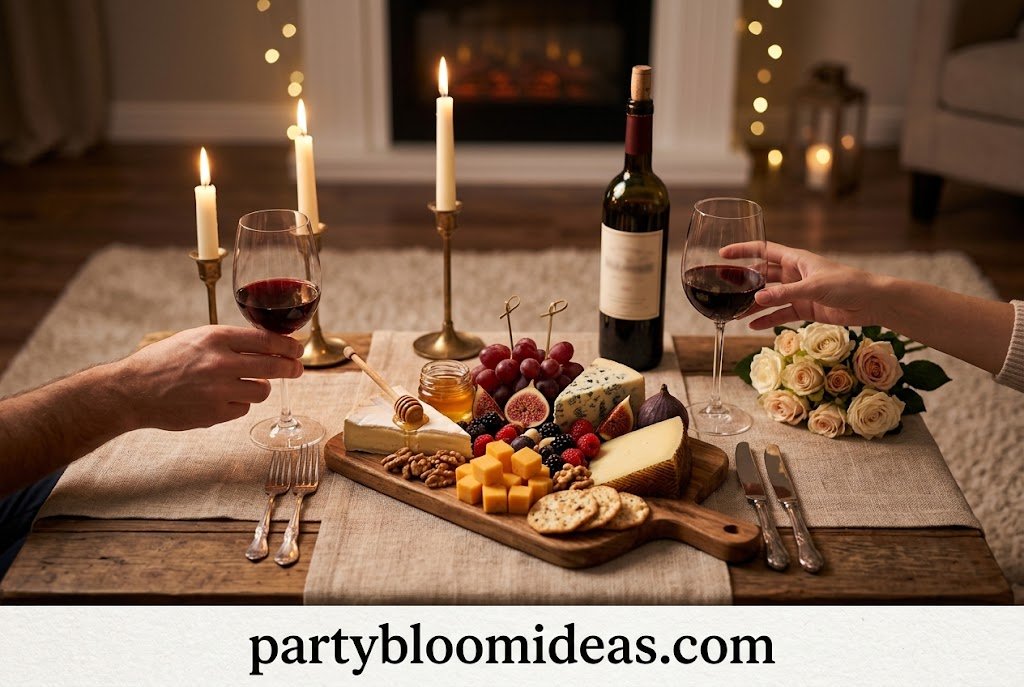
Scale everything down and the quality up. Two people, one really good bottle, three small cuts of cheese, a few squares of dark chocolate, candles, a record on. This is where spending a little more on one bottle actually pays off, because you’re not splitting it eight ways. Keep the board tiny and intentional — a soft cheese, a hard cheese, and something with honey.
Best for: Couples, anniversaries, a quiet Friday in. 2 people.
5. Girls’ Night In
Relaxed and crowd-pleasing. Lead with rosé and prosecco, lean into approachable cheeses nobody has to think about — brie, havarti, a good cheddar — and add strawberries, dark chocolate, and something salty. The point isn’t a wine education; it’s an easy, pretty spread that lets everyone talk. Done right, this looks collected and effortless. Done wrong, it’s an overstuffed board nobody can reach across.
Best for: Friend gatherings, birthdays, 4–8 people who want low effort and high comfort.

6. The Dinner Party Opener
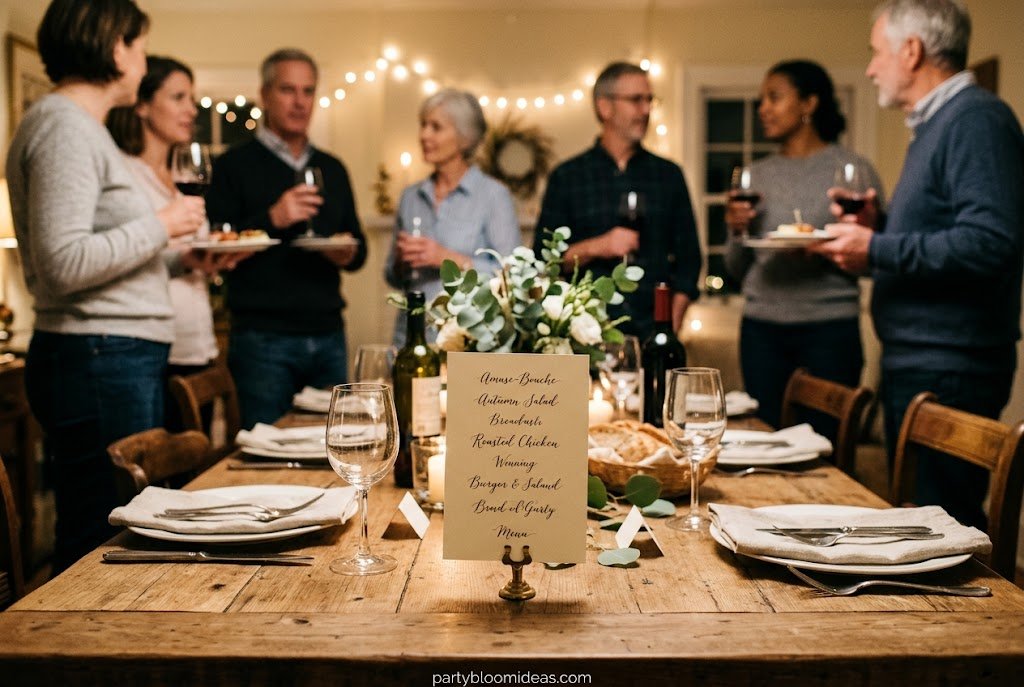
Use wine and cheese as the first act, not the whole show. A small board and a bottle of sparkling while people arrive takes the pressure off your kitchen timing and gives early guests something to do. Keep it light — two or three cheeses, some nuts and olives — so nobody fills up before dinner. It buys you 30–40 minutes of grace while the main course finishes.
Best for: Anyone hosting a sit-down dinner, 6–12 guests.
7. The Holiday Board
The seasonal upgrade. Search interest in cheese boards spikes every December (Google Trends), which is no accident — they’re built for holiday gatherings. Go bigger and more festive: cranberries, rosemary sprigs, baked brie with honey, candied nuts, and a warm option like mulled wine alongside the cold bottles. This is the one time a larger, more abundant board genuinely fits the occasion.
Best for: Christmas, New Year’s, family gatherings, 8–15 people.
💡 Pro Tip: Keep your crackers boring on purpose. Plain water crackers and sliced baguette let the cheese be the star. Heavily flavored crackers — rosemary-garlic-everything — fight the cheese instead of carrying it.
8. The Beginner-Friendly Setup
For the host who’s never done this and doesn’t want to overthink it. Three foolproof pairings, full stop: sparkling with brie, Sauvignon Blanc with goat cheese, and a Cabernet with aged cheddar. Buy those six things, set them out at room temperature, light a candle, and you have a real wine and cheese party. No charts, no stress. Once you’ve done it once, you’ll never be intimidated again.
Best for: First-time hosts, small groups, anyone easing in. 2–6 people.
How Much Does a Wine and Cheese Party Cost at Home?
Less than dinner out, almost always. A bare-bones night for 4–6 people runs about $40–$60 — two or three bottles and a simple three-cheese board. A comfortable middle for 6–8 guests lands around $80–$120, with four bottles and a fuller board with accompaniments. Go all-out for a holiday crowd of 10–15 and you’re looking at $150–$250. The wine is usually where costs creep, not the cheese — which is exactly backwards from where the value actually is.
💡 Pro Tip: Skip the gadgets. Wine aerators, fancy decanters, and electric openers look impressive in the box and live in a drawer forever. For a casual cheese night, a $5 corkscrew and a 15-minute head start on opening the reds does the same job.
Casual Wine Night vs. Elaborate Tasting: Which Should You Throw?
Most hosts are happier with the casual version, but here’s the honest comparison:
| Casual Wine Night | Elaborate Tasting | |
|---|---|---|
| Bottles | 3–4, any price | 5–8, often pricier |
| Structure | Graze and chat | Scorecards, tasting order, notes |
| Prep time | About 1 hour | 2–3 hours |
| Best mood | Relaxed, social | Focused, learning |
| Cost (6–8 people) | $80–$120 | $150–$300+ |
Nine times out of ten, the casual night is the one people remember. The elaborate tasting is fun once or twice, but the gathering — not the wine scores — is what makes guests stay.
Common Mistakes to Avoid
The biggest mistake most hosts make is serving cheese cold. Straight from the fridge, even great cheese tastes like nothing — give it 45–60 minutes on the counter first. After that, the usual culprits:
- Too many wines. Six-plus bottles means palate fatigue and nobody remembers a thing. Three to four is plenty.
- Spending on wine, skimping on cheese. It’s backwards. The cheese is what guests actually taste and talk about.
- Fancy crackers that fight the cheese. Keep them plain.
- An overstuffed board nobody can reach. Abundance looks good in photos and eats badly in real life.
- No water and no non-alcoholic option. Both make the night go longer and better.
- Too few knives. One knife dragged across a blue and a brie ruins both.
🎉 Quick Summary ✅ Best for: Casual gatherings, date nights, girls’ nights, dinner-party openers, and holiday entertaining 💰 Budget range: $40–$250 depending on group size (about $80–$120 for 6–8 guests) ⏱ Setup time: Roughly 1 hour for a casual night 🌟 Top pick: The Beginner-Friendly Setup — three foolproof pairings, zero stress 📌 Don’t skip: Take every cheese out of the fridge 45–60 minutes before serving
People Also Ask
What do you serve at a wine and cheese party? Three to five cheeses across different textures (soft, hard, and a blue), plus sliced baguette, plain crackers, grapes, nuts, honey, and optional cured meats or olives. Pair with 3–4 bottles — typically one sparkling, one white, one red, and a rosé.
How many cheeses for a wine and cheese party? Three to five is the sweet spot. Three covers a small group; five suits a larger one. More than six tends to muddle the board and overwhelm palates. Aim for variety in texture and milk type rather than sheer number.
What is the best wine for a cheese party? Sparkling wine is the most versatile — it pairs with nearly every cheese. For a small selection, a sparkling, a Sauvignon Blanc, and a Pinot Noir or Cabernet will handle almost any board you put together.
How far in advance can you prepare a cheese board? Assemble it up to a few hours ahead, cover with plastic wrap, and refrigerate — but pull it out 45–60 minutes before serving so the cheese reaches room temperature. Add crackers and bread last so they stay crisp.
Do you serve red or white wine with cheese? Both, but white and sparkling are actually more reliable with cheese than big reds, since tannins can clash with aged cheese. Offer a mix and let guests explore.
Frequently Asked Questions
How many bottles of wine do I need for 8 people? Plan on about one bottle for every two to three guests, so four bottles comfortably covers eight people for an evening. That accounts for roughly 2–3 glasses per person. For a longer night or a heavier-drinking crowd, add a fifth bottle. Leftover wine keeps; running dry mid-party doesn’t.
What cheeses go best on a wine and cheese board? Build across textures: a soft cheese (brie, camembert, goat), a semi-firm one (gouda, havarti, manchego), a hard aged one (cheddar, aged gouda, parmesan), and a wildcard (blue or washed-rind). Mixing cow, goat, and sheep milk adds range. Three to five total is ideal.
What food goes with wine and cheese besides cheese? Sliced baguette and plain crackers as the base, then grapes, figs, apple slices, almonds or walnuts, honey, fruit jam, olives, and dark chocolate. Cured meats like prosciutto or salami round it out. Keep accompaniments simple so they support the cheese rather than compete with it.
How do I set up a wine and cheese party on a budget? Shop Trader Joe’s, Aldi, or Costco. Two or three bottles in the $10–$15 range, three cheeses, a sleeve of crackers, grapes, and nuts can come in under $40 for a small group. Spend on cheese over wine — it’s what guests notice most.
What temperature should cheese be served at? Room temperature, always. Take cheese out of the fridge 45–60 minutes before serving. Cold cheese is firm and flavorless; warming it lets the texture soften and the flavors open up. This is the single biggest difference between a good board and a forgettable one.
Do I need special wine glasses? No. Matching universal wine glasses are nice but not required — any stemware works, and even tumblers are fine for a casual night. What matters more is having enough glasses and a way for guests to track which one is theirs, like charms or a marker.
What’s the right order to serve wine in? Generally light to bold: start with sparkling, move through whites, then reds from lighter (Pinot Noir) to fuller (Cabernet), and finish with anything sweet. This keeps lighter wines from being overwhelmed. For a casual night, it’s a guideline, not a rule.
How much cheese do I need per person? About 2 ounces of each cheese per person, or 3–4 ounces of cheese total per person if the board is the main event rather than a starter. For eight guests with a five-cheese board, that’s roughly 1.5–2 pounds total. Round up.
Can I host a wine and cheese party in a small apartment? Absolutely. Small spaces actually suit this kind of gathering — a coffee table, a board, candles, and 4–6 people is plenty. Keep the board compact and the guest list tight. Intimacy is a feature here, not a limitation.
What non-alcoholic options should I offer? Sparkling water with citrus or berries, an alcohol-free sparkling wine, kombucha, or a simple mocktail. Non-alcoholic sparkling pairs with cheese just as well as the real thing. Offering a good option means non-drinkers feel included instead of stuck with tap water.
Is red or white wine better with cheese? White and sparkling wines are generally more reliable with cheese because tannins in bold reds can clash with aged cheese. That said, lower-tannin reds like Pinot Noir pair beautifully, and aged cheddar loves a Cabernet. Offer a mix so guests can find their own favorites.
How long should a wine and cheese party last? Most run two to three hours, which is the natural arc of grazing and conversation. There’s no formal end — people drift out when they’re ready. Keep the board stocked and glasses topped, and the night will find its own length.
What are common wine and cheese pairing mistakes? Serving cheese cold, putting out too many wines, choosing heavily flavored crackers that fight the cheese, and overspending on wine while skimping on cheese. The fix for all of them is restraint: fewer, better choices, served at the right temperature, almost always win.
Final Thoughts
The hosts who pull this off best aren’t the ones with the deepest wine knowledge or the biggest budget. They’re the ones who keep it simple — a few good bottles, a board built with care, the lights down low, and enough room for people to settle in.
Go back to that picture from the start: the board on the coffee table, glasses being refilled without anyone asking, candles going, nobody reaching for their coat. That’s the whole goal. You don’t need a sommelier’s vocabulary or a $200 spread to get there. You need three or four honest bottles, a handful of good cheeses at room temperature, and the confidence to let the night be easy.
Start with the beginner setup if you’re nervous. Buy the six things, light a candle, and pour the sparkling first. The rest takes care of itself.
A note on the numbers in this article: U.S. per-capita wine consumption figures come from NIAAA data (2022); charcuterie and meat-and-cheese platter growth (~8% year over year) from Technomic Ignite menu data (2024); and seasonal cheese-board search interest from Google Trends. Worth verifying current figures before publishing if you want exact, up-to-date stats.
Meta Title: Wine and Cheese Party at Home: Ideas, Pairings & Setup
Meta Description: Wine and cheese party ideas for home: how many bottles and cheeses to buy, easy pairings, budget tips, and 8 ways to host a night guests love.
Recommended schema: Article, HowTo, FAQPage, ItemList. The five-step setup supports HowTo; the FAQ and People Also Ask sections support FAQPage; the eight party ideas support ItemList.