Quick Answer: Elegant dinner party hosting comes down to four things you actually control: a make-ahead menu, low candlelit lighting, a simple layered table, and a calm host. Pick one showpiece main, set the table the night before, dim every light in the room, and aim to sit guests down within 30 minutes of arrival. Budget $75–$250 for 6–8 guests.
What an Elegant Dinner Party Actually Means
Let’s be honest about what people think makes a dinner party elegant: expensive wine, matching china, cloth napkins folded into swans, a different fork for every course. Most of that is theater.
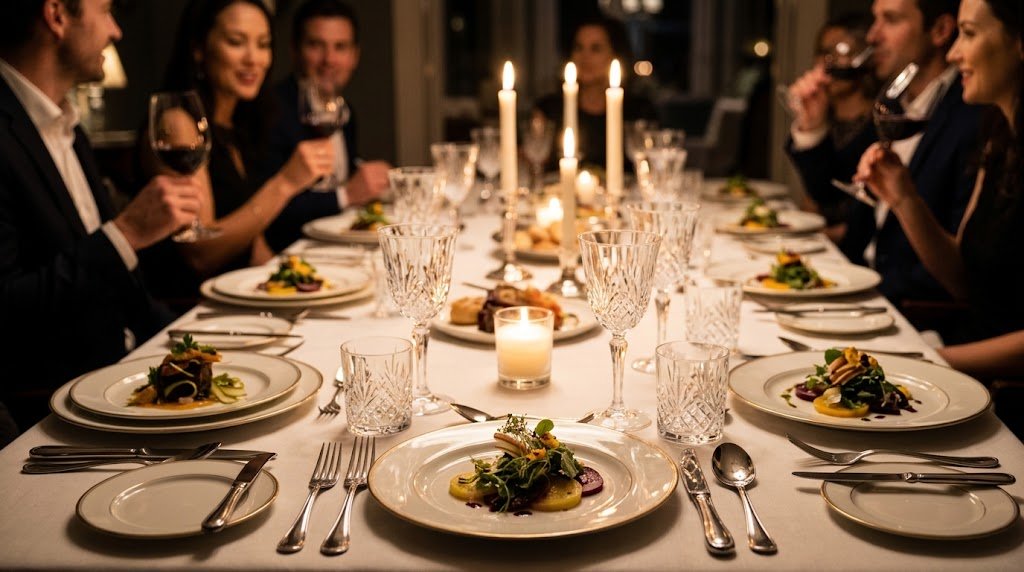
What an elegant dinner party actually is: warm, low light. Food that tastes like someone cared. A table that feels considered. Enough breathing room in the timeline that conversation never stalls. A host who isn’t visibly stressed.
What it isn’t: a competition. It isn’t about spending money, matching everything perfectly, or proving you can cook restaurant food. The most over-coordinated tables — everything bought new, everything matching — often read as trying too hard rather than refined.
The trick is restraint. One showpiece dish beats five mediocre courses. One good candle does more than a tablecloth full of décor. Done right means the room feels collected and calm, not staged.
How Do You Host a Dinner Party Without Spending the Whole Night in the Kitchen?
This is the question that separates a relaxed evening from a stressful one, and the answer is all in the prep. Here’s the five-step system that works 9 times out of 10.
Step 1: Plan Your Menu Around What You Can Execute Calmly
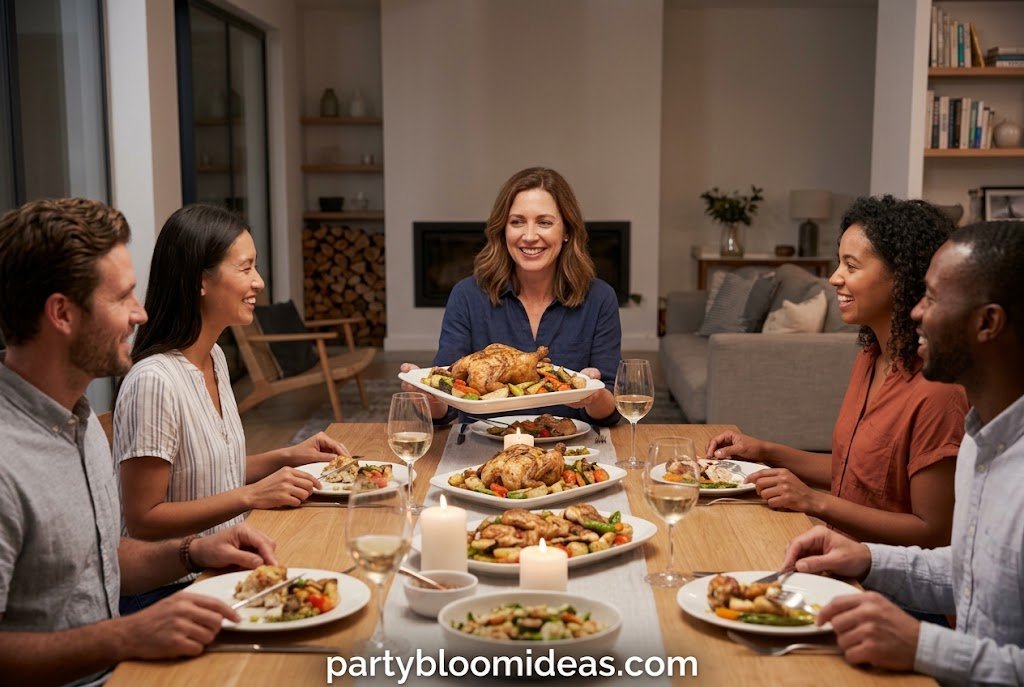
The mistake most hosts make is building a menu around what looks impressive instead of what they can actually cook without panic. Choose dishes that hold: braises, roasts, stews, lasagna, a slow-cooked pork shoulder — anything that improves sitting in its own juices. Pair one showpiece main with two simple sides and a salad you can dress at the last second.
The rule I’d give every host: nothing on the menu should need last-minute attention except one thing. If you’ve got three dishes all demanding the stove the moment guests arrive, you’ve designed a stressful night. Costco is your friend here for proteins and a ready-made cheese board; Target and World Market cover everything else.
Step 2: Design the Table Setting
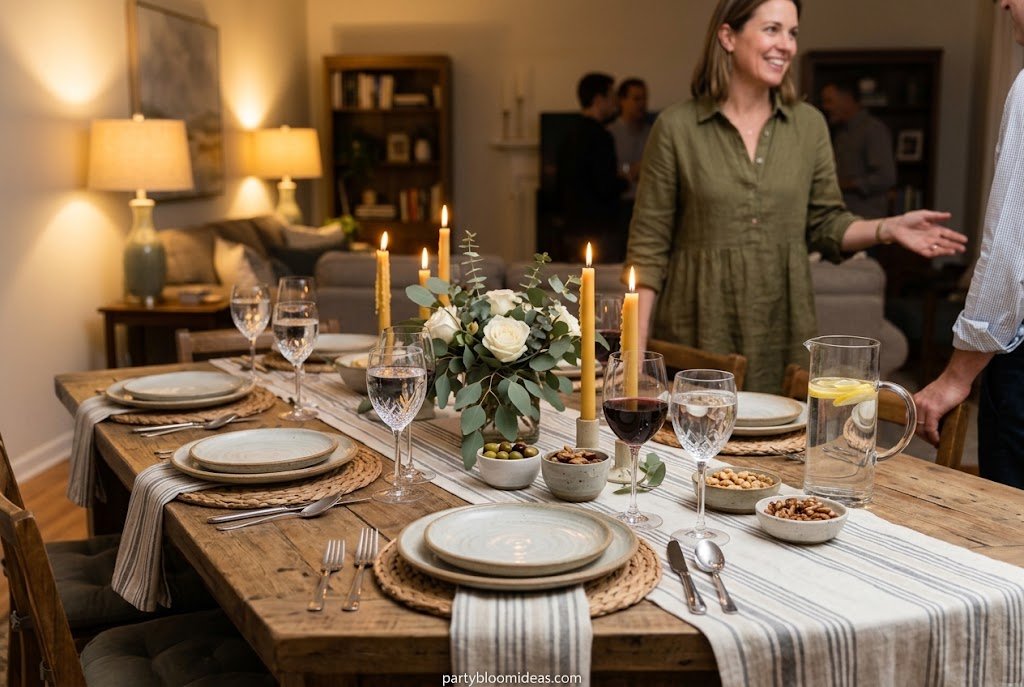
Here’s the one move that does the most: a low centerpiece, candles, and a little layering. Keep the centerpiece below eye level so people can actually see each other across the table — tall arrangements look great in photos and ruin conversation in real life.
Layer a runner or chargers under the plates for depth. Use cloth napkins (more on those below). Mismatched-but-cohesive beats matchy-perfect every time — a few different glasses or plates in the same color family read as collected over time, which is the whole aesthetic. World Market and Target both carry inexpensive runners and chargers that look like far more than they cost.
Step 3: Lighting and Atmosphere
If you change one thing, change the lighting. This is the single biggest lever you have, and it costs almost nothing.
Turn off the overhead lights. Use lamps, candles, and dimmers instead. Swap your bulbs to warm 2700K — the difference between a 5000K “daylight” bulb and a warm one is the difference between a kitchen and a restaurant. Scatter unscented candles (scented ones fight with the food smell) down the table and around the room. Add a quiet playlist at conversation volume. That’s it. Guests walk into a warmly lit room and their shoulders drop before they’ve even said hello.
Step 4: Timing Your Courses
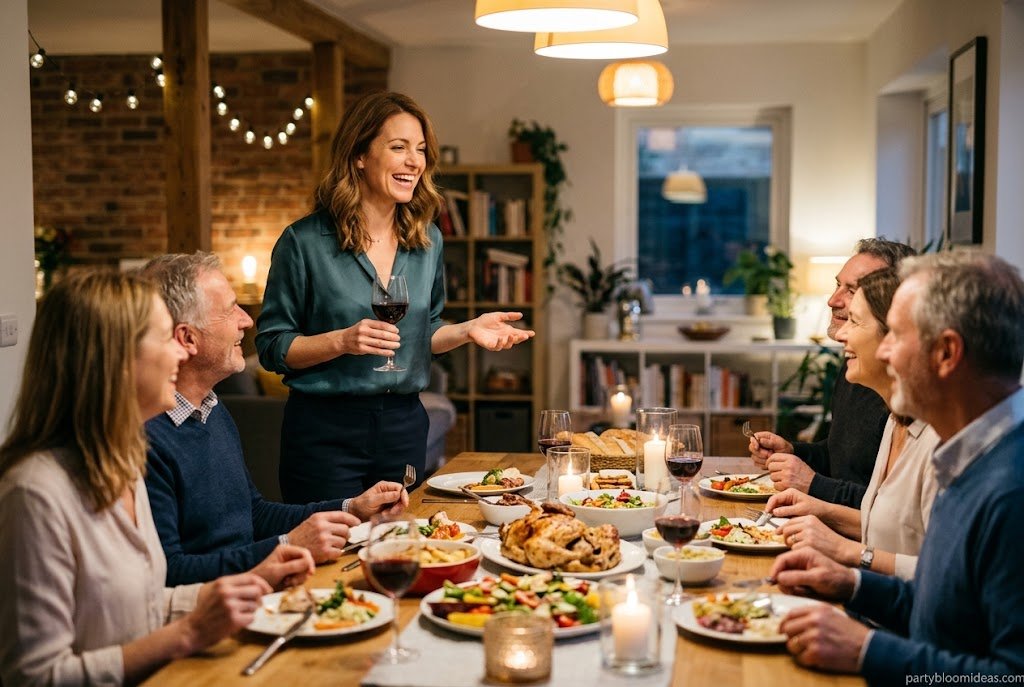
Work backward from sit-down time. Write a loose timeline: what gets done the day before, what gets done that afternoon, and the one or two things that happen in the final 30 minutes. Have a small starter — cheese, olives, something to nibble — ready before anyone arrives so there’s no dead air at the door.
Aim to get everyone seated within about 30 minutes of arrival. Then pace the courses with gaps. A little space between the main and dessert lets conversation breathe and keeps the night from feeling rushed. The goal isn’t speed — it’s flow.
Step 5: The Host’s State of Mind
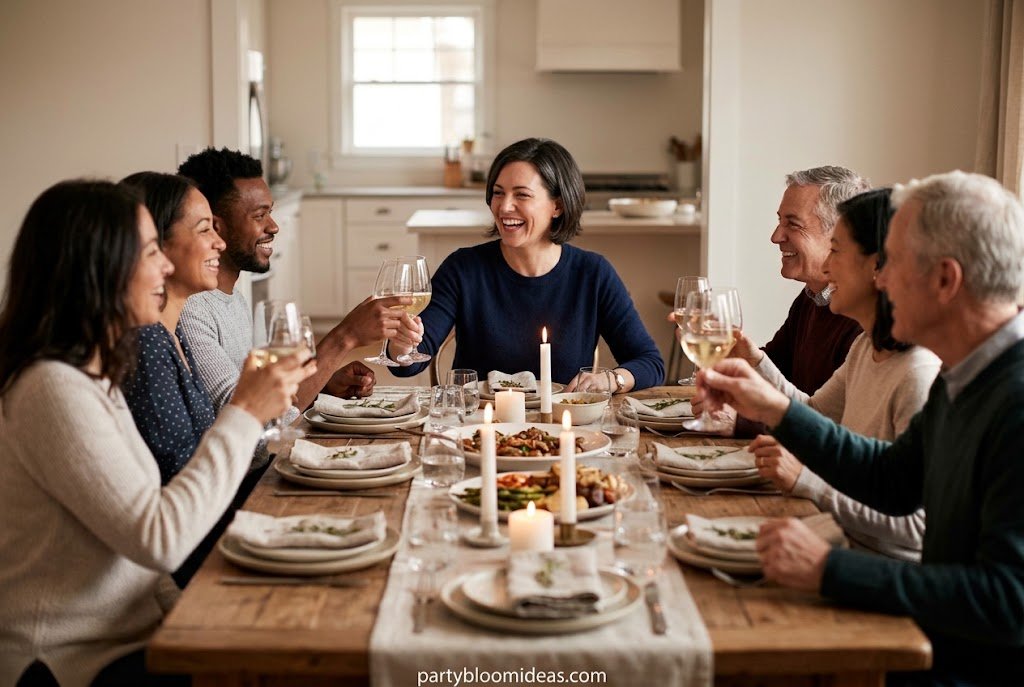
Trust me on this: the fanciest dinner party you can throw is one where the host is calm. Your guests take their emotional cue from you. If you’re frazzled, they feel it; if you’re sitting at the table with a drink in your hand, laughing, they relax into the evening.
So be a guest at your own party. Accept help when it’s offered. Let “good enough” be good enough — nobody remembers that the potatoes were five minutes late, but everyone remembers a host who never sat down. Pour yourself a glass before the first knock at the door.
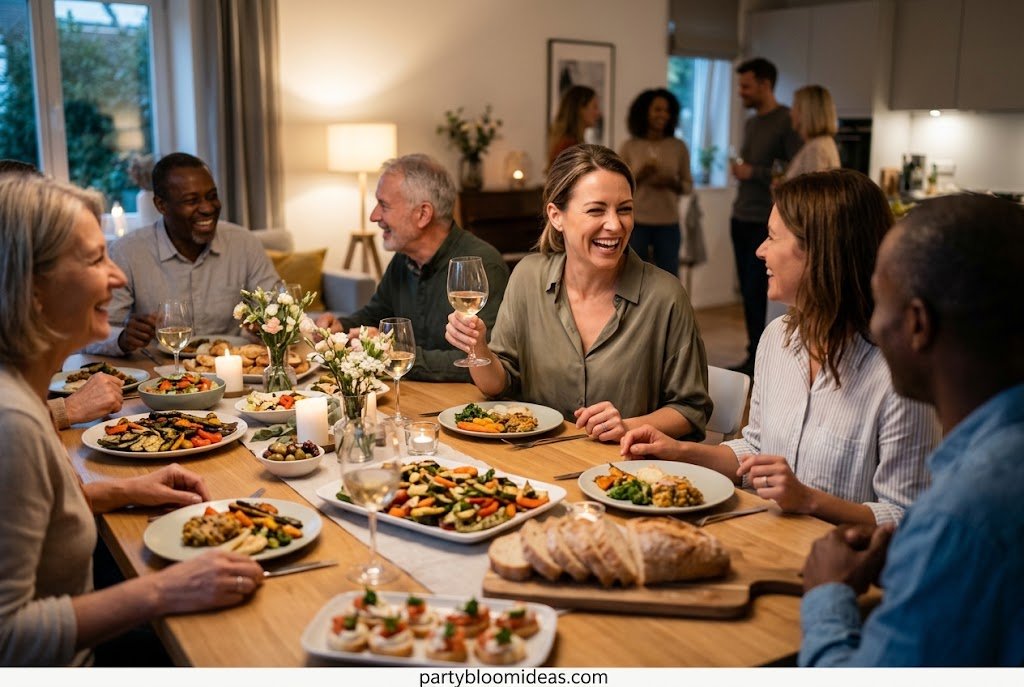
8 Elegant Dinner Party Concepts for Real Homes
Eight directions you can take the evening — each one achievable in an actual home, with real costs and the kind of guest count that keeps it intimate.
1. The Seasonal Harvest Dinner
The mood: warm, earthy, autumnal — the kind of table that smells like rosemary and roasting vegetables.
Palette: deep amber, rust, olive green, cream.
Key décor: a low runner of greenery and small gourds ($12), taper candles in mismatched holders ($15), kraft-paper or linen napkins ($8), a wooden serving board as the centerpiece anchor.
Food focus: a roast (chicken or pork shoulder), roasted root vegetables, a grain salad, crusty bread, a simple apple or pear dessert.
Best for: fall birthdays, friendsgiving, milestone dinners. 6–8 guests.
Budget: $90–$160 for 6–8 guests.
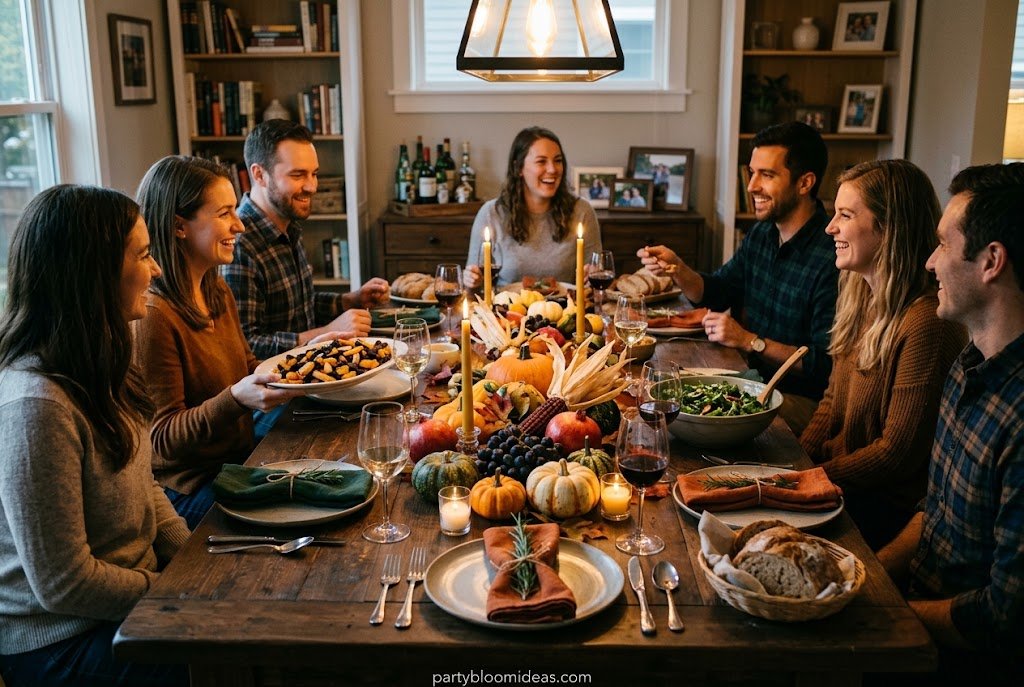
2. Mediterranean Night
The mood: bright, generous, table-spilling-over abundance. Less about courses, more about a shared spread.
Palette: white, terracotta, deep blue, fresh green.
Key décor: a runner of lemons and olive branches ($10), white pillar candles ($12 from World Market), simple white serving bowls, a linen tablecloth.
Food focus: mezze board, grilled chicken or fish, herbed couscous, roasted vegetables, hummus, warm pita, baklava or citrus cake.
Best for: casual-elegant gatherings, summer dinners, mixed groups. 6–10 guests.
Budget: $80–$140 for 6–8 guests.
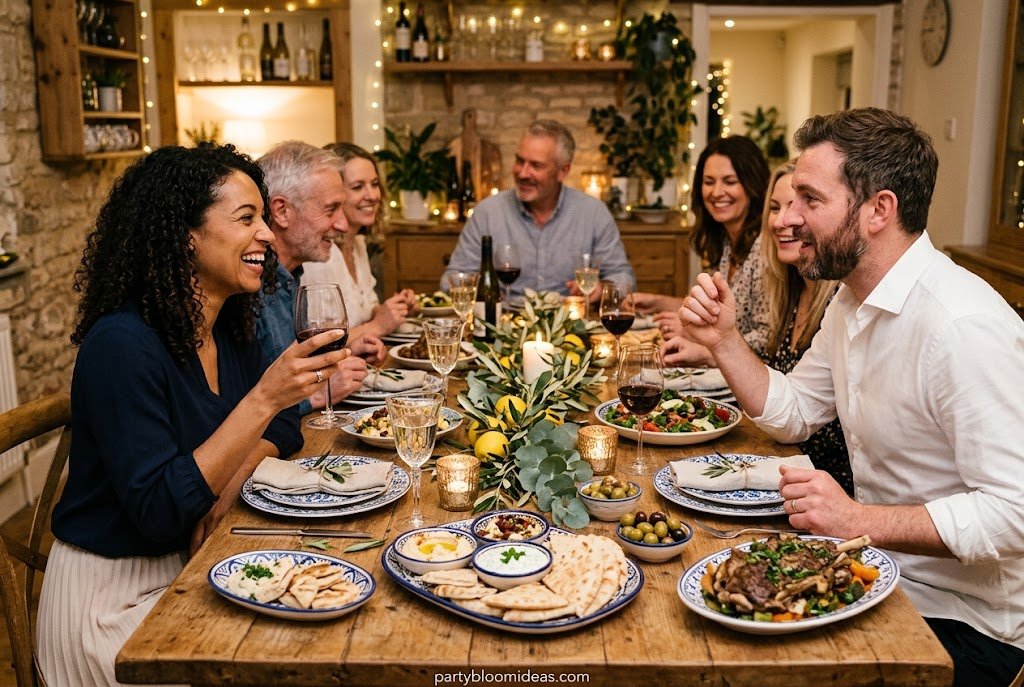
3. The Wine Pairing Dinner
The mood: intimate and a little indulgent, built around three or four wines and the food that flatters them.
Palette: burgundy, charcoal, gold, deep green.
Key décor: small place cards noting each pairing ($5), candlelight only, a few good glasses (two per guest), one bottle displayed per course.
Food focus: a light starter with white wine, a richer main with red, a cheese course, something chocolate to close.
Best for: adult dinner parties, anniversaries, small groups who love a slow evening. 4–6 guests.
Budget: $130–$250 for 6 guests (the wine is most of it).
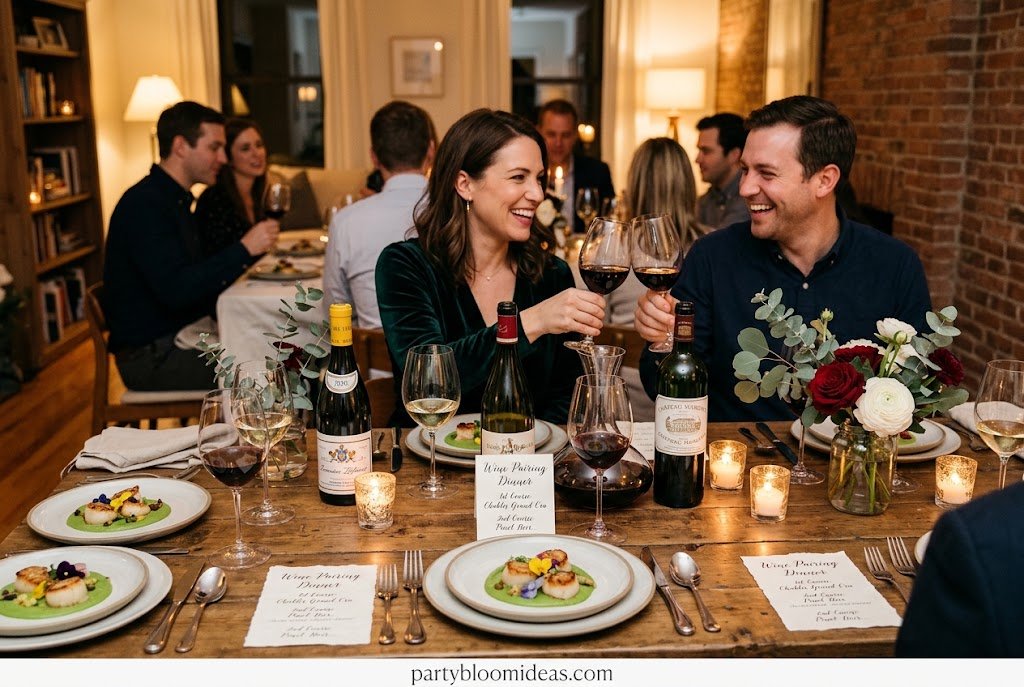
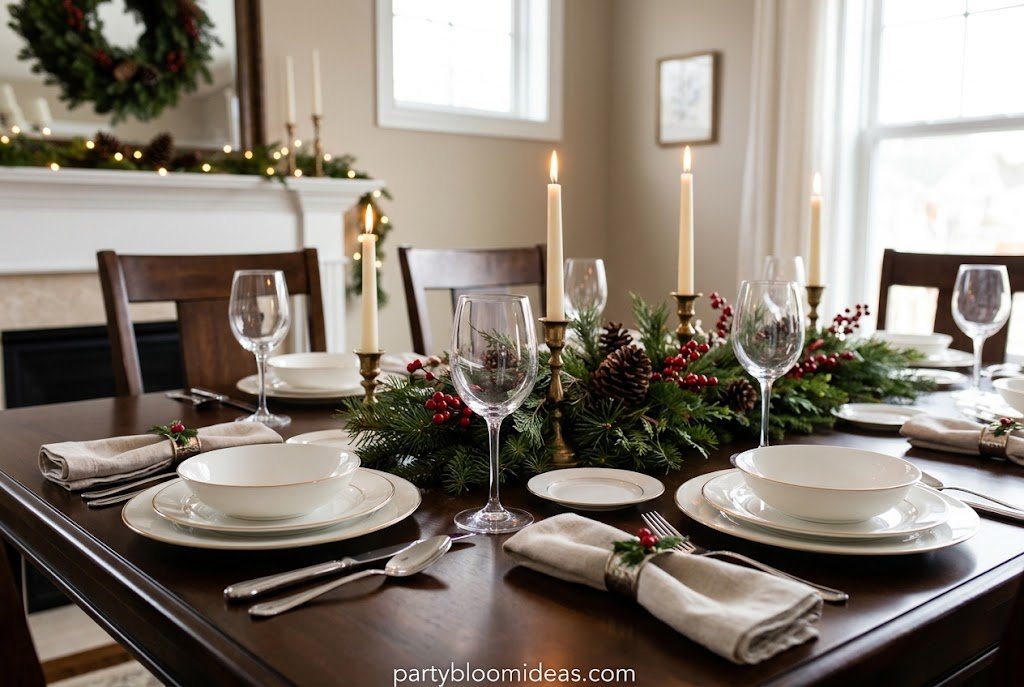
4. The Holiday Table
The mood: classic, glowing, a little dressed up — the dinner that makes a regular December night feel like the occasion.
Palette: evergreen, gold, cranberry, white.
Key décor: an evergreen-and-candle runner ($18), gold-rimmed chargers ($15 from Target), velvet or linen napkins ($10), small place settings.
Food focus: a holiday roast, make-ahead sides, a starter board, a showstopper dessert you bake the day before.
Best for: Christmas dinners, New Year’s Eve, family milestones. 8–12 guests.
Budget: $150–$250 for 8 guests.
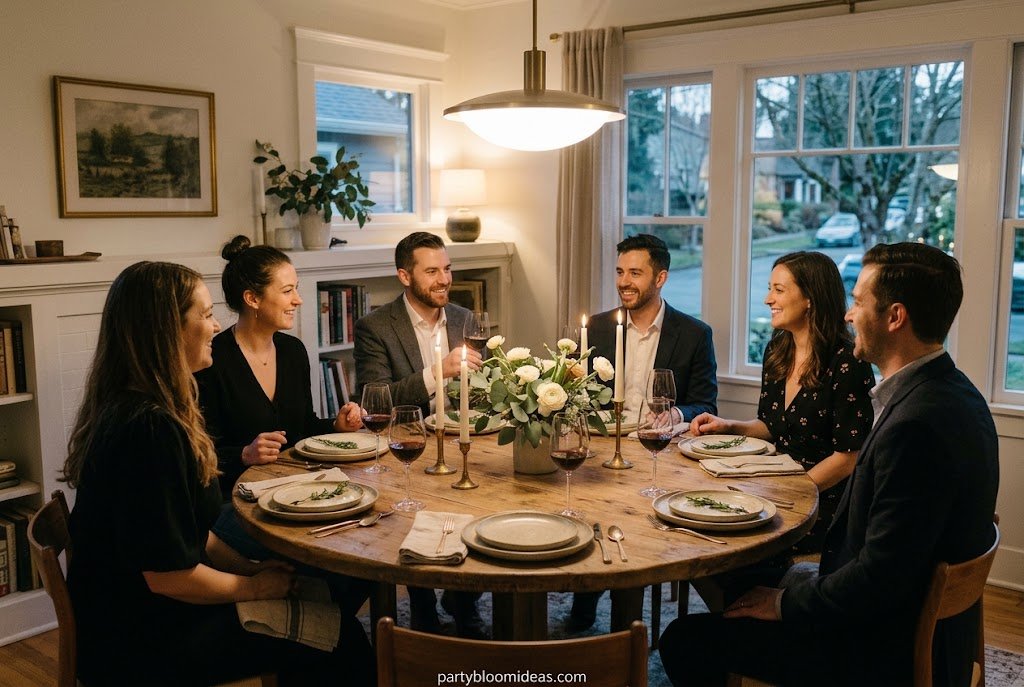
5. The Intimate Six-Person Dinner
The mood: the format I’d recommend to almost anyone — small enough for one conversation, relaxed enough to actually enjoy.
Palette: soft neutrals — bone, taupe, sage, a single accent.
Key décor: one low centerpiece, a cluster of candles, simple cloth napkins, your nicest plates (even if they’re mismatched).
Food focus: one beautiful main, two sides, a starter, one dessert. Restraint is the whole point.
Best for: birthdays, close friends, “we should really do this more often” dinners. Exactly 6.
Budget: $75–$150 for 6 guests.
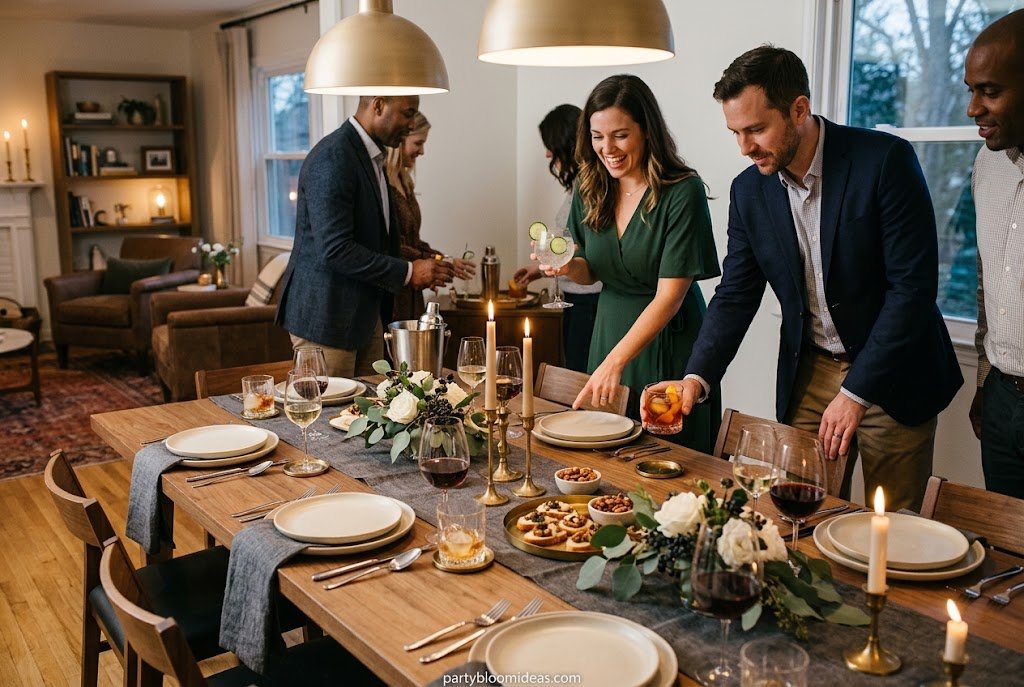
6. The Cocktail-to-Dinner Transition
The mood: an evening in two acts — drinks and small bites first, then everyone moves to a candlelit table.
Palette: moody and warm — charcoal, brass, deep red, amber glassware.
Key décor: a small bar cart or drinks station, a bowl of garnishes, candles in both rooms so the transition feels seamless.
Food focus: one signature cocktail, two passed appetizers, then a seated main and dessert.
Best for: adult celebrations, engagements, slightly more formal occasions. 8–12 guests.
Budget: $120–$220 for 8 guests.
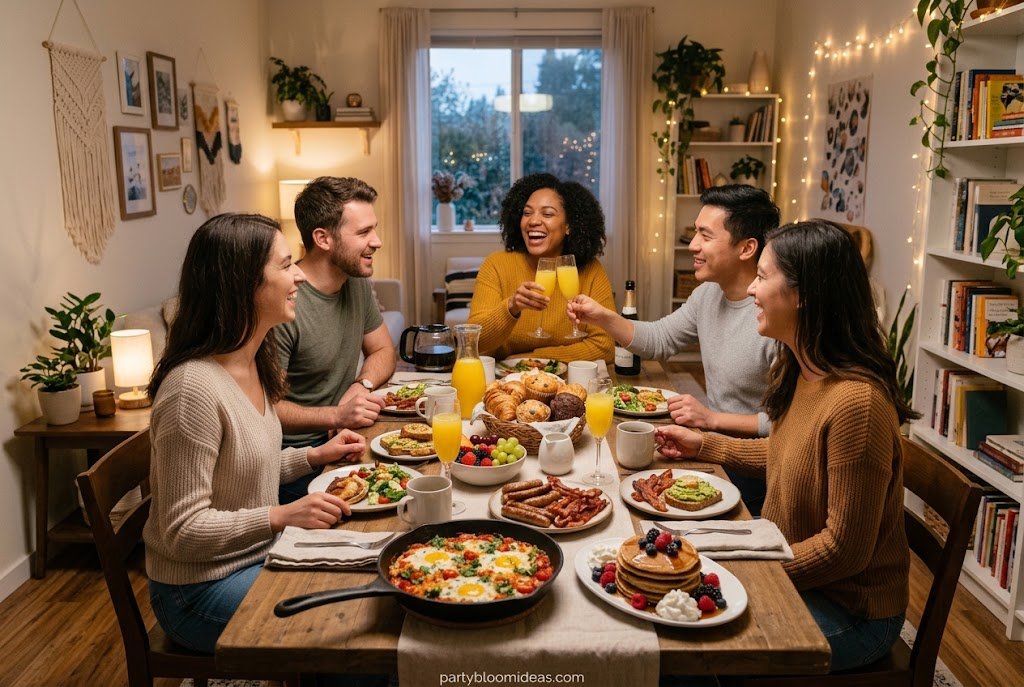
7. The Brunch-for-Dinner Party
The mood: unexpected and a little playful — breakfast foods at 7 p.m., which guests always find delightful.
Palette: soft and sunny — butter yellow, white, pale green, fresh flowers.
Key décor: fresh flowers in jars ($10), white linens, simple stacked plates, a carafe of something sparkling.
Food focus: a savory strata or quiche (made ahead), a fruit platter, roasted potatoes, mimosas, a coffee cake.
Best for: bridal showers, casual birthdays, low-key celebrations. 6–10 guests.
Budget: $70–$130 for 6–8 guests.
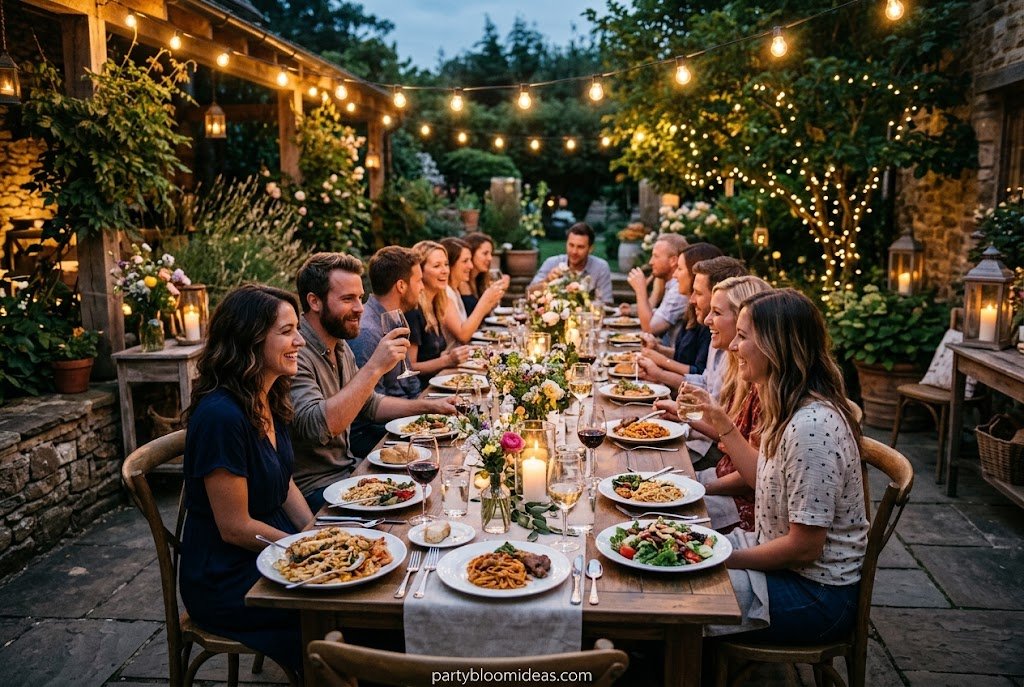
8. The Outdoor Evening Dinner
The mood: the dinner everyone remembers — a table under string lights as the sun goes down, candles flickering against the dusk.
Palette: natural and warm — wood, white, sage, glowing amber light.
Key décor: string lights overhead ($25 from Amazon), lanterns down the table ($20), a linen runner, citronella tucked at the edges to keep bugs off.
Food focus: a grilled main, make-ahead salads, grilled vegetables, a fruit galette or s’mores bar.
Best for: summer birthdays, anniversaries, warm-weather gatherings. 8–12 guests.
Budget: $90–$170 for 8 guests.
💡 Pro Tip: The reason restaurant dinners feel special isn’t the food — it’s the light. Bring a single dimmer switch home from the hardware store for $12, or just swap your dining-room bulbs to warm 2700K. It’s the cheapest upgrade in this entire guide and the one guests feel the most.
What Does It Actually Cost to Host an Elegant Dinner Party?
Less than people assume — and according to the 2024 At-Home Entertaining Survey from the International Housewares Association, 57% of people who hosted in the past year hosted casual gatherings rather than formal events, which tells you most “elegant” dinners are really relaxed dinners with good lighting. Here’s how the same evening for 6–8 guests scales across three budgets.
| Element | $75 (Smart Budget) | $150 (Comfortable) | $250 (Splurge) |
|---|---|---|---|
| Main / protein | Roast chicken or pasta main (~$25) | Pork shoulder or beef braise (~$45) | Standing rib roast or nicer cut (~$90) |
| Sides & starter | Pantry + Costco sides (~$15) | Sides + cheese board starter (~$30) | Multi-component sides + apps (~$45) |
| Wine / drinks | 2 value bottles (~$18) | 3 mid-range bottles (~$36) | 4 bottles + a cocktail (~$60) |
| Table & candles | Dollar-store candles, owned plates (~$7) | Candles + runner + napkins (~$18) | Nicer candles + linens (~$25) |
| Centerpiece / flowers | Grocery flowers or greenery (~$5) | Small arrangement (~$12) | Florist-style centerpiece (~$20) |
| Dessert | Simple make-ahead (~$5) | Make-ahead showpiece (~$9) | Special dessert or cheese course (~$10) |
| Total | ~$75 | ~$150 | ~$250 |
The honest takeaway: the gap between the $75 table and the $250 table is mostly the protein and the wine. The elegance — the lighting, the timing, the calm host — costs the same at every tier. That’s not a small detail. That’s the whole game.
Why Are Dinner Parties Suddenly Everywhere?
Because the format is having a genuine moment. Food media widely dubbed 2024 “the year of the dinner party,” a phrase popularized by Eater and picked up across outlets including Bloomberg Businessweek, as small gatherings around a home table became a real engine for social connection. One 2025 industry roundup even reported a 160% jump in searches for “dinner party” styling between 2024 and 2025.
The takeaway for a host: you don’t need to reinvent anything. The intimate, slightly-dressed-up dinner at home is exactly what people are craving right now — and the bar for “special” is lower and warmer than the Pinterest version suggests.
💡 Pro Tip: Set the entire table the night before. Plates, glasses, napkins, candles, centerpiece — all of it. Walking into a finished table the next morning removes the single biggest source of last-minute host panic, and it gives you the whole day to focus on food instead of folding napkins while the doorbell rings.
The Honest Truth About “Fancy” Dinner Parties
After breaking down what separates the dinners people remember from the ones they forget, here’s what I’ll stake my reputation on: the things hosts spend money on are rarely the things guests notice.
Overrated: expensive wine (guests two glasses in cannot tell the $12 bottle from the $40 one), $30 designer napkins (cloth napkins from the dollar store fold just as nicely), and an ambitious five-course menu (more courses means more ways to fall behind and a host who never sits down).
Underrated: warm lighting, a starter ready before guests arrive, a playlist at the right volume, and a host who’s genuinely relaxed.
Done right, an elegant dinner looks collected and feels easy. Done wrong, it looks like a checklist someone is anxiously working through. The difference isn’t the budget — it’s the restraint and the calm.
💡 Pro Tip: Buy one starter you don’t have to cook — a good cheese, some olives, marcona almonds, a baguette. Having something on the table the moment guests walk in eliminates the awkward “what do I do with my hands” arrival window and buys you 30 quiet minutes to finish the main.
Common Mistakes to Avoid
The biggest mistake most hosts make is choosing a menu they can’t cook calmly — three dishes all needing the stove at once turns the host into a line cook and the party into a waiting room. Close behind: leaving the overhead lights on (instantly cancels every other elegant choice you made), building a centerpiece so tall guests can’t see across the table, over-coordinating everything until it reads as staged rather than collected, and forgetting a starter so guests stand around hungry while you finish cooking. And the quiet killer — a visibly stressed host. Your mood sets the room’s mood. Fix the lighting and the timeline, and you’ve fixed 80% of what goes wrong.
🎉 Quick Summary
- ✅ Best for: birthdays, anniversaries, holidays, bridal showers, milestone celebrations, and “we should do this more often” dinners
- 💰 Budget range: $75–$250 for 6–8 guests
- ⏱ Setup time: 2–3 hours of prep, mostly the day before
- 🌟 Top pick: the Intimate Six-Person Dinner — small enough for one conversation, relaxed enough to actually enjoy
- 📌 Don’t skip: the lighting. Turn off the overheads, light the candles, swap to warm bulbs. It’s the cheapest upgrade and the one guests feel the most.
People Also Ask
Is a dinner party cheaper than going out to eat? Usually, yes. A $150 dinner for six at home works out to $25 a head — well under what the same group would spend at a sit-down restaurant once drinks and tip are added. You also control the pace and the atmosphere, which is the part you can’t buy out.
What time should a dinner party start? For a dinner-focused evening, 6:30–7:30 p.m. is the sweet spot. It gives guests time to arrive and settle, lets you seat everyone within 30 minutes, and still wraps at a reasonable hour. Tell people a start time 15 minutes earlier than you actually need them.
How do you make a small apartment feel elegant for a dinner party? Lighting and restraint. Kill the overhead light, use lamps and candles, and keep the table simple — one low centerpiece, cloth napkins, your best (even mismatched) plates. A small space lit warmly feels intimate; the same space under bright bulbs feels like a meeting.
What’s the difference between a casual and a formal dinner party? Mostly the table and the courses. A formal dinner has assigned seating, plated courses served in sequence, and a dressed table; a casual one leans family-style with shared platters. Both can be elegant — elegance comes from the atmosphere, not the formality.
Frequently Asked Questions
How much does it cost to host a dinner party at home? For 6–8 guests, plan on $75 for a smart-budget dinner, around $150 for a comfortable one, and up to $250 if you’re splurging on protein and wine. The difference between tiers is almost entirely the main dish and the drinks — the décor and atmosphere cost roughly the same at every level.
What makes a dinner party feel elegant? Warm, low lighting; a simple layered table; food that tastes considered; and a host who’s relaxed. People assume elegance means expensive wine and matching china, but it’s really about restraint and atmosphere. Dim the lights, light some candles, and don’t over-decorate, and a modest dinner instantly feels special.
How many courses should a dinner party have? Three is the sweet spot for a home dinner: a starter, a main with sides, and a dessert. More courses mean more ways to fall behind and a host stuck in the kitchen. One genuinely good main beats five rushed courses, and guests almost never wish you’d served more.
What food can I make ahead for a dinner party? Braises, stews, roasts, lasagna, slow-cooked pork or beef, and most desserts all hold or improve when made in advance. The goal is a menu where only one thing needs last-minute attention. Make-ahead dishes are the secret to a host who actually gets to sit down and enjoy the evening.
How do you host a dinner party without stressing? Prep everything possible the day before, including setting the table. Choose a make-ahead menu, have a starter ready before guests arrive, and write a loose timeline working backward from sit-down. Most dinner-party stress comes from too many last-minute tasks, so front-load the work and pour yourself a drink before the doorbell rings.
What lighting is best for a dinner party? Warm and low. Turn off overhead lights, use lamps and candles, and swap bulbs to warm 2700K. This single change does more for the mood than any décor. Restaurants feel special largely because of their lighting, and you can copy that at home for the price of a few candles or a dimmer switch.
Do I need cloth napkins for a formal dinner party? Cloth napkins do add a finished feel, but they don’t need to be expensive — dollar-store cloth napkins fold and drape just as nicely as the $30 designer ones. If you don’t own any, simple white or linen-look napkins from Target work beautifully. It’s the cloth that reads as considered, not the price tag.
How early should I start cooking for a dinner party? Start the day before with anything that holds — desserts, braises, sauces, and prepped vegetables. On the day, give yourself two to three hours, but design the menu so most of that is hands-off (roasting, simmering) rather than active cooking right as guests arrive. The fewer last-minute tasks, the calmer the host.
What are good dinner party themes for adults? A wine pairing dinner, a Mediterranean shared-spread night, a seasonal harvest table, or a cocktail-to-dinner evening all work well for adults. The best themes give you a clear menu and palette without becoming costume-party gimmicks. Keep it to a mood — warm lighting, a cohesive table, food that fits — rather than a literal checklist of decorations.
How many guests is ideal for an intimate dinner party? Six is the magic number. It’s small enough for everyone to share one conversation, fits comfortably at most dining tables, and keeps the cooking manageable. Eight still works well. Beyond ten, the table splits into separate conversations and the menu becomes much harder to execute calmly.
What should I serve guests when they first arrive? Have a simple starter on the table before anyone knocks — a cheese board, olives, marcona almonds, or a baguette with good butter. This fills the arrival window so there’s no awkward standing around, and it buys you a quiet 30 minutes to finish the main while guests settle in with a drink.
How do I set an elegant table on a budget? Layer a runner or chargers under the plates, add a low centerpiece, scatter candles, and use cloth napkins. Mismatched plates in the same color family read as collected, not cheap. World Market, Target, and even the dollar store cover candles, runners, and napkins for very little, and the layering is what makes it look considered.
What wine should I serve at a dinner party? Two to four bottles in the $12–$18 range is plenty for most dinners — guests a glass or two in genuinely can’t distinguish those from far pricier bottles. Offer one white and one red, or match wines loosely to your courses. Spend your money on the food and the lighting instead; the wine is rarely where guests notice the difference.
How do you keep conversation flowing at a dinner party? Seat people within 30 minutes of arrival, keep the centerpiece low so everyone can see across the table, play music at conversation volume, and pace courses with gaps. A calm, present host who’s seated rather than hovering does the most — when the host is relaxed, the table follows.
What’s the biggest mistake people make hosting a dinner party? Designing a menu they can’t cook calmly. Three dishes all demanding the stove at once turns a host into a stressed line cook while guests wait. The fix is a make-ahead menu where only one thing needs last-minute attention — that single change prevents most of what goes wrong on the night.
Conclusion
Hosting an elegant dinner party doesn’t require a luxury budget, professional chef skills, or a perfectly coordinated table. The most memorable evenings are built on thoughtful planning, warm lighting, delicious make-ahead food, and a relaxed host who enjoys the experience alongside their guests.
Whether you’re planning a cozy six-person gathering, a festive holiday meal, or a sophisticated wine-pairing dinner, focus on creating an inviting atmosphere rather than chasing perfection. Set the table ahead of time, keep your menu simple, light plenty of candles, and let meaningful conversation take center stage.
At the end of the night, your guests won’t remember whether every plate matched—they’ll remember how welcomed, comfortable, and connected they felt. That’s the true secret to an elegant dinner party, and it’s something every host can create, no matter the budget.
Read More : 15 Creative DIY Easter Decorations That Wow Your Guests
14 Mother’s Day Party Ideas (2026) Sunday, May 10, 2026
Best Summer Party Ideas for the Ultimate Backyard Bash summer party ideas backyard