My daughter turned seven last March, and she wanted a rainbow butterfly party. I made the mistake of Googling “rainbow butterfly party” before setting a budget, and what I found nearly gave me a panic attack. Custom butterfly backdrops for $150. Themed tableware sets for $45. Professional balloon installations for $300. A butterfly-shaped cake from a bakery for $80. Before I had bought a single thing, the internet had already convinced me that a proper birthday party would cost somewhere between $400 and $800.
I spent $62.
Sixty-two dollars. And let me tell you what my daughter said when her friends left and the house was quiet again. She looked up at me with frosting on her nose and said, “Daddy, that was the best day of my whole life.”
Not “that was okay.” Not “I wish we had gotten the fancy cake.” The best day of her whole life. And I spent less than what most people spend on a Thursday dinner for two.
Here is what I have learned after throwing birthday parties for my kids, for my wife, for my friends, and for myself over the past decade — all on tight budgets, all of which were genuinely wonderful celebrations. The amount of money you spend has almost nothing to do with how good the party is. What matters is planning, creativity, and understanding what actually makes people — especially kids — feel celebrated.
This guide is your complete playbook. Not just “here are some cheap ideas” but a full system for planning a birthday party from start to finish that looks incredible, keeps your guests entertained, feeds everyone well, and leaves the birthday person feeling like the most special human on the planet — all without breaking the bank.
Step 1: Set Your Budget Before You Plan Anything Else
This is the step that saves everything. Before you choose a theme, before you pick a date, before you open Pinterest and start pinning ideas that cost a fortune — write down a number. Your total budget. The actual amount of real money you can spend on this party without stressing about it afterward.
Be honest with yourself. If you can comfortably spend $50, write $50. If $100 is your max, write $100. If $200 is realistic, write $200. There is no wrong number. The wrong move is not having a number at all, because without a budget, every “it’s only $15” decision stacks up until you have spent $300 without realizing it.
Once you have your number, break it into five categories. Food should get about 40 percent of your budget because feeding people well is the foundation of any good party. Decorations should get about 20 percent because a few impactful decorations beat a room full of mediocre ones. Entertainment and activities get about 20 percent. The cake or dessert gets about 10 percent. And the remaining 10 percent is your buffer for things you forgot or last-minute needs.
For a $75 budget, that looks like this: $30 for food, $15 for decorations, $15 for activities and games, $7.50 for cake, and $7.50 as a buffer. Those numbers might seem small, but by the end of this guide you will see exactly how far they stretch when you are intentional about every dollar.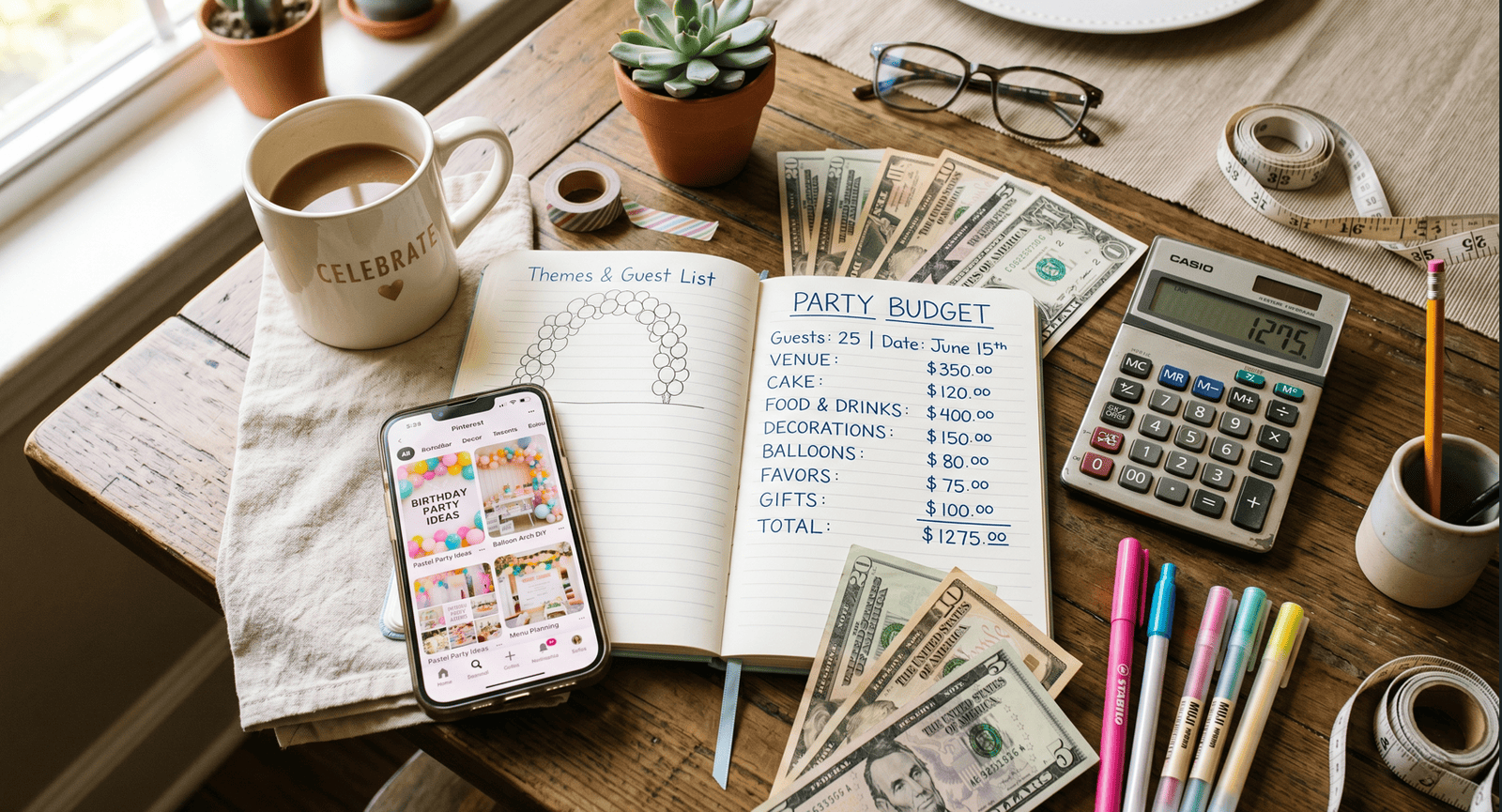
Step 2: Choose a Theme That Works With Your Budget (Not Against It)
The theme you choose can either save you money or drain your budget before you start. Elaborate licensed character themes — where every plate, napkin, and banner needs to have a specific character printed on it — are expensive because you are paying for the brand, not the quality. A Frozen-themed plate costs three times more than a blue plate because of the licensing, even though a blue plate looks just as beautiful when styled intentionally.
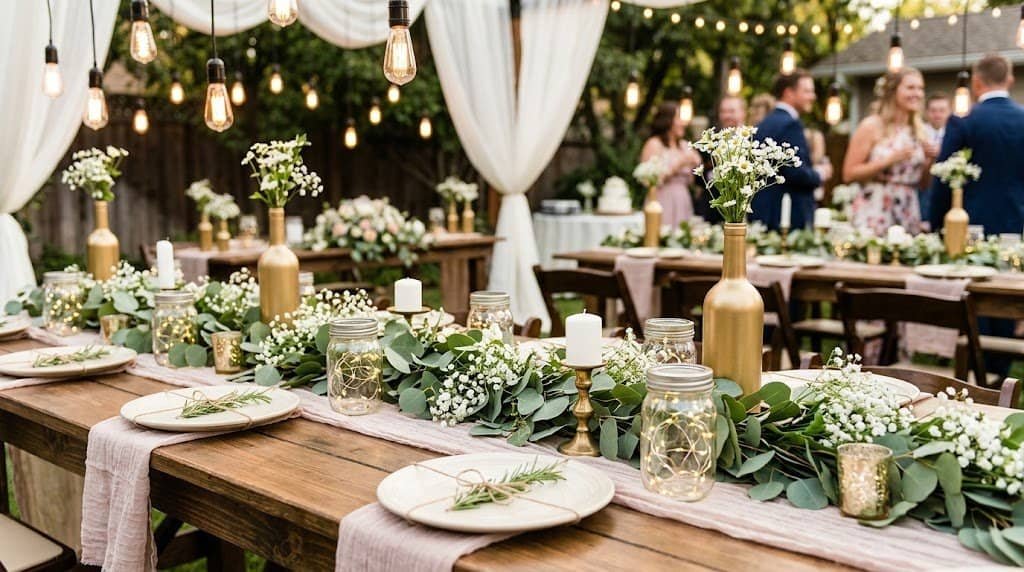
The smartest budget themes are color-based rather than character-based. A rainbow party uses multicolored plates, balloons, and streamers from the dollar store. A pink and gold party uses basic pink tableware with a few gold accents. A blue and white party looks sophisticated and timeless with nothing more than blue plates, white napkins, and a few blue balloons.
Color themes work because you can source everything from dollar stores, big box stores, and even items you already own. You are not hunting for licensed products in a specific character — you are simply buying things in a color. This gives you complete flexibility on where you shop and how much you spend.
That said, some character or concept themes are naturally budget-friendly because the decorations are easy to DIY. A “space” theme needs dark blue tablecloths, glow-in-the-dark stars stuck to the wall, and tin foil wrapped around cardboard tubes to make rockets. A “garden” theme needs green plates, real flowers from the yard, and paper butterflies hung from string. A “construction” theme needs yellow and black tape, toy trucks you already own, and a dirt cake made from chocolate pudding and crushed Oreos.
The trick is choosing themes where the decor elements are common, cheap materials styled creatively — not specialty items that only exist in the party supply aisle.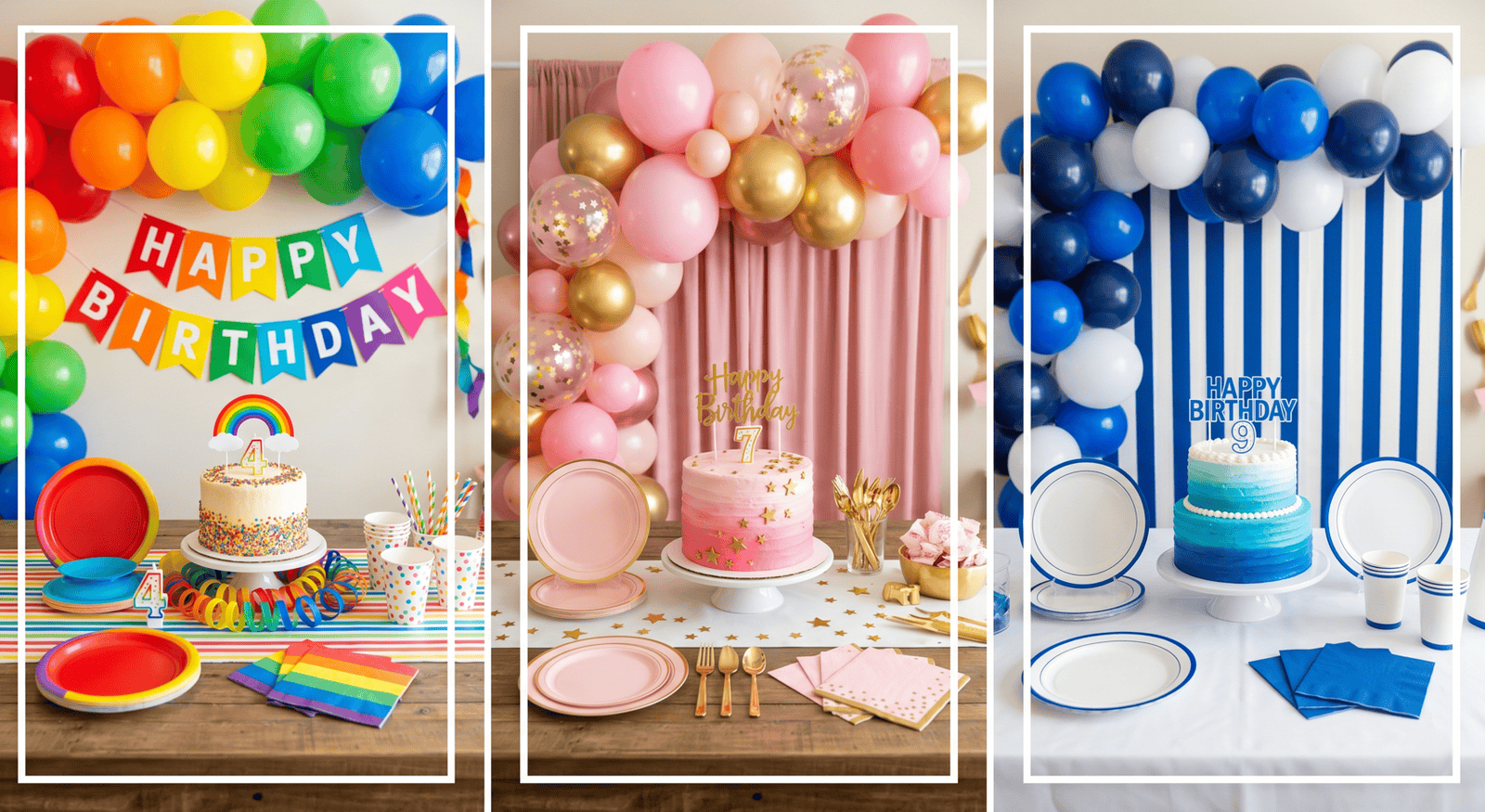
Step 3: Decorations That Look Expensive but Cost Almost Nothing
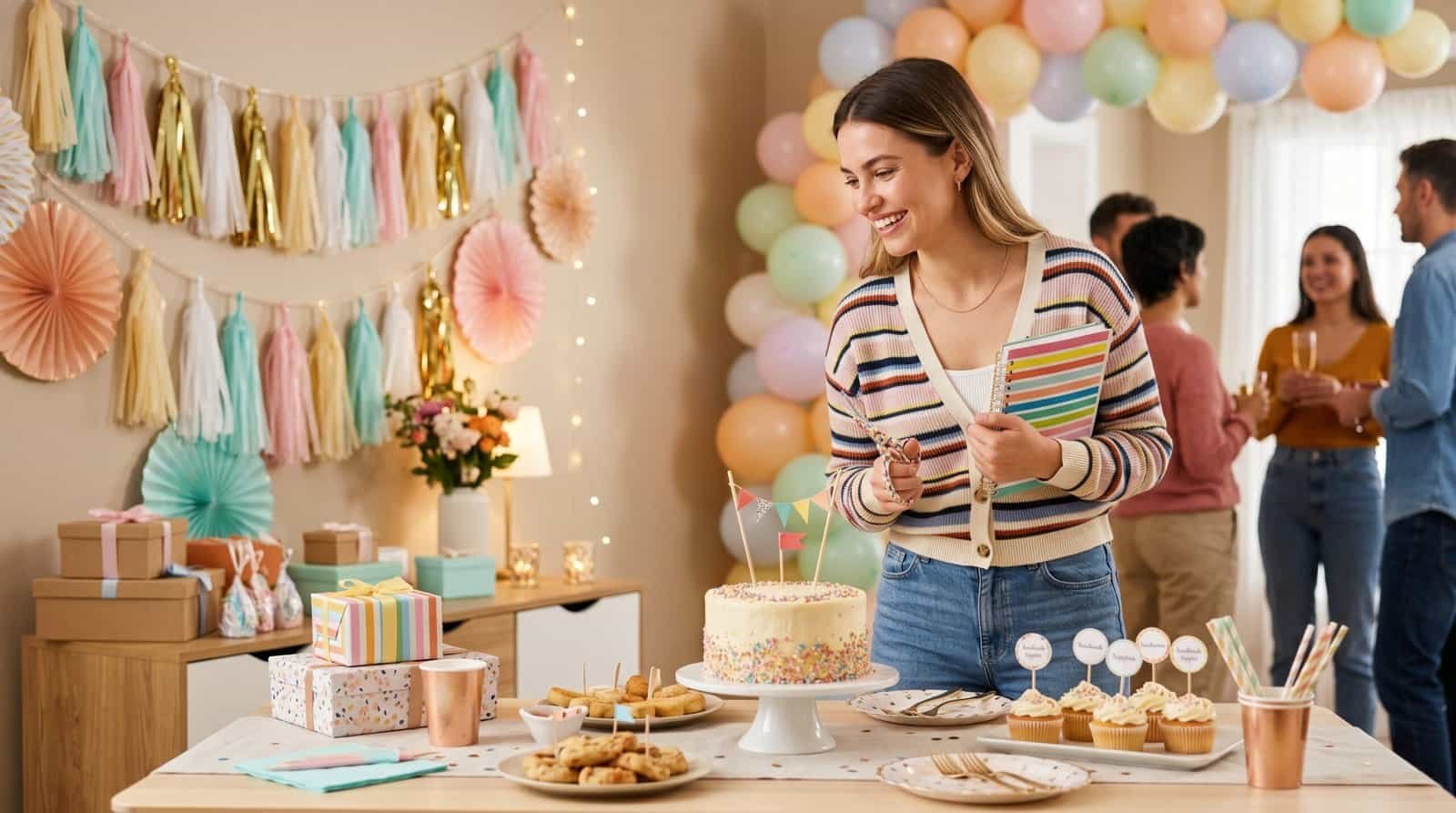
Let me tell you the decorator’s secret that changed how I think about party styling. Three impactful decorations in a coordinated color scheme look ten times better than twenty random decorations in mismatched colors. More is not better. Intentional is better.
Here are the decorations that give you the most visual punch per dollar spent.
Balloons — Your Highest Impact Investment
A bag of 50 latex balloons costs $3 to $5 at any dollar store. That single bag, inflated with your own lungs and arranged with intention, can transform any room. Tape them in clusters to the wall behind the cake table. Tie them to chair backs. Scatter a few on the floor for kids to kick around. Attach them in a line above the doorway as a welcome arch.
For a more polished look, buy balloons in only two or three colors that match your theme. A cluster of all-white and gold balloons looks elegant. All-pink balloons with a few clear ones filled with confetti look Instagram-worthy. Random assorted colors from the bag look like a doctor’s office waiting room. Color discipline is what separates a styled party from a chaotic one.
If you want to go one step further, a DIY balloon garland costs under $15 and creates the kind of backdrop that people assume cost $100. Buy a balloon garland strip from Amazon or the dollar store, inflate balloons in three coordinating sizes and colors, push them into the strip, and shape it into an arch or swoosh over the food table. The whole project takes 30 minutes and the visual impact is genuinely jaw-dropping.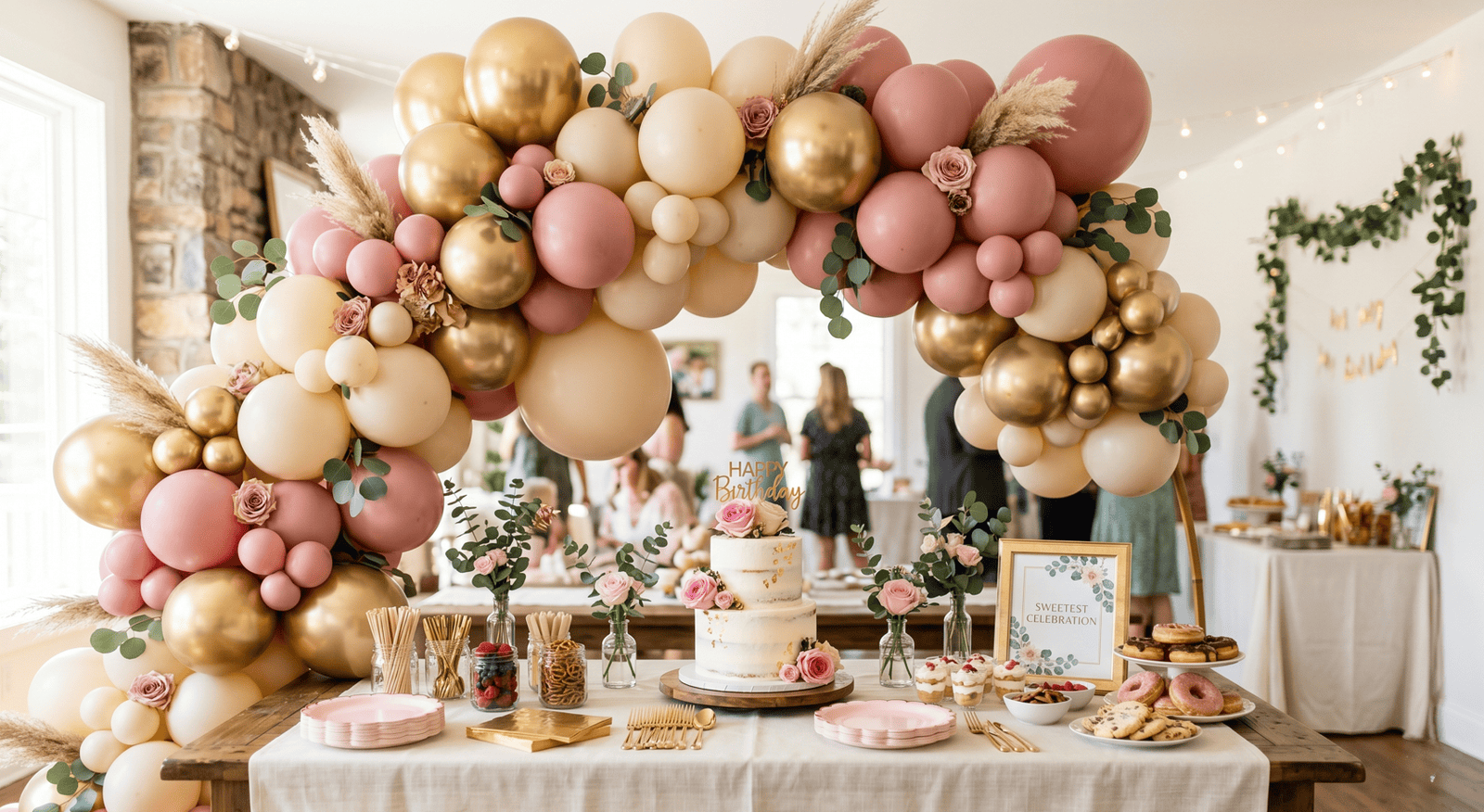
Paper Decorations — Cheap, Beautiful, and Endlessly Customizable
Paper is the budget party planner’s best friend. A pack of colored card stock ($3 to $5), a pair of scissors, some tape, and a little creativity produce decorations that look handmade-on-purpose rather than handmade-because-cheap.
Cut circles from card stock, sew or tape them onto a string, and you have a polka-dot garland that looks like it came from a boutique party shop. Cut triangles, fold the tops over a string, and you have classic bunting that never goes out of style. Cut the birthday child’s age as a large number from glittery card stock and tape it to the wall as a focal piece. Cut out letters spelling “HAPPY BIRTHDAY” and string them as a banner — or buy a reusable cloth or felt banner for $5 that you use year after year.
Tissue paper pompoms are another incredible budget decoration. Buy a pack of tissue paper ($1 to $2), layer six to eight sheets, accordion-fold them, tie the center with string, fan out the layers, and you have a fluffy sphere that looks like it costs $10 each but actually costs about $0.30. Make five or six in your party colors and hang them from the ceiling at different heights. The room transforms instantly.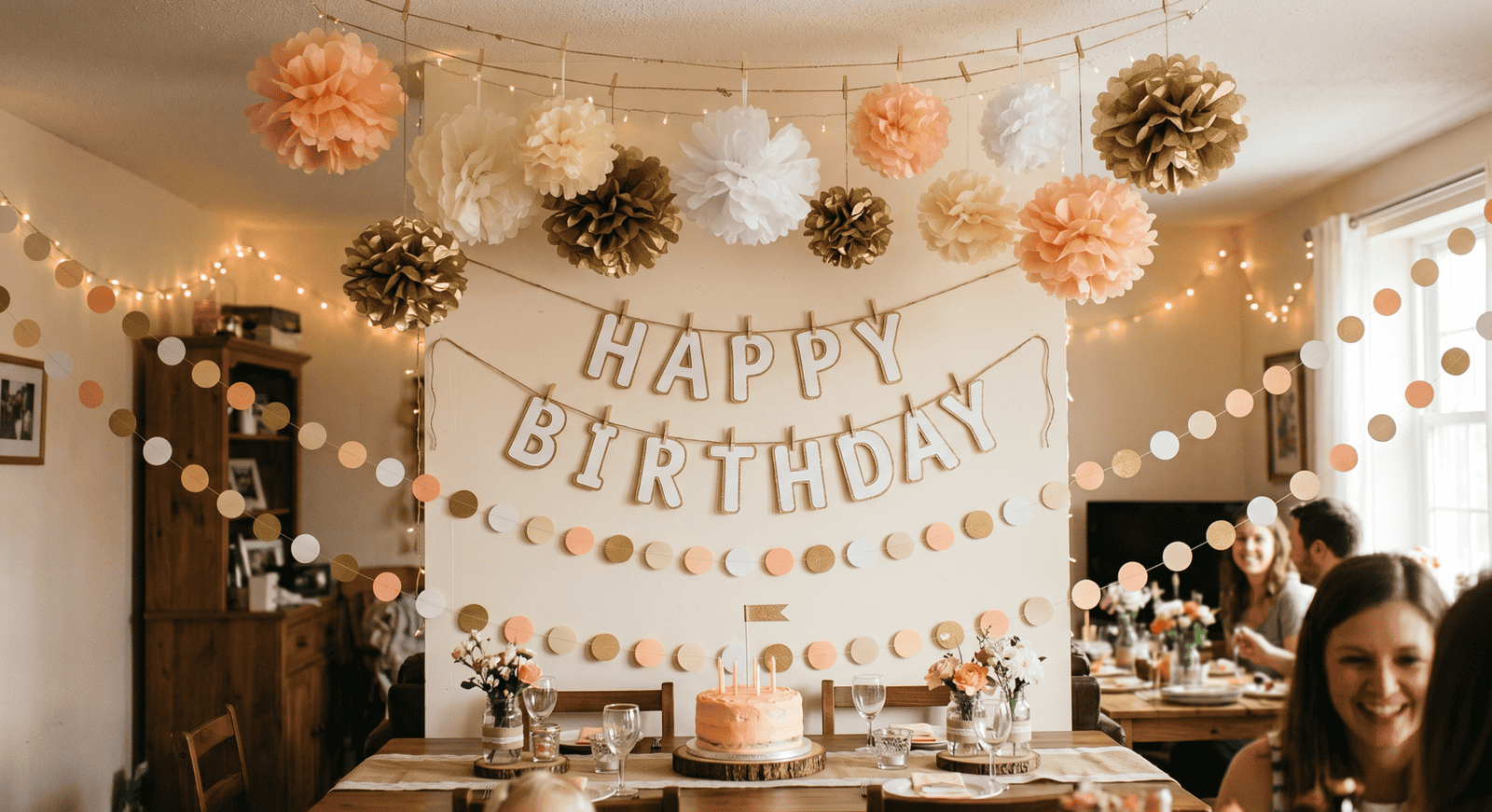
The “One Wow Piece” Strategy
Instead of trying to decorate every surface, invest your decoration energy into one single statement piece that anchors the whole party. This could be a balloon garland over the food table, a large handmade number piñata, a flower wall made from tissue paper flowers on a cardboard base, or even just a beautifully styled cake table with a backdrop made from a $3 plastic tablecloth and some streamers twisted into a pattern.
When guests walk in, their eyes will go to the wow piece first. It sets the tone for the entire party and photographs beautifully. Everything else can be simple — plain plates, basic napkins, minimal additional decor — because the wow piece does the heavy lifting.
This strategy also saves you an enormous amount of time. Instead of spending five hours decorating every corner, you spend one focused hour creating one spectacular element and 15 minutes scattering a few supporting touches around the room.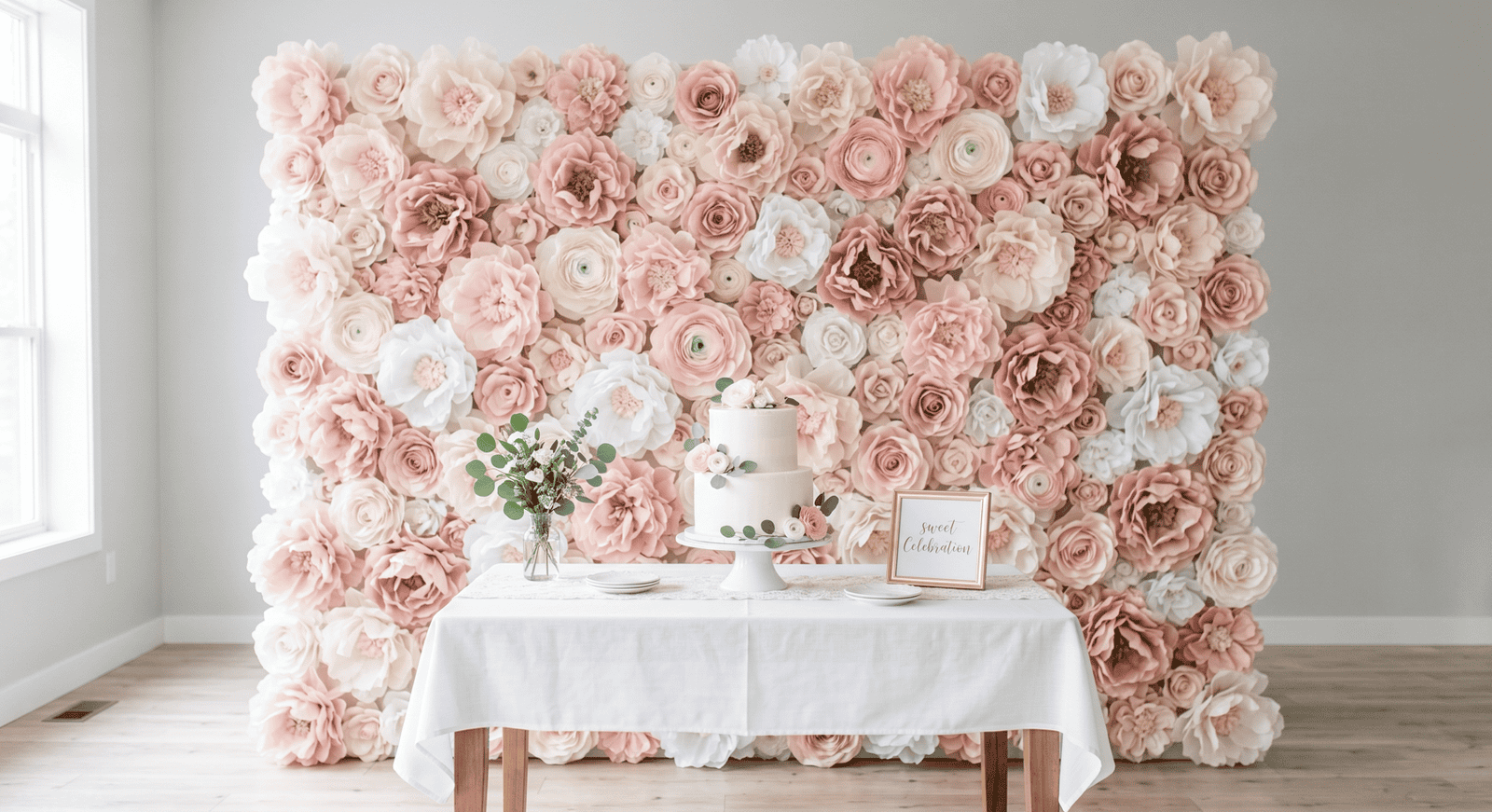
Step 4: Party Food That Feeds a Crowd for Less
Food is where birthday party budgets typically explode because people default to one of two expensive options — ordering a catered spread or buying every pre-made party tray at the grocery store. Both are unnecessary when you are feeding kids who would honestly be thrilled with pizza bagels and juice boxes, or adults who are perfectly happy with a taco bar and a cooler of drinks.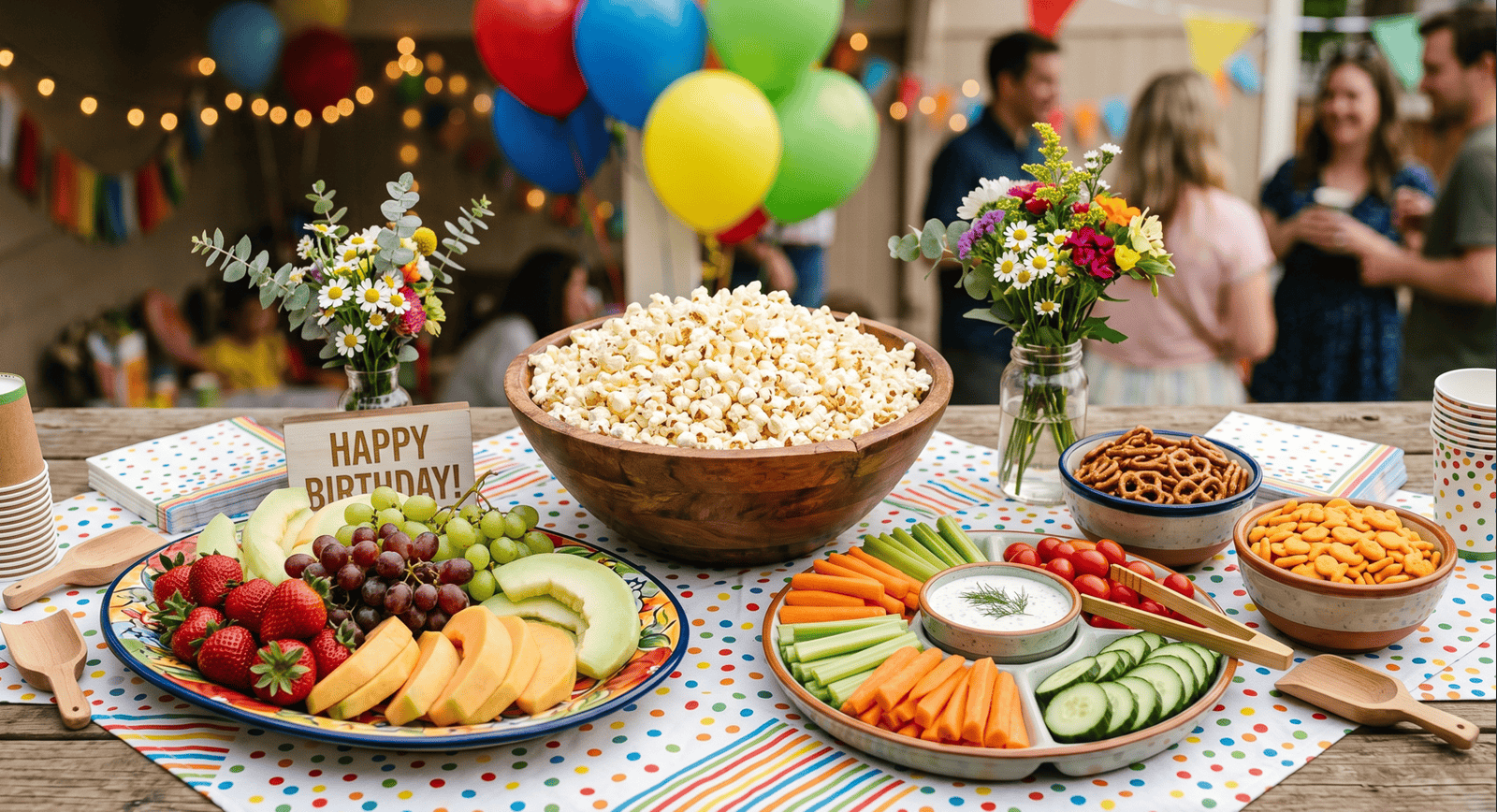
The Taco Bar — Best Dollar-Per-Person Ratio in Party History
If I could recommend only one party food setup for the rest of time, it would be the taco bar. It is interactive, customizable, works for any age group, accommodates dietary restrictions naturally, and feeds 15 people for about $25 to $30.
Here is the math. Two pounds of ground beef or chicken ($6 to $8) with a pack of taco seasoning ($1). Two packs of tortillas or taco shells ($4). A can of refried beans ($1.50). Shredded cheese ($2.50). Sour cream ($1). Salsa from a jar ($2.50). A head of lettuce shredded ($1.50). Two tomatoes diced ($2). One onion diced ($0.75). A few limes ($1).
Set everything out in bowls buffet-style. Guests build their own tacos exactly the way they want them. Kids who are picky eaters just get cheese and meat in a tortilla — no complaints. Adults load theirs up with everything. Someone who does not eat meat fills a tortilla with beans, cheese, and veggies. Everyone eats well, everyone is full, and you spent less than $2 per person.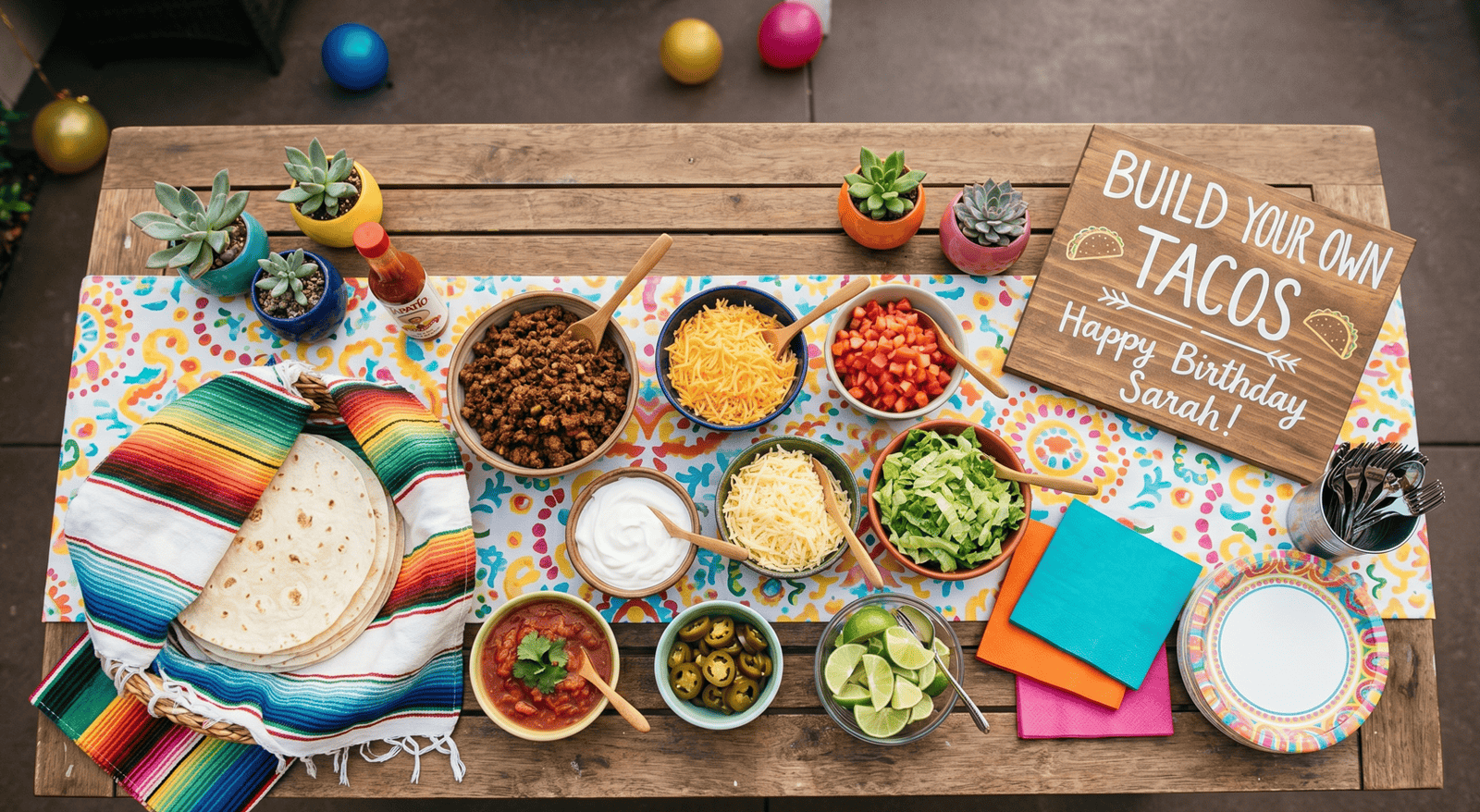
Pizza Bagels or Mini Pizzas — The Kid Party MVP
For children’s parties, nothing beats the simplicity and universal appeal of pizza bagels. Buy a bag of mini bagels ($3), a jar of pizza sauce ($2), a bag of shredded mozzarella ($3), and whatever toppings the kids like — pepperoni, olives, mushrooms. Lay them out on a baking sheet, let each kid build their own mini pizza, bake at 375 degrees for 10 minutes, and serve. Total cost for 15 kids: about $12 to $15.
Kids love this because they made their own food. Parents love this because it doubles as an activity — the building process takes 15 minutes and keeps everyone engaged. You love this because it is cheap, easy, and creates zero complaints because every child got exactly what they wanted on their pizza.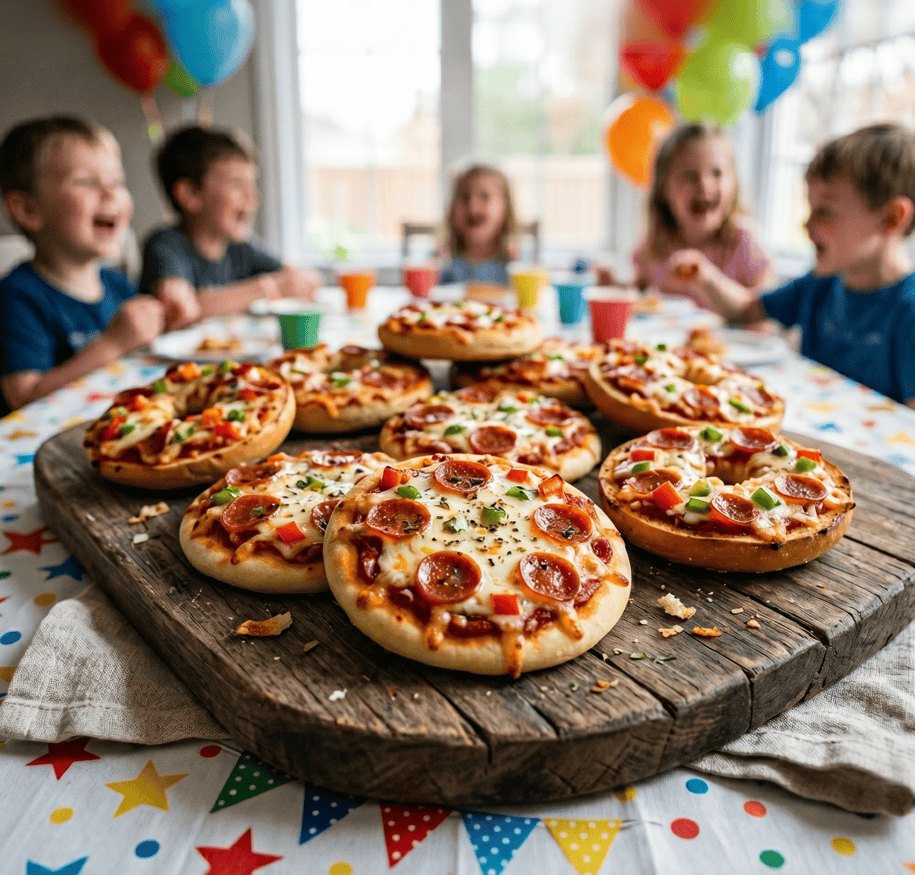
Snack Table Strategy — Quantity Over Complexity
Fill the rest of your food table with high-volume, low-cost snacks. A large bowl of popcorn made from kernels ($0.50 for a huge batch). Cut-up fruit arranged on a platter ($5 for a beautiful spread). A veggie tray with ranch dip ($4 if you cut the veggies yourself instead of buying pre-made). A bowl of pretzels ($2). A bowl of goldfish crackers ($2).
These bulk snacks fill the table, look abundant, and give guests something to munch on throughout the party. The key is presentation — pouring crackers into a nice bowl instead of leaving them in the bag makes everything look intentional and generous.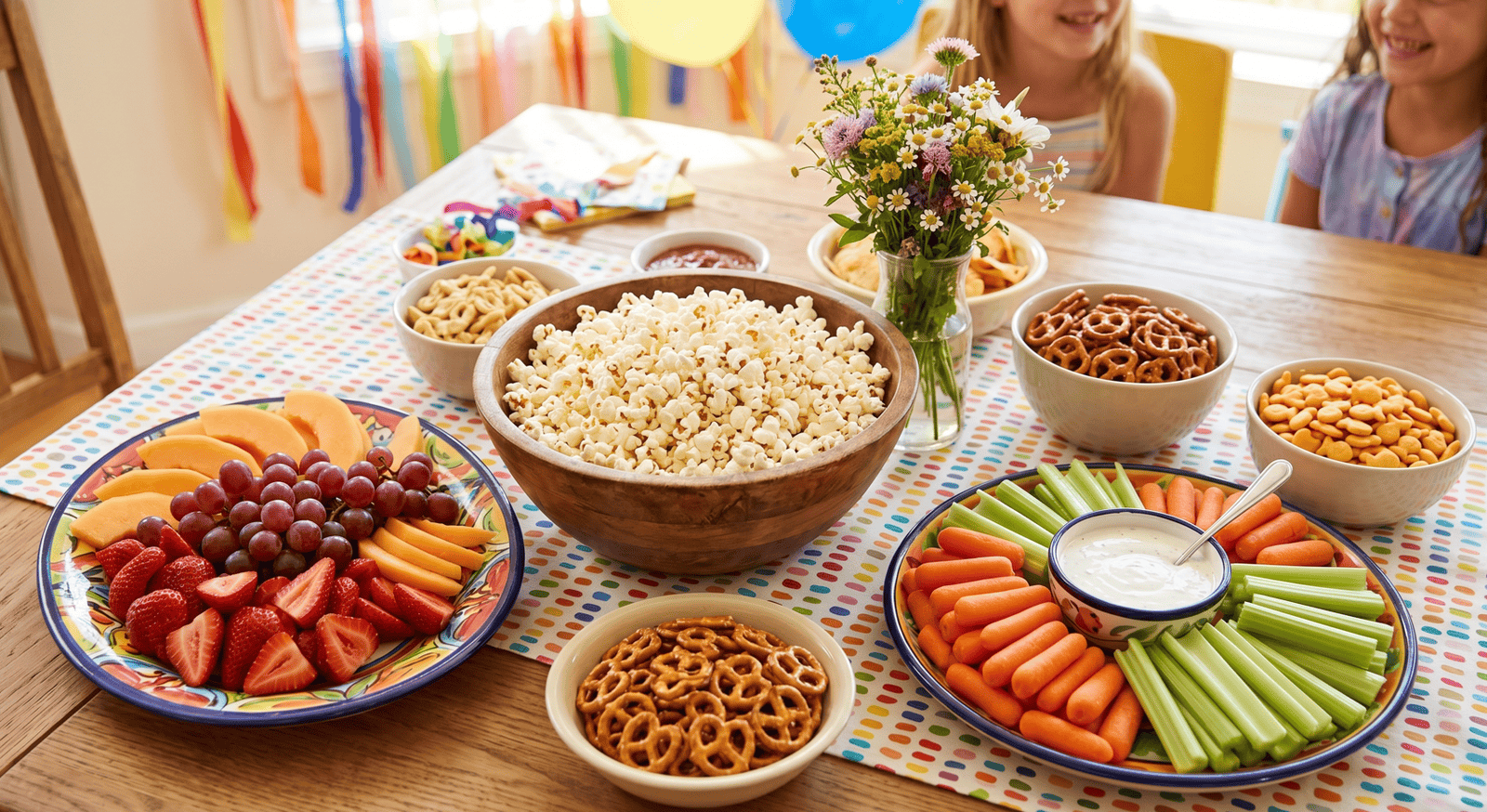
Step 5: The Birthday Cake (Or How to Skip the $80 Bakery Bill)
The birthday cake is emotionally the most important food item at the party. It is the centerpiece. Everyone gathers around it for the song. It appears in every photo. So it needs to look good — but looking good does not require a professional bakery.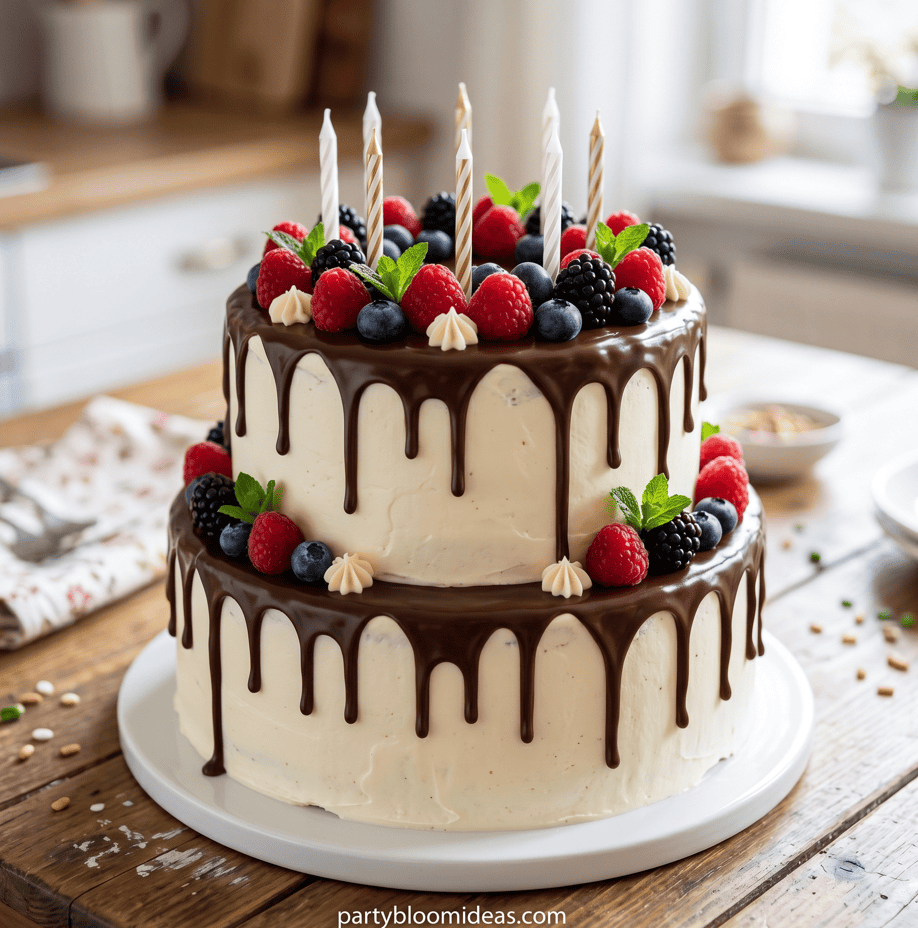
The $5 Homemade Cake That Looks Like $50
A box of cake mix costs $1.50. A can of frosting costs $2. Food coloring costs $1. Sprinkles cost $1. Total: $5.50 for a cake that, with a tiny bit of care, looks absolutely beautiful.
The secret to making a box-mix cake look professional is a technique called “crumb coating.” Bake your cake, let it cool completely, apply a thin layer of frosting to seal in the crumbs, refrigerate for 30 minutes, then apply the final thick layer of frosting. This creates a smooth, clean surface that looks like a bakery cake. Add sprinkles on the sides, a few fresh berries on top, or pipe a simple border around the edge with a zip-lock bag with the corner cut off, and nobody — literally nobody — will know it came from a box.
If you are not confident in cake decorating at all, go the “naked cake” or “semi-naked” route. This trending style deliberately shows the cake layers through a thin, imperfect layer of frosting. It looks rustic, artisan, and intentionally styled — like you chose this aesthetic, not like you could not frost evenly. Top with fresh flowers, berries, or a simple cake topper, and you have a cake that looks like it belongs on Pinterest.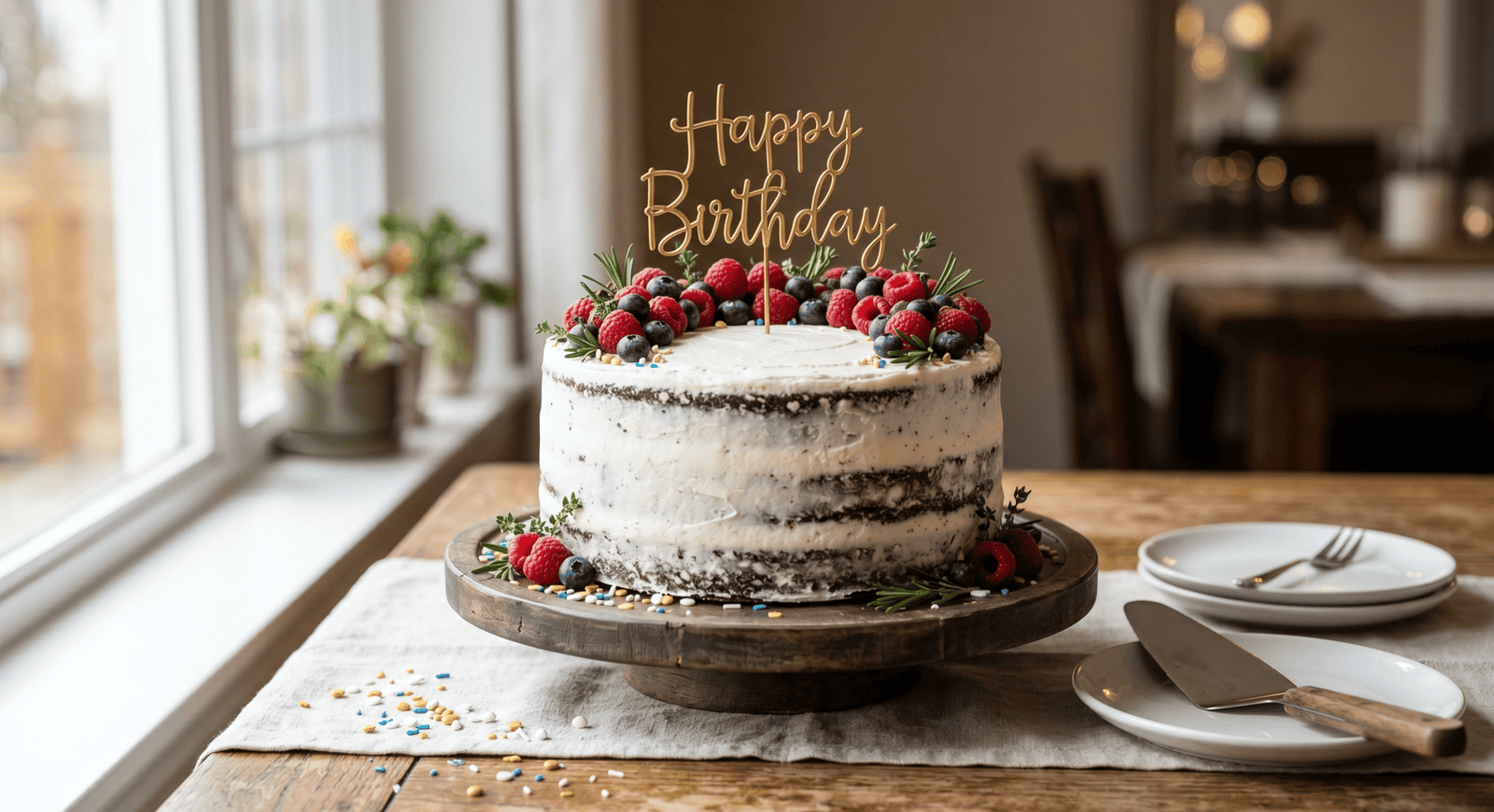
The Cupcake Tower Alternative
If cake decorating truly intimidates you, cupcakes are your escape hatch. Bake a batch from a box mix, frost them with a simple swirl (YouTube “how to frost cupcakes” — it is easier than you think), and arrange them on a tiered stand or a simple plate stack.
Cupcakes have a huge practical advantage at kids’ parties: no cutting, no plates getting knocked over, no arguments about who got a bigger slice. Each child grabs a cupcake and walks away happy. Decorate a few cupcakes with the birthday child’s age or initial for a personalized touch.
A cupcake tower of 24 cupcakes costs about $6 to $8 in ingredients and looks spectacular when arranged with height variation. Buy a cheap tiered cardboard cupcake stand from the dollar store for $2 to $3 and the display looks like a professional dessert table.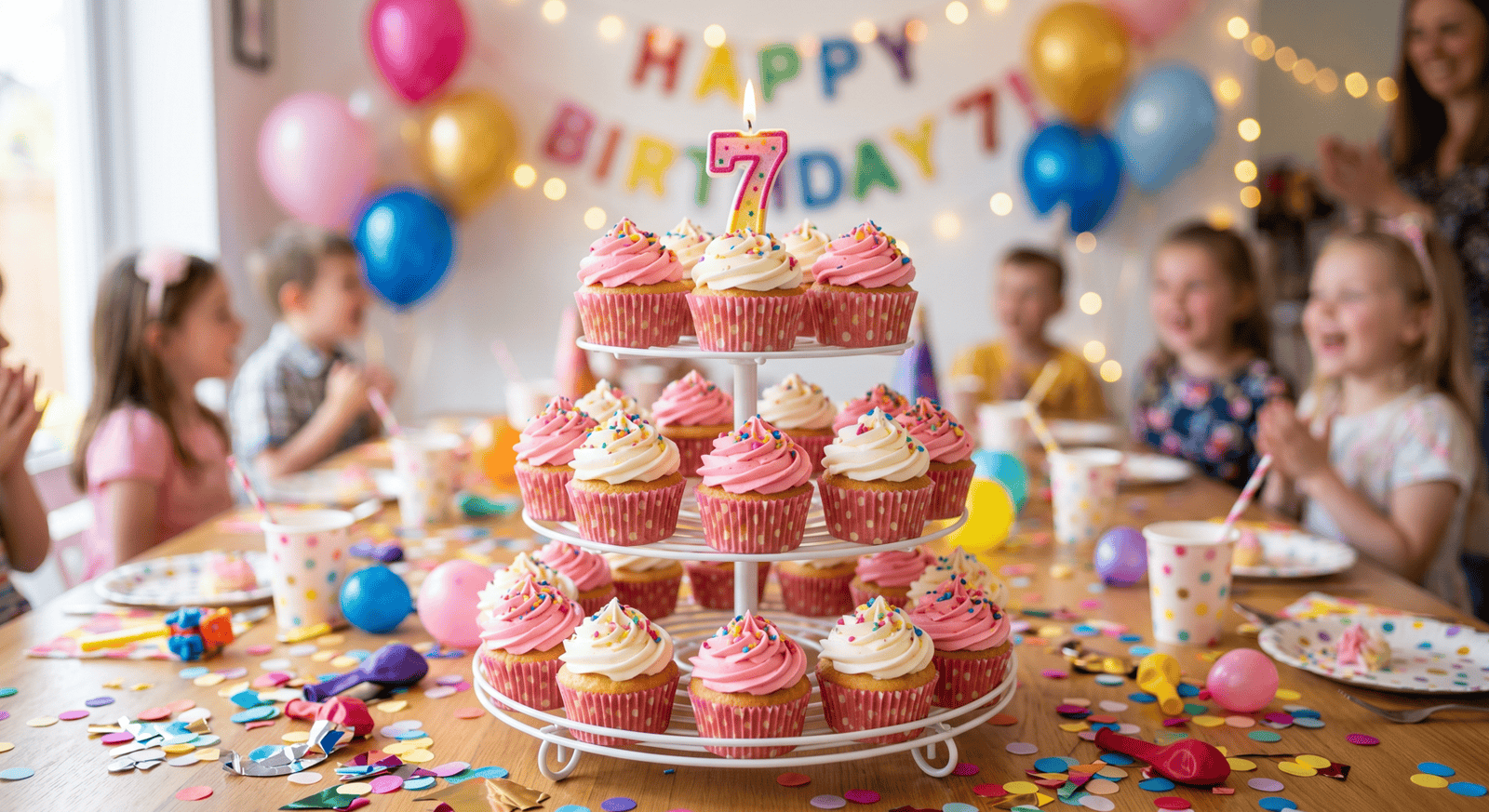
Step 6: Games and Activities That Cost Nothing
Entertainment is where creativity beats money every single time. The most memorable party games in history — musical chairs, freeze dance, hot potato, scavenger hunts — cost exactly zero dollars. What they require is enthusiasm and organization, both of which are free. 
For Kids Ages 3-7: Classic Games With Themed Twists
Young kids do not need elaborate entertainment. They need structure, energy, and the opportunity to win small prizes.
Musical Statues: Play music and kids dance. When the music stops, everyone freezes. Anyone who moves is out. The last child standing wins a small prize. This game can run for 15 to 20 minutes and kids never get tired of it because the silliness of freezing in weird positions is endlessly entertaining.
Treasure Hunt: Hide small items around the yard or house. Give kids a list of things to find — a blue rock, a yellow flower, a specific toy, a coin. First child to find everything wins. Adjust difficulty by age — obvious hiding spots for little ones, tricky spots for older kids. This takes 15 to 20 minutes of setup but buys you 30 minutes of completely engaged, independent play.
Relay Races: Divide kids into two teams. Race variations: carry an egg on a spoon, run with a balloon between your knees, hop in a sack, dribble a ball. Each relay takes about five minutes, and you can run four or five different types to fill 25 to 30 minutes. The competitive energy is incredible and the laughter is constant.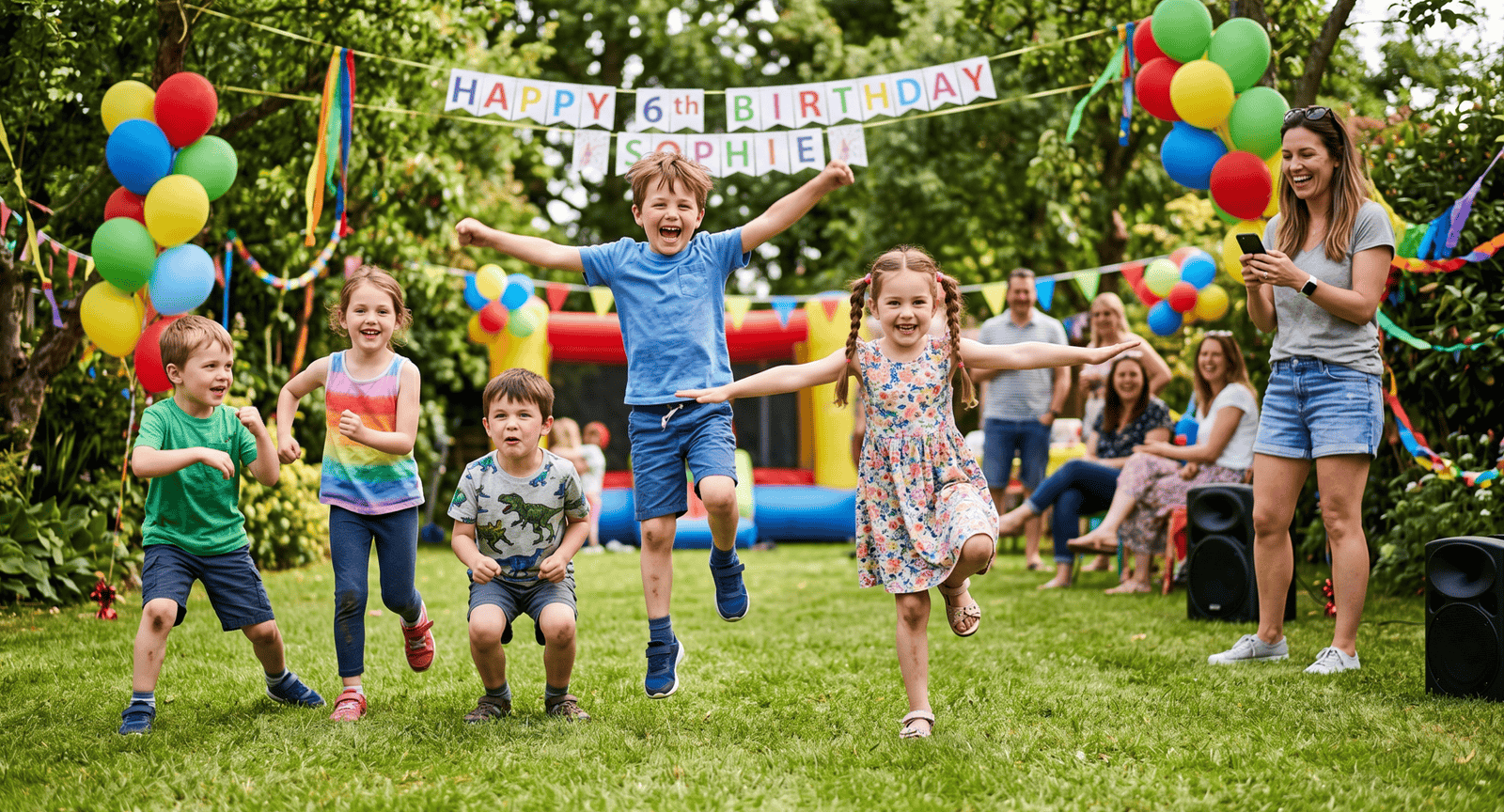
For Kids Ages 8-12: Competition and Creativity
Older kids need games that challenge their brains and feed their competitive instincts.
Minute-to-Win-It Challenges: Set up five or six one-minute challenges. Stack 10 cups into a pyramid and back down. Move three Oreos from your forehead to your mouth using only your face muscles. Keep a balloon in the air for 60 seconds using only your breath. Pick up 10 items with chopsticks and transfer them to a bowl. These games are hilarious to watch, thrilling to play, and cost nothing — you use items already in your kitchen.
Scavenger Hunt With Clues: Write a series of riddles where each answer leads to the next clue location. Eight to twelve clues ending at a prize works perfectly. Make the clues progressively harder to maintain excitement. The final prize can be a bag of candy, a small toy, or even the honor of being first in line for cake.
DIY Craft Station: Set up a table with basic craft supplies — markers, stickers, glue, paper, pom-poms — and let kids create something to take home. A decorate-your-own-crown station, a friendship bracelet station, or a design-your-own-superhero-mask station all cost under $5 in supplies and keep creative kids happily occupied for 30 to 45 minutes.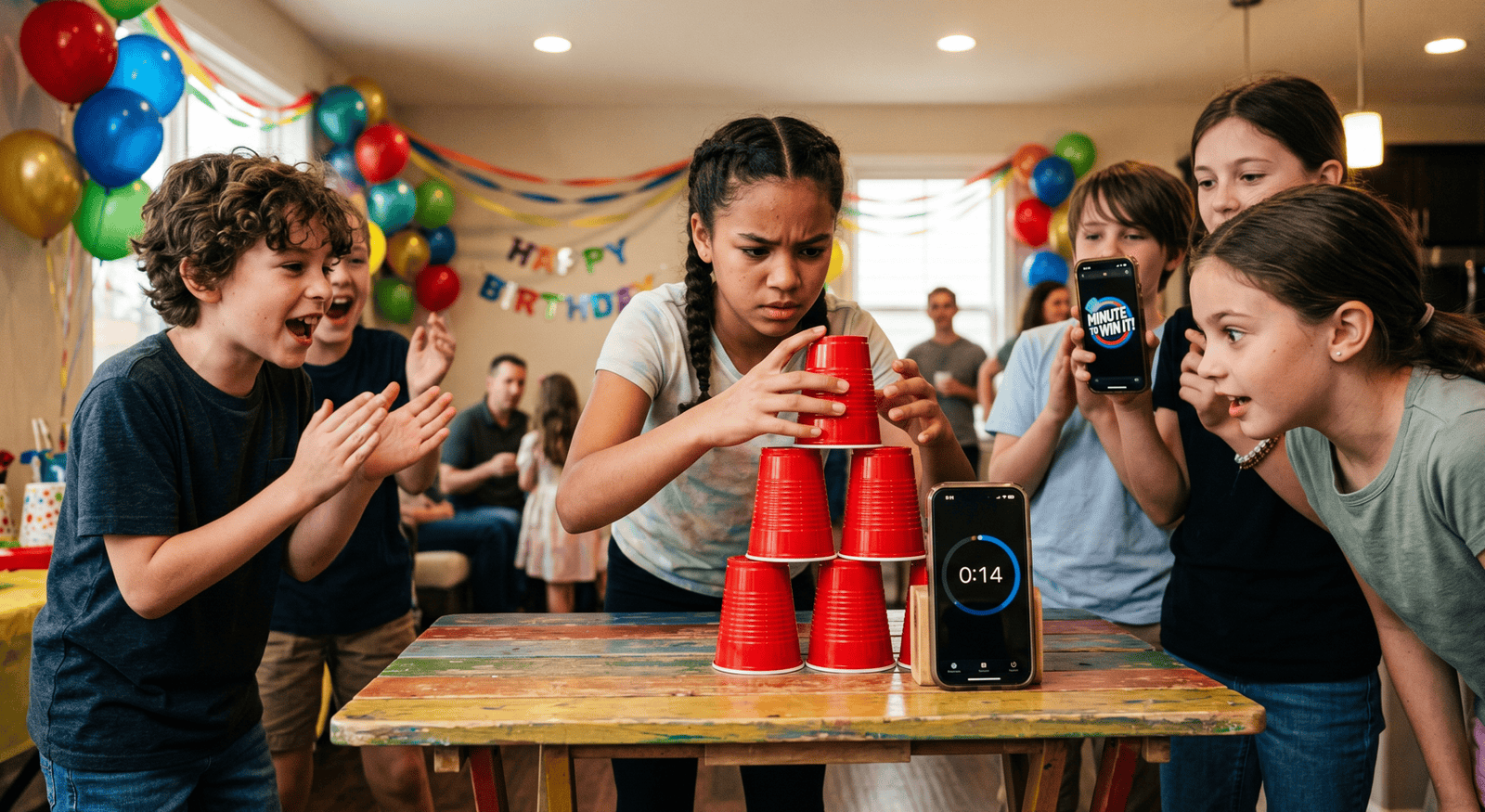
For Adult Parties: Low-Cost Entertainment That Actually Works
Adult birthday entertainment does not need to be expensive. What adults want is connection, laughter, and an excuse to be silly — all of which are free.
A Playlist That Tells Their Story: Create a playlist spanning the birthday person’s life — songs from the year they were born, the songs they loved in high school, their current favorites. Play it as background music throughout the party. Guests will be constantly saying “oh my God, I love this song!” and it creates an emotional through-line for the entire celebration.
A “How Well Do You Know the Birthday Person?” Quiz: Write 15 to 20 trivia questions about the guest of honor — their childhood nickname, their biggest fear, the first concert they attended, their hidden talent. Play in teams. The birthday person serves as the answer key. This game creates hilarious revelations and genuine connection.
A Toast Circle: Before cake, gather everyone and go around the room. Each person shares one memory, one thing they appreciate, or one wish for the birthday person. Keep it to one or two sentences each. This takes five minutes, costs nothing, and is consistently the most emotionally powerful moment of any birthday party I have ever attended.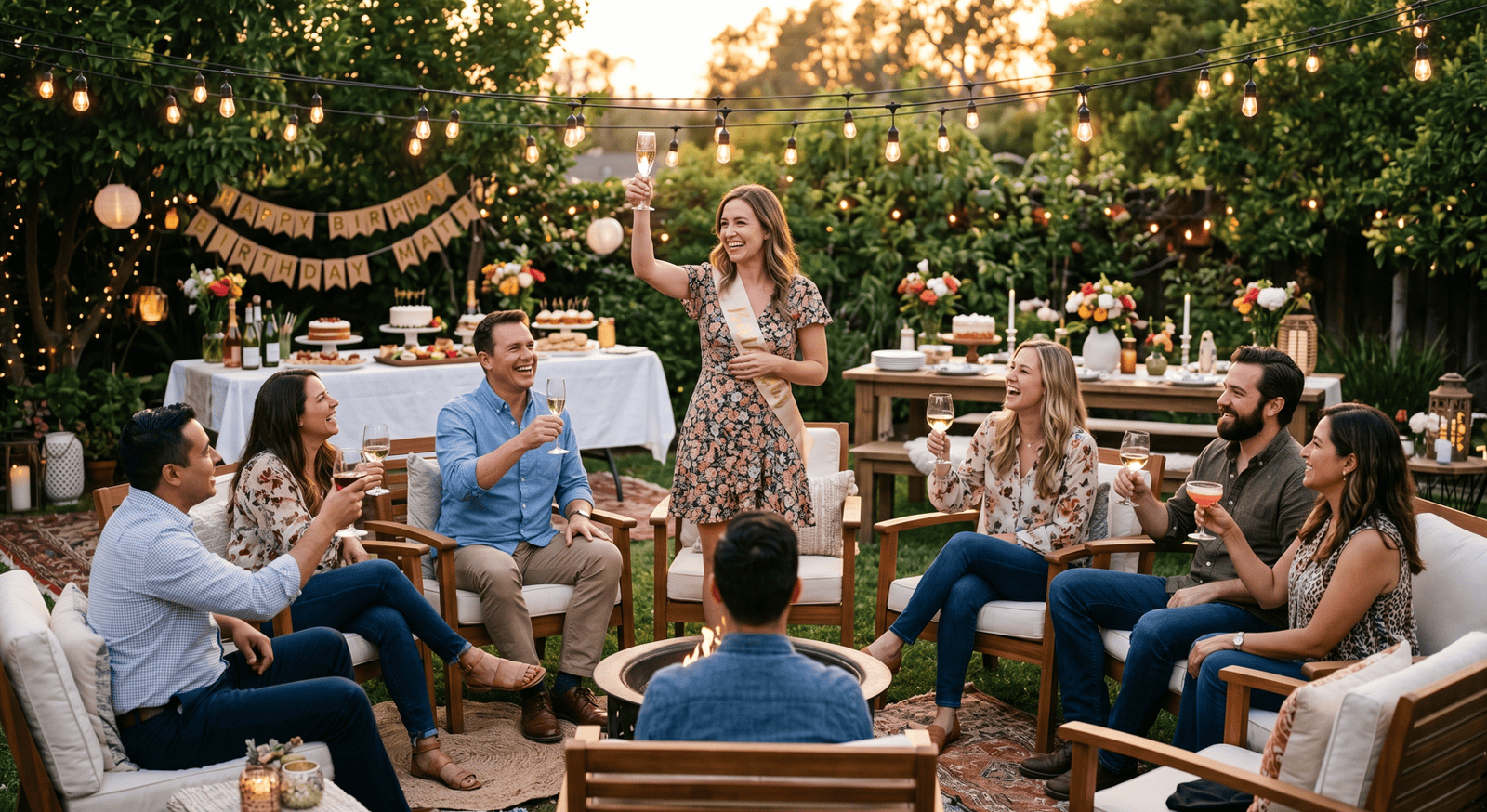
Step 7: Party Favors That Don’t Break the Bank
Party favors are the one area where I give you full permission to keep it extremely simple. Kids will forget about a goody bag within 24 hours. What they will not forget is the experience of the party itself. So if your budget is tight, spend your money on food and activities and skip the favors entirely — nobody will notice or care.
If you do want to send guests home with something, here are ideas that cost less than $1 per child. A small bag of candy from a bulk bag. A homemade sugar cookie from the decorating station. A seed packet with a tag that says “Thanks for helping my birthday bloom.” A small container of playdough you made yourself (flour, salt, water, food coloring — costs pennies). A friendship bracelet the child made at the craft station.
The best party favors are ones that were part of the party experience itself. A craft they created, a cookie they decorated, a small prize they won in a game. These feel personal and earned rather than just handed out, which makes them more meaningful to kids despite costing you less.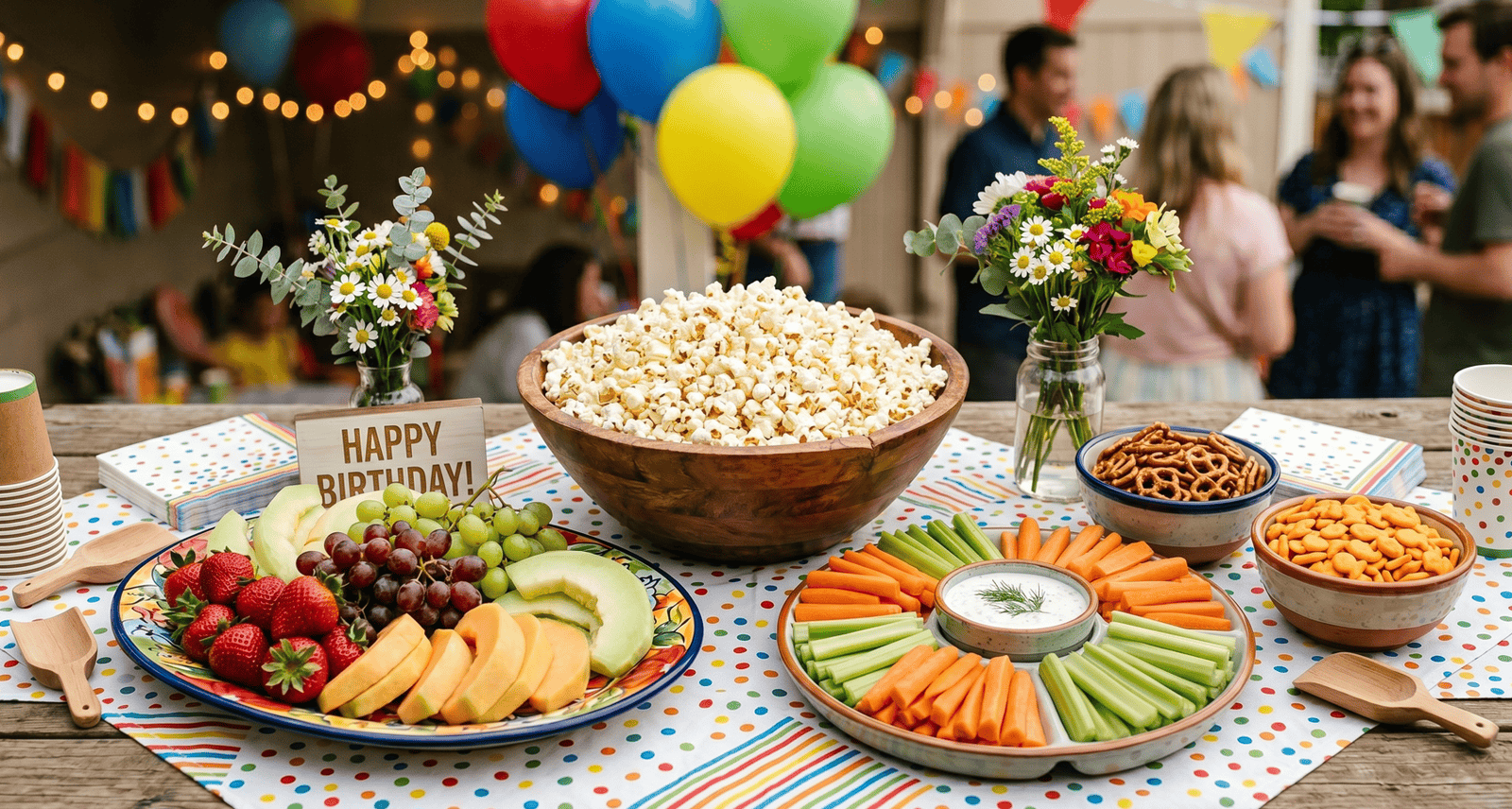
Complete Budget Party Plans at Three Price Points
The $50 Birthday Party (Feeds 12-15 Kids)
- Balloons (bag of 50 in two colors): $4
- Paper plates, cups, napkins (dollar store): $5
- DIY paper banner and garlands: $3
- Taco bar or pizza bagels ingredients: $15
- Snacks (popcorn, fruit, crackers): $8
- Box cake mix + frosting + sprinkles: $6
- Drinks (juice boxes or lemonade): $5
- Game prizes (candy, small dollar store toys): $4
Total: $50 | Per child: $3.33
The $100 Birthday Party (Feeds 15-20 Kids)
Everything from the $50 plan, plus:
- DIY balloon garland: $12
- Upgraded food (add chips and dip, more fruit): $10
- A craft activity station: $8
- Cupcakes in addition to the cake: $6
- Themed paper plates instead of plain: $5
- Piñata (dollar store + candy to fill): $9
Total: $100 | Per child: $5-$6.67
The $200 Birthday Party (Feeds 20-30 Kids or Adults)
Everything from the $100 plan, plus:
- Personalized banner or sign: $15
- Upgraded dessert (bakery cake or two cake options): $30
- Photo booth area with props: $10
- Lawn games or rented bounce house: $30
- Better drinks (sparkling cider, lemonade bar): $10
- Small party favors: $15
Total: $200 | Per child: $6.67-$10
The Secrets Nobody Tells You About Budget Party Planning
After years of throwing budget parties, there are a few insights that consistently make the biggest difference.
Timing saves money. A party from 2 to 4 PM falls between lunch and dinner, which means you only need snacks and cake — not a full meal. This alone can save $30 to $50 on food. A morning party from 10 to 12 requires only brunch-level food like muffins, fruit, and juice. Only a party from 12 to 2 PM or 5 to 7 PM creates the expectation of a full meal.
Location matters. A party at a park, beach, or playground is free and provides built-in entertainment. Kids run, climb, swing, and play — you just bring food and cake. A party at a rented venue starts at $100 to $300 before you have spent a single dollar on food or decorations. Home parties and outdoor public spaces are the budget planner’s best friends.
Ask for help instead of spending money. Your friend who bakes? Ask them to make the cake as their gift instead of buying a present. Your neighbor with a bounce house? Ask to borrow it. Your mother-in-law who loves crafts? Ask her to help with decorations. Most people are genuinely happy to contribute something hands-on to a celebration, and many prefer it over buying yet another toy.
Buy in bulk at dollar stores. A single trip to Dollar Tree can cover plates, napkins, balloons, streamers, tablecloths, gift bags, candy, and small prizes. Everything is $1.25 each, and the party supply selection is surprisingly good. You can outfit an entire party for $15 to $20 in supplies.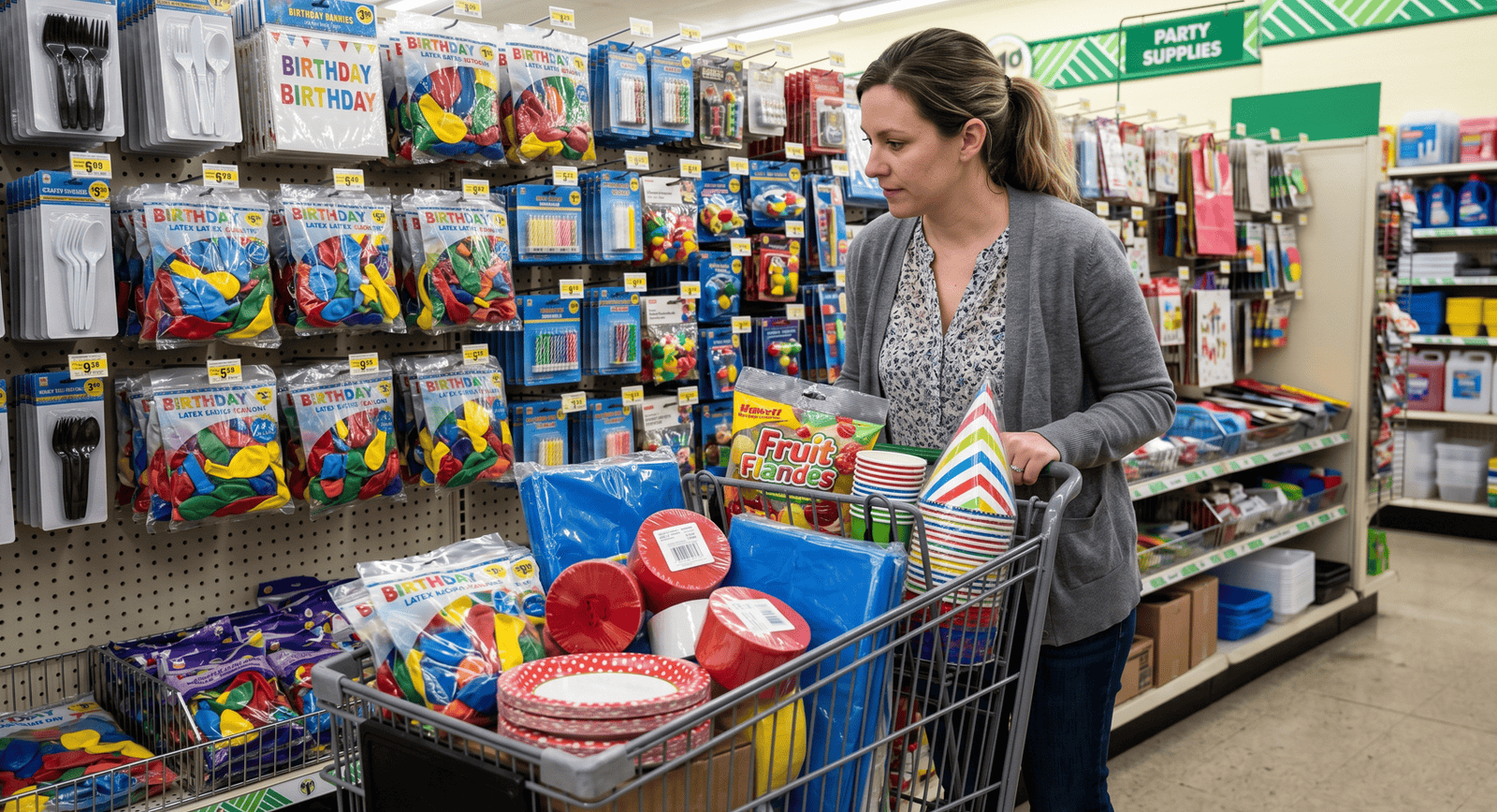
Frequently Asked Questions
How much should you spend on a child’s birthday party?
There is no “should” — only what works for your family’s budget. A wonderful kids’ party can absolutely happen at $50 or less. The national average is around $300 to $500, but that average is inflated by people spending on venues, professional entertainment, and elaborate themes. Your child will remember the fun, the friends, and the cake — not how much you spent.
What is the cheapest way to decorate for a birthday party?
Balloons from the dollar store ($3 to $5 for 50), DIY paper garlands and banners ($2 to $3 in card stock), and tissue paper pompoms ($1 to $2 for a pack of tissue paper) give you the most visual impact for the least money. A coordinated color scheme with these three items makes any space look festive and intentionally designed.
How do I feed a lot of kids at a party without spending a fortune?
A build-your-own taco bar feeds 15 kids for about $25 to $30. Pizza bagels feed 15 kids for about $12 to $15. Add bulk snacks like popcorn, fruit, and crackers for another $8 to $10. Avoid pre-made party trays and individually packaged snacks — they cost three to four times more than assembling the same items yourself.
Do I really need party favors?
No. Party favors are completely optional, and many parents are moving away from them. If you want to give something, keep it under $1 per child — a few pieces of candy in a small bag, a cookie from the decorating station, or a small prize they won during a game. The experience of the party itself is the real gift.
How long should a kids’ birthday party last?
Two hours is the sweet spot for kids under 10. Any shorter and it feels rushed. Any longer and kids (and parents) start to fade. For kids 10 and older, two and a half to three hours works. For adult parties, three to four hours is comfortable with a natural flow of food, activity, and socializing.
How far in advance should I plan a birthday party?
Two to three weeks is plenty for a home party. Send invitations (text or digital is fine) two weeks before. Shop for supplies one week before. Prep food and decorations the day before. Set up the morning of the party. You do not need months of planning for a wonderful celebration.
Can I throw a good party with no money at all?
Yes. A “no spend” birthday party at a free park with homemade decorations from items you already have (paper, markers, tape), a homemade cake, sandwiches from home, free games, and borrowed items from friends is completely possible and can be genuinely wonderful. What makes a birthday special is feeling celebrated by people who love you — and that is always free.
The Party They Will Remember
Here is the truth that took me years and many parties to learn. Kids do not remember how much you spent. They remember how they felt. They remember the game where they laughed so hard they fell over. They remember decorating their own cupcake. They remember the moment everyone sang happy birthday and the candles flickered and for one beautiful second, they were the most important person in the room.
You can give them all of that for $50. Or $30. Or honestly, for nothing but your time and attention.
So set your budget, choose a theme that works with your wallet, make the food simple and abundant, plan two or three great games, bake a cake with love if not with skill, and let the celebration happen.
The best birthday parties are not the most expensive ones. They are the ones where the birthday person looks around the room and thinks, “All of these people are here for me.”
That is the only thing that matters. And it is the one thing money cannot buy.
Happy planning.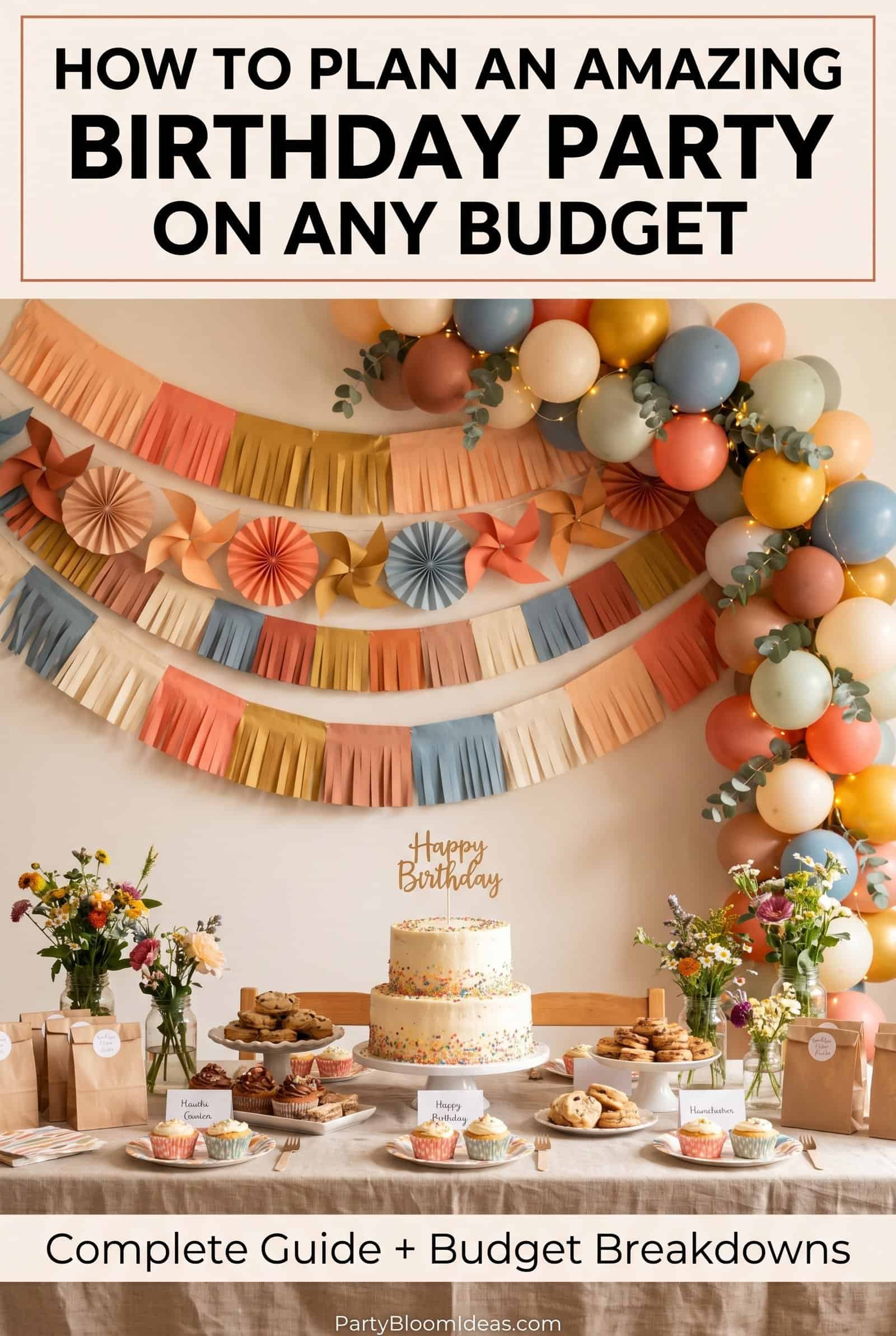
Love this guide? Pin it for your next birthday planning session and share it with every parent you know. Visit PartyBloomIdeas.com for more celebration ideas that won’t break the bank!
Related articles:
- 25 Best Easter Party Ideas for Kids and Families
- How to Throw a Perfect Spring Garden Party on Any Budget
- 20 Mothers Day Party Ideas She Will Never Forget
- 25 Party Food Ideas That Are Easy, Cheap, and Crowd-Pleasing
Read more: 15 Baby Shower Ideas