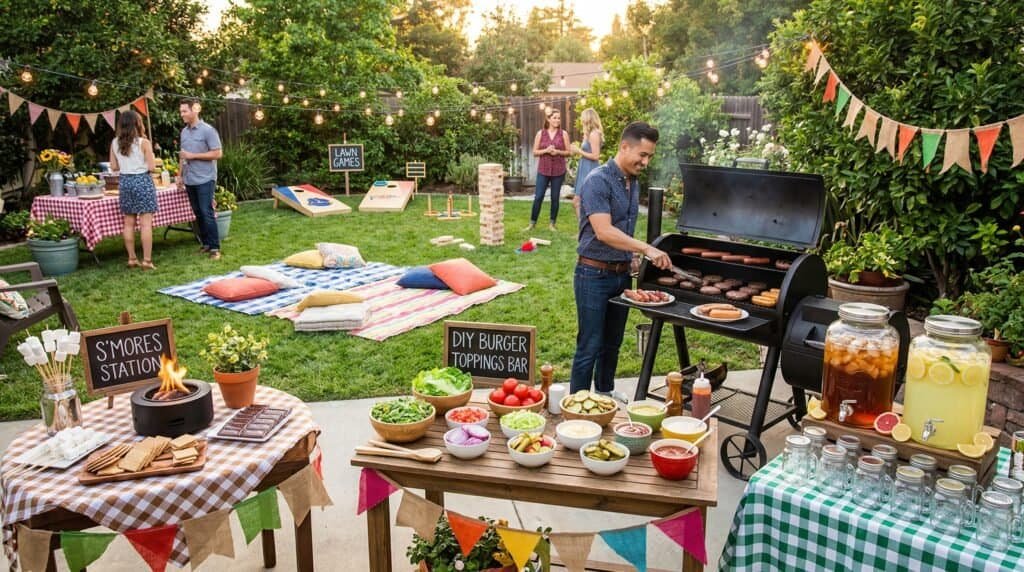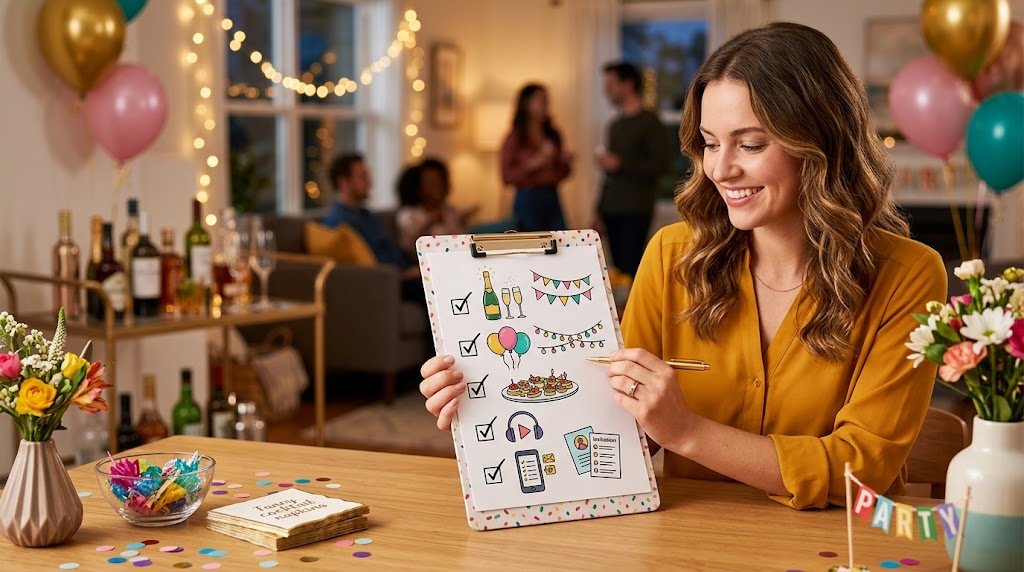
Quick Answer: A party planning checklist breaks hosting into a timeline — roughly 8 weeks out for the date, budget, and guest list; 4 weeks for invitations, menu, and vendors; the final week for prep and cleaning; and the day-of for cooking and setup. The goal is to finish early so the hour before guests arrive is calm, not chaos.
Last spring, I sat on Emma’s back porch at 4 p.m.—just two hours before her birthday guests arrived—and we were relaxing with iced tea. The decorations were already finished, the drinks were perfectly chilled, and the playlist was quietly setting the mood. There was no rushing around, no last-minute panic, and no forgotten tasks. That’s exactly what a well-organized Party Planning Checklist can do.
I’ve also experienced the opposite. The host answers the door with flour on their shirt, appetizers are still in the oven, decorations are unfinished, and everyone can see the stress. The biggest difference between those two parties wasn’t a bigger budget or professional planning skills—it was having a simple Party Planning Checklist and following a realistic timeline.
This complete Party Planning Checklist is your step-by-step guide to hosting any celebration with confidence. From eight weeks before your event to the morning after, you’ll learn exactly what to do, when to do it, and how to stay organized every step of the way. Whether you’re planning a birthday party, baby shower, bridal shower, backyard BBQ, holiday gathering, or dinner party, this Party Planning Checklist helps you manage your budget, guest list, decorations, food, and schedule without feeling overwhelmed.
By the end of this guide, you’ll have a proven timeline, practical hosting tips, budget-saving ideas, and printable-style checklists that make party planning simple and enjoyable. No matter if you call it a Party Planning Checklist, a party hosting checklist, or an event planning checklist, the goal is the same: spend less time stressing and more time making memories with your guests.
What Does a Party Planning Checklist Actually Do for You?
A party planning checklist isn’t about being rigid. It’s about moving the work earlier so the stressful parts don’t all collide on party day.
Here’s what a good checklist does:
- Spreads tasks across weeks instead of cramming them into 24 hours
- Forces the two decisions everything else depends on — date and budget — to the front
- Tells you what’s make-ahead (most of it) and what’s truly last-minute (very little)
- Protects the final hour, which should belong to you
What it isn’t: a 200-line spreadsheet that makes hosting feel like a second job. The trick is using just enough structure to stay calm.
The data backs this up. In a Yelp survey of 2,000 Americans, 51% said hosting a party or dinner was the most stress-inducing part of the holidays — and 38% pointed specifically to not having enough time to get everything ready. A timeline is the fix for exactly that.
The Full Party Planning Timeline at a Glance
| When | Key Tasks | Estimated Time |
|---|---|---|
| 8 Weeks Out | Set date + budget; draft guest list; pick the vibe; book venue if needed | 1–2 hours |
| 4 Weeks Out | Send invitations; plan menu + drinks; book vendors/rentals; plan activities | 2–3 hours |
| 2 Weeks Out | Confirm RSVPs; build shopping list; buy décor + non-perishables; write the run-of-show | ~2 hours |
| 1 Week Out | Big non-perishable grocery run; confirm vendors; prep DIY décor; deep clean | 3–4 hours |
| 48 Hours Before | Perishable shopping; start make-ahead food; set up décor; test lighting + playlist | 3–4 hours |
| Day Before | Set tables/stations; chill drinks; label platters; prep garnishes | 1–2 hours |
| Day-Of Morning | Cook; final décor touches; ice drinks; set up bar | 2–4 hours |
| 1 Hour Before | Light candles, dim lights, start music, set out apps — then get yourself ready | 1 hour |
| During | Greet, refresh food/drinks, delegate, take photos | — |
| After | Leftovers, dishes, thank-yous, return rentals, notes for next time | 1–2 hours |
Now let’s break each phase down.
8 Weeks Out: Lock In the Foundation
Two numbers run the whole show: your date and your budget. Set them first and every later decision has a guardrail.
- Pick the date (and a backup). Weekends fill up fast — for vendors and for your guests’ calendars.
- Set a total budget. A 2023 LendingTree survey found Americans planning to host holiday gatherings expected to spend an average of $556, but home parties routinely land between $200 and $500 when you cook most of the food yourself. Decide your number now.
- Draft the guest list and a rough headcount. This single number drives food, drinks, seating, space, and rentals.
- Choose the vibe. Not a rigid theme — a mood. “Warm, golden backyard evening” tells you more than a one-word theme ever will.
- Book the venue if you’re not hosting at home.
The mistake most hosts make is jumping straight to inspiration boards before settling the budget and headcount. Trust me on this: décor is the fun part, but it’s the part that should come last, not first.
💡 Pro Tip: Write your headcount at the top of every list you make. Forty different decisions trace back to that one number — and “12–15 guests” plans very differently than “40.”
4 Weeks Out: Invitations, Menu, and Vendors
This is the heavy-lifting phase, and the earlier you do it, the calmer everything downstream gets.
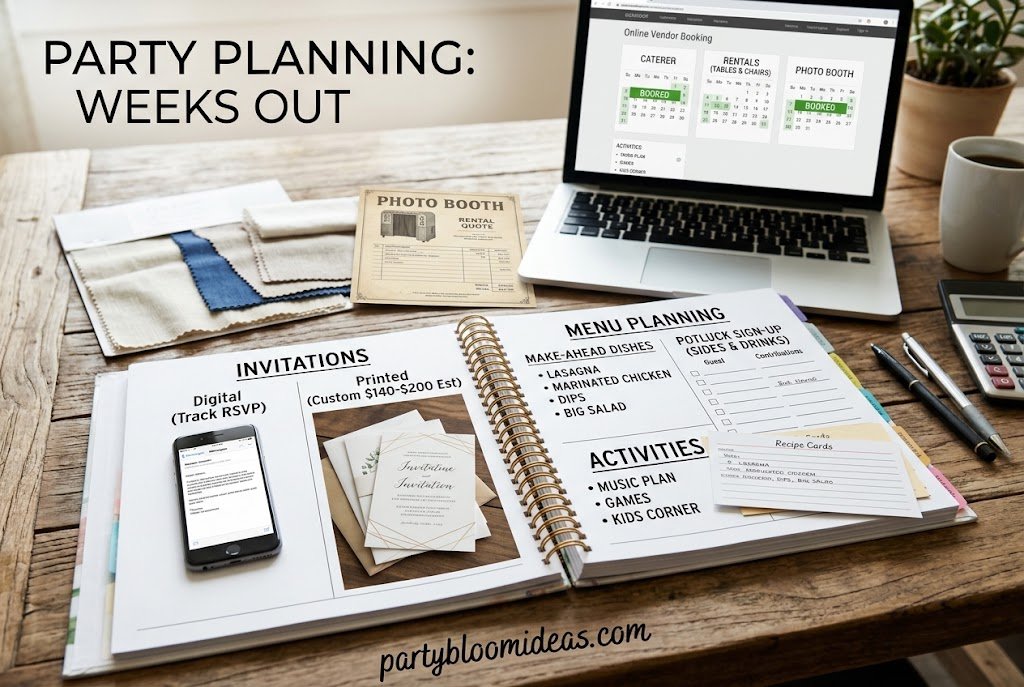
- Send invitations. Digital invites are free and track RSVPs automatically; custom printed invitations run roughly $140–$200, so unless it’s a formal event, go digital.
- Plan the menu and drinks. Here’s the rule that saves the most stress: anchor your menu with two to three make-ahead dishes that hold well — dips, baked pasta, marinated proteins, a big salad you dress at the end.
- Book vendors and rentals early. Caterers, tables, chairs, linens, a photo booth — weekend slots disappear three to four weeks out.
- Plan the activities. A few games, a music plan, a kids’ corner if you need one.
According to a 2024 Upgraded Points survey, 75% of hosts ask guests to bring something — and most guests are genuinely happy to help. A potluck-style assist on sides and drinks isn’t tacky; it’s how relaxed parties actually get thrown.
Done right means your menu is mostly make-ahead. Done wrong means you’re cooking six hot dishes from scratch while the doorbell rings.
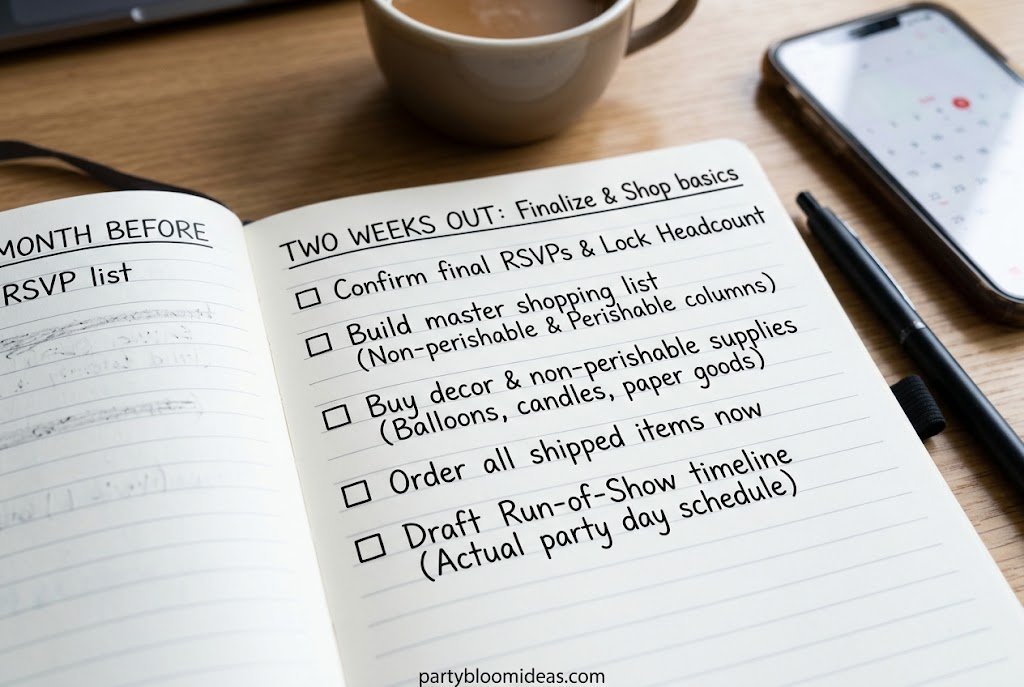
2 Weeks Out: Confirm, Finalize, and Shop the Basics
Two weeks out is when a vague plan becomes a concrete one.
- Confirm your RSVPs and lock the final headcount. Adjust food and seating now, not the night before.
- Build one master shopping list, split into non-perishable and perishable columns. One list, two trips, zero forgotten items.
- Buy your décor and non-perishables. Balloon kits, candles, linens, paper goods, drinks that keep.
- Write your run-of-show — the actual timeline of party day. When apps come out, when the main food is served, when cake or toasts happen, when the music shifts.
That run-of-show is the single most underrated document in hosting. After helping plan more parties than I can count, I can tell you the hosts who write one are the hosts standing calmly by the door at go-time.
💡 Pro Tip: Order anything shipped — balloon garlands, themed plates, candles — at the two-week mark. Nothing derails a plan like a delivery that lands the day after the party.
1 Week Out: Prep, Clean, and Pre-Shop
The final week is about getting the bulky, boring work out of the way while you still have breathing room.
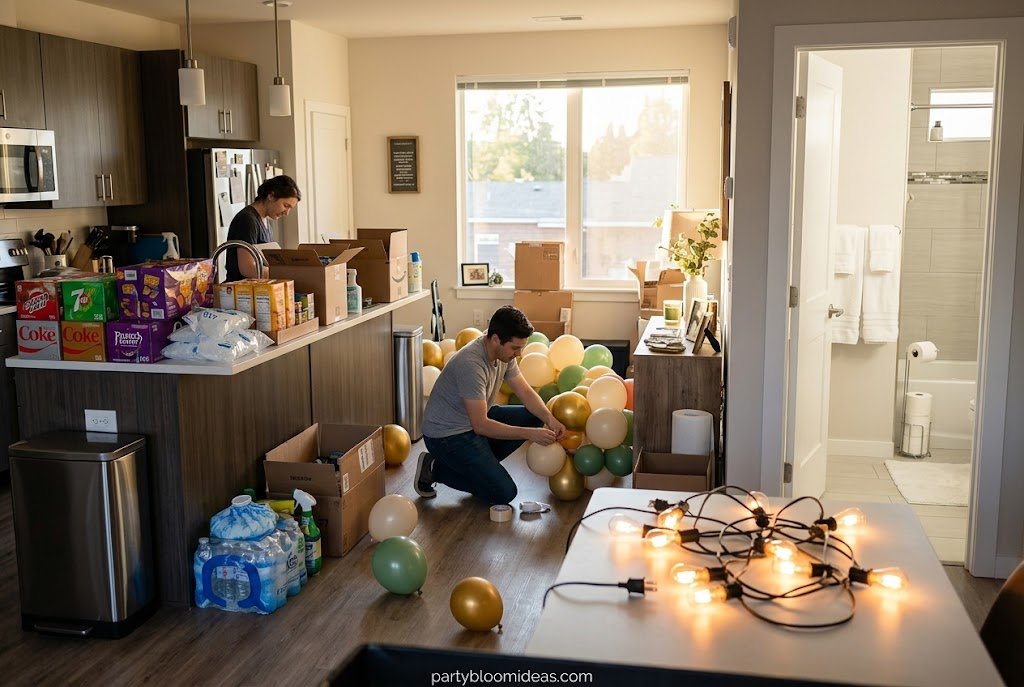
- Do the big non-perishable grocery run — drinks, snacks, pantry items, ice you can freeze ahead.
- Confirm every vendor in writing. Arrival windows, contact numbers, what they’re bringing.
- Prep your DIY décor. Assemble the balloon garland, make the signage, test the string lights. Forty-five minutes now beats forty-five minutes during the chaos window.
- Deep clean the two rooms guests actually use: the main gathering space and the bathroom. Everything else gets a lighter pass.
Let’s be honest: nobody is inspecting your baseboards. 9 times out of 10, guests notice whether the bathroom is clean and stocked and whether the main room feels welcoming. Spend your cleaning energy there.
Done right, your house is guest-ready a full week out and you spend the final days on food and finishing touches. Done wrong, you’re scrubbing the kitchen at 5 p.m. on party day instead of getting dressed.
48 Hours Before: The Make-Ahead Window
This is the window that separates calm hosts from frazzled ones, and most people waste it.
- Do your perishable grocery run — produce, dairy, proteins, fresh flowers.
- Start your make-ahead food. Dips, sauces, dressings, anything braised or baked that tastes as good (or better) reheated. Get it into the fridge.
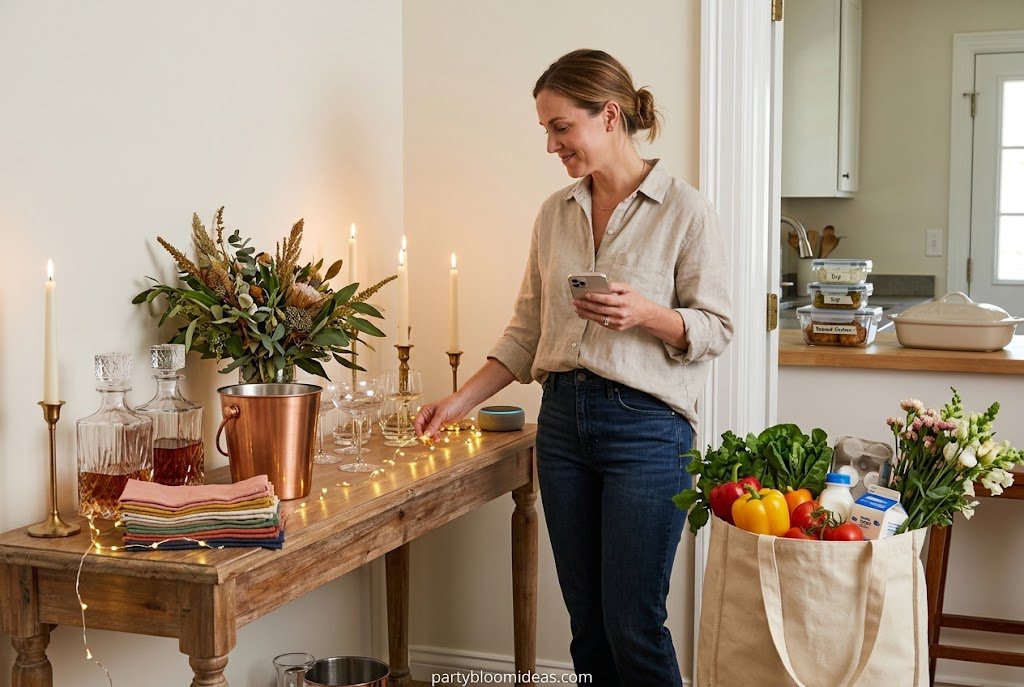
- Set up all non-food décor. Hang the garland, place the centerpieces, set out candles, arrange the drink station.
- Test your lighting and playlist. Dim where you can, swap in warm bulbs, and build a three- to four-hour playlist so you’re never scrambling for music mid-party.
The decoration that always gets photographed first is your entry or drink station — so if you’re going to make one spot genuinely great, make it that one and let the rest breathe.
💡 Pro Tip: Take a photo of your fully set space the night before. Seeing it through a camera lens reveals the empty gaps and dark corners your eyes have stopped noticing.
The Day Before: Set the Stage
By the day before, your goal is to make party-day morning as light as possible.
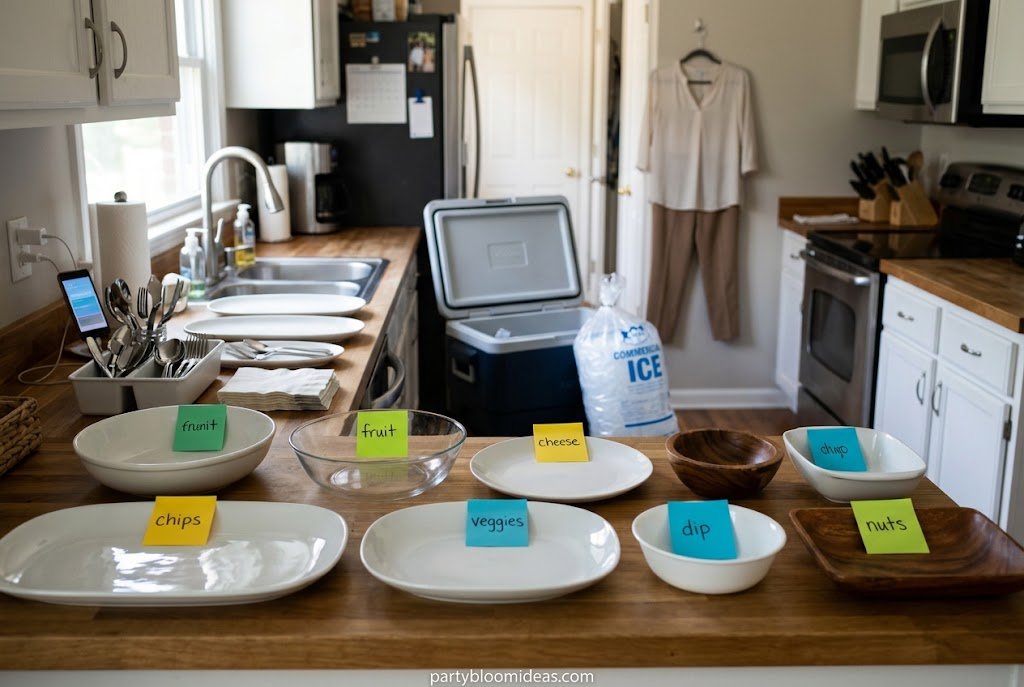
- Set your tables and serving stations. Lay out platters and bowls, then drop a sticky note in each one labeling what goes where (“chips,” “fruit,” “cheese”). On party day you just fill and go.
- Chill all your drinks and prep a cooler or tub with an ice plan. Buy more ice than you think — it always goes faster than expected.
- Prep garnishes and any final components you couldn’t make ahead.
- Lay out serveware, utensils, napkins, and trash/recycling bins where you’ll want them.
In my experience, the sticky-note-on-empty-platters trick is the closest thing hosting has to a cheat code. It turns the frantic “where does everything go?” moment into a five-minute fill-in.
This is also the night to charge your phone or camera and set out what you’re wearing. Future-you, getting ready in a calm house tomorrow, will be grateful.
Day-Of Morning: Cook, Chill, and Finish
Party-day morning should be cooking and finishing — not setup you should have done already.
- Cook your day-of dishes in order of what holds longest to what’s most last-minute.
- Do your final décor touches — fresh flowers in water, candles positioned, any signage placed.
- Ice the drinks an hour or two before doors, and set up your bar or drink station fully.
- Handle the logistics guests forget about: clear coat space, point out parking, set out hand towels, and empty the dishwasher so it’s ready for the night’s cleanup.
If you front-loaded the week the way I keep nagging you to, this morning is genuinely pleasant — music on, coffee in hand, knocking out a short, tidy list.
💡 Pro Tip: Empty your dishwasher and clear your sink before guests arrive. Sounds trivial, but a clear sink means dirty dishes disappear all night instead of stacking into a stress-inducing tower you have to face at the end.

The Hour Before Guests Arrive: Where Hosting Is Won or Lost
If you remember one section, make it this one. Most party “disasters” don’t happen during the party — they happen in the 60 minutes before it starts, when an over-scheduled host is still cooking, still cleaning, and still not dressed.
Here’s the goal: by one hour out, the work is done and this hour is yours.
- Light the candles, dim the lights, and start the music low.
- Set out the first round of appetizers and drinks so early guests have something the second they walk in.
- Do a final 60-second bathroom check — soap, towel, toilet paper, a quick wipe.
- Then go get yourself ready. Actually ready. Dressed, calm, a glass of something in hand before the doorbell rings.
That Yelp survey found 38% of hosts say not having enough time is their biggest party-planning headache, and this is exactly the hour where that crunch shows up. A checklist doesn’t add time — it moves the work earlier so this hour is free.
When you greet your first guest relaxed instead of frazzled, they relax too. The whole tone of the night is set in those first few minutes at the door.

During the Party: Host, Don’t Hover
Your job during the party isn’t to do everything — it’s to keep things flowing and actually be present.
- Greet every guest as they arrive and point them toward drinks and food.
- Refresh food and drinks on a loop — top up platters, restock ice, clear empties.
- Delegate. Hand a close friend the “keep the drink station stocked” job. Ask someone to start the next playlist. Good guests genuinely want to help.
- Take a few photos early, while the food is full and the space is fresh — not at 10 p.m. when everything’s picked over.
The mistake most hosts make is disappearing into the kitchen for the entire party. Let’s be honest: nobody came to watch you wash dishes. Do a light loop, then sit down and join your own party.
By 10 p.m., if nobody wants to leave, you’ve done it right. That “stay awhile” feeling is the whole point.
After the Party: Close It Out Right
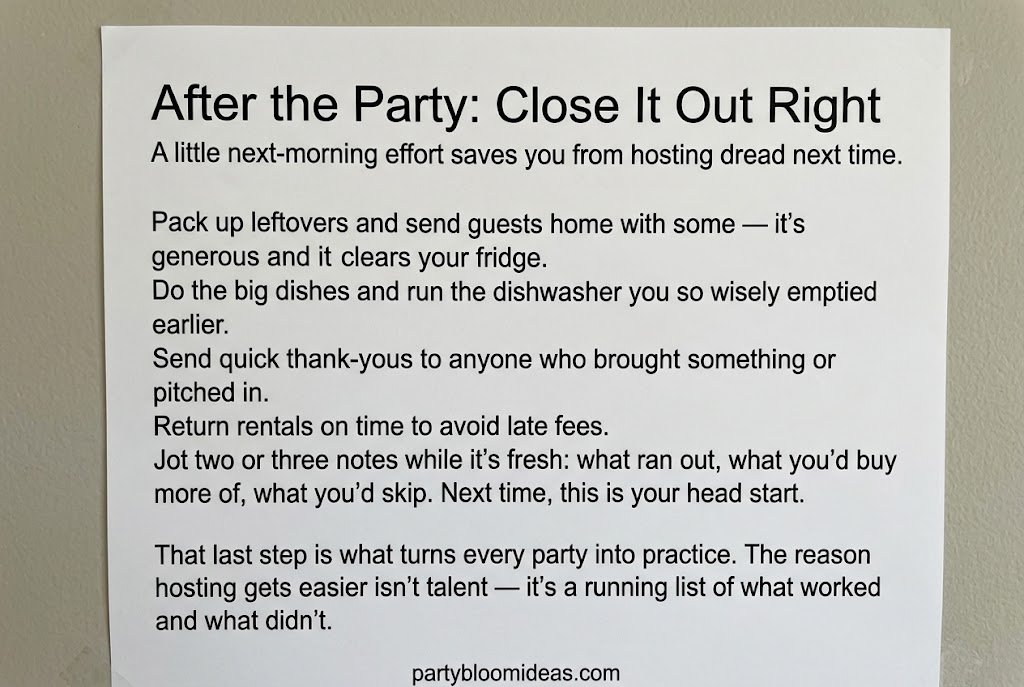
A little next-morning effort saves you from hosting dread next time.
- Pack up leftovers and send guests home with some — it’s generous and it clears your fridge.
- Do the big dishes and run the dishwasher you so wisely emptied earlier.
- Send quick thank-yous to anyone who brought something or pitched in.
- Return rentals on time to avoid late fees.
- Jot two or three notes while it’s fresh: what ran out, what you’d buy more of, what you’d skip. Next time, this is your head start.
That last step is what turns every party into practice. The reason hosting gets easier isn’t talent — it’s a running list of what worked and what didn’t.
How Do You Plan a Party Without the Stress?
After years of hosting and helping friends pull off everything from backyard BBQs to baby showers, I’ve landed on three rules that matter more than any app or trend.
Front-load everything so the final hour is free. This is the big one. The 60 minutes before guests arrive should be you getting dressed, not you cooking. Every task you can move earlier, move earlier.
Delegate food tasks, not décor. Décor is personal and quick. Food is where stress compounds — six hot dishes timed to one exact moment is a recipe for a meltdown. Let guests bring sides and drinks, lean on make-ahead dishes, and keep the truly hot, last-minute items to one or two.
Make one spot great and let the rest breathe. You don’t need every surface styled. Nail the entry or the drink station — the spot that gets photographed first — and the eye fills in the rest.
Here’s the honest truth most blogs won’t tell you: the three things that actually matter at any party are enough food and drink, a warm welcome, and a host relaxed enough to enjoy it. Everything else is a nice-to-have.
Party Planning Checklist Variations by Event Type
The timeline above works for any gathering, but each party type has its own must-not-forget items.
Birthday party — Confirm cake pickup or baking time, check that you have candles and a lighter, and bag any party favors the night before. Best for: kids, teens, and milestone adults.
Bridal shower — Set up a gift table near where the guest of honor will sit, plan one or two low-key games, and build a mimosa or bubbly bar. Best for: 15–30 guests, daytime.
Baby shower — Display the registry info, decide neutral vs. themed palette early, and keep the run-time to about two hours. Best for: relaxed afternoon gatherings.
Backyard BBQ — Check grill fuel days ahead, do the ice math (about 1–1.5 lbs per guest), and set out bug spray, sunscreen, and shade. Best for: summer, 10–40 guests.
Holiday party — Plan coat space, a hot-drink station, and parking, and add a seasonal scent like simmering cider or a candle. Best for: indoor winter gatherings.
Dinner party — Set place settings, sketch a seating plan, and pace your courses. Best for: 6–12 guests, evening.
Kids’ party — Allergy-check the menu, cap it at about 90 minutes, and rotate two or three activities. Best for: ages 3–10.
Cocktail / mingling party — Stock the bar to ratios, plan passed apps, and create standing room with a few perches to lean on. Best for: adults, evening.
Common Party Planning Mistakes to Avoid
Even seasoned hosts trip on the same few things. Here’s what to dodge:
- Skipping the headcount confirmation. You under-order food or run out of seating. Confirm RSVPs two weeks out.
- Cooking everything day-of. The single biggest stress trap. Anchor your menu with make-ahead dishes.
- Over-cleaning the whole house. You burn out before guests arrive. Focus on the main room and bathroom.
- Decorating before setting the budget. You overspend on the fun stuff and run short on essentials.
- Forgetting the final-hour buffer. You greet guests frazzled and never quite recover. Protect that hour.
The biggest mistake most hosts make is treating party day as the deadline for everything. It’s not. The deadline for almost everything is the day before. Party day should be cooking, finishing, and welcoming — full stop.
🎉 Quick Summary
- ✅ Best for: birthdays, showers, BBQs, dinner parties, holiday gatherings — any event you’re hosting
- 💰 Budget range: $200–$556 for a typical home party (more for catered or milestone events)
- ⏱ Setup time: spread across 8 weeks; roughly 12–16 active hours total
- 🌟 Top pick: the written run-of-show — the one document that keeps party day calm
- 📌 Don’t skip: the one-hour-before buffer; front-load everything so that hour is yours
People Also Ask
How far in advance should you plan a party? For a standard gathering, start about 8 weeks out — lock the date, budget, and guest list first, then handle invitations and vendors around the 4-week mark. Small, casual parties can come together in one to two weeks if your guest list and menu stay simple.
What is the one-hour-before-the-party rule? It’s the principle that all your work should be finished one hour before guests arrive, leaving that final hour for lighting candles, setting out appetizers, and getting yourself ready. Most hosting stress lives in that last hour, so protecting it is the single best move you can make.
What’s the most important part of party planning? Confirming your headcount and planning make-ahead food. Your guest count drives every other decision, and make-ahead dishes prevent the day-of cooking crunch that causes the most stress. Nail those two and the rest tends to fall into place.
How much should you budget for a party? A typical at-home party runs $200–$500, while a 2023 LendingTree survey found holiday hosts expected to spend around $556 on average. Food and drinks usually account for 35–40% of the total, so that’s where to focus your budget first.
Frequently Asked Questions
What should be on a party planning checklist? A complete checklist covers six phases: the foundation (date, budget, guest list), invitations and menu, shopping and décor, prep and cleaning, day-of cooking and setup, and post-party cleanup. The most important inclusions are a confirmed headcount, a make-ahead menu, and a run-of-show for party day. Organize it by timeline rather than by category so nothing piles up at the end.
How do you plan a party step by step? Start 8 weeks out by setting your date, budget, and guest list. At 4 weeks, send invitations and plan your menu and vendors. At 2 weeks, confirm RSVPs and shop for non-perishables. In the final week, prep décor and clean. In the last 48 hours, do perishable shopping and make-ahead cooking. On party day, cook, set up, and protect the final hour for yourself.
How do you host a party without getting stressed? Move as much work as possible earlier so the final hour is free, delegate food tasks to willing guests, and lean on make-ahead dishes instead of cooking everything day-of. A written timeline is what makes this possible — it spreads the work across weeks so nothing collides on party day. And remember that guests come for connection, not perfection.
What should you do the night before a party? Set your tables and serving stations, label empty platters with sticky notes so you can fill them quickly, chill all drinks, prep garnishes, and lay out serveware and napkins. It’s also the time to charge your camera, set out your outfit, and empty the dishwasher. The goal is to make party-day morning as light as possible.
How much does it cost to host a party at home? Most at-home parties cost between $200 and $500, with food and drinks making up 35–40% of the budget. A 2023 LendingTree survey found holiday hosts expected to spend an average of $556. You can cut costs significantly by cooking instead of catering, sending digital invitations, and asking guests to bring sides or drinks.
How many guests should I invite to a party? That depends on your space and budget, but a good rule is to invite based on the room you can comfortably fill plus your seating. For home parties, 12–25 guests is a manageable range for most hosts. Smaller gatherings are far less stressful to plan, so if you’re new to hosting, start on the lower end.
Should guests bring food to a party? Often, yes. According to a 2024 Upgraded Points survey, 75% of hosts ask guests to bring something, and most guests are happy to contribute. Assigning sides, drinks, or desserts is a normal, gracious way to reduce your workload — just keep the main dish or two yourself so the menu stays cohesive.
What is a run-of-show for a party? A run-of-show is a simple timeline of party day itself: when appetizers come out, when the main food is served, when cake or toasts happen, and when the music shifts. It’s not rigid scheduling — it’s a reference that keeps you from forgetting key moments and helps you stay calm and present instead of improvising.
How do you plan a last-minute party? Keep it simple and lean on shortcuts. Send digital invitations immediately, plan a menu of make-ahead or store-bought items, ask guests to bring sides and drinks, and focus your décor on one spot like the drink station. A casual party can absolutely come together in a few days when you skip the elaborate extras.
What’s the best way to handle party food without stress? Anchor your menu with two to three make-ahead dishes that hold well, keep truly last-minute hot items to a minimum, and accept help from guests on sides and drinks. Food timed to one exact moment is the top stress trap, so spreading the cooking across the 48 hours before — and letting some dishes be served at room temperature — keeps you sane.
Do I need to deep clean my whole house before a party? No. Focus your cleaning on the two rooms guests actually use — the main gathering space and the bathroom. A lighter pass everywhere else is plenty. Over-cleaning the entire house is a common way hosts exhaust themselves before guests even arrive, so spend that energy where it’s genuinely noticed.
How early should I set up decorations? Set up all non-food décor 24 to 48 hours before the party so it’s completely done before party day. This includes balloon garlands, centerpieces, candles, and your drink station. Leaving décor for the day-of is a common mistake that eats into the time you need for cooking and the all-important final hour.
What do experienced hosts do differently? They front-load everything so the final hour is free, they delegate food tasks rather than décor, and they make one focal spot great instead of styling every surface. They also write a run-of-show and keep a running list of what worked at past parties. The result looks effortless, but it’s really just earlier, smarter preparation.
Conclusion
Hosting a memorable party doesn’t require a huge budget, professional event-planning skills, or weeks of stress. What it really takes is a well-organized party planning checklist that helps you spread the work over time instead of leaving everything until the last minute.
By setting your date and budget early, confirming your guest list, planning a make-ahead menu, and following a simple week-by-week timeline, you’ll enjoy the process just as much as your guests enjoy the celebration. Whether you’re organizing a birthday party, baby shower, bridal shower, backyard BBQ, holiday gathering, or elegant dinner party, the same principles apply: prepare ahead, keep things simple, and focus on creating meaningful moments.
Remember, your guests won’t remember whether every decoration was perfect—they’ll remember the welcoming atmosphere, the great food, the laughter, and the time spent together. Use this ultimate party planning checklist as your go-to guide every time you host, and each celebration will become easier, more enjoyable, and far less stressful than the last.
Save this checklist, customize it for your event, and let it take the guesswork out of hosting. With the right plan in place, you’ll be free to greet your guests with confidence, enjoy every moment, and create a party everyone will remember for all the right reasons.
Read More : 20 kids Birthday Party Themes
20 Backyard BBQ Party Ideas
25 Best Easter Party Ideas for Kids and Families (2026 Guide)